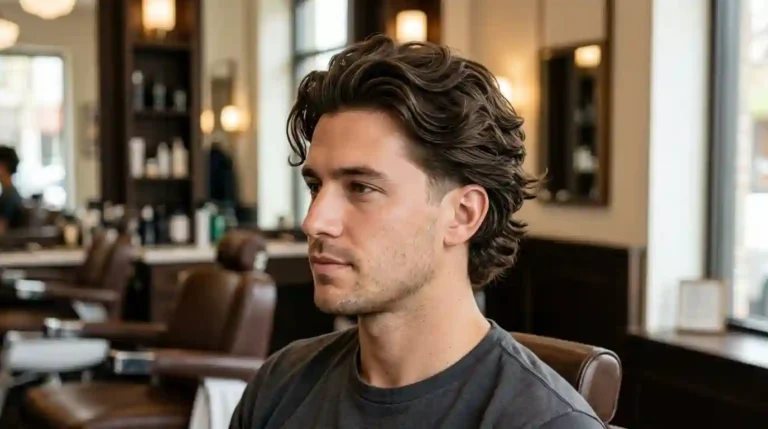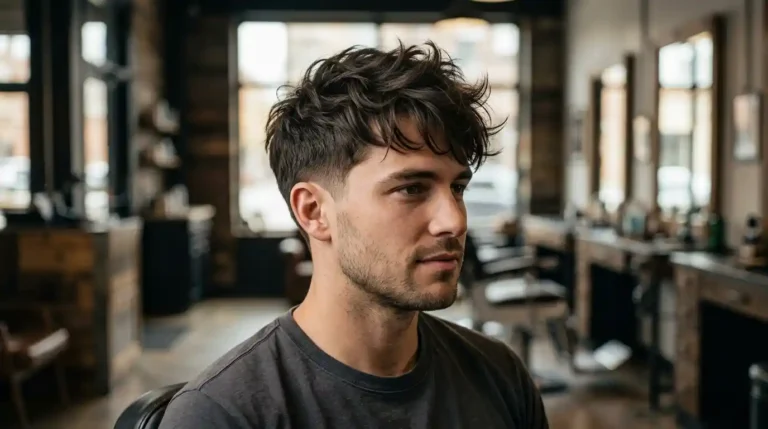
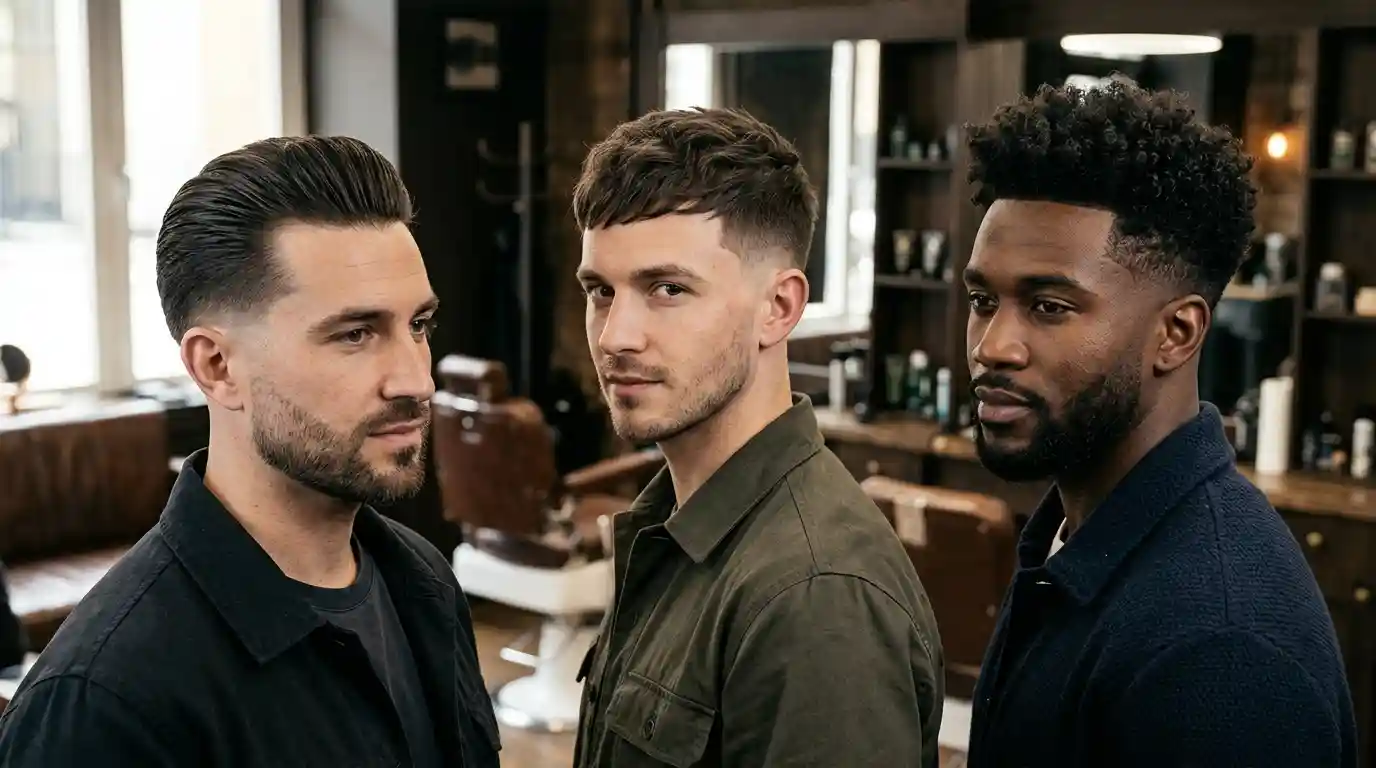
Undercut Taper Haircut: 67+ Styles & Complete Guide for Men
The undercut taper haircut combines the bold contrast of an undercut with the clean, gradual blending of a taper, creating a versatile hairstyle that works with short, medium, and long hair. Unlike a traditional undercut with uniformly short sides and a sharply disconnected top, a tapered undercut can feature softer transitions around the temples, sideburns, and neckline while maintaining noticeable length and volume above. Whether you prefer a classic slick back, textured crop, modern quiff, curly top, or long man bun, this haircut can be adapted to different hair types, face shapes, and styling preferences.
A low taper undercut offers a subtle, professional finish, while mid and high taper variations create stronger contrast. Understanding the difference between connected, blended, and disconnected styles is essential for choosing the right haircut and explaining your expectations to a barber.
In this comprehensive guide, you’ll discover 67 undercut taper hairstyle ideas, before-and-after comparisons, barber cutting techniques, clipper guard recommendations, styling routines, and maintenance advice. You’ll also learn how to choose the correct undercut height, manage difficult hair growth patterns, avoid common cutting mistakes, and maintain your hairstyle between appointments.
Table of Contents
- Undercut Taper Haircut: Complete Overview
- Understanding Undercut Taper Haircuts and Fade Differences
- Best Undercut Taper Haircut Styles for Men
- Undercut Taper Haircut Before and After: 360° Visual Gallery
- How to Choose the Right Undercut Taper Haircut
- Undercut Taper Haircut Length, Shape and Proportions
- How Barbers Cut an Undercut Taper Haircut
- How to Ask Your Barber for an Undercut Taper Haircut
- How to Style an Undercut Taper Haircut at Home
- Best Styling Products and Haircare Tools for an Undercut Taper
- Undercut Taper Haircut Maintenance and Grow-Out Guide
- Common Undercut Taper Haircut Problems, Mistakes and Solutions
- Undercut Taper Haircut Cost and Professional Barber Services
- Frequently Asked Questions About Undercut Taper Haircuts
- Final Thoughts: Choosing Your Ideal Undercut Taper Haircut
1. Undercut Taper Haircut: Complete Overview
1.1 What Is an Undercut Taper Haircut?
An undercut taper haircut is a men’s hairstyle that combines noticeably longer hair on top with shorter hair underneath and a tapered finish around selected areas of the sides, temples, or neckline.
The defining feature of an undercut is the difference in length between the upper and lower sections. A taper gradually reduces hair length, creating a smooth transition toward the perimeter.
Combining these techniques gives the barber flexibility to create different results. The top can remain visibly disconnected from the shorter sides, or the transition can be softened through selective blending.
For example, a slicked-back undercut may feature several inches of hair on top, clipped sides, and a gradual nape taper. A textured crop can use the same basic construction but with considerably less top length.
The precise meaning of taper undercut haircut men can vary between barbershops. Some barbers use it for a disconnected undercut with tapered edges, while others describe a softer, partially blended undercut.
Understanding these differences helps prevent misunderstandings during your haircut consultation.
For additional haircut inspiration, explore Taper Haircut Hub and its collection of Hairstyles with taper.
1.2 What Is a Tapered Undercut Fade?
A tapered undercut fade combines a longer upper section with gradually shortened hair beneath it.
The fade may begin near the temples and continue toward the sideburns or neckline, depending on the intended design.
A skin-close undercut fade reaches exposed skin at the shortest point. A guarded version retains visible short hair.
The taper fade should not be confused with the undercut’s upper boundary. A haircut can have a defined disconnection line and still feature a gradual fade lower down.
1.3 How Does an Undercut Work With a Taper?
The undercut establishes a length difference between the upper and lower hair.
The taper controls how the shorter hair transitions toward the perimeter.
In a disconnected version, the longer top remains clearly separated from the shorter sides. In a blended version, the barber gradually softens the transition between the two lengths.
A third option uses partial disconnection. For example, the upper sides may remain visibly distinct while the temples and neckline receive a smooth taper.
This combination creates flexibility in both appearance and maintenance.
1.4 Why Are Undercut Taper Haircuts Popular in 2026?
Undercut taper haircuts continue to appeal to men in 2026 because they combine traditional barbering with modern styling options.
The haircut supports several recognizable looks, including slick backs, textured tops, middle parts, quiffs, and longer layered hairstyles.
It also allows men to choose their preferred level of contrast.
A low taper undercut provides a softer appearance suitable for everyday use, while a high fade undercut creates a bold silhouette.
The growing interest in natural texture, flexible styling, and haircuts that can transition between professional and casual settings also makes this combination appealing.
For more contemporary variations, explore our taper haircut 2026 guide.
1.5 Benefits and Drawbacks of an Undercut Taper Haircut
The main advantage of an undercut taper is styling versatility.
Longer hair on top can be brushed backward, styled into a quiff, separated into a middle part, or worn naturally.
Other benefits include controlled side volume, a cleaner neckline, adaptable taper heights, and compatibility with several hair textures.
However, the haircut has limitations.
A sharply disconnected undercut can develop an obvious grow-out line. Longer styles may need regular blow-drying or styling products, while skin-close fades require more frequent maintenance to retain their definition.
An undercut placed too high can also reduce important side weight and make the top appear unusually narrow.
For these reasons, a successful haircut should reflect both your preferred appearance and your natural hair characteristics.
1.6 Who Should Consider an Undercut Taper Haircut?
An undercut taper may suit men who want a hairstyle with a clear difference between the top and sides.
It can be particularly useful for men who prefer a clean perimeter but want enough upper length for styling flexibility.
It is also worth considering if you want to reduce bulky side hair, showcase natural curls, or combine a longer hairstyle with a refined taper.
However, people who dislike frequent barber visits or do not want noticeable grow-out lines may prefer a softer, more connected taper.
1.7 Undercut Taper Haircut at a Glance
Hair Length, Taper Height and Styling Requirements
| Feature | General recommendation |
| Top length | Approximately 2–6 inches for many styles |
| Side length | Usually shorter than the top |
| Taper height | Low, mid, or high |
| Top-to-side transition | Connected, blended, or disconnected |
| Common finishes | Matte, natural, textured, or glossy |
| Styling time | Approximately 3–15 minutes |
| Barber maintenance | Commonly every 2–6 weeks |
| Popular products | Matte clay, pomade, styling cream, texture powder |
| Suitable hair types | Straight, wavy, curly, and coily |
| Main styling advantage | Strong contrast with flexible top styling |
These measurements are illustrative. A buzz-inspired undercut can be shorter, while a long-hair undercut may retain substantially more length.
Top 5 Undercut Taper Styles: Quick Comparison
| Hairstyle | Visual appearance | Styling effort |
| Low taper undercut | Subtle, controlled contrast | Low to moderate |
| Slicked-back undercut | Smooth, polished top | Moderate |
| Textured crop undercut | Short, separated layers | Low |
| Curly undercut taper | Natural curl volume | Varies |
| Disconnected undercut | Strong top-to-side contrast | Moderate |
Best Hair Types, Face Shapes and Maintenance Levels
Undercut tapers can be adapted to many hair types and face shapes.
Straight hair supports slick backs and side parts, while wavy hair adds natural movement. Curly and coily hair can create attractive volume above the shortened sides.
A low, partially blended undercut is often easier to grow out than a sharply disconnected high undercut.
2. Understanding Undercut Taper Haircuts and Fade Differences
The terms undercut, taper, and fade describe different aspects of haircut construction.
Understanding them makes it easier to choose the correct style and communicate with your barber.
2.1 The Anatomy of an Undercut Taper Haircut
An undercut taper consists of several connected or deliberately separated cutting areas.
The Longer Hair on Top
The upper section determines the main hairstyle.
It may be styled as a slick back, quiff, textured crop, fringe, middle part, or longer flow.
Its length and weight influence how much of the undercut remains visible.
The Shorter Sides and Back
The lower section creates the length contrast.
It may be clipped evenly, gradually faded, or selectively tapered around the perimeter.
The Disconnection or Blending Line
The disconnection line marks the transition between longer and shorter hair.
In a disconnected undercut, this boundary remains visually distinct.
In a blended version, the barber softens the transition.
The Parietal Ridge and Undercut Placement
The parietal ridge is the area where the upper head curves toward the sides.
It provides an important anatomical reference when determining undercut height.
Cutting far above this area can significantly reduce the width of the remaining top section.
The Tapered Temples and Sideburns
The temples and sideburns can be shortened gradually to create clean edges.
A temple taper is useful when you want localized definition without removing much additional hair.
The Neckline and Nape
The nape is the lower rear area of the head.
Its shape influences how the haircut looks from behind and how naturally it grows out.
2.2 Undercut vs Taper Haircut
An undercut emphasizes a noticeable length difference between the top and sides.
A traditional taper creates a gradual shortening of the hair toward the perimeter.
An undercut may include a taper, but not every tapered haircut is an undercut.
The main distinction is whether the haircut features a substantial upper-to-lower length contrast.
2.3 Undercut vs Fade Haircut
A fade gradually blends hair from one length to another, often becoming very short near the perimeter.
An undercut may retain an abrupt transition between the top and sides.
A faded undercut combines both principles by placing a fade beneath a longer upper section.
2.4 Undercut vs Taper Fade
A taper fade typically concentrates blending around selected perimeter areas.
An undercut describes the relationship between the longer top and shorter lower hair.
An undercut taper fade can therefore combine a distinct top section with graduated temple and neckline cutting.
2.5 Disconnected vs Blended Undercut
What Is a Disconnected Undercut?
A disconnected undercut maintains a clear separation between longer upper hair and shorter sides.
The barber does not fully blend the lengths together.
This creates a strong, deliberate contrast.
What Is a Blended Undercut?
A blended undercut softens the transition between the top and sides.
The haircut still retains a length difference, but the boundary looks more gradual.
How the Transition Changes the Final Appearance
A disconnected undercut looks sharper and more dramatic.
A blended version generally appears softer and may be easier to wear in conservative professional settings.
Which Style Grows Out More Naturally?
A blended undercut usually develops a less obvious grow-out line.
A disconnected undercut may become visibly uneven as the shorter sides gain length.
2.6 Traditional Undercut vs Modern Tapered Undercut
A traditional undercut commonly features short sides beneath a distinctly longer top.
Modern tapered undercuts introduce graduated cutting around the temples, neckline, or upper sides.
The result can preserve the undercut’s contrast while making its perimeter appear more refined.
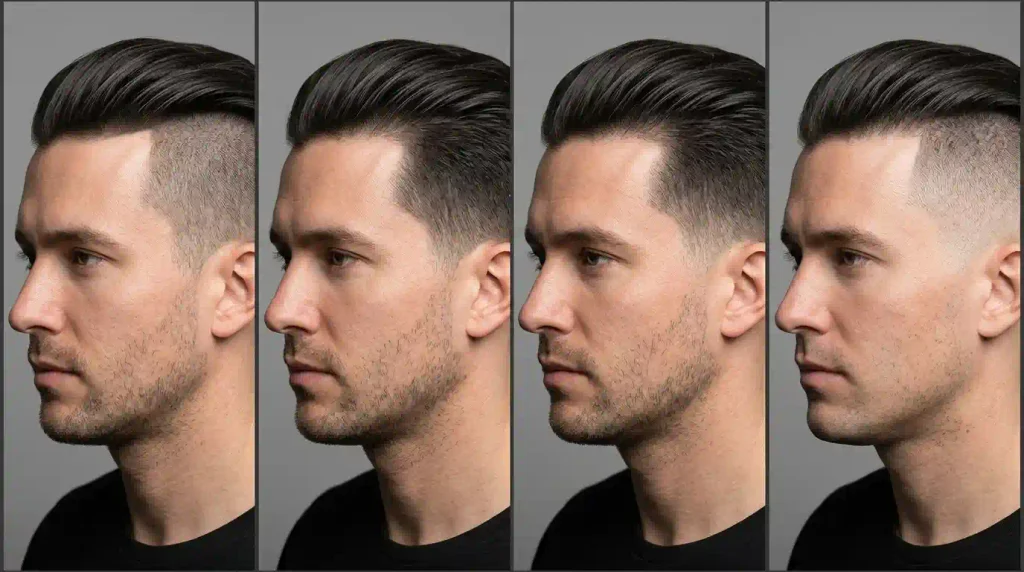
2.7 Low vs Mid vs High Undercut Taper
Low Taper Undercut
A low taper undercut concentrates the shortest hair around the lower temples and neckline.
It maintains more surrounding hair and creates subtle definition.
Mid Taper Undercut
A mid taper increases the visible blending around the temple area.
It provides moderate contrast without necessarily creating a full mid fade.
High Taper Undercut
A high taper creates stronger definition around the upper temples.
It works well with bold top styles but needs careful placement to avoid removing excessive side weight.
Differences in Fade Height and Side Coverage
| Feature | Low taper | Mid taper | High taper |
| Taper location | Lower perimeter | Mid-temple area | Upper temple area |
| Contrast | Subtle | Moderate | Strong |
| Side hair retained | More | Moderate | Less |
| Common top pairing | Side part, crop | Quiff, curly top | Pompadour, bold textured top |
| Grow-out appearance | Generally softer | Moderate | More noticeable |
2.8 Skin Fade vs Shadow Fade With an Undercut
A skin fade reaches exposed skin at its shortest point.
A shadow fade retains visible short hair throughout the transition.
Skin fades create sharper contrast, while shadow fades offer a softer appearance.
A shadow fade may also be preferable for men who want less scalp exposure.
2.9 How High Should an Undercut Go?
The appropriate height depends on head shape, hair density, natural growth patterns, and the intended top style.
A lower undercut generally preserves more side fullness.
A high undercut creates stronger contrast but can leave a narrower upper section.
The barber should examine the parietal ridge before setting the boundary.
2.10 How Much Hair Should Remain on the Sides?
The sides should retain enough hair to support the intended hairstyle.
A disconnected undercut may use very short clipper settings beneath the top.
A blended undercut may retain more length near the upper sides.
The exact measurement depends on the desired contrast and hair density.
2.11 Best Neckline Shapes for an Undercut Taper Haircut
Natural Neckline With a Tapered Undercut
A natural neckline follows the existing hair growth pattern.
It creates a softer appearance and can look less abrupt during regrowth.
Rounded Tapered Neckline
A rounded neckline features a curved outline near the nape.
It complements softer, more connected undercuts.
Squared or Blocked Neckline
A squared neckline creates a straighter, more defined lower edge.
It looks sharp immediately after cutting but may require frequent cleanup.
V-Shaped Undercut Neckline
A V-shaped neckline forms a pointed lower outline.
It creates a decorative, angular appearance and works best when deliberately planned.
Undercut Taper With a Soft Nape Fade
A soft nape fade gradually reduces hair length toward the neck.
It avoids a harsh blocked edge and supports a natural-looking finish.
Which Neckline Shape Grows Out More Naturally?
Natural and softly tapered necklines generally produce a less obvious regrowth boundary.
Blocked and V-shaped designs may require more frequent refinement.
2.12 Which Is Better: Undercut, Taper or Fade?
There is no universally superior option.
Choose an undercut when you want a noticeable top-to-side length difference.
Choose a traditional taper when you prefer gradual transitions.
Choose a fade when you want stronger blending across a larger area.
A tapered undercut is useful when you want elements of both an undercut and a gradual perimeter finish.
2.13 Undercut Taper Haircut Comparison Chart
Differences in Hair Length and Fade Placement
| Haircut | Upper hair | Sides | Transition |
| Traditional undercut | Significantly longer | Short | Often disconnected |
| Blended undercut | Longer | Graduated | Soft |
| Taper haircut | Variable | Gradually shorter | Connected |
| Full fade | Variable | Broad faded area | Graduated |
| Tapered undercut | Longer | Short with tapered areas | Blended or partially disconnected |
Subtle vs High-Contrast Haircut Results
A low blended undercut offers subtle contrast.
A high skin-fade undercut produces a stronger visual separation.
Differences in Styling and Maintenance
Disconnected styles often need more attention to the boundary.
Softly blended cuts may allow longer intervals between appointments.
Best Options for Natural and Disconnected Finishes
Choose a connected or partially blended undercut for a natural appearance.
Choose a clearly disconnected undercut if you want the upper and lower sections to remain visibly separate.
3. Best Undercut Taper Haircut Styles for Men
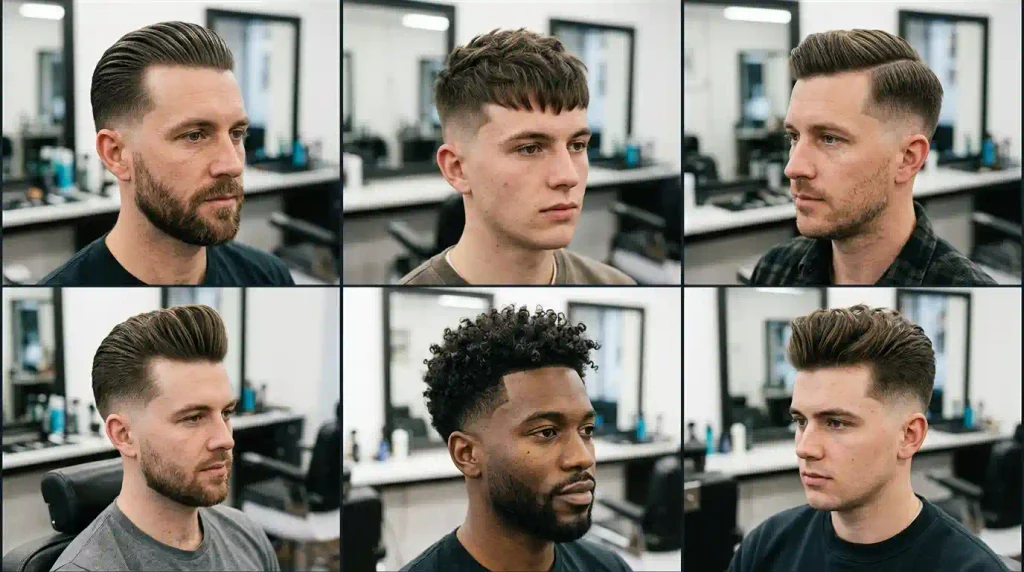
The following 67 hairstyle variations demonstrate how an undercut can be combined with different taper heights, top lengths, textures, and styling directions.
Although some styles share a similar foundation, their shape, cutting method, or styling finish creates a distinct appearance.
3.1 Short Undercut Taper and Textured Crop Styles
1. Classic Short Undercut Taper
The classic short undercut taper retains slightly longer hair on top with shorter hair around the sides.
A subtle taper around the temples and neckline softens the contrast.
It is suitable for men who want an undercut without managing several inches of upper hair.
2. Textured Crop Undercut With Taper
A textured crop features short, layered hair with visible strand separation.
The undercut creates contrast beneath the crop, while a taper refines the perimeter.
This style works well with straight and slightly wavy hair that benefits from point-cut texture.
For additional ideas featuring a layered top, explore our textured taper haircut guide.
3. French Crop Undercut Taper
A French crop combines a compact upper section with a relatively short forward fringe.
Adding an undercut produces a stronger difference between the top and sides.
The taper prevents the perimeter from appearing unnecessarily harsh.
Our french crop taper haircut men guide explores related styles.
4. Short Choppy Undercut Fade
A choppy undercut uses uneven, textured ends to create movement.
The faded lower section contrasts with the intentionally irregular top.
A small amount of matte clay can emphasize separation.
5. Buzz Cut Undercut With Tapered Sides
This variation combines a very short upper section with even shorter sides.
Because a traditional buzz cut is usually quite uniform, the undercut effect depends on retaining a noticeable length difference.
For more short-hair variations, explore the Buzz Taper Haircut.
6. Crew Cut Undercut Taper
A crew cut retains a relatively short top, often with slightly more length toward the front.
A tapered undercut adds definition around the sides without requiring a long hairstyle.
For a more conventional short variation, see our Taper Haircut Crew Cut Low Fade guide.
7. Bowl Cut Undercut With Taper
A bowl-cut undercut keeps a longer rounded upper shape above shorter sides.
A tapered perimeter can soften the lower edges.
The haircut creates a distinctive silhouette and works best when the upper length is carefully shaped.
8. Spiky Textured Top With Undercut Fade
This haircut features short, upward-directed strands above a faded undercut.
A styling paste or matte clay can create controlled spikes.
The clean lower section emphasizes the textured top.
9. Blunt Fringe Undercut Taper
A blunt fringe creates a relatively straight front edge.
The undercut contrasts with the structured upper section.
For related sharp-fringe hairstyles, explore the Edgar taper haircut.
10. Textured Fringe With Undercut Taper
A textured fringe introduces layering and separation to the hair falling toward the forehead.
The undercut creates contrast beneath the longer front section.
For dedicated fringe variations, read our textured fringe taper haircut guide.
11. Asymmetrical Fringe Undercut
An asymmetrical fringe features an uneven front outline or diagonal length difference.
The haircut creates a more experimental appearance than a symmetrical crop.
A carefully placed taper balances the shape.
12. Side-Swept Fringe Undercut Taper
A side-swept fringe moves diagonally across the forehead.
The longer upper hair partially covers the short sides when worn loose.
Our fringe taper haircut guide provides additional styling inspiration.
3.2 Classic Tapered Undercut and Fade Variations
13. Classic Tapered Undercut
The classic tapered undercut combines a noticeably longer top with short sides that become gradually shorter near the perimeter.
It is a versatile foundation for slick backs, side parts, and textured styles.
14. Polish Undercut With Soft Taper
The Polish undercut is a less standardized label sometimes used for a softer, more classically blended interpretation of the undercut.
Rather than maintaining a severe disconnection, the haircut preserves some transition between the upper and lower lengths.
Ask your barber for a visual example because terminology varies.
15. Low Taper Undercut Haircut
A low taper undercut concentrates the shortest blending around the lower temples and neckline.
It creates a refined appearance without removing excessive hair from the upper sides.
This is a practical option for men who want controlled contrast.
16. Mid Taper Undercut Haircut
A mid taper undercut extends the blended area farther upward.
It provides greater definition than a low taper.
The style complements textured crops, side parts, and medium-length quiffs.
17. High Taper Undercut Haircut
A high taper undercut creates a more dramatic silhouette.
The barber removes more visible side weight near the upper temple area.
This version works particularly well with longer, voluminous tops.
18. Temple Taper With Undercut
A temple taper focuses on the hair around the temples and sideburns.
It can be combined with an otherwise traditional undercut to refine the perimeter.
This is suitable for men who want minimal changes to the existing undercut structure.
19. Low Fade Undercut
A low fade undercut blends the lower sides toward shorter hair.
The upper section retains a clear length difference.
The haircut produces a cleaner lower outline without extending the fade too high.
20. Mid Fade Undercut
A mid fade undercut provides moderate contrast across the sides.
The fade extends higher than a typical low fade while preserving the longer top.
It works well with medium-length styling.
21. High Fade Undercut
A high fade undercut removes more hair from the upper sides.
The result is bold and emphasizes the length remaining on top.
Careful placement is important to avoid creating an unintended narrow strip of long hair.
22. Skin Fade Undercut
A skin fade undercut blends the lower hair down to exposed skin.
This creates strong contrast.
It may require frequent maintenance to preserve its sharp appearance.
23. Drop Fade Undercut
A drop fade curves downward toward the back of the head.
It can complement a rounded crown and textured upper section.
The curved shape creates a distinct side and rear profile.
24. Burst Fade Undercut
A burst fade creates a rounded faded area around the ear.
It can be paired with an undercut that retains more length toward the back.
The result is particularly suitable for creative, mohawk-inspired hairstyles.
25. Classic Disconnected Undercut With Tapered Neckline
This haircut maintains a sharp transition between the long top and shorter sides.
The neckline receives a gradual taper rather than a rigid blocked finish.
It combines dramatic upper contrast with a softer rear outline.
3.3 Slick Back, Side Part and Professional Undercut Styles
26. Classic Slicked-Back Undercut
A classic slicked-back undercut retains enough length on top to comb backward smoothly.
The shortened sides create the haircut’s characteristic contrast.
A pomade or suitable styling cream helps maintain the direction.
For a softer alternative, explore our slick back taper haircut guide.
27. Textured Slick Back Undercut
A textured slick back directs the hair backward while retaining visible separation.
It looks less rigid than a heavily polished slick back.
Lightweight paste or matte clay can create a natural finish.
28. Long Slicked-Back Undercut
This style keeps enough upper length for the hair to flow backward toward the crown.
The undercut remains visible when the top is styled away from the sides.
It generally requires more maintenance than a short slick back.
29. Side Part Undercut Taper
A side part undercut uses a defined parting direction above tapered sides.
The haircut works well in professional settings because the top can be styled neatly.
For additional variations, explore our side part taper haircut guide.
30. Hard Part Undercut Fade
A hard part features a deliberately shaved parting line.
The undercut and fade create strong visual contrast beneath the upper hairstyle.
It requires precise barbering and may need frequent refinement.
31. Textured Comb Over Undercut
A textured comb over directs the upper hair across the head while retaining some natural movement.
The undercut creates a clear separation beneath the longer section.
See our Comb Over Taper Haircut guide for related looks.
32. Side-Swept Undercut Taper
This hairstyle directs the top hair diagonally toward one side.
The undercut can remain partially hidden beneath the swept hair.
It offers flexibility between relaxed and more formal styling.
33. Brush-Back Undercut With Taper
A brush-back undercut pushes the top hair backward without requiring a perfectly smooth finish.
The taper softens the perimeter.
It is a practical option for men who want a professional hairstyle with natural movement.
34. Business Professional Undercut Taper
A business undercut typically uses restrained contrast, a controlled upper shape, and minimal decorative details.
A low taper and neatly styled top can provide a polished appearance.
For another professional haircut reference, explore the Drake Taper Haircut.
3.4 Quiff, Pompadour and High-Volume Undercut Styles
35. Classic Pompadour Undercut
A classic pompadour features substantial volume at the front of the head.
The hair is lifted upward and directed backward.
The undercut emphasizes the elevated top.
36. Textured Pompadour Undercut
A textured pompadour retains the height of a traditional pompadour but incorporates visible strand separation.
Matte styling products can create a more relaxed appearance.
37. Curly Pompadour Undercut
This variation uses natural curls to create front volume.
The undercut keeps the sides controlled while the curls remain prominent.
The barber should consider shrinkage when establishing the top length.
38. Classic Quiff Undercut
A quiff lifts the front hair upward, sometimes with a slight backward direction.
The undercut creates contrast below.
It usually requires less extreme height than a full pompadour.
39. Textured Quiff With Taper Undercut
A textured quiff uses light layering and separated ends to create movement.
The tapered undercut provides a clean foundation.
For more elevated styling ideas, explore our taper fade haircut quiff guide.
40. High-Volume Brush-Up Undercut
A brush-up undercut directs the upper hair upward.
The volume becomes the main visual feature.
For additional height-focused styles, explore our high top taper haircut guide.
41. Faux Hawk Undercut Taper
A faux hawk concentrates longer hair toward the center of the head.
The undercut creates separation around the sides.
Our fohawk taper haircut guide explores similar shapes.
42. Mohawk-Inspired Undercut Fade
This hairstyle uses stronger contrast and a more pronounced central strip of hair.
The fade can soften the transition around the sides.
It is a bold alternative to a conventional undercut.
3.5 Curly, Wavy and Naturally Textured Undercut Tapers
43. Curly Hair Undercut Taper
A curly undercut retains natural curl volume above shorter sides.
The taper creates clean edges around the perimeter.
Curl cream or a lightweight styling product can help maintain definition.
44. Wavy Hair Undercut Fade
Natural waves create movement without requiring substantial styling.
The faded sides emphasize the upper wave pattern.
This variation works well with medium-length hair.
45. Straight Hair Undercut Taper
Straight hair is well suited to slick backs, side parts, and textured crops.
The barber may introduce light layering to create additional movement.
46. Thick Hair Undercut Taper
Thick hair provides substantial upper volume.
An undercut reduces bulk around the sides, while controlled layering can improve the shape.
Avoid removing excessive density from the top.
47. Fine Hair Undercut With Soft Taper
Fine hair requires careful weight distribution.
A softer taper and conservative top length can help preserve a fuller-looking silhouette.
Aggressive thinning may expose sparse areas.
48. Afro Undercut Taper for Black Men
An Afro undercut retains natural coil volume above shorter sides.
The taper defines the temples and neckline.
The haircut can be shaped to emphasize a rounded or more angular upper silhouette.
49. Twist Top With Undercut Taper Fade
A twist top combines defined twists with a shortened undercut perimeter.
The fade adds structure beneath the hairstyle.
Suitable moisture and gentle handling help maintain the twists.
50. Braided Undercut With Taper
Braids can be combined with an undercut that keeps the lower sides shorter.
The taper refines the edges without changing the main braid pattern.
For related styles, explore our taper haircut braids guide.
51. Permed Undercut Taper
A perm introduces waves or curls through chemical processing.
Combining the resulting texture with an undercut creates additional contrast.
For similar combinations, see our taper haircut perm guide.
52. Curly Fringe With Undercut Fade
A curly fringe falls toward the forehead while the sides remain shorter.
The undercut creates a clean silhouette beneath the curls.
The barber should check the final dry fringe length before making significant adjustments.
3.6 Medium and Long Undercut Taper Haircuts
53. Medium-Length Undercut Taper
A medium-length undercut retains enough top hair for side-swept styling, loose texture, and backward movement.
The taper keeps the perimeter controlled.
54. Long Hair Undercut With Taper
A long-hair undercut combines substantial upper length with shorter lower sections.
The undercut may be visible when the hair is tied or hidden when it falls naturally.
For a softer long-hair direction, consider the Flow Taper Haircut.
55. Grown-Out Undercut Taper
A grown-out undercut features longer regrowth around the sides.
It can create a relaxed appearance when the top remains sufficiently long.
A barber may reshape the transition without returning to a skin-close fade.
56. Man Bun Undercut Taper
A man bun gathers longer upper hair into a tied style.
The undercut becomes visible around the lower head.
Avoid tying the hair excessively tightly to reduce unnecessary tension.
For related long hairstyles, explore our taper haircut ponytail guide.
57. Top Knot Undercut With Taper
A top knot gathers the hair higher on the head.
The taper creates definition around the sides and neckline.
This version works best when sufficient upper length remains for comfortable tying.
58. Middle Part Undercut Taper
A middle part divides the upper hair near the center.
The undercut can remain visible beneath the parted sections.
Our middle part taper haircut guide explores similar center-part styles.
59. Korean Two-Block Undercut
A two-block haircut keeps longer hair through the upper section and shorter hair underneath.
It resembles an undercut but may use softer transitions and different side proportions.
A taper can refine the lower perimeter.
60. Long Layered Undercut Taper
Long layers create movement and reduce excess weight through the upper hair.
The tapered undercut keeps the lower section neat.
This is a versatile option for men who want a longer hairstyle without bulky sides.
61. Messy Textured Undercut
A messy undercut features deliberately irregular movement through the top.
The sharp lower contrast balances the relaxed upper styling.
For related ideas, explore our messy taper haircut guide.
62. Modern Mullet Undercut Taper
A modern mullet retains additional length toward the back.
The undercut creates contrast around the sides, while the taper refines the perimeter.
Our mullet taper haircut guide explores related variations.
3.7 Creative, Colored and Beard-Ready Undercut Styles
63. Undercut Taper With Beard Blend
A beard-blended undercut connects the tapered sideburns with the facial hair.
The beard may be shaped as short stubble, a full beard, or a more defined boxed style.
A gradual transition creates a coordinated appearance.
64. Undercut Taper With Shaved Design
A shaved design adds decorative lines or geometric patterns to the short section.
The undercut provides a suitable area for the design.
This variation requires precise barbering and relatively frequent maintenance.
65. Blonde Undercut Taper
Blonde hair can highlight the contrast between the longer top and shorter sides.
The haircut may be worn naturally or combined with a polished styling finish.
Explore our taper haircut blonde guide for additional ideas.
66. Highlighted Undercut With Taper Fade
Highlights introduce color variation through the upper hair.
The taper creates clean contrast beneath the colored strands.
Professional coloring helps achieve an even result while reducing unnecessary chemical damage.
67. Copper and Ash Highlighted Undercut
Copper and ash tones create a more distinctive color combination.
The undercut emphasizes the upper hair’s color and texture.
This style is suitable for men who want an expressive finish, although color maintenance adds time and expense.
4. Undercut Taper Haircut Before and After: 360° Visual Gallery
Before-and-after photographs help show how the undercut changes the overall haircut shape.
For accurate comparisons, use the same model, lighting, camera position, and hair condition.
4.1 Front View: Undercut Shape and Hairline Changes
The front view shows the upper hair’s length, direction, and forehead coverage.
A properly constructed undercut should create a balanced appearance without making the top look unnecessarily narrow.
4.2 Side View: Low vs Mid vs High Undercut Taper
The side view reveals the taper height and undercut boundary.
A low taper creates subtle definition, while a high taper produces stronger contrast.
This angle is especially useful for identifying whether the undercut has been placed too high.
4.3 Back View: Neckline and Undercut Boundary
The back view shows how the shorter sides connect around the nape.
A smooth taper should follow the intended silhouette without leaving unwanted cutting lines.
4.4 Disconnected vs Blended Undercut Before and After
A disconnected undercut maintains a noticeable separation between lengths.
A blended version gradually softens this difference.
Photographs of the same person with both finishes can help readers identify their preferred result.
4.5 Straight Hair Before and After an Undercut Taper
Straight hair often reveals the undercut line clearly.
The transformation may include improved side definition, a cleaner neckline, and a more deliberate top direction.
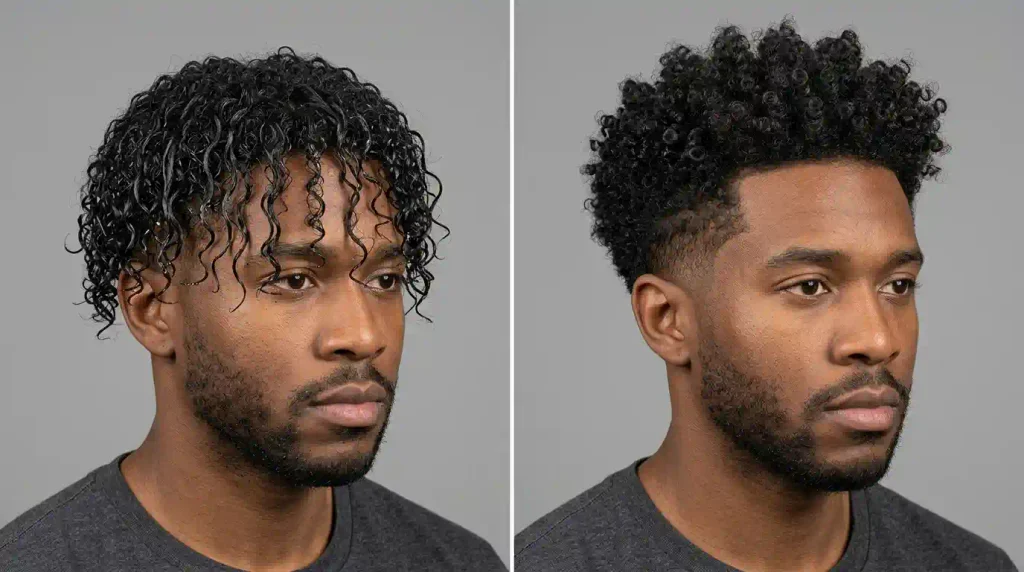
4.6 Curly Hair Before and After an Undercut Taper
Curly hair can produce strong upper volume.
The undercut reduces bulk around the lower sides and emphasizes the natural curls.
The finished dry shape may differ significantly from the wet cutting position.
4.7 Freshly Styled vs Naturally Unstyled Undercut Results
A professionally styled undercut may have additional volume, stronger hold, and clearly separated strands.
The unstyled version reveals how naturally the hair falls.
Both views are important when judging daily maintenance requirements.
4.8 What Changes Most After Getting an Undercut Taper?
Top Length, Volume and Hair Direction
The upper section becomes the dominant visual feature.
Undercut Height and Side Profile
The short sides change the outline of the head.
Disconnection Line and Fade Definition
The transition between lengths becomes more deliberate.
Overall Haircut Shape and Balance
A successful haircut coordinates the top, sides, crown, and neckline.

5. How to Choose the Right Undercut Taper Haircut
The most suitable undercut depends on hair type, density, natural growth direction, head shape, and styling preferences.
5.1 Best Undercut Taper Haircut for Your Hair Type
Straight Hair
Straight hair supports slick backs, side parts, and textured crops.
A controlled taper can maintain a clean outline while preserving enough upper length for styling.
Wavy Hair
Wavy hair creates natural movement.
A medium-length undercut can emphasize the waves while keeping the lower sides manageable.
Curly Hair
Curly hair provides volume above the shorter sections.
The barber should account for shrinkage and preserve the natural curl pattern.
Coily and Afro-Textured Hair
Coily hair works well with rounded tops, twists, and short textured undercuts.
The taper can refine the perimeter without changing the upper curl structure.
Thick and Dense Hair
Thick hair may require internal weight removal to control excessive bulk.
However, removing too much hair can disrupt the intended shape.
Fine or Thin Hair
Fine hair benefits from careful density preservation.
A softer undercut with less dramatic contrast may create a more balanced appearance.
5.2 Best Undercut Taper Haircut for Your Face Shape
Face-shape advice is a styling guideline rather than a strict rule.
Hair density, head shape, and personal preference remain important.
Round Face
A quiff or pompadour with controlled side volume may create a more elongated appearance.
Oval Face
Oval faces can accommodate many undercut variations.
Choose based on hair texture and maintenance preferences.
Square Face
A textured top or controlled slick back can complement a strong jawline.
Long or Oblong Face
Avoid excessive height if you do not want to emphasize facial length.
A side-swept top or moderate fringe may provide balance.
Heart-Shaped Face
A softer upper shape can complement a wider forehead and narrower jawline.
Diamond Face
Maintaining some volume near the upper sides may help balance prominent cheekbones.
5.3 Choosing an Undercut Based on Hair Density
Preserving Volume in Fine Hair
Avoid aggressive thinning or removing excessive upper side weight.
Removing Excess Weight From Thick Hair
Controlled internal layering can improve movement.
Controlling Natural Curls and Waves
Work with the natural pattern rather than attempting to force every section into one direction.
5.4 Undercut Taper for Different Hair Lengths
Short Hair
Short undercuts work with crops, crew cuts, and compact textured tops.
Medium-Length Hair
Medium-length hair supports slick backs, quiffs, side parts, and natural waves.
Long Hair
Long hair can cover the undercut when loose or reveal it when tied.
5.5 Best Undercut Taper Haircuts for Cowlicks and Double Crowns
Cowlicks can make hair grow in unexpected directions.
Ignoring them can cause sections to stand upright or separate awkwardly.
Understanding Single vs Double Crown Growth Patterns
A single crown typically has one dominant swirl.
A double crown has two distinct growth centers that may create opposing hair directions.
How a Front Cowlick Affects a Slick Back Undercut
A strong front cowlick can make the hair resist backward styling.
Additional length or adjusted layering may help.
Best Undercut Placement for a Double Crown
Avoid setting the undercut boundary without checking the crown’s growth pattern.
The barber may need to preserve more length around the upper rear section.
Why the Top Hair Sticks Up Near the Back
Short hair around a cowlick may naturally project outward.
How Much Length to Keep Around the Crown
Enough length should remain for the hair to settle naturally.
The appropriate amount varies by growth pattern and texture.
Styling an Undercut With Difficult Hair Growth Patterns
Style while the hair is damp and work with the existing growth direction when possible.
5.6 Choosing an Undercut Taper Based on Head Shape
Undercut Taper for a Flat Back of the Head
Maintaining controlled crown volume may create a rounder-looking rear silhouette.
Undercut Taper for a Prominent Crown
Softer layering can prevent excessive height around the crown.
Choosing Undercut Height for a Narrow Head
A lower undercut may preserve side width and create a more balanced appearance.
Balancing a Wide Head Shape With a Lower Undercut
A carefully positioned taper can control side volume without creating excessive contrast.
How the Parietal Ridge Changes the Side Profile
The parietal ridge influences where the upper head curves into the sides.
It should guide the placement of the undercut boundary.
When a High Undercut Makes the Top Look Too Narrow
Removing hair too far above the parietal ridge can leave an unexpectedly narrow upper section.
5.7 Undercut Taper Haircuts for Receding Hairlines
A side-swept top or textured crop may soften the appearance of a receding hairline.
However, an undercut does not treat hair loss.
Choose a style based on the remaining density rather than attempting to copy a hairstyle requiring much fuller hair.
5.8 Undercut Taper Haircuts for Men With Thinning Hair
A softer, partially blended undercut may be more suitable than a severe high undercut.
Avoid removing excessive density from the upper sections.
5.9 Undercut Taper Haircuts for Asian Hair
Some straight, dense hair types can create a strong upper silhouette above clipped sides.
Light layering and suitable styling can soften the transition.
Individual hair texture matters more than ethnicity alone.
5.10 Undercut Taper Haircuts for Black Men
Undercut tapers work with natural curls, coils, twists, locs, and other textured hairstyles.
The barber should consider shrinkage, hair density, and scalp comfort.
For longer natural styles, see our taper haircut dreads guide.
5.11 Undercut Taper Haircuts for Boys and Teenagers
Short or medium-length undercuts can be adapted for younger wearers.
A conservative taper may be easier to maintain and appropriate for school routines.
5.12 Undercut Taper Haircuts for Professional Settings
A low tapered undercut with a side part or controlled slick back can suit many workplaces.
The goal is a balanced shape rather than maximum contrast.
5.13 Can Women Wear an Undercut Taper Haircut?
Yes. Undercut tapers can be adapted for different hair lengths and styling preferences.
Short Tapered Undercuts for Women
A short upper crop can be combined with a tapered lower perimeter.
Long Hair With Hidden Undercut
Long hair may conceal the shorter section when worn loose.
Curly and Coily Women’s Undercut Styles
Natural curls and coils can create volume above shorter tapered sides.
5.14 Choosing an Undercut Taper Based on Your Lifestyle
Daily Styling Time
Short textured crops generally require less styling than long slick backs or pompadours.
Barber Visit Frequency
A sharp skin fade may require more frequent appointments.
Workplace and Casual Styling
Medium and long tops can often be styled differently for professional and casual settings.
Low-Maintenance vs High-Maintenance Styles
Choose a softly blended undercut if you prefer an easier grow-out.
5.15 Who Should Think Twice Before Getting an Undercut?
An undercut may be inconvenient if you dislike visible grow-out lines, rarely visit a barber, or want the same hairstyle to look neat without styling.
People with significant crown cowlicks or limited upper hair density should discuss realistic results before cutting.
5.16 Undercut Taper Hairstyle Selection Chart
Best Styles by Hair Type and Length
| Hair type | Recommended style |
| Straight | Slick back or side part |
| Wavy | Medium undercut |
| Curly | Curly top with taper |
| Coily | Afro or twist-top undercut |
| Fine | Soft blended undercut |
| Thick | Layered undercut |
Best Styles by Face and Head Shape
Choose the top volume and undercut height that produce your preferred facial and head proportions.
Best Styles by Taper Height and Contrast
Low tapers create subtle contrast, while high tapers and skin fades create stronger definition.
Best Styles by Styling Time and Maintenance
A short crop is usually easier to maintain than a long pompadour or highly disconnected undercut.
6. Undercut Taper Haircut Length, Shape and Proportions
Hair length determines how visible the undercut becomes and how much styling flexibility the top provides.
6.1 How Long Should Your Hair Be for an Undercut Taper?
Many undercut styles work well with approximately two to six inches on top.
A short crop may need less, while a man bun requires significantly more.
The best length depends on hair texture and styling direction.
6.2 Short vs Medium vs Long Undercut Tops
Short tops create compact styles.
Medium tops provide flexibility for quiffs and slick backs.
Long tops support flowing hair, man buns, and hidden undercuts.
6.3 How Short Should the Sides Be?
The sides may be clipped with a short guard or blended gradually.
The correct length depends on whether the haircut should be disconnected or softly blended.
6.4 Where Should the Undercut Line Start?
The boundary should be planned around the head’s natural shape.
A barber may use the upper temple area and parietal ridge as reference points.
6.5 How the Parietal Ridge Affects Undercut Placement
The parietal ridge helps determine how much upper width remains after cutting.
Placing the undercut too high can alter the hairstyle’s silhouette.
6.6 Understanding the Length Difference Between Top and Sides
A larger length difference produces stronger contrast.
A smaller difference creates a softer, more connected appearance.
6.7 How Hair Growth Direction Affects an Undercut
The natural direction of hair growth influences whether the top falls backward, forward, or sideways.
Choosing a compatible style reduces daily effort.
6.8 How to Balance Crown Volume and Side Length
The crown should connect visually with the upper hairstyle.
Removing too much rear side weight can create an uneven-looking silhouette.
6.9 How to Choose Between Connected and Disconnected Sides
Choose connected sides for a softer transition.
Choose disconnected sides when you want the top-to-side length difference to remain prominent.
6.10 Wet vs Dry Undercut Taper Haircut: Why the Final Shape Changes
How Wet Hair Changes Top Length and Appearance
Wet hair may appear longer or flatter because it is stretched or weighed down.
Curly and Coily Hair Shrinkage After Drying
Curly and coily hair can become visibly shorter when it returns to its natural dry shape.
Why the Undercut Boundary Looks Different When Dry
Drying changes hair volume and how the longer top rests over the shorter sides.
How to Check the Top Length Before the Final Cut
Ask the barber to assess the hairstyle in its natural dry position.
Wet vs Dry Hair Length Comparison Chart
| Hair condition | Appearance | Important consideration |
| Wet straight hair | Flat and stretched | Check dry resting shape |
| Dry straight hair | Natural direction visible | Evaluate top coverage |
| Wet curly hair | Longer-looking curls | Allow for shrinkage |
| Dry curly hair | More compact volume | Check final length |
| Dry coily hair | Defined natural contraction | Preserve appropriate length |
6.11 Hair Length and Guard Number Comparison Chart
Top Hair Length Requirements by Hairstyle
| Hairstyle | Approximate top length |
| Short crop | 1–2 inches |
| Textured fringe | 2–4 inches |
| Quiff | 3–5 inches |
| Slick back | 3–6 inches |
| Pompadour | 4–6 inches or more |
| Man bun | Enough length to tie comfortably |
Side Length and Clipper Guard Comparison
Common clipper guards include #1 at approximately 1/8 inch, #2 at 1/4 inch, #3 at 3/8 inch, and #4 at 1/2 inch.
Measurements may vary slightly between clipper systems.
Choosing the Right Length for a Natural or Disconnected Undercut
A disconnected undercut generally needs a clear length difference.
A natural-looking undercut usually benefits from a smaller difference or selective blending.
7. How Barbers Cut an Undercut Taper Haircut
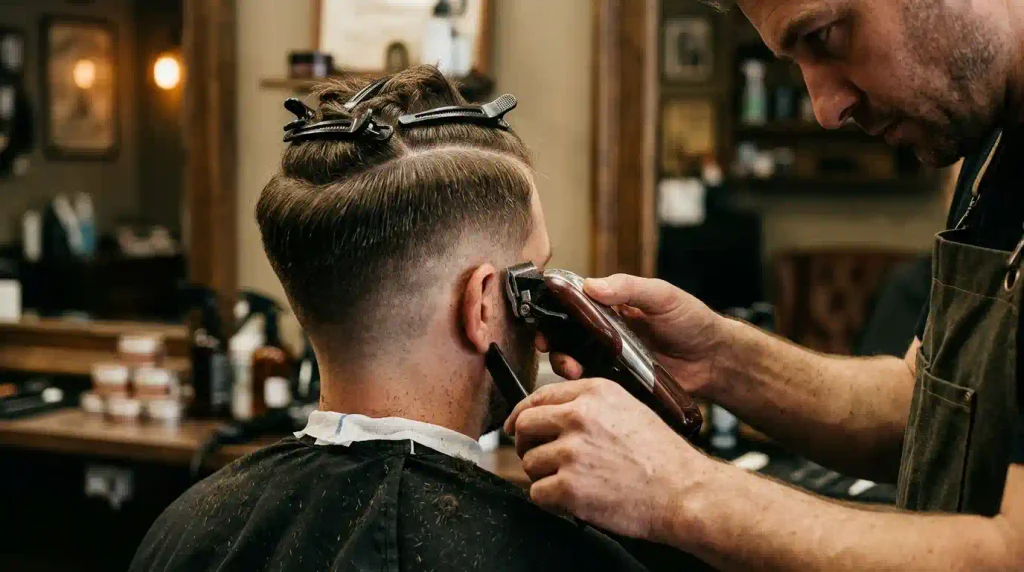
Creating a good undercut requires accurate sectioning, controlled clipper cutting, and a deliberate plan for the transition between the top and sides.
7.1 Step-by-Step Undercut Taper Haircut Process
Step 1: Hair Consultation and Style Selection
The barber evaluates hair type, density, growth patterns, and desired styling.
Step 2: Choosing the Taper Height and Top Length
The barber confirms the undercut height and how much hair will remain on top.
Step 3: Sectioning and Separating the Hair on Top
Sectioning clips hold the longer upper hair away from the shorter lower section.
Step 4: Establishing the Undercut Boundary
The barber establishes the intended disconnection or blending line.
Step 5: Cutting the Sides and Back With Clippers
Clippers remove the lower hair to the selected starting length.
Step 6: Creating the Taper Fade Gradient
Different guard lengths create a smooth transition near the perimeter.
Step 7: Blending or Preserving the Disconnection
The barber either softens the boundary or maintains the deliberate contrast.
Step 8: Cutting and Texturizing the Longer Top
Scissors establish the final upper length and create suitable movement.
Step 9: Refining the Hairline, Sideburns and Neckline
Detailing improves the finished outline.
Step 10: Drying, Styling and Checking the Final Shape
The barber evaluates symmetry, balance, and natural hair direction.
7.2 Cutting Techniques Used for Undercut Tapers
Clipper-Over-Comb Technique
Clipper-over-comb cutting helps refine transitions through shorter hair.
Scissor-Over-Comb Technique
Scissor-over-comb work allows controlled shaping near the upper sides.
Point Cutting and Texturizing
Point cutting introduces separation and softens blunt ends.
Creating a Clean Disconnection Line
Accurate sectioning prevents the barber from unintentionally cutting into the longer top.
Blending the Upper Sides Into the Taper
A gradual blend can soften the undercut without eliminating the intended contrast.
Razor and Detail-Trimmer Finishing
Detail trimmers and razors refine the perimeter when suitable for the client’s skin.
7.3 Undercut Taper Haircut Clipper Guard Numbers
Understanding #0, #0.5, #1, #2, #3 and #4 Guards
Different guards control the approximate cutting length.
#0 and #0.5 settings vary by clipper system.
Best Guard Lengths for Low Taper Undercuts
A low taper may use short guards around the sideburns and neckline while preserving additional hair above.
Best Guard Lengths for Mid and High Undercuts
Mid and high tapers may use similar guards but with a different blend placement.
Skin-Close vs Guarded Undercut Finishes
Skin-close finishes create stronger contrast.
Guarded finishes retain visible hair and may be more comfortable for sensitive skin.
7.4 Essential Barbering Tools for an Undercut Taper
Clippers and Detail Trimmers
Clippers create the main short sections, while trimmers refine the edges.
Cutting Scissors and Texturizing Shears
Scissors shape the upper hair.
Texturizing shears can remove selected weight when appropriate.
Straight Razor and Foil Shaver
These tools create very close finishes but require careful skin assessment.
Sectioning Clips and Barber Combs
Sectioning tools keep the long and short areas separated during cutting.
Blow Dryer and Styling Brushes
A blow dryer and suitable brush help reveal the final haircut shape.
7.5 Cutting an Undercut on Straight vs Curly Hair
Straight hair often reveals the undercut boundary clearly.
Curly hair requires consideration of natural shrinkage and uneven curl patterns.
The barber should assess the dry result before making final adjustments.
7.6 Common Technical Mistakes During an Undercut Taper
Common mistakes include setting the boundary too high, accidentally cutting into the top section, over-thinning fine hair, and removing too much side weight.
A careful consultation and final dry inspection can reduce these problems.
8. How to Ask Your Barber for an Undercut Taper Haircut
Clear communication is essential because the term undercut taper can describe several different cutting styles.
8.1 What Exactly Should You Tell Your Barber?
Explain the desired top hairstyle, undercut height, taper placement, and whether the transition should remain disconnected.
Reference photographs help clarify the result.
8.2 Standard Undercut Taper Barber Request Script
You can say:
“I want a low tapered undercut with longer hair on top. Please keep the undercut boundary below the upper head curve, taper the temples and neckline gradually, and preserve enough length on top for a natural slick back. I want a soft transition rather than a harsh high skin fade.”
Adjust the wording according to your preferred style.
8.3 How to Request a Low, Mid or High Undercut Taper
Show the barber where you want the shortest hair to begin.
Do not rely entirely on the labels low, mid, or high.
8.4 How to Explain the Undercut Height and Disconnection
Specify whether you want the top and sides visibly separated or softly connected.
The barber should confirm the boundary before cutting.
8.5 How to Describe the Top Length and Styling Direction
Explain whether the top should move backward, sideways, upward, or forward.
Mention the desired dry length.
8.6 How to Request Specific Undercut Styles
Slick Back and Brush-Back Undercuts
Ask for enough upper length to direct the hair backward.
Textured Crop and Fringe Undercuts
Request visible texture and controlled front length.
Quiff and Pompadour Undercuts
Ask for sufficient front volume and layering.
Curly and Wavy Undercuts
Ask the barber to preserve the natural pattern and account for shrinkage.
Long Hair and Man Bun Undercuts
Discuss which sections should remain long enough for comfortable tying.
8.7 How to Use Haircut Reference Photos Effectively
Front View
Shows the upper shape and hairline.
Side View
Shows undercut height and taper placement.
Back View
Shows neckline shaping and crown balance.
8.8 Questions to Ask Before Your Barber Starts Cutting
Ask whether your hair has enough length for the desired style, where the boundary will be placed, and how the haircut will grow out.
8.9 Common Misunderstandings Between Clients and Barbers
Terms such as low taper, undercut fade, and disconnected undercut may be interpreted differently.
Reference photographs and specific guard-length discussions help avoid confusion.
8.10 Undercut Taper Haircut Consultation Checklist
Confirm the undercut height, top length, fade placement, neckline shape, and styling direction.
8.11 How to Check Your Undercut Taper Before Leaving the Barbershop
Check the Undercut Height on Both Sides
Compare the position of the undercut boundary.
Inspect the Disconnection Line for Consistency
Make sure the line follows the agreed shape.
Check the Back and Tapered Neckline
Use a mirror to examine the rear outline.
Confirm the Top Length When Dry
Check the resting length rather than judging only wet hair.
Inspect the Fade Blending and Haircut Symmetry
Look for unwanted shelves or uneven transitions.
Test the Hairstyle Without Excessive Product
The haircut should maintain a reasonable natural shape.
Ask Your Barber to Demonstrate Home Styling
Watch how the barber uses airflow, brushes, and styling products.
9. How to Style an Undercut Taper Haircut at Home
An undercut can be styled in several directions depending on top length and hair texture.
9.1 Step-by-Step Daily Undercut Styling Routine
Step 1: Start With Clean, Slightly Damp Hair
Damp hair is easier to redirect.
Avoid excessive rough towel drying.
Step 2: Apply a Suitable Pre-Styling Product
Use lightweight mousse, spray, or styling cream based on your hair type.
Step 3: Blow-Dry the Hair Into Shape
Direct the roots toward the intended hairstyle.
Use moderate or low heat.
Step 4: Create Volume, Texture or a Smooth Finish
Use fingers for natural texture or a brush for a controlled finish.
Step 5: Set the Hairstyle With a Finishing Product
Apply a small amount of clay, paste, pomade, or flexible-hold product.
9.2 How to Style a Slicked-Back Undercut
Apply a suitable styling product to damp hair.
Comb backward and allow the hair to settle naturally.
Use a blow dryer for additional control if needed.
9.3 How to Style a Textured Undercut
Use your fingers to separate small sections.
A lightweight matte product can emphasize texture without creating excessive stiffness.
9.4 How to Style a Side-Part Undercut
Establish the natural parting direction.
Comb the upper hair to one side and use a suitable styling product for hold.
9.5 How to Style an Undercut Quiff
Lift the front hair while blow-drying.
Direct the roots upward and slightly backward.
Finish with matte clay or styling paste.
9.6 How to Style a Pompadour Undercut
Blow-dry the front upward to create volume.
Use a brush to guide the upper shape backward.
Apply enough product to maintain the height without making the hair excessively rigid.
9.7 How to Style a Curly Undercut
Apply curl cream or lightweight gel while the hair is damp.
Scrunch gently and allow the curls to air-dry or use a diffuser.
9.8 How to Style a Messy Undercut
Arrange the upper hair in slightly irregular directions.
Use minimal product to preserve natural movement.
9.9 How to Style a Long Hair Undercut or Man Bun
Gather the longer upper hair into a loose tie.
Avoid excessive tension around the hairline.
9.10 Visible vs Hidden Undercut Taper: How Styling Changes the Appearance
How to Hide an Undercut With Longer Hair
Allow the upper hair to fall naturally over the shorter sides.
How to Expose the Undercut With a Slick Back
Brush the hair backward to reveal the undercut boundary.
Wearing a Side-Swept Undercut With Partial Coverage
Direct the top diagonally to cover part of one side.
Hidden Undercut With a Man Bun or Top Knot
A tied hairstyle typically reveals the shortened lower section.
Wearing the hair loose may conceal it.
Switching Between Professional and Casual Styles
Style the hair smoothly for a polished appearance or loosely for a relaxed finish.
Which Hair Length Offers the Most Styling Flexibility?
Medium and longer tops generally provide more options for concealing or exposing the undercut.
9.11 How to Style an Undercut Without a Blow Dryer
Arrange damp hair using your fingers or a comb.
Allow it to air-dry in the intended direction.
9.12 How to Add Volume Without Excessive Product
Use gentle root-directed drying and lightweight mousse.
Avoid applying heavy wax directly to the roots.
9.13 How to Maintain an Undercut Taper During Everyday Activities
Best Undercut Tapers for Men Who Wear Glasses
A controlled temple taper can reduce excess hair around eyeglass frames.
Preventing Hair Discomfort Around Eyeglass Frames
Keep bulky side hair from pressing unnecessarily beneath the frame arms.
How to Restyle an Undercut After Wearing a Helmet
Lightly dampen the hair and redirect the roots.
Managing Hair After Working Out
Allow sweat to dry or cleanse as needed before restyling.
Styling an Undercut in Hot and Humid Weather
Use lightweight products and avoid excessive buildup.
Preventing Flat Hair After Wearing a Cap
Restore volume with gentle finger styling or light blow-drying.
Quick Undercut Refresh Routine for Busy Days
Dampen the top, redirect the hair, and use a small amount of finishing product.
10. Best Styling Products and Haircare Tools for an Undercut Taper
The right products depend on hair density, texture, and desired finish.
10.1 Matte Texture Clay
Matte clay creates separation and a relatively dry finish.
It works well for textured crops and quiffs.
10.2 Molding Paste
Molding paste provides flexible control.
It is suitable for natural-looking brush-backs and textured tops.
10.3 Lightweight Styling Cream
Styling cream can help control flyaways while preserving movement.
It works well for medium-length hair.
10.4 Texture Powder
Texture powder provides root lift and separation.
Use it sparingly to avoid residue.
10.5 Sea Salt Spray
Sea salt spray can emphasize natural waves and create a rougher texture.
Frequent use may feel drying on some hair types.
10.6 Pomade and Hair Wax
Pomade is useful for smooth or glossy styles.
Wax can provide separation and hold.
Choose based on the desired finish.
10.7 Hydrating Argan Oil
Argan oil may help some dry hair types feel smoother.
Apply a very small amount to avoid weighing down fine hair.
10.8 Clarifying Shampoo
Clarifying shampoo can help remove accumulated styling products.
Use according to hair and scalp needs rather than automatically every day.
10.9 Hydrating Conditioner
Conditioner helps maintain softness and manageability.
Curly and dry hair may require more conditioning than fine, oily hair.
10.10 Blow Dryer and Styling Brushes
A blow dryer helps direct hair movement.
Round and vent brushes provide different levels of lift and control.
10.11 Choosing Products Based on Hair Type and Desired Finish
Matte vs Shiny Finish
Matte products create a natural-looking surface.
Shiny products produce a more polished appearance.
Flexible vs Strong Hold
Flexible hold allows movement.
Strong hold supports structured styles.
Lightweight vs Heavy Styling Products
Fine hair generally benefits from lighter formulas.
Thicker hair may tolerate heavier products.
10.12 Undercut Taper Styling Product Comparison Chart
| Product | Main purpose | Suitable style |
| Matte clay | Separation | Textured crop |
| Pomade | Smooth control | Slick back |
| Styling paste | Flexible hold | Brush-back |
| Texture powder | Root lift | Quiff |
| Sea salt spray | Wave definition | Wavy undercut |
| Curl cream | Curl control | Curly undercut |
| Styling cream | Soft control | Medium-length top |
| Mousse | Volume | Pompadour |
10.13 Common Product Mistakes to Avoid
Avoid excessive product application, high heat, and repeatedly combing hair after strong-hold products have set.
Choose a routine that complements the haircut’s natural shape.
11. Undercut Taper Haircut Maintenance and Grow-Out Guide
An undercut’s appearance changes as the shorter sides grow.
Maintenance depends on fade sharpness, top length, and personal preference.
11.1 How Often Should You Trim an Undercut Taper?
Many men refresh their haircut approximately every three to six weeks.
Sharper fades may require more frequent appointments.
11.2 How Often Should You Refresh the Taper Fade?
A defined skin-close taper may need attention every two to three weeks.
A softer guarded taper can often grow longer between visits.
11.3 Daily vs Weekly Haircare Routine
Daily care focuses on styling and basic cleanliness.
Weekly care includes washing, conditioning, and checking for product buildup.
11.4 How to Wash and Condition an Undercut
Use shampoo appropriate for your scalp.
Apply conditioner according to hair type and length.
Avoid unnecessary aggressive rubbing.
11.5 Maintaining the Disconnection Line
Ask the barber to preserve the original boundary during touch-ups.
Repeatedly cutting above it can change the haircut’s proportions.
11.6 Keeping the Sideburns and Neckline Clean
Maintain the established outline without unnecessarily moving the hairline.
11.7 Maintaining a Slick Back or Textured Top
Use lightweight products and avoid excessive heat.
Regular reshaping helps maintain the desired silhouette.
11.8 How to Maintain Curly and Wavy Undercuts
Use curl-friendly conditioning and gentle drying.
Avoid unnecessary manipulation after the curls have set.
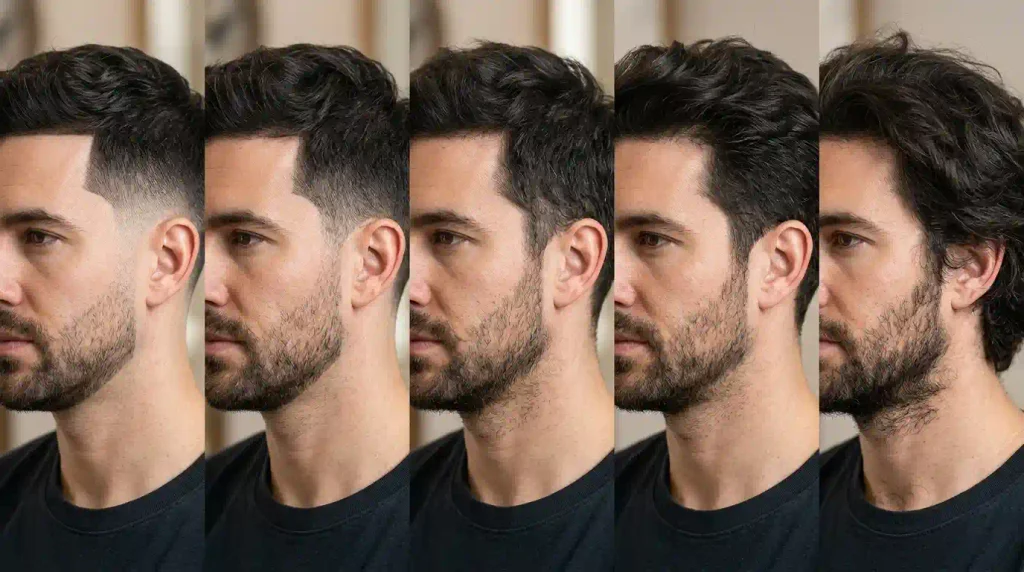
11.9 Undercut Taper Haircut After 1, 2, 4 and 8 Weeks
Freshly Cut Undercut Taper Appearance
The perimeter is sharp, and the upper-to-lower contrast is clear.
One-Week Hair Growth and Fade Changes
The shortest areas begin to soften slightly.
Two-Week Undercut Boundary Changes
The undercut remains visible, but the fade may lose some definition.
Four-Week Side Regrowth and Top Weight
The sides become fuller, and the top may begin to feel heavier.
Eight-Week Undercut Grow-Out Appearance
The sides may develop enough length to create a softer transition, although the original disconnection can remain visible.
When to Refresh the Taper vs Reshape the Top
Refresh the taper when the perimeter loses definition.
Reshape the top when the length or volume no longer supports the intended hairstyle.
11.10 How to Grow Out an Undercut Taper
Allow the shorter sides to gain length before attempting to fully reconnect them with the top.
A barber can gradually reshape the transition.
11.11 Transitioning From an Undercut to a Regular Taper
A regular taper generally requires a more connected relationship between the top and sides.
The transition may take several haircut cycles, depending on the original length difference.
11.12 Managing Uneven Lengths During the Grow-Out
Use side-sweeping, controlled brush-back styling, or suitable products to manage temporary differences.
Avoid repeatedly removing the growing side hair.
11.13 How to Prevent the Undercut From Becoming Too High
Understanding the Original Undercut Boundary
Identify the intended height before each appointment.
Why Repeated Touch-Ups Can Change Undercut Height
Repeatedly trimming above the original line gradually increases the undercut height.
How to Preserve the Same Undercut Placement
Ask the barber to follow the existing boundary.
Using Previous Haircut Photos for Consistency
Reference photographs help preserve the same proportions.
What to Do When an Undercut Has Already Been Cut Too High
Allow the affected area to regrow before attempting a lower undercut.
11.14 Undercut Taper Haircuts for Sensitive Skin and Razor Bumps
Skin-Close vs Guarded Undercut for Sensitive Skin
A guarded finish leaves short visible hair and may be more comfortable for people who experience irritation from close shaving.
Why Razor Bumps Develop Around the Neckline
Razor bumps can occur when shaved hair grows back into the skin.
Preventing Irritation After a Close Fade
Avoid unnecessary repeated razor passes and shaving against the natural hair growth direction.
How to Care for an Irritated Scalp After a Haircut
Keep the affected area clean and avoid aggressive shaving over irritated skin.
When to Avoid Skin-Close Shaving
Consider a guarded finish if close shaving repeatedly causes bumps, inflammation, or discomfort.
When to Consult a Dermatologist
Persistent painful bumps, signs of infection, or repeated irritation should be assessed by a dermatologist.
The American Academy of Dermatology offers practical advice for preventing razor bumps.
11.15 Undercut Taper Maintenance Schedule and Checklist
| Frequency | Recommended maintenance |
| Daily | Basic styling and cleanliness |
| As needed | Wash and condition |
| Weekly | Check buildup and hair dryness |
| Every 2–4 weeks | Refresh a sharp fade if desired |
| Every 3–6 weeks | Reshape the upper hairstyle |
| Every appointment | Confirm undercut height and boundary |
12. Common Undercut Taper Haircut Problems, Mistakes and Solutions
Understanding common haircut mistakes can help you avoid unnecessary corrections.
12.1 Cutting the Undercut Too High
A high undercut can leave the upper section looking narrow.
Regrowth is often the best correction.
12.2 Creating an Unwanted Disconnection
A sharp boundary may appear when the barber removes too much hair near the upper sides.
A professional may be able to soften the contrast if enough length remains.
12.3 Blending Away the Undercut Shape
Excessive blending can eliminate the intended undercut contrast.
Clear barber instructions help preserve the design.
12.4 Choosing the Wrong Taper Height
The wrong fade height may change the haircut’s overall silhouette.
Use reference photographs before cutting.
12.5 Cutting the Hair on Top Too Short
A top that is too short may not support the intended slick back or quiff.
Growing it out is usually necessary.
12.6 Removing Too Much Weight From Fine Hair
Excessive thinning can create gaps and reduce apparent fullness.
Avoid further aggressive texturizing.
12.7 Leaving Thick Hair Too Heavy
Thick hair may become bulky when the upper sections lack suitable layering.
Controlled weight removal can improve movement.
12.8 Why Does an Undercut Look Flat?
Flatness may result from excessive product, insufficient root lift, or an unsuitable top length.
Lightweight styling and proper cutting may help.
12.9 How to Fix Uneven Fade Blending
A barber may be able to refine the fade gradient.
Avoid major DIY corrections.
12.10 Managing Curly Hair Shrinkage and Puffiness
Use appropriate moisture and curl-definition products.
A barber experienced with curly hair can adjust the dry shape.
12.11 Why Does My Undercut Taper Look Different After the First Wash?
Barbershop Styling vs Natural Hair Texture
Professional blow-drying can create extra volume and direction.
Why the Top Hair Falls Differently After Washing
Removing products allows hair to return toward its natural growth pattern.
How Product Removal Changes Undercut Volume
A slick back or quiff may become flatter without styling support.
Why the Disconnection Line Becomes More Visible
The upper hair may move away from the sides after washing, exposing the undercut boundary.
How to Recreate the Barber’s Finish at Home
Repeat the drying direction and product application demonstrated at the barbershop.
When the Problem Is the Haircut Instead of the Product
If the hair cannot maintain a reasonable shape without extensive styling, the cutting technique may need adjustment.
12.12 What to Do When the Undercut Grows Out Awkwardly
Allow the sides to gain length and use temporary styling to manage uneven sections.
12.13 When Should You Return to the Barber for Corrections?
Return when the haircut has clear technical problems such as uneven blending, major asymmetry, or an unwanted disconnection.
13. Undercut Taper Haircut Cost and Professional Barber Services
Haircut prices vary considerably across the United States.
The final cost depends on location, barber experience, service complexity, and optional grooming treatments.
13.1 How Much Does an Undercut Taper Haircut Cost in the USA?
In 2026, many US barbershops charge approximately 30–65 for standard men’s haircuts and fades.
A detailed undercut taper involving extensive scissor work, precision blending, or beard shaping may cost more.
These are general budgeting ranges rather than fixed national prices.
13.2 What Factors Affect the Haircut Price?
Factors include the city, barbershop reputation, barber experience, cutting time, and additional services.
13.3 Basic Undercut vs Detailed Taper Fade Pricing
| Service | Illustrative US price range |
| Basic men’s haircut | 25–50 |
| Standard undercut or taper | 30–65 |
| Detailed undercut taper fade | 40–80 |
| Premium haircut and styling | 60–100+ |
| Haircut with beard service | 50–90+ |
13.4 Monthly and Annual Maintenance Costs
Haircut Expenses Based on Appointment Frequency
At $40 per haircut, appointments every four weeks would cost approximately $520 annually.
Appointments every six weeks would cost approximately $347 annually.
Low-Maintenance vs High-Maintenance Undercut Budget
A soft taper can often be maintained less frequently than a skin-close disconnected undercut.
How to Reduce Maintenance Costs Without Losing the Style
Choose a softer neckline, maintain a manageable upper length, and avoid unnecessary extra services.
13.5 Cost of Styling Products and Haircare
Product expenses depend on the styling routine.
A simple routine using one or two products may cost less than a multi-step routine involving several specialized products.
13.6 Professional Barber vs DIY Undercut
DIY cutting may save money but requires accurate sectioning and blending.
Professional barbering is generally preferable for complex undercuts and significant hairstyle changes.
13.7 How to Choose a Barber Experienced With Undercut Tapers
Review previous haircut photographs showing similar hair types.
Look for accurate disconnection lines, controlled fade gradients, and balanced side profiles.
14. Frequently Asked Questions About Undercut Taper Haircuts
14.1 Is an Undercut Taper the Same as an Undercut Fade?
Not exactly; a tapered undercut may have localized blending, while an undercut fade can involve a larger faded area.
14.2 Can an Undercut Be Combined With a Low Taper?
Yes, a low taper can refine the temples and neckline beneath a longer undercut top.
14.3 Does an Undercut Taper Work With Curly Hair?
Yes, it can emphasize natural curl volume while keeping the sides controlled.
14.4 Is an Undercut Taper Suitable for Thin Hair?
It can work, but conservative cutting and careful density preservation are important.
14.5 Can an Undercut Taper Work With a Receding Hairline?
Yes, although the top length and styling should suit the remaining hair density.
14.6 Is an Undercut Taper Haircut High-Maintenance?
It depends on the style; sharp disconnected fades usually need more frequent attention than softly blended cuts.
14.7 How Long Does an Undercut Taper Last Before a Trim?
Many men schedule maintenance every two to six weeks, depending on hair growth and desired sharpness.
14.8 What Is a Polish Undercut?
It is a loosely used term for a softer, more classically blended undercut; exact definitions vary between barbers.
14.9 Is an Undercut Taper Haircut Professional?
Yes, a low tapered undercut with a neat side part or slick back can suit many workplaces.
14.10 Are Undercut Haircuts Still in Style in 2026?
Yes, undercut variations remain recognizable options in contemporary men’s grooming.
14.11 Can You Get an Undercut Taper With a Beard?
Yes, the sideburn taper can blend into the beard.
14.12 Can You Change an Undercut Into a Regular Taper?
Yes, although the shorter sides may need time to grow before they can be fully blended.
14.13 What Is the Difference Between a Two-Block and an Undercut?
A two-block generally uses distinct upper and lower hair sections, while an undercut emphasizes the length contrast between the top and sides.
14.14 Can You Get an Undercut Without a Skin Fade?
Yes, an undercut can use guarded sides, a shadow fade, or a softly tapered perimeter.
15. Final Thoughts: Choosing Your Ideal Undercut Taper Haircut
The undercut taper haircut offers a flexible combination of contrast, clean edges, and modern styling. Whether you prefer a subtle low taper, classic slick back, textured crop, curly undercut, or bold disconnected fade, the best result comes from choosing a haircut that complements your natural hair texture, head shape, and daily routine.
15.1 Best Undercut Tapers for a Clean, Professional Appearance
Choose a low tapered undercut with a controlled side part, brush-back, or slicked-back top.
15.2 Best Undercut Tapers for a Modern, Bold Appearance
Consider a high taper, textured quiff, disconnected undercut, or creative fade design.
15.3 Best Low-Maintenance Undercut Taper Styles
A short textured crop or soft blended undercut is a practical choice for easier daily styling.
15.4 Final Barber Consultation and Styling Checklist
Before your appointment, select reference photos, choose your preferred undercut height, and decide whether you want a connected, blended, or disconnected transition. Discuss your hair growth patterns and ask the barber to check the finished shape when dry. Save your favorite styles from this guide and use them during your next consultation to achieve a balanced haircut that looks good and remains manageable as it grows.