
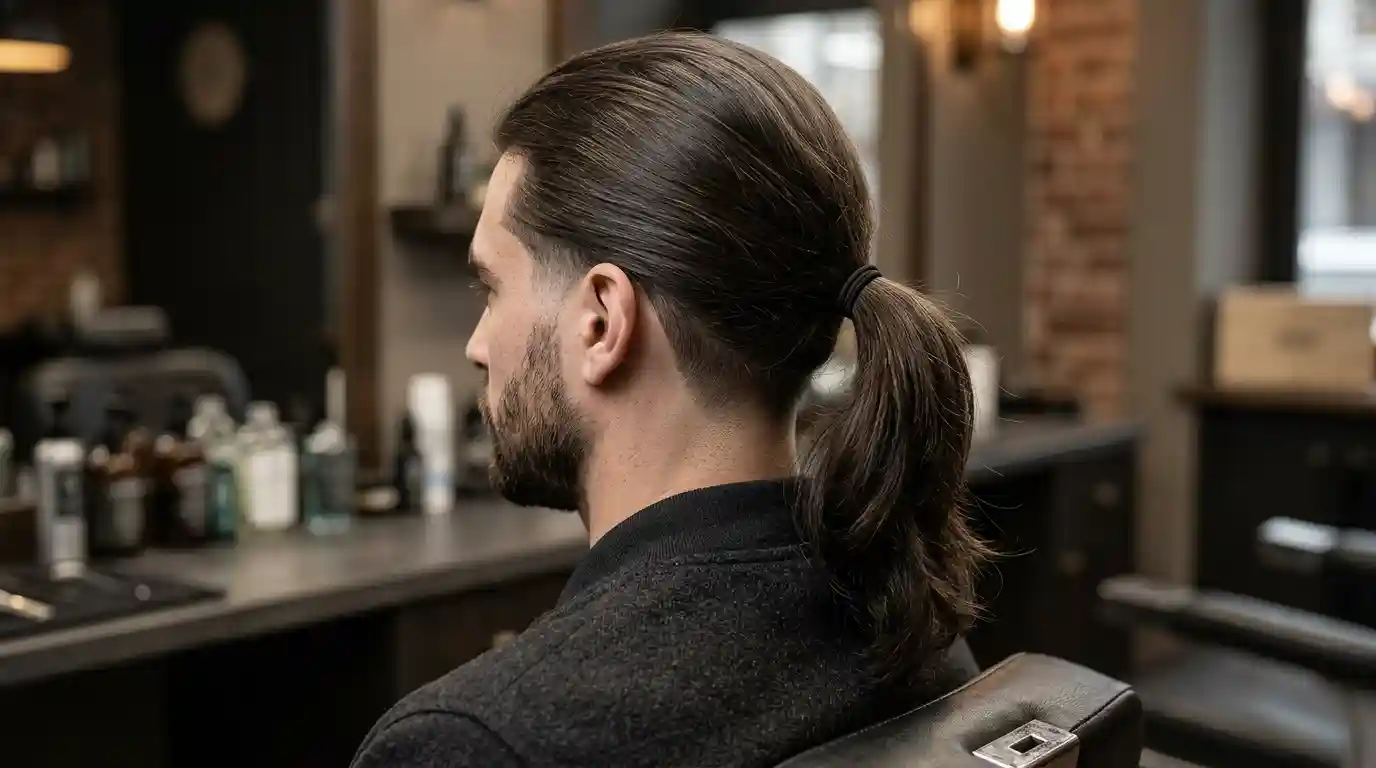
Ponytail Taper Haircut: Sides & Back Style Ideas
A taper haircut ponytail combines the clean, gradually shortened sides of a taper haircut with longer hair tied into a ponytail at the back or crown. This versatile hairstyle gives men the freedom to wear their hair neatly secured, loosely flowing, braided, or styled into a man bun while maintaining a sharp, modern appearance around the temples, sideburns, and neckline. Whether you prefer a subtle low taper ponytail, a bold high fade, a curly ponytail with tapered sides, or a braided undercut, the right combination can complement almost any hair texture and personal style.
Unlike a traditional ponytail, a tapered ponytail creates visible contrast between the longer upper hair and carefully blended sides. The haircut can also look different when the hair is untied, making taper height, ponytail thickness, and neckline design important decisions before visiting your barber.
This complete guide explores 80+ ponytail and taper hairstyle variations, front, side, and back views, hair-length requirements, clipper guards, barber instructions, styling techniques, U.S. haircut costs, maintenance schedules, and ways to prevent unnecessary tension and hair breakage.
Table of Contents
- Taper Haircut Ponytail: Quick Overview
- Best Taper Haircut Ponytail Styles for Men
- Modern Taper Haircut Ponytail Styles for Women
- Taper Haircut Ponytail: Front, Side, and Back Views
- How a Taper Ponytail Looks Tied vs. Untied
- Understanding Taper Haircut Ponytail Styles
- How to Choose the Right Taper Haircut Ponytail
- Taper Haircut Ponytail Length and Clipper Guard Guide
- How to Grow Your Hair for a Taper Ponytail
- How to Grow Out or Change a Taper Ponytail Haircut
- How to Ask Your Barber for a Taper Haircut Ponytail
- How Much Does a Taper Haircut Ponytail Cost in the USA?
- How to Tie a Taper Haircut Ponytail Step by Step
- Best Hair Products and Accessories for Taper Ponytails
- How to Maintain a Taper Haircut Ponytail
- Taper Haircut Ponytail Growth Timeline: Week by Week
- Ponytail Hair Health and Damage Prevention
- Taper Haircut Ponytail vs. Similar Hairstyles
- Common Taper Haircut Ponytail Mistakes and How to Fix Them
- History, Culture, and Modern Influence of Men’s Taper Ponytails
- Frequently Asked Questions About Taper Haircut Ponytails
- Final Thoughts: Choosing the Best Taper Haircut Ponytail
Taper Haircut Ponytail: Quick Overview
What Is a Taper Haircut Ponytail?
A taper haircut ponytail is a hairstyle that combines long hair gathered into a ponytail with gradually shortened hair around the temples, sideburns, or neckline.
The most recognizable variation features a low taper around the lower sides while preserving enough length through the top and back to secure the hair.
The taper creates a clean transition from shorter to longer hair. Unlike a disconnected undercut, a conventional taper usually preserves more of the surrounding hair, making it easier to wear the hairstyle both tied and untied.
The ponytail can sit low near the nape, at a medium height behind the crown, or higher toward the upper back of the head.
Depending on the haircut, the ponytail may be straight, wavy, curly, braided, twisted, or formed from locs.
Explore additional haircut variations at Taper Haircut Hub for ideas that combine modern tapering with different hair lengths and textures.
Why Are Ponytails with Taper Haircuts Popular?
Taper ponytails combine the practicality of tied-back hair with the detailed appearance of a modern barbershop haircut.
Men growing longer hair often struggle with bulky sections around the ears and neckline. A subtle taper removes some of this weight without requiring them to cut the entire hairstyle short.
Another advantage is versatility. The same haircut can appear polished when tied tightly enough to hold securely, relaxed when worn in a loose low ponytail, or more expressive when combined with braids or shaved designs.
Tapered ponytails also work with different personal styles. Straight hair creates a sleek silhouette, natural curls add volume, and longer coily hair can be styled into an Afro puff or loosely secured ponytail.
The increasing variety of men’s long hairstyles has made the taper ponytail a useful option for combining controlled edges with longer hair.
How a Taper Changes a Traditional Men’s Ponytail
A traditional ponytail normally leaves most of the hair around the sides and back at longer lengths.
When the hair is pulled backward, those strands become part of the ponytail or remain tucked beneath the surrounding hair.
Adding a taper removes some length around the lower sides, creating a neater hairline and sharper side profile.
A low taper produces a subtle result because the shortest area remains close to the temples and nape.
A mid or high taper removes more hair from the sides, making the contrast more noticeable.
This difference affects the ponytail’s final appearance. Higher tapers may reduce the number of strands reaching the hair tie, while lower tapers generally preserve more fullness.
Benefits and Drawbacks of a Taper Ponytail Haircut
| Advantages | Disadvantages |
| Combines long hair with neatly tapered sides | Requires sufficient hair length |
| Works with straight, wavy, curly, and coily textures | Tapered areas need periodic maintenance |
| Can be styled into multiple ponytail positions | High tapers may reduce ponytail fullness |
| Keeps some hair away from the ears and neckline | Growing out heavily shortened sides takes time |
| Supports braided and man bun variations | Tight styling may cause hairline tension |
| Can look professional when styled appropriately | Longer hair requires detangling and conditioning |
| Allows tied and untied styling options | The untied appearance depends on taper placement |
For someone who wants long hair but prefers clean barbered edges, a low taper ponytail often offers the best balance between versatility and maintenance.
Taper Haircut Ponytail Styles at a Glance
Compare Styles by Taper Height, Ponytail Length, Hair Texture, and Maintenance
| Hairstyle | Taper placement | Hair length | Best texture | Maintenance |
| Classic low ponytail | Low | Medium to long | Straight, wavy | Low–medium |
| Low taper fade ponytail | Low | Medium to long | Most textures | Medium |
| Mid taper ponytail | Mid | Medium to long | Straight, thick | Medium |
| High taper ponytail | High | Long | Dense hair | Medium–high |
| Curly ponytail taper | Low to mid | Medium to long | Curly | Medium |
| Braided ponytail taper | Low to mid | Medium to long | Most textures | Medium |
| Undercut ponytail | High or disconnected | Long | Thick hair | Medium–high |
| Half-up taper ponytail | Low | Medium | Straight, wavy | Low |
| Afro puff with taper | Low to mid | Sufficient natural volume | Coily | Medium |
| Professional ponytail | Low | Medium to long | Most textures | Low–medium |
Maintenance describes the combination of haircut upkeep and everyday styling effort. Individual routines vary with hair texture, scalp needs, and preferred neatness.
Best Picks for Classic, Modern, Braided, and Professional Ponytails
For a classic appearance, choose a low ponytail with a subtle taper. It keeps the hair gathered near the neckline and retains enough surrounding length for a balanced silhouette.
A mid taper fade ponytail provides a more modern, noticeable transition around the temples.
For braiding, a low taper with retained crown and side length is especially versatile because it provides enough hair for multiple braid arrangements.
For professional environments, a smooth low ponytail with controlled flyaways and a clean neckline creates a tidy appearance without requiring dramatic shaved sides.
Best Taper Haircut Ponytail Styles for Men
The right ponytail style depends on the amount of hair reaching the tie, its natural texture, and how much of the sides you want to keep.
Classic Ponytail Styles with Tapered Sides
Classic Low Ponytail with Taper
The classic low ponytail sits near the nape of the neck.
A subtle temple taper keeps the hairline neat while the longer top and back are secured with a fabric-covered elastic.
This hairstyle works particularly well for straight or slightly wavy hair.
The low placement generally creates less upward pull than an aggressively tightened high ponytail, provided the hair is gathered gently.
Medium-Height Ponytail with Taper
A medium-height ponytail sits behind the middle portion of the head.
It creates a balanced profile between the lower neckline and crown.
This position is suitable for hair that reaches the tie comfortably without excessive stretching.
A low or mid taper can complement the hairstyle without sacrificing too much surrounding hair.
High Ponytail with Taper
A high ponytail is secured near the crown or upper back of the head.
It creates a sporty, lifted appearance and highlights the tapered lower sides.
High ponytails usually require longer front and lower-back hair because those sections must reach the elevated tie position.
Avoid excessive tension, particularly around the temples and front hairline.
Short Ponytail with Taper
A short ponytail forms a compact tail behind the head.
It can be an excellent transitional hairstyle for men growing out a medium-length haircut.
Keep the taper low and conservative so the barber does not remove strands that are nearly long enough to reach the hair tie.
Long Sleek Ponytail with Taper
A long sleek ponytail features smooth hair gathered into a controlled tail.
A clean low taper adds definition without taking attention away from the longer hair.
Use gentle smoothing techniques and a small amount of styling cream to manage flyaways.
This variation suits formal occasions and professional environments.
Loose and Relaxed Ponytail with Taper
A loose ponytail allows some natural movement around the crown and sides.
The hair is gathered without forcing every strand tightly against the scalp.
This style is comfortable for casual activities and can create a softer appearance than a slicked-back ponytail.
Slicked-Back Ponytail with Taper
A slicked-back ponytail directs the top hair backward before securing it.
A lightweight gel or styling cream can help maintain the polished shape.
Use only enough tension to hold the hairstyle securely.
If you prefer a short hairstyle with a similar backward direction, compare the Comb Over Taper Haircut.
Textured and Messy Ponytail with Taper
A textured ponytail preserves natural movement and does not require a perfectly smooth crown.
Some strands may fall loosely around the forehead or sides.
This style works especially well with wavy or layered hair.
For a shorter alternative that emphasizes casual texture, explore the messy taper haircut.
Wet-Look Ponytail with Taper
A wet-look ponytail creates a glossy appearance using appropriate styling products.
The hair is smoothed backward while the tapered sides remain visibly defined.
Apply the product sparingly to avoid greasy buildup.
A flexible-hold formula may be more comfortable than a rigid gel for everyday use.
Low, Mid, and High Taper Fade Ponytail Styles
Low Taper Ponytail
The low taper ponytail keeps the shortest haircut sections near the sideburns and lower neckline.
Most of the hair above the ears remains long enough to blend into the rest of the hairstyle.
It is one of the most practical options for men who frequently alternate between a tied ponytail and loose hair.
Low Taper Fade Ponytail
A low taper fade ponytail features a slightly more noticeable graduated transition near the lower temples.
The hair becomes progressively shorter toward the edges while the longer sections remain available for tying.
This style provides a clean barbershop finish without the strong side exposure of a high fade.
Mid Taper Fade Ponytail
A mid taper fade begins higher around the temples.
The stronger contrast emphasizes the longer hair gathered at the back.
This option suits men who want a more visible fade but still prefer some side weight.
High Taper Fade Ponytail
A high taper fade ponytail exposes more of the upper sides.
The longer top creates a dramatic contrast with the shortened side panels.
Because more hair is removed, this style may leave less density for the ponytail itself.
Discuss the cutting boundary carefully before choosing a high taper.
Skin Fade Ponytail
A skin fade ponytail features areas blended down to bare skin.
The result creates strong contrast between the longer hair and faded sides.
This look requires more frequent maintenance to preserve its sharp appearance.
A less aggressive guarded fade may be preferable for sensitive skin.
Low Drop Fade Ponytail
A low drop fade follows a curved path toward the rear of the head.
This shape complements a longer back section and can make the transition appear more natural.
The ponytail usually sits above the faded neckline.
Mid Drop Fade Ponytail
A mid drop fade produces a more pronounced side transition while curving downward behind the ears.
The style works well when enough upper-back hair remains to form a balanced tail.
Avoid removing the lower crown hair needed to reach the tie.
Burst Fade Ponytail
A burst fade creates a rounded fade pattern around the ears.
The longer upper and rear sections can then be tied into a ponytail.
This variation creates an expressive silhouette, especially with curly or textured hair.
High Ponytail with Low Taper Fade
This combination creates contrast between a lifted ponytail and subtly tapered sides.
The low taper preserves more side hair than a higher fade.
The ponytail should sit only as high as the hair reaches comfortably.
Folded Ponytail with Low Taper Fade
A folded ponytail is created by pulling the hair partly through the elastic on the final pass.
The result forms a compact loop instead of a fully extended tail.
It is a practical option for medium-length hair that is long enough to gather but not long enough for a substantial hanging ponytail.
Disconnected Taper Ponytail
A disconnected ponytail has a more obvious boundary between the longer upper hair and shorter sides.
Unlike a conventional gradual taper, the transition may be intentionally abrupt.
This produces a bold appearance but can be more difficult to grow out evenly.
Undercut and Shaved-Side Ponytail Styles
Classic Undercut Ponytail
An undercut ponytail combines long hair on top with considerably shorter sides.
The difference in length is more pronounced than in a subtle taper.
The style can look dramatic when tied and substantially different when the hair is worn down.
High Undercut Ponytail
A high undercut removes a large section of side hair.
This emphasizes the ponytail but may significantly reduce the hair available for gathering.
It is better suited to someone comfortable with a bold contrast and a longer growing-out process.
Low Nape Undercut Ponytail
A nape undercut removes hair from a lower section at the back of the neck.
It may remain hidden when the hair is worn down and become visible when tied high.
This makes it useful for those wanting a relatively concealed design.
Wavy Undercut Ponytail
A wavy undercut ponytail combines natural wave movement with closely shortened sides.
The ponytail retains texture instead of appearing completely smooth.
Lightweight styling cream can help maintain wave definition.
Curly Undercut Ponytail
This style emphasizes curly volume above short or shaved sides.
Because curls may shrink when dry, the hair must have enough natural or stretched length to reach the ponytail base without excessive tension.
Ponytail with Shaved Sides
A shaved-side ponytail creates strong contrast between the long central hair and very short side panels.
It is visually striking but removes more hair than a conventional low taper.
Consider how the hairstyle will look when untied before committing.
Undercut Ponytail with Hair Design
A shaved design introduces geometric lines, curves, or patterns within the shorter side panels.
These details are most visible when the hair is tied.
The design should be created by an experienced barber who can preserve the surrounding haircut proportions.
Ponytail with Line-Up
A line-up sharpens selected edges around the temples and hairline.
It gives the ponytail a more structured appearance.
Avoid forcing an unnatural edge shape through excessive shaving, especially around a receding or fragile hairline.
Mohawk Ponytail with Taper
A mohawk ponytail concentrates longer hair through the center of the head.
The sides are tapered or faded, while the central hair is gathered toward the back.
This style creates a distinctive, narrow silhouette.
Fauxhawk Ponytail with Taper
A fauxhawk ponytail maintains more side hair than a traditional mohawk.
The longer central section can be lifted or gathered into a small ponytail.
For a related short-hair version, explore the fohawk taper haircut.
Half-Up, Man Bun, and Top Knot Ponytail Styles
Half-Up, Half-Down Ponytail with Taper
A half-up ponytail gathers the upper hair while allowing the lower hair to remain loose.
The taper creates neat edges around the temples.
This style works well when the top reaches a hair tie but the lower sections are not long enough for a full ponytail.
Half-Up Short Ponytail
A short half-up ponytail forms a small tail or loop near the crown.
It is practical during the early stages of growing longer hair.
Avoid pulling short front strands aggressively to make them reach the tie.
Half Man Bun Ponytail
A half man bun gathers some of the upper hair into a compact bun while leaving the remaining length loose.
A low taper creates a clean side profile.
The hairstyle is suitable for medium-length hair.
Ponytail and Man Bun Hybrid
This hybrid combines a partially folded ponytail with a small bun-like loop.
Some hair remains extended beyond the tie.
It creates a relaxed appearance and can help control longer hair during casual activities.
Samurai Ponytail
A modern samurai-inspired ponytail generally features longer hair gathered toward the crown or upper back.
The style can include a taper or undercut.
Today’s fashion interpretation should not be confused with a single historically standardized samurai hairstyle.
Samurai Top Knot with Taper
A samurai-inspired top knot gathers the hair into a compact knot near the crown.
The tapered sides create a sharper modern outline.
Keep the knot comfortable rather than tightening it excessively.
Viking-Inspired Ponytail
A Viking-inspired ponytail often combines longer hair, braids, and a rugged textured appearance.
A low taper or undercut can modernize the silhouette.
Historical depictions of Viking hair are varied, so this is best understood as a contemporary style inspired by popular interpretations.
High Bun Ponytail with Taper
A high bun ponytail collects the hair near the crown and forms a rounded knot.
The tapered sides remain visible beneath the bun.
This style requires sufficient length to secure the hair without discomfort.
Slicked-Back Bun with Low Taper
A slicked-back bun creates a neat, polished appearance.
The hair is smoothed backward and secured near the upper nape or crown.
Use a comfortable tie and avoid repeated strong pulling around the temples.
Braided and Twisted Ponytail Hairstyles
Classic Braided Ponytail with Taper
A braided ponytail gathers the hair first, then braids the length extending from the tie.
This creates a neat, controlled shape while keeping the taper visible.
It is suitable for straight, wavy, and suitably detangled curly hair.
Single-Braid Ponytail
A single braid runs through the ponytail length.
The hairstyle is simple to maintain and works well with medium-to-long hair.
Keep the braid loose enough that it does not place excessive pressure on the ponytail base.
French Braided Ponytail
A French braid begins near the front or crown and incorporates additional hair as it travels backward.
The braid can finish in a ponytail near the nape.
This style is useful for keeping layered hair secured.
Dutch Braided Ponytail
A Dutch braid creates a raised braid pattern by crossing strands beneath the central section.
It produces a more prominent surface texture than many French braids.
A low taper adds clean edges without interfering with the main braid.
Side-Braided Ponytail
A side braid directs the hair toward one side before joining the ponytail.
This creates asymmetry and can complement a side part.
It works especially well for medium and long hair.
Cornrow Ponytail
Cornrows are braided close to the scalp and can be directed toward a common ponytail base.
The taper keeps selected lower edges short.
Braids should not cause pain, scalp tenting, or persistent tightness.
Box-Braided Ponytail with Taper
Box braids can be gathered into a low or high ponytail.
A tapered hairline may create a clean surrounding shape.
Consider braid weight and avoid repeatedly pulling heavy braids into tight elevated positions.
Fishtail Braided Ponytail
A fishtail braid uses smaller sections of hair crossing between two main groups.
The resulting braid has a detailed, woven appearance.
It is most practical when the ponytail has sufficient length.
Braided-Top Ponytail
This variation features braids across the top that eventually join a ponytail.
The tapered sides add contrast and may make the braid arrangement more visible.
Multiple Braids into a Ponytail
Several braids can be directed backward and gathered together.
This creates a textured ponytail base and keeps individual sections organized.
Choose an elastic that accommodates the hair without excessive compression.
Twisted Ponytail
A twisted ponytail uses two or more sections wrapped around one another.
It produces a softer pattern than some braided styles.
Suitable styling cream can help control flyaways.
Bubble Braided Ponytail
A bubble ponytail uses several elastics spaced along the ponytail.
The hair between elastics is gently expanded to create rounded sections.
Avoid making the elastics too tight.
Locs Ponytail with Taper
Long locs can be gathered into a ponytail with tapered sides.
The style can be especially striking when the lower sideburn and neckline areas are neatly shaped.
Because mature locs can be heavy, choose a comfortable placement and avoid excessive root tension.
Braided Ponytail with Fade and Line-Up
This style combines braids, a tapered or faded side transition, and a defined hairline.
The different elements produce a structured appearance.
Ensure the braiding process does not pull tightly at the freshly lined temples.
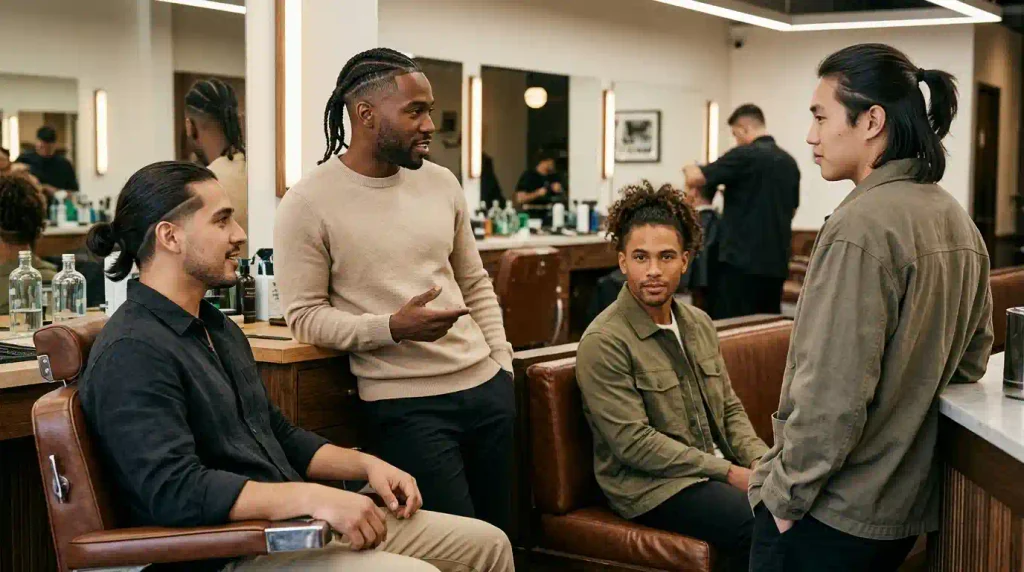
Taper Ponytail Hairstyles by Hair Texture
Straight Hair Ponytail with Taper
Straight hair creates a sleek and defined ponytail silhouette.
The taper is usually easy to see when the hair is tied.
A lightweight styling cream can smooth flyaways without making the hair appear greasy.
Wavy Hair Ponytail with Taper
Wavy hair adds natural movement to the ponytail length.
A low taper creates a neat contrast while preserving enough hair for fullness.
Avoid aggressively brushing dry waves if you want to retain their shape.
Curly Hair Ponytail with Taper
A curly ponytail can produce a rounded or cascading shape.
The length appears shorter when curls contract, so placement should account for natural shrinkage.
A low or mid taper highlights the texture without removing excessive side hair.
Coily and Afro-Textured Ponytail with Taper
Coily hair can be gathered into a textured ponytail, puff, or protective arrangement depending on length.
The taper provides definition around the lower hairline.
Gentle detangling, conditioning, and comfortable tension are especially important.
Afro Puff Ponytail with Taper
An Afro puff concentrates natural coily volume into a rounded shape.
The tapered sides create a clean outline beneath the puff.
Use a suitable soft band and avoid drawing the hairline backward with excessive force.
Twist-Out Ponytail with Low Taper
A twist-out creates defined texture after twists are released.
The hair can then be gathered into a loose ponytail while preserving separation.
A subtle low taper keeps the sides neat.
Fine or Thin Hair Ponytail with Taper
Fine hair may form a smaller ponytail because each strand has less thickness.
A low taper helps preserve more available hair.
Avoid aggressive side shaving or high undercuts if ponytail fullness is a priority.
Thick Hair Ponytail with Taper
Thick hair can support a substantial ponytail with natural volume.
However, heavy hair may become uncomfortable when gathered high.
A lower ponytail and suitable elastic can distribute the weight more comfortably.
Asian Straight-Hair Ponytail with Taper
Straight, dense hair often creates a smooth and defined ponytail silhouette.
A low taper can add clean edges while preserving natural flow.
This style is not limited to any ethnicity; the best cutting approach depends on the individual’s actual hair texture and density.
Ponytail Hairstyles with Different Parts, Fringes, and Layers
Middle-Part Ponytail with Taper
A middle-part ponytail divides the front hair before gathering the longer sections.
The central part creates symmetry, while the taper cleans up the temples.
For a related hairstyle that leaves the hair untied, explore the middle part taper haircut.
Side-Part and Side-Swept Ponytail with Taper
A side part directs greater hair volume toward one side before securing it.
The result can look polished or relaxed depending on styling.
It is especially suitable for medium and long straight or wavy hair.
Curtain Fringe Ponytail with Taper
A curtain fringe leaves two face-framing sections loose while the remaining hair forms a ponytail.
The taper provides a clean lower silhouette.
This variation suits people who prefer some softness around the forehead.
Ponytail with Face-Framing Strands
Selected strands remain loose around the cheeks or jawline.
This creates movement and softens the appearance of tightly gathered hair.
The loose sections should be long enough to fall naturally without constant restyling.
Long Fringe Ponytail with Taper
A longer fringe can be styled forward or swept to one side while the back remains tied.
For a shorter hairstyle with a similar front-focused appearance, see the fringe taper haircut.
Layered Ponytail with Taper
Layered hair produces a textured ponytail with sections of different lengths.
The ends may appear feathered or separated.
Short layers around the crown may need light styling cream or pins to remain controlled.
Textured Long-Top Ponytail with Taper
This variation emphasizes a textured crown and longer upper hair.
The taper keeps the lower sides controlled while the long top forms a small or medium ponytail.
Creative, Retro, and Modern Taper Ponytail Styles
Korean-Inspired Ponytail with Taper
A Korean-inspired ponytail often emphasizes soft layering, smooth texture, and an understated finish.
A subtle low taper complements the natural hair movement.
The style can also include curtain bangs or a center part.
Two-Block Ponytail with Low Taper
A two-block ponytail features longer upper hair over shorter lower sections.
The difference in length can resemble an undercut, although some versions use softer blending.
A low taper at the sideburns adds definition.
Mullet Ponytail with Taper
A mullet ponytail preserves longer hair toward the back while keeping the sides shorter.
Depending on the length, the back can be gathered into a compact tail.
For more detailed haircut variations, see the mullet taper haircut.
Wolf Cut Ponytail with Taper
A wolf cut ponytail features layered crown volume and longer rear sections.
Because the haircut contains shorter layers, some strands may fall loose when tied.
A low taper adds clean edges without eliminating the shag-like movement.
Long Shag Ponytail with Taper
A long shag creates a deliberately relaxed ponytail with feathered ends.
The tapered sides keep the hairstyle from looking excessively bulky.
It works well for naturally wavy hair.
Rocker-Style Ponytail with Taper
A rocker-inspired ponytail emphasizes longer, textured hair and a less polished finish.
A mid taper can add modern contrast.
The hairstyle may include loose strands, layered ends, or natural wave movement.
Blonde Ponytail with Taper
Blonde hair can emphasize the contrast between different lengths and textures.
A low taper produces a restrained result, while a high fade creates a bolder look.
Maintain appropriate conditioning if the hair has been chemically lightened.
Highlighted Ponytail with Taper
Highlights can make long layers and waves appear more distinct.
The tapered sides create a neat frame for the longer hair.
Avoid unnecessary chemical processing on already fragile strands.
Two-Tone Ponytail with Taper
A two-tone ponytail uses contrasting colors through the upper and lower lengths.
The taper can make the difference more visible around the temples.
Choose colors according to hair condition and maintenance preferences.
Salt-and-Pepper Ponytail with Taper
A salt-and-pepper ponytail embraces a mixture of gray and naturally pigmented hair.
A neat taper creates a sophisticated, structured appearance.
This style works especially well with a low ponytail and controlled sideburns.
Ponytail Hairstyles with Beards and Facial Hair
Taper Ponytail with Full Beard
A full beard can balance the visual weight of a long ponytail.
The sideburns may be blended gradually into the beard.
The combination creates a bold, mature silhouette.
Taper Ponytail with Short Beard or Stubble
A short beard or stubble provides facial definition without competing with the ponytail.
A subtle taper helps connect the haircut and facial hair naturally.
For a related clean-cut inspiration, explore the Drake Taper Haircut.
Taper Ponytail with Goatee
A goatee concentrates facial hair around the chin.
It pairs well with medium-height ponytails and clean temple tapers.
Taper Ponytail with Mustache
A mustache can add a retro or minimalist touch to a long ponytail.
The hairstyle can remain understated with a low taper and natural finish.
Ponytail with Beard Fade and Sideburn Blend
A beard fade creates a graduated connection between the haircut and facial hair.
The sideburn transition should complement the taper rather than introducing an unintended harsh boundary.
Ponytail Hairstyles for Different Occasions
Professional and Office-Friendly Taper Ponytail
A low ponytail with a neat neckline and restrained taper can look polished.
Smooth flyaways and avoid excessive styling product.
Professional suitability depends on workplace expectations rather than the haircut alone.
Casual Everyday Ponytail with Taper
A loose low ponytail provides a practical style for daily activities.
Natural texture can remain visible, and the hair does not need to be perfectly smooth.
Formal and Wedding Ponytail
A formal ponytail can be styled sleek, braided, or partially wrapped with hair.
A freshly maintained taper creates a cleaner outline in photographs.
Avoid trying a completely unfamiliar high-tension style immediately before an important event.
Gym and Athletic Ponytail
An athletic ponytail keeps longer hair away from the face.
Choose a secure but comfortable tie and avoid pulling the same hairline sections tightly every day.
Swimming-Friendly Ponytail
A loose braid or suitable ponytail may help organize long hair during swimming.
Rinse the hair after pool exposure and condition when needed.
Avoid tight wet styling that causes discomfort or excessive pulling.
Baseball Cap Ponytail
A low ponytail can sit beneath a baseball cap, while some cap designs allow the tail through an opening.
Keep the hair comfortably positioned to avoid pressure beneath the cap.
Headband Ponytail
A headband controls loose front strands while the rest of the hair remains tied.
This works well for layered cuts with shorter hair around the forehead.
Bandana Ponytail
A bandana can secure or cover selected hair sections while the ponytail remains exposed.
It creates a casual, retro-inspired appearance.
Avoid tying the fabric too tightly around the scalp.
Hair-Wrapped Ponytail
A hair-wrapped ponytail uses a small strand to conceal the elastic.
This produces a polished finish and is especially useful for formal styling.
Secure the wrap gently with a suitable pin.
Modern Taper Haircut Ponytail Styles for Women
Tapered ponytails can also complement feminine and gender-neutral hairstyles.
The same principles apply: preserve sufficient length, choose the taper height carefully, and avoid unnecessary pulling.
Low Taper Ponytail for Women
A low taper ponytail combines long hair with a subtle temple or neckline taper.
The haircut looks polished when tied and may remain relatively discreet when the hair is worn down.
High Ponytail with Tapered Nape
A high ponytail exposes the lower neckline.
A tapered nape creates a neat finish beneath the lifted hair.
This style can be especially useful when the wearer wants a clean back outline.
Curly Ponytail with Tapered Sides
Natural curls can be gathered into a voluminous ponytail while the sides remain short.
The taper emphasizes curl shape and creates visual contrast.
Choose a comfortable tie that does not overcompress the curls.
Braided Ponytail with Undercut Taper
Braids can be gathered into a ponytail above an undercut or tapered neckline.
The result creates a structured combination of long braided sections and short lower hair.
Avoid heavy extensions or tightly pulled braids that create scalp discomfort.
Short Hair Ponytail with Hidden Nape Taper
A small ponytail can be combined with a low hidden nape taper.
When the hair is worn down, the short lower section may be partly concealed.
When tied, the tapered neckline becomes visible.
Taper Haircut Ponytail: Front, Side, and Back Views
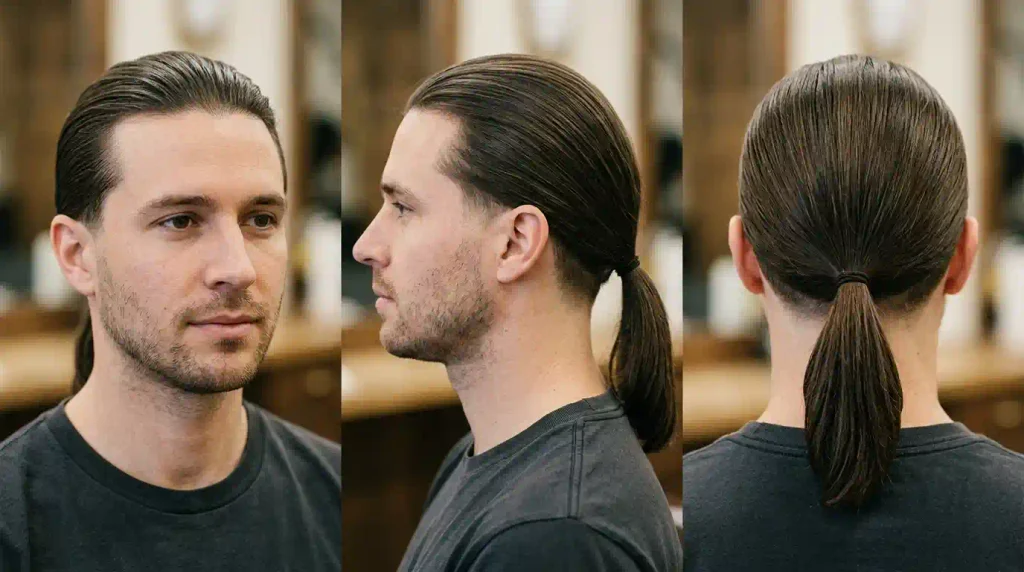
A taper ponytail should be evaluated from multiple angles because the ponytail position and fade placement affect different parts of the head.
Front View: Hairline, Temples, and Pulled-Back Hair
From the front, the hairstyle may resemble slicked-back long hair, a middle part, or a textured fringe.
The temple taper becomes visible when the surrounding hair is pulled backward.
The front view should show whether the hairline remains comfortable and whether the crown has the desired volume.
Side View: Taper Height and Ponytail Position
The side view reveals the relationship between the fade and ponytail base.
A low taper keeps more side fullness.
A higher taper creates greater contrast between the short edges and longer top.
The tie position also affects the silhouette. A low ponytail creates a smoother backward line, while a high ponytail produces a more lifted appearance.
Back View: Neckline, Nape Taper, and Ponytail Length
The back view is especially important because it reveals the neckline shape and the amount of hair gathered into the ponytail.
A low nape taper may remain visible beneath the tie.
A higher nape undercut exposes more skin and creates a stronger contrast.
Check that the taper looks balanced on both sides and that the ponytail has sufficient fullness.
Low vs. Mid vs. High Taper Ponytail Photo Comparison
| Viewing angle | Low taper | Mid taper | High taper |
| Front | Subtle temple cleanup | Noticeable temple blend | Stronger side exposure |
| Side | More retained side hair | Balanced contrast | Dramatic short-to-long difference |
| Back | Minimal nape reduction | More visible neckline taper | Greater lower-back exposure |
| Hair-down appearance | Often more concealed | Partly visible | Frequently more obvious |
| Ponytail fullness | Usually preserves more hair | Moderate effect | Can reduce available hair |
How a Taper Ponytail Looks Tied vs. Untied
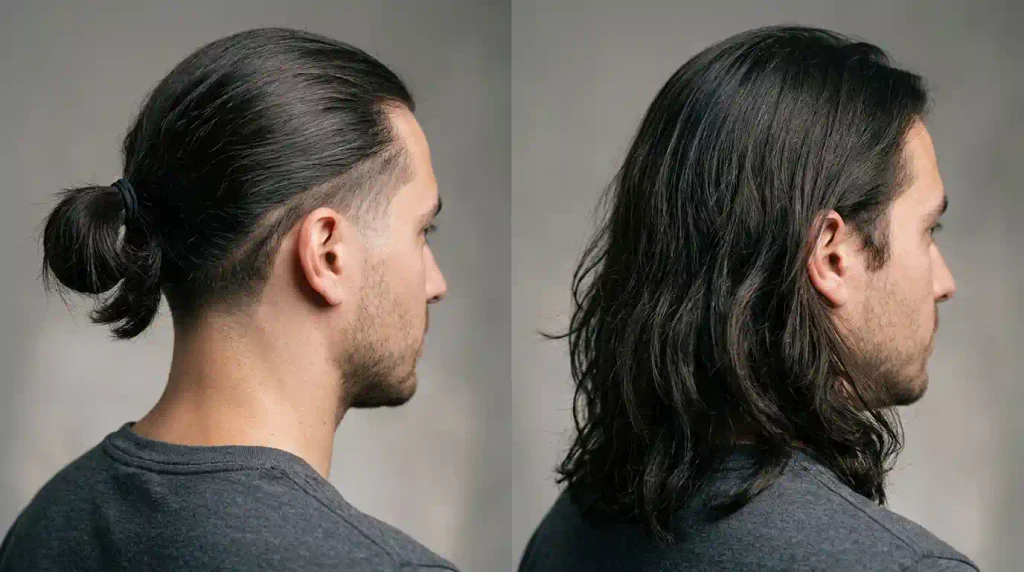
One of the most important decisions is whether the haircut should remain attractive when the ponytail is released.
How a Low Taper Ponytail Looks with Hair Down
When untied, a low taper may be partly hidden beneath longer side hair.
The haircut can resemble an ordinary long layered hairstyle from the front.
This makes a low taper practical for people who frequently alternate between tied and loose hair.
How a Mid or High Taper Appears with Loose Hair
Mid and high tapers remove more of the side hair.
When the ponytail is released, the longer top may fall over the shortened sides, creating an undercut-like silhouette.
This effect can look intentional, but the wearer should consider it before cutting.
Hidden vs. Exposed Tapered Sides
A hidden taper stays close to the lower hairline and is less visible under loose hair.
An exposed taper extends into areas that remain visible even when the hair is down.
Neither option is inherently better.
The correct choice depends on styling habits and the desired level of contrast.
Choosing a Taper That Looks Good Both Ways
If you wear your hair loose frequently, preserve enough length near the upper sides.
Ask your barber to demonstrate where the cutting boundary will sit.
A low taper is generally the most forgiving starting option because it avoids removing large sections of hair.
Understanding Taper Haircut Ponytail Styles
The relationship between the long hair and shortened areas determines how natural or dramatic a taper ponytail looks.
How the Taper Connects with Longer Ponytail Hair
A gradual taper reduces hair length toward the lower edges.
The barber must preserve enough length above the tapered region to create a natural connection.
If too much hair is removed, the hairstyle may resemble a disconnected undercut.
Low Taper vs. Mid Taper vs. High Taper for Ponytails
A low taper is subtle and preserves more side hair.
A mid taper produces a stronger, more visible transition.
A high taper removes more hair near the upper sides and may affect the ponytail’s density.
For first-time clients, beginning with a lower taper allows greater flexibility for later adjustments.
Temple Taper, Sideburns, and Neckline Placement
The temples, sideburns, and nape are the main areas involved in a traditional taper.
The barber should decide how these sections connect before cutting.
A neckline taper can complement the ponytail without creating a large shaved area.
How a Taper Affects Ponytail Volume and Shape
A small lower taper may have little effect on the amount of hair available for tying.
A high taper or undercut may remove substantial hair from the sides and lower back.
The resulting ponytail can appear thinner because fewer strands reach the elastic.
Tapered Sides vs. Disconnected Undercut
Tapered sides transition gradually between lengths.
A disconnected undercut preserves a more abrupt boundary.
A taper generally offers easier styling flexibility, while an undercut produces stronger contrast.
Choosing Between a Natural and Skin-Close Finish
A natural or shadow taper retains some visible hair near the shortest section.
A skin-close taper blends into bare skin and looks sharper.
Choose according to maintenance preferences, skin sensitivity, and desired contrast.
How to Keep a Ponytail Full with Tapered Sides
A full-looking ponytail depends on retained hair density and the number of strands reaching the tie.
How Taper Height Affects Ponytail Thickness
Higher tapers shorten more hair.
If those sections previously contributed to the ponytail, the finished tail may become noticeably smaller.
A low taper usually preserves more potential ponytail fullness.
How Much Side Hair Should Stay Long?
The required length depends on the chosen tie position.
Side hair that cannot comfortably reach the elastic should not be forced into the style.
Ask your barber to keep the upper side panels long enough for your preferred ponytail.
Avoiding a Thin Ponytail After a High Taper
Before cutting, gather the hair into a ponytail and identify which sections contribute to its thickness.
Show the barber the amount of side hair you want to preserve.
Avoid moving the fade boundary upward merely to make the sides appear cleaner.
Choosing the Right Taper for Fine or Low-Density Hair
Fine or low-density hair may benefit from a conservative low taper.
Preserving side and crown length helps retain more strands in the ponytail.
Avoid excessive thinning shears and unnecessary debulking.
Balancing Crown Volume with Ponytail Length
The crown should connect comfortably to the ponytail base.
Removing too much crown weight can create short strands that escape the tie.
For a natural shape, preserve enough top length and use controlled layering.
How to Choose the Right Taper Haircut Ponytail
Choose a hairstyle according to hair length, texture, density, face shape, and how frequently you plan to tie it.
Choosing a Ponytail by Hair Length
Short vs. Medium vs. Long Ponytail Styles
A short ponytail generally requires enough hair to gather into a small tail behind the head.
Medium-length hair supports low ponytails and half-up styles.
Longer hair offers more options, including braids, high ponytails, and man buns.
Shoulder-Length vs. Extra-Long Ponytails
Shoulder-length hair is versatile because it can often reach a comfortable low ponytail.
Extra-long hair supports longer braids and more elaborate arrangements.
However, additional length also increases weight and may require more careful detangling.
Choosing Between a Half-Up and Full Ponytail
A half-up ponytail is useful when only the upper hair reaches the tie.
A full ponytail requires enough front, side, crown, and back length to gather the intended sections.
Do not pull short strands tightly to force a full ponytail before the hair is ready.
Choosing a Taper Ponytail by Hair Type
Best Ponytail for Straight Hair
Straight hair creates a smooth, defined tail.
A low taper complements the natural flow without adding unnecessary side contrast.
Use lightweight smoothing products to control flyaways.
Best Ponytail for Wavy Hair
Wavy hair looks attractive in loose low or medium-height ponytails.
The natural bends create movement and texture.
A low taper generally maintains a balanced shape.
Best Ponytail for Curly and Coily Hair
Curly and coily hair can be gathered into ponytails, puffs, or braided arrangements.
Account for shrinkage and avoid excessive stretching.
A soft, comfortable tie is essential.
Best Ponytail for Fine or Thinning Hair
Preserve as much useful length as possible.
Avoid high undercuts and strongly tightened ponytails that expose sparse areas or pull on fragile hair.
A loose low ponytail is often a practical choice.
Best Ponytail for Thick and Dense Hair
Thick hair offers substantial ponytail volume.
However, a heavy high ponytail can place more weight on the scalp.
Try lower placement and supportive accessories to improve comfort.
Best Taper Ponytail Haircuts by Face Shape
These recommendations concern visual balance rather than strict rules.
Oval Face Shape
Oval faces generally accommodate many ponytail positions.
A classic low ponytail with a subtle taper is a versatile choice.
Round Face Shape
A medium or slightly elevated ponytail can create the appearance of added height.
Keep the upper sides controlled without removing unnecessary hair.
Square Face Shape
Loose waves and face-framing strands can soften a pronounced jawline.
A low taper provides a neat outline.
Heart-Shaped Face
A medium-height ponytail with soft front sections may balance a wider forehead and narrower chin.
Avoid excessive backward tension.
Long or Oblong Face Shape
A lower ponytail with modest crown volume may create a balanced appearance.
Avoid exaggerated vertical height if you want to reduce the visual impression of facial length.
Diamond Face Shape
A relaxed ponytail with face-framing strands can soften prominent cheekbones.
Subtle temple tapering helps preserve balance around the upper face.
Choosing Ponytail Height by Face Shape and Hairline
Ponytail height affects both appearance and physical tension.
A higher position emphasizes crown volume but requires more length and may pull the hairline if secured too tightly.
A lower position often looks understated and allows the hair to follow a more natural backward direction.
How Hair Density and Natural Growth Patterns Affect Ponytail Placement
Natural hair growth direction influences how comfortably the hair gathers.
Cowlicks and uneven growth patterns can make some sections stand away from the scalp.
Work with these patterns rather than forcing every strand into the same direction.
Choosing a Ponytail Style for Your Lifestyle and Personal Style
For everyday use, a low ponytail with minimal product is practical.
For formal occasions, a polished, smoothly gathered hairstyle may be preferable.
For sports, select a secure but comfortable arrangement that keeps hair away from the face.
Taper Haircut Ponytail Length and Clipper Guard Guide
Understanding length requirements helps prevent cutting mistakes.
How Long Does Your Hair Need to Be for a Ponytail?
The required length depends on the distance between each hair section and the intended tie position.
Hair near the forehead must travel farther to reach a low ponytail than hair near the nape.
Curly hair also requires special consideration because its visible length may be much shorter than its stretched length.
Minimum Hair Length for a Short Ponytail
Some people can gather portions of hair measuring approximately six to eight inches into a small ponytail, depending on head size and placement.
A full ponytail often requires longer front sections.
These measurements are approximate rather than universal standards.
Hair Length Requirements for Low, Mid, and High Ponytails
| Ponytail style | Approximate starting length | Main consideration |
| Small half-up ponytail | 5–7 inches | Only top hair needs to reach |
| Short low ponytail | 7–10 inches | Front and side reach may vary |
| Medium-height ponytail | 8–12 inches | More sections travel upward |
| High ponytail | 10–14+ inches | Front and nape hair need reach |
| Long braided ponytail | 12+ inches | Additional length supports braiding |
These are illustrative ranges. The actual test is whether every intended section reaches the tie comfortably.
Recommended Top and Back Length for Taper Ponytails
The top often needs more length than the lower back for a low ponytail.
For a higher ponytail, the opposite may become important because nape hair must travel upward.
Tell your barber where you intend to secure the hair before trimming.
Ponytail Hair Length Reach Test and Measurement Guide
How to Check If Your Hair Can Reach a Ponytail
Stand in front of a mirror and choose the intended ponytail position.
Using your fingers, gently guide the front, crown, side, and back hair toward that point.
If strands cannot reach without strong pulling, the chosen full ponytail is not yet practical.
Measuring Front, Crown, Side, and Back Length
Measure hair from the root to the ends while following the natural strand direction.
For curly hair, distinguish natural visible length from gently stretched length.
Compare these measurements with the distance each section must travel to the ponytail base.
What to Do When the Front Hair Is Too Short
Use a half-up style, allow short front strands to remain loose, or choose a lower tie position.
Avoid repeatedly pulling the hairline backward.
How Much Hair to Preserve Before Getting a Taper
Gather the intended ponytail before the haircut.
Identify any side or crown strands that contribute to the tail.
Show the barber which sections must remain long.
Common Clipper Guard Numbers for Tapered Sides
| Guard number | Approximate cutting length |
| #0.5 | 1/16 inch (1.5 mm) |
| #1 | 1/8 inch (3 mm) |
| #1.5 | 3/16 inch (4.5 mm) |
| #2 | 1/4 inch (6 mm) |
| #3 | 3/8 inch (10 mm) |
| #4 | 1/2 inch (13 mm) |
Measurements vary slightly by clipper system and adjustable blade position.
Understanding the 3-2-1 Fade Technique
The 3-2-1 technique is an informal way some barbers describe using progressively shorter clipper guards.
A barber might use #3 higher in the transition, #2 below it, and #1 near the lower edge.
Actual blending involves additional lever adjustments and detail work.
The technique does not define the fade height by itself.
How to Choose Between a Low and Mid Taper for Long Hair
Choose a low taper if you want more natural side coverage and maximum flexibility when wearing the hair down.
A mid taper is suitable when you want a stronger visual contrast.
If unsure, start with the lower taper. More hair can be removed later, but a high taper cannot be immediately reversed.
How to Grow Your Hair for a Taper Ponytail
Growing a ponytail requires patience and consistent hair care.
Growing Long Hair While Keeping the Sides Tapered
Maintain only the lower temple and neckline edges while allowing the upper sections to grow.
Avoid repeated short haircuts around the crown.
Explain your long-term goal to the barber before each appointment.
Growing a Ponytail from a Buzz Cut or Crew Cut
A buzz cut provides a relatively even starting length.
Hair typically grows around half an inch per month on average, though individual growth rates vary.
Reaching a full ponytail may take well over a year depending on starting length and desired placement.
For an early-stage haircut, see the Buzz Taper Haircut.
Transitioning from a Fade or Undercut to a Ponytail
Shorter side sections may need substantial time to catch up with the upper hair.
Keep trimming conservative and avoid resetting the growth progress during each appointment.
For a shorter comparison style, review the Taper Haircut Crew Cut Low Fade.
How to Manage the Awkward Growing Stage
During growth, the hair may be too long for a conventional short haircut but too short for a ponytail.
Use gentle styling cream, headbands, or a half-up arrangement.
Avoid cutting the front excessively simply because it falls into the eyes.
Maintaining Hair Length Without Excessive Breakage
Use conditioner suited to your hair type.
Detangle carefully, reduce unnecessary heat exposure, and avoid tight styling.
Length retention depends not only on growth but also on preventing breakage along the existing strands.
When to Trim the Ends While Growing a Ponytail
Trim the ends when they become damaged, uneven, or difficult to manage.
Regular trimming does not make hair grow faster from the scalp.
Its benefit is maintaining the condition and appearance of existing lengths.
How to Grow Out or Change a Taper Ponytail Haircut
Some people eventually want a fuller long hairstyle or a completely different haircut.
Growing Out Tapered Sides into Full-Length Hair
Stop repeatedly trimming the areas you want to grow.
Allow the shorter sides to gain length while keeping the longer hair organized.
The transition may require several months or longer, depending on the original taper height.
Managing Uneven Side and Back Lengths
Temporary differences between side and back lengths are expected.
A stylist can use conservative layering to reduce awkward transitions.
Avoid shortening the entire hairstyle to match the shortest sections unless you genuinely want a shorter cut.
Transitioning from a Taper Ponytail to a Man Bun
A man bun requires enough length to wrap the hair around itself comfortably.
If your hair already forms a ponytail, a compact folded bun may be an easy transition.
Do not force short hair into a tight knot.
Converting a Taper Ponytail into a Shorter Haircut
A long ponytail can transition into a textured crop, quiff, or medium-length flow hairstyle.
For an example emphasizing natural movement, compare the Flow Taper Haircut.
How to Avoid Awkward Length Differences During Transition
Plan the final hairstyle before making major cuts.
A barber can preserve useful crown length while gradually balancing shorter side sections.
How to Ask Your Barber for a Taper Haircut Ponytail
Clear barber instructions help preserve the hair needed for the ponytail.
What to Tell Your Barber
Explain the intended ponytail position and how much of the sides you want shortened.
Ask the barber to check the haircut while your hair is tied.
Ready-to-Use Barber Request Script
“I want a low taper around my temples, sideburns, and neckline, but I want to keep enough length on the top and sides to tie a full ponytail. Please keep the fade low and avoid cutting into the hair that reaches my ponytail. I’d like a natural blend and a clean neckline without a large disconnected undercut.”
Explaining Your Desired Taper Height
Describe whether the taper should remain near the lower hairline or extend higher into the side panels.
Use photographs rather than relying only on terms like “low fade.”
Choosing Clipper Guards and Fade Placement
Ask the barber what length will remain at the shortest section.
A #1 or #2 may create a different appearance than a skin-close taper.
The exact guard selection should complement the desired transition.
Explaining the Ponytail Length and Tie Position
Show the barber where you normally secure your hair.
This helps identify which sections need to remain long.
Choosing Reference Photos for Your Hair Type
Bring photographs showing the style from front, side, and back angles.
Prefer models with hair texture and density similar to yours.
If possible, include an image of the haircut worn down.
Step-by-Step Barbering Process
Sectioning and Securing the Long Hair
The barber separates the hair intended for the ponytail from the sections to be tapered.
This is a critical step because mistakenly cutting useful side hair can reduce ponytail fullness.
Establishing the Temple and Sideburn Taper
Clippers gradually shorten the lower temple and sideburn areas.
The taper height should stay within the agreed boundary.
Creating a Smooth Blend Around the Sides
The barber connects the shorter hair into the longer surrounding sections.
The goal is a smooth transition without unintended harsh lines.
Shaping the Nape and Neckline
The nape can be cleaned with a natural taper, shadow fade, or more defined neckline.
Avoid removing more lower-back hair than necessary for the chosen ponytail position.
Refining the Long Top and Ponytail Ends
The barber may trim damaged ends or adjust layers while preserving overall length.
The ponytail should be checked after cutting to ensure it remains sufficiently full and secure.
Essential Barber Tools and Cutting Techniques
Common tools include clippers, guards, detail trimmers, barber scissors, combs, sectioning clips, and thinning shears where appropriate.
Clipper-over-comb and scissor-over-comb techniques may help blend different lengths.
How to Check Your Taper Before Leaving the Barbershop
Inspect the haircut both tied and untied.
Check for uneven blending, missing side sections, excessive nape shaving, and unwanted loss of ponytail thickness.
How to Find a Barber Experienced with Long Hair and Tapers
Look for portfolios showing long hair combined with low and mid tapers.
A barber experienced only with short fades may not be as familiar with preserving long-hair proportions.
Choose someone comfortable with both clipper blending and longer haircut shaping.
How Much Does a Taper Haircut Ponytail Cost in the USA?
The price depends on location, service complexity, and whether the appointment includes a full long-hair trim.
Average Barbershop Cost for a Taper Ponytail
There is no standardized nationwide price specifically for a taper ponytail.
The following are illustrative U.S. budgeting ranges, not guaranteed quotes or independently established national averages.
| Service | Approximate budget |
| Basic taper cleanup | 15–35 |
| Standard men’s taper haircut | 25–50 |
| Detailed fade with long-hair shaping | 40–80 |
| Premium barber or stylist appointment | 70–120+ |
| Long-hair trim with taper detailing | 45–90 |
Confirm the price with your chosen salon or barbershop.
Low Taper vs. Fade and Undercut Pricing
A basic low taper may be relatively quick to maintain.
Detailed skin fades and shaved designs can require more time.
An undercut combined with substantial long-hair reshaping may also increase the price.
Cost of a Full Haircut vs. Taper Touch-Up
A full haircut includes reshaping long sections and refining the taper.
A touch-up may focus only on the sideburns and neckline.
Separating these services can be practical when the ponytail length does not need trimming.
Factors That Affect Haircut Pricing
Location, appointment duration, haircut complexity, beard services, and barber experience influence the final price.
Long, dense, or heavily textured hair may require more time to section and shape.
Estimated Monthly and Annual Maintenance Budget
For example, a $30 taper cleanup every four weeks would cost approximately $390 over a 52-week year if scheduled 13 times.
A $60 full haircut every eight weeks would total approximately $390 over the same period if scheduled six or seven times.
Actual costs depend on how frequently you book services. Tips and styling products should be budgeted separately.
How to Tie a Taper Haircut Ponytail Step by Step
A well-tied ponytail should look balanced, hold securely, and remain comfortable.
Essential Tools for Creating a Men’s Ponytail
Useful tools include a wide-tooth comb, appropriate brush, soft hair elastic, styling cream, and optional pins for loose strands.
Choose accessories according to hair density and texture.
Step-by-Step Ponytail Styling Tutorial
Step 1: Wash and Prepare Your Hair
Begin with clean or manageable hair.
Use shampoo and conditioner according to scalp oiliness and hair needs.
Allow wet hair to dry sufficiently before applying strong tension, especially if it is fragile.
Step 2: Detangle and Section the Hair
Remove tangles gently.
For straight hair, a suitable brush or comb can help smooth the strands.
For curly or coily hair, detangling with conditioner and an appropriate wide-tooth comb may be more comfortable.
Step 3: Choose Low, Mid, or High Ponytail Placement
Decide where the ponytail base should sit.
A low position generally creates a relaxed appearance.
A higher position produces more lift but requires adequate length.
Step 4: Gather the Hair Without Excessive Tension
Guide the hair toward the selected position.
Do not pull tightly at the hairline.
If short strands cannot reach, allow them to remain loose or adjust the tie position.
Step 5: Secure the Ponytail with a Suitable Hair Tie
Use a fabric-covered or otherwise gentle elastic.
Wrap it only as many times as needed for a secure hold.
The ponytail should remain comfortable without scalp soreness.
Step 6: Adjust the Volume, Fringe, and Loose Strands
Use your fingers to restore some crown volume.
Adjust the fringe or face-framing sections.
Avoid repeatedly tugging the base to create more height.
Step 7: Finish with Styling Products
Apply a small amount of suitable styling cream, mousse, or gel if needed.
Concentrate on flyaways rather than coating the entire ponytail with heavy product.
How to Create a Sleek Ponytail
Comb the hair backward gently and use lightweight smoothing cream.
Secure it at a comfortable low or medium height.
A polished result does not require painful tightness.
How to Create a Messy and Textured Ponytail
Preserve some natural movement before gathering the hair.
Allow selected strands to remain loose.
For a short hairstyle with a similarly relaxed feel, consider the messy taper haircut as a contrasting style reference.
How to Tie a Curly Ponytail Without Losing Definition
Use your fingers to gather curls gently.
Avoid repeatedly brushing the hair after the curls have formed.
A soft scrunchie can help secure the ponytail without excessively compressing its natural shape.
How to Create a Half-Up Ponytail
Separate the top section from the lower hair.
Gather only the upper strands and secure them near the crown.
Allow the remaining hair to flow naturally over the tapered sides.
How to Braid a Ponytail
Simple Three-Strand Braiding Method
Divide the ponytail into three sections.
Cross the right strand over the middle, then the left strand over the new middle section.
Repeat until the braid reaches the desired length.
Secure the end comfortably.
French and Dutch Braid Techniques
A French braid incorporates additional hair over the central section as it moves backward.
A Dutch braid crosses strands beneath the center, producing a raised appearance.
Both techniques can finish in a ponytail.
Combining Multiple Braids into One Ponytail
Create several braids that follow the head toward a shared tie position.
Gather them gently without pulling the roots excessively.
How to Style a Ponytail Naturally Without Heavy Products
Use minimal styling cream or conditioner when needed.
Allow natural hair texture to remain visible.
The taper itself provides a structured appearance, so the ponytail does not always need strong-hold products.
Best Hair Products and Accessories for Taper Ponytails
The ideal products depend on hair texture, preferred finish, and daily styling needs.
Choosing Hair Ties and Bands That Reduce Breakage
Fabric-covered elastics and soft scrunchies are often preferable to exposed rubber bands.
Avoid accessories with rough joins or metal parts that catch strands.
Hair Gel for Sleek Ponytails
Gel can smooth flyaways and provide hold.
Use only the amount needed.
Excessively rigid styling may make restyling difficult and increase breakage if the hair is repeatedly combed afterward.
Pomade and Styling Cream for Flexible Hold
Pomade can create a polished finish, while styling cream often provides softer control.
Choose a formula that suits your hair thickness.
Heavy pomade may flatten fine hair.
Volumizing Mousse for Fine Hair
Lightweight mousse can create an appearance of additional volume near the crown.
It does not increase actual hair density.
Apply conservatively to avoid unnecessary buildup.
Hair Tonic and Refreshing Sprays
Refreshing sprays can help reshape flattened sections between washes.
Use suitable products rather than repeatedly applying heavy oil or gel.
Curl Cream and Leave-In Conditioner
Curl cream supports definition in curly or wavy ponytails.
Leave-in conditioner can improve manageability and reduce friction during detangling.
Hairspray for Long-Lasting Hold
Hairspray may help control flyaways during formal events.
Avoid using excessive quantities that make the hairstyle stiff or difficult to release.
Combs and Brushes for Different Hair Textures
A wide-tooth comb can be useful for detangling.
A paddle brush may help smooth suitable straight or wavy hair.
An Afro pick or other curl-appropriate tool may be more useful for certain coily hairstyles.
Headbands, Bandanas, and Hair-Wrap Accessories
These accessories help control loose strands or add visual interest.
Choose comfortable materials and avoid overly tight wrapping.
Essential Men’s Ponytail Styling Kit
| Item | Main purpose |
| Soft scrunchie or hair elastic | Secure the ponytail |
| Wide-tooth comb | Gentle detangling |
| Suitable brush | Smoothing and shaping |
| Styling cream | Flyaway control |
| Leave-in conditioner | Manageability |
| Optional headband | Hold short front strands |
| Small pins | Secure loose sections |
Choose only the products and accessories you need rather than purchasing an unnecessarily large styling collection.
How to Maintain a Taper Haircut Ponytail
Maintenance involves caring for both the short tapered areas and the longer ponytail hair.
Daily Hair Care and Styling Routine
Check the scalp, hairline, and ponytail base for discomfort.
Remove tangles gently and avoid repeated unnecessary pulling.
Release the ponytail when practical to reduce continuous tension.
How Often Should You Wash Long Ponytail Hair?
Washing frequency depends on scalp oiliness, product buildup, activity, and hair texture.
Some people need relatively frequent washing, while others benefit from a less frequent routine.
Clean the scalp without aggressively scrubbing the longer hair.
Conditioning and Detangling Long Hair
Apply conditioner where needed, particularly through the mid-lengths and ends.
Detangle carefully.
For tightly curled or textured hair, detangling when damp and conditioned may reduce breakage compared with forceful dry brushing.
How Often Should You Refresh the Taper?
A skin-close or sharply defined taper may benefit from cleanup every two to three weeks.
A softer low taper can often remain presentable for longer.
Choose the schedule according to growth rate and desired sharpness.
When to Trim the Ponytail Ends
Trim when the ends become noticeably damaged or uneven.
A stylist can preserve most of the length while removing split or weakened sections.
At-Home Sideburn and Neckline Maintenance
Basic cleanup may involve trimming isolated stray hairs.
Avoid attempting a detailed fade if you are inexperienced with clippers.
An accidental high cut can be difficult to disguise when the hair is tied.
How to Prevent Frizz, Tangling, and Product Buildup
Use gentle shampooing, suitable conditioner, and moderate styling products.
Avoid aggressive towel rubbing.
Longer hair may benefit from loose protection during sleep to reduce tangling.
How to Maintain Ponytail Volume and Natural Movement
Avoid excessive product application at the roots.
Gather the hair gently and allow some crown movement.
If the ponytail appears flat, adjust placement or use suitable lightweight styling products rather than tightening the elastic.
Taper Haircut Ponytail Growth Timeline: Week by Week
The tapered sections change much faster visually than the overall ponytail length.
Week 1: Fresh Taper and Defined Neckline
The temples and neckline appear neat, and the ponytail sits against the intended haircut shape.
Take reference photographs if you want your barber to reproduce the look.
Week 2: Temple and Sideburn Regrowth
Short hairs begin to grow beyond the original tapered outline.
A skin-close fade may already appear less defined.
Weeks 3–4: When the Taper Starts Losing Definition
The sideburns and neckline may become noticeably fuller.
The ponytail itself will usually have changed relatively little in overall appearance.
Weeks 5–6: Managing Longer Side Hair
The lower sides may begin looking bulkier.
A touch-up can restore the taper while preserving the longer sections.
How the Haircut Looks After 8 Weeks Without a Trim
After approximately eight weeks, the taper may lose much of its original sharpness.
A low taper may blend naturally into the surrounding hair.
A previously high or disconnected fade may develop a more uneven grow-out appearance.
Ponytail Hair Health and Damage Prevention
Ponytails can be convenient, but repeated tight styling may damage hair and place unnecessary stress on the scalp.
How Tight Ponytails Can Cause Hair Breakage
A tight ponytail pulls hair strands toward one point.
Repeated tension can weaken vulnerable areas, particularly around the front hairline and temples.
The problem is more likely when the hairstyle is worn tightly for long periods.
Hair Tie Tension and Scalp Discomfort
A ponytail should feel secure without causing pain.
Scalp soreness, persistent pulling, or headaches may indicate excessive tension.
Loosen or release the hairstyle rather than tolerating discomfort.
Preventing Traction Alopecia from Repeated Tight Styling
Traction alopecia is a form of hair loss associated with repeated pulling on hair follicles.
Tight ponytails, buns, and certain braiding practices can contribute to this condition.
The American Academy of Dermatology’s guidance on hairstyles that pull recommends reducing tension, changing hairstyles regularly, and seeking professional assessment for concerning hair loss.
Choosing Protective Ponytail Hairstyles
A protective style should reduce manipulation and unnecessary stress rather than create additional tension.
Loose low ponytails, comfortable braids, and appropriately secured twists may be useful for some hair types.
No hairstyle is protective if it causes persistent pain or pulling.
Why You Should Change Ponytail Placement Regularly
Repeatedly securing hair in exactly the same position can place recurring stress on the same strands.
Alternating between lower and medium-height styles may help distribute tension differently.
Also spend time with the hair loose when practical.
How to Tie a Ponytail Without Pulling the Hairline
Gather hair gently and avoid forcing short temple strands into the elastic.
Use a soft tie and secure it only enough to hold the hairstyle.
Do not repeatedly tighten the ponytail by pulling the two sides apart.
Caring for the Hairline and Temples
Avoid excessive edge control, strong brushing, and repeated tight hairstyles.
Check for broken hairs, irritation, and areas of unusual thinning.
A clean taper should not require constant shaving or harsh manipulation of the natural hairline.
When to Consult a Dermatologist About Hair Loss
Consult a dermatologist if you notice persistent hairline thinning, receding areas, bald patches, scalp pain, or continuing hair breakage.
Early evaluation matters because prolonged traction-related damage can sometimes become permanent.
Taper Haircut Ponytail vs. Similar Hairstyles
These comparisons help clarify common terms used in barbershops.
Taper Ponytail vs. Regular Ponytail
A regular ponytail simply gathers longer hair into a tied style.
A taper ponytail adds a deliberately shortened transition around the temples, sideburns, or neckline.
Taper Ponytail vs. Fade Ponytail
A taper generally concentrates the shortest transition near lower hairline areas.
A full fade may extend across a larger portion of the sides or back.
Taper Ponytail vs. Undercut Ponytail
An undercut usually produces a stronger separation between long and short sections.
A taper emphasizes gradual blending.
Low Taper Ponytail vs. Low Fade Ponytail
A low taper ponytail often retains more hair around the upper sides.
A low fade ponytail may shorten a wider area near the lower head.
Taper Ponytail vs. Man Bun
A ponytail leaves the gathered hair extending beyond the tie.
A man bun wraps or folds the hair into a compact knot.
Both can be combined with tapered sides.
Taper Ponytail vs. Top Knot
A top knot sits higher on the head and gathers the hair into a compact bundle.
A ponytail may sit low, medium, or high and normally leaves a hanging tail.
Half-Up Ponytail vs. Full Ponytail
A half-up style gathers only selected upper sections.
A full ponytail collects most or all of the intended long hair.
Braided Ponytail vs. Twisted Ponytail
A braid interweaves multiple sections of hair.
A twist wraps strands or sections around one another.
Both can be gathered over tapered sides.
Taper Ponytail vs. Long Hair with Shaved Sides
A taper preserves a gradual transition.
Long hair with shaved sides may expose a larger area of scalp and create a disconnected undercut.
Common Taper Haircut Ponytail Mistakes and How to Fix Them
Avoiding cutting and styling mistakes can help preserve both the haircut’s appearance and hair health.
Choosing the Wrong Taper Height
A taper that is too high can remove hair needed for a full ponytail.
If unsure, begin with a low taper.
You can gradually increase the height during later appointments.
Cutting Too Much Hair Before Growing a Ponytail
Repeated short trims around the crown or upper sides can delay the ability to gather all the hair.
Explain your growth goal before every haircut.
Uneven Blending Around the Temples and Neckline
Poorly blended sections can create visible steps between the taper and longer hair.
An experienced barber may be able to refine the transition.
Avoid removing more hair than necessary to correct a minor imbalance.
Tying the Ponytail Too Tightly
A tight ponytail can cause scalp discomfort and repeated tension.
Loosen the elastic and consider a lower position.
Do not treat tightness as a requirement for a polished appearance.
Using Damaging Hair Ties
Exposed rubber bands and accessories with rough edges can catch strands.
Replace them with suitable fabric-covered or snag-resistant ties.
Creating a Ponytail with Insufficient Hair Length
Short strands may escape the tie or require excessive pulling.
Choose a half-up style or allow more growing time.
Excessive Pulling on Fine or Thinning Hair
Fine or thinning hair may be more vulnerable to visible tension-related problems.
Avoid tight elevated ponytails and heavy extensions.
Flat Ponytail with No Volume
A ponytail may look flat when the crown is pulled excessively tight or overloaded with product.
Loosen the gathered hair slightly and use an appropriate lightweight volumizing product.
Frizzy, Tangled, or Unmanageable Hair
Frizz can result from dryness, humidity, unsuitable styling, or rough handling.
Use appropriate conditioner and gentle detangling.
Avoid repeated forceful brushing.
Using Too Much Gel, Pomade, or Hairspray
Excessive product can create buildup, stiffness, and a greasy finish.
Start with a small amount and adjust according to hair texture.
What to Do When Your Barber Cuts the Taper Too High
If the taper is higher than requested, avoid making additional major cuts immediately.
Allow the shortened sections to grow and use a lower-maintenance style during the transition.
The barber may be able to adjust surrounding lengths, but removed hair cannot be restored instantly.
History, Culture, and Modern Influence of Men’s Taper Ponytails
Men have worn long, tied-back hairstyles across many cultures and periods.
The modern taper ponytail combines these broader traditions with contemporary barbershop techniques.
Historical Origins of Men’s Ponytail Hairstyles
Tied-back hair has appeared in military, ceremonial, practical, and fashionable contexts across different societies.
Ponytail-like arrangements have been used to manage long hair during work, travel, and physical activity.
However, modern hairstyle terminology should not be projected directly onto every historical example.
Samurai and Viking-Inspired Ponytail Traditions
Some historical Japanese warrior hairstyles involved tying or arranging hair in specialized topknot forms.
Modern samurai-inspired ponytails borrow from this visual tradition but often differ considerably from historical styles.
Similarly, contemporary Viking-inspired ponytails frequently combine braids, shaved sides, and rugged textures, although historical evidence does not establish one universal Viking hairstyle.
Modern Barbering and the Rise of Tapered Ponytails
Modern taper haircuts use controlled clipper blending to create graduated transitions around the hairline.
Combining this technique with longer hair allows people to retain ponytail length while maintaining neat edges.
Cultural and Religious Considerations for Shaved or Tapered Sides
Hair length, shaving, and grooming practices can carry cultural or religious significance.
Personal preferences and community expectations differ.
Someone following specific grooming restrictions should choose a haircut compatible with those requirements rather than assuming every fade or taper is acceptable.
How Ponytail Hairstyles Have Evolved in Men’s Fashion
Men’s ponytails now appear in minimalist, athletic, formal, braided, and alternative fashion styles.
The modern taper adds another customization option.
Long hair can be tied neatly for work, left loose for casual settings, or combined with braiding and detailed fades for a more distinctive appearance.
Frequently Asked Questions About Taper Haircut Ponytails
Can Men with Short Hair Get a Taper Ponytail?
Yes, if enough upper hair reaches a tie; otherwise, a half-up ponytail is a practical starting point.
How Long Does Hair Need to Be for a Ponytail?
Many short ponytails become possible around six to ten inches, but the actual requirement depends on head size, hair texture, and tie placement.
Is a Low Taper Ponytail Better Than a High Fade Ponytail?
A low taper generally preserves more hair and provides a subtler appearance, while a high fade creates stronger contrast.
Can You Get a Ponytail with Curly Hair?
Yes, curly hair can be tied into a ponytail when it has enough length and is gathered without excessive tension.
Does a Ponytail Work with a Receding Hairline?
It can, but loose styling is important, and a dermatologist should assess progressive or unexplained recession.
Can a Taper Ponytail Look Professional?
Yes, a neat low ponytail with a subtle taper can be appropriate in many workplaces.
How Often Should You Trim a Taper Ponytail?
The taper may need refreshing every few weeks, while the longer ends generally require trimming according to their condition.
Can You Sleep with a Ponytail?
A very loose protective arrangement may be suitable, but avoid sleeping with a tightly secured ponytail.
Is Wearing a Ponytail Every Day Bad for Your Hair?
Not necessarily, but repeatedly wearing tight ponytails can cause breakage and traction-related hair loss.
Can You Turn a Taper Ponytail into a Man Bun?
Yes, if the hair is long enough to fold or wrap comfortably into a bun.
What Is the Difference Between a Samurai Ponytail and a Top Knot?
A modern samurai-inspired ponytail often leaves more hair extending backward, while a top knot generally forms a compact gathered bundle near the crown.
Final Thoughts: Choosing the Best Taper Haircut Ponytail
A taper haircut ponytail offers a practical balance between longer hair and the clean, structured appearance of modern barbering. From classic low ponytails and mid taper fades to braided styles, curly puffs, undercut combinations, and formal hairstyles, the right variation depends on hair length, density, texture, and personal preference.
For maximum styling flexibility, start with a subtle low taper that preserves enough hair for a comfortable ponytail. Evaluate the haircut from the front, sides, and back, and consider how it will look when untied. Use gentle hair ties, avoid excessive tension, and maintain the tapered edges without sacrificing valuable length.
Before your next appointment, save a few hairstyle references and discuss your preferred ponytail position with your barber. The best taper ponytail is one that looks balanced, feels comfortable, and works with your everyday routine.

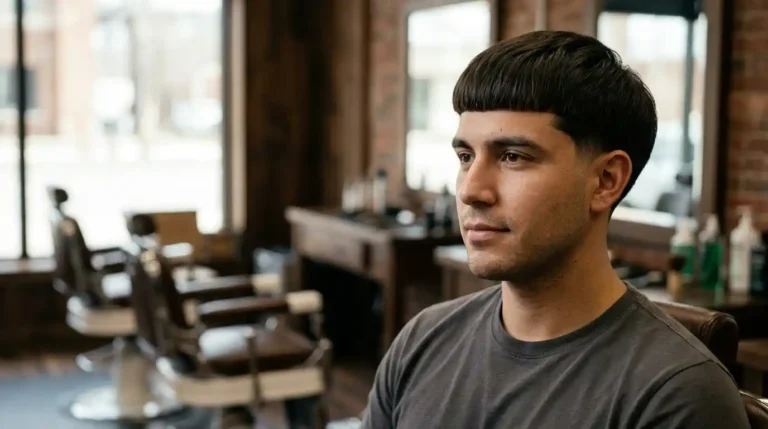
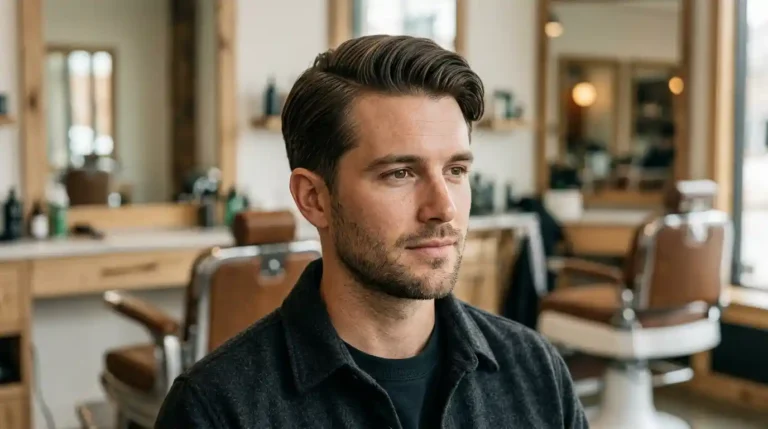
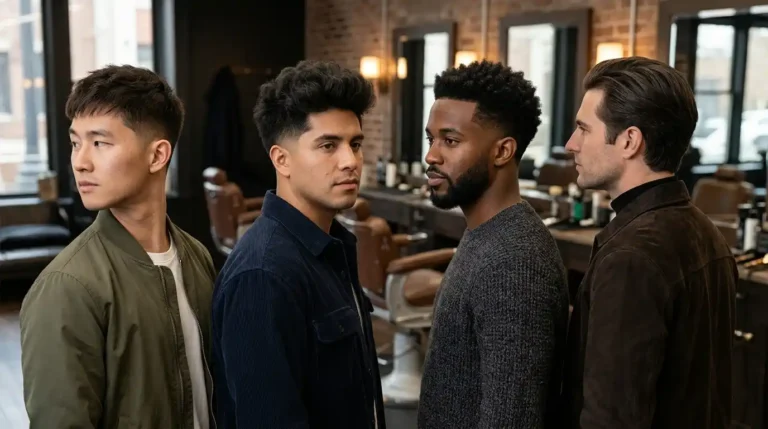
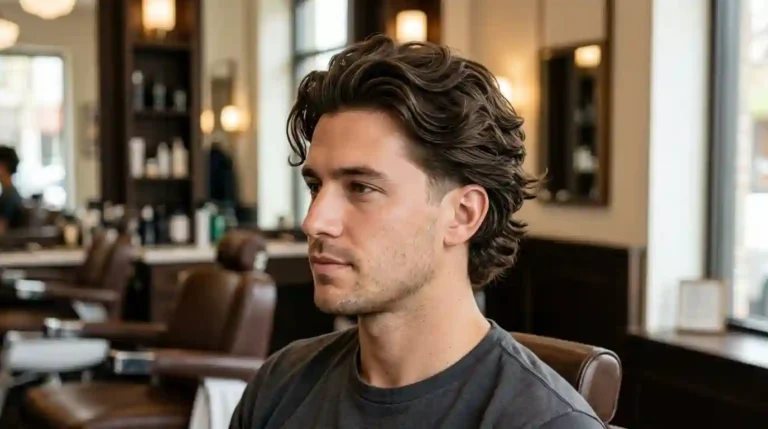

One Comment