
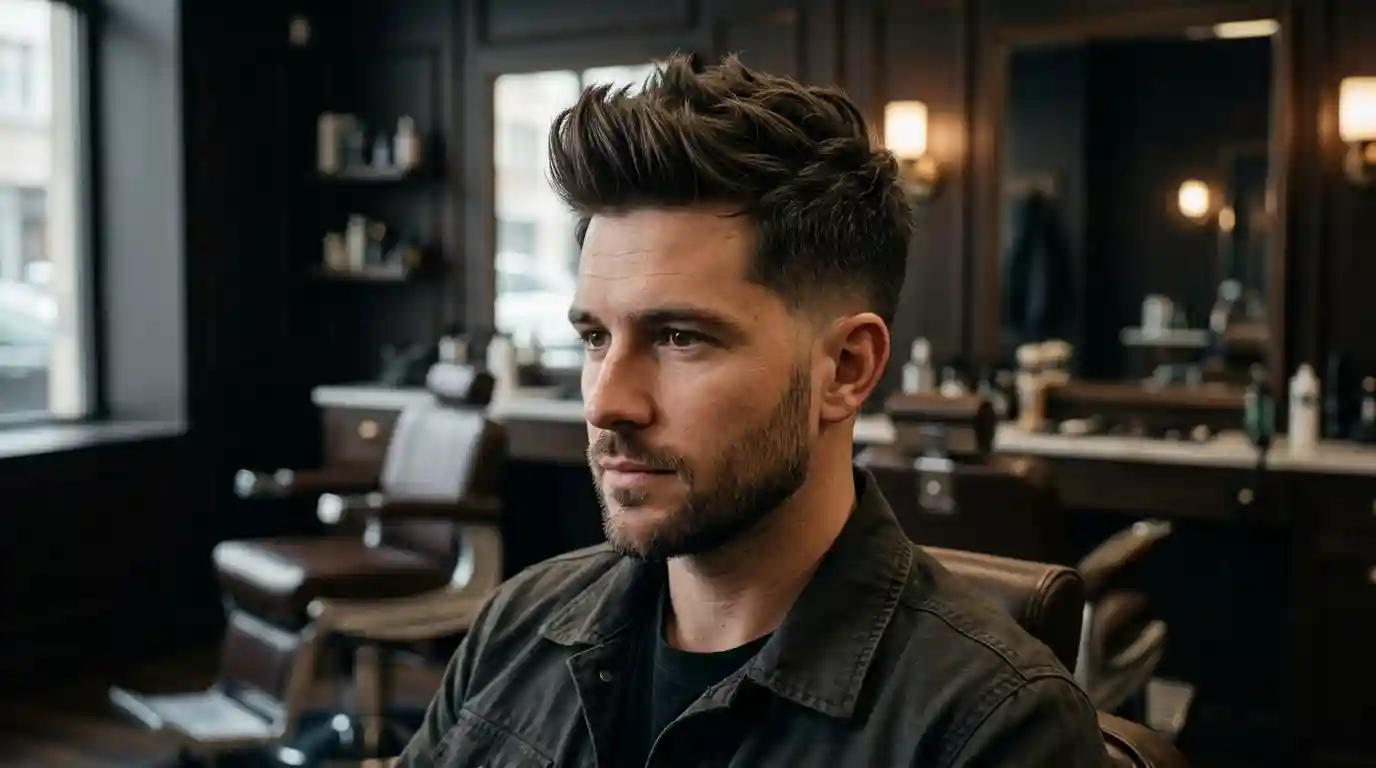
Fohawk Taper Haircut: Styles, Fade Options, and Barber Guide
The fohawk taper haircut combines the bold, raised center strip of a mohawk with clean, gradually tapered sides, creating a modern men’s hairstyle that’s stylish without being overly dramatic. Also known as a faux hawk, this haircut keeps the hair longer along the center of the head while shortening the temples, sideburns, and neckline for a balanced appearance. Unlike a traditional mohawk with shaved sides, a tapered fohawk preserves more hair, making it suitable for everyday wear, professional environments, and different styling preferences. Whether you want a short textured fohawk, a subtle low taper, a sharp skin fade, or a naturally curly faux hawk, the style can be customized to complement your hair texture, face shape, and maintenance routine. The secret to a great fohawk is choosing the right crest width, top length, and taper placement. This guide explores popular fohawk taper haircut variations, compares fade options, explains how barbers create the signature shape, and provides practical instructions for styling and maintaining your haircut at home.
Table of Contents
- What Is a Fohawk Taper Haircut?
- Fohawk vs. Similar Hairstyles
- Choosing a Fohawk for Your Face Shape and Hair
- Fohawk Taper and Fade Styles
- Fohawk Taper Decision Guide
- How a Barber Cuts a Fohawk
- What to Ask Your Barber For
- How to Style a Fohawk at Home
- Fohawk Maintenance and Grow-Out
- Common Fohawk Taper Problems and Fixes
- Cost and Appointment Planning
- Frequently Asked Questions
- Final Thoughts
What Is a Fohawk Taper Haircut?
A fohawk taper haircut is a men’s hairstyle featuring longer hair through the center of the head, styled upward or inward into a raised crest, with shorter hair around the sides and neckline.
The central section creates the recognizable mohawk-inspired silhouette, while the taper produces a softer transition between the top and sides.
Unlike a traditional mohawk, which commonly has shaved or nearly shaved sides, a fohawk retains enough surrounding hair to create a connected, less extreme appearance.
The style can be short and subtle or long and dramatic depending on the desired crest height.
Fohawk, faux hawk, and faux-hawk: names for the same style
The terms fohawk, faux hawk, and faux-hawk refer to the same basic hairstyle.
The word faux means artificial or imitation, making faux hawk a shortened way of describing a hairstyle that imitates a mohawk without requiring the same degree of side shaving.
A fohawk is sometimes called a fake mohawk because its recognizable shape is created through cutting and styling rather than complete separation between the center strip and shaved sides.
Barbers may use all three spellings.
The haircut itself can incorporate a low taper, mid fade, high fade, burst fade, or other side treatment.
When asking for a fohawk taper haircut, the important details are the center-strip width, top length, and amount of contrast between the top and sides.
The raised center strip and shorter sides
The central hair crest is the defining feature of a fohawk.
The barber typically preserves additional length along the middle of the head, running from the front hairline toward the crown and sometimes farther toward the back.
The surrounding upper hair is slightly shorter or directed inward to support the center.
When styled, the strands meet along a raised ridge.
The crest may look like a narrow peak, a wider textured strip, or a soft line of natural curls.
Short fohawks often need only modest lift, while longer versions can develop dramatic height.
The width of the center strip significantly affects the finished appearance.
A narrow crest creates a sharper, more mohawk-like silhouette.
A wider crest looks fuller and generally blends more naturally into the sides.
For everyday wear, a moderately wide crest often provides a useful balance between visible style and flexibility.
How a taper shapes the sides and neckline
The taper controls the haircut’s perimeter.
On a fohawk, the barber gradually shortens the hair around the temples, sideburns, and neckline while preserving enough upper side length to support the central crest.
A low taper creates a subtle result by concentrating shortening near the lower hairline.
A mid taper introduces more contrast around the temples.
A higher taper can make the crest stand out more strongly.
The neckline may be softly tapered or taken to a very short clipper finish.
A good taper should connect naturally with the surrounding hair rather than producing a sudden shelf beneath the crest.
This balance makes the fohawk more versatile than many disconnected hairstyles.

Fohawk vs. Similar Hairstyles
The fohawk shares characteristics with several popular men’s haircuts.
Understanding the differences helps you choose the correct shape rather than requesting a style that only partially matches your reference photograph.
Fohawk vs. a traditional mohawk
The traditional mohawk features a clearly separated strip of longer hair running through the center of the head.
The surrounding sides are typically shaved or cut extremely close.
This creates a dramatic distinction between the central strip and the scalp.
A fohawk uses a similar central shape but usually preserves more hair through the sides.
The surrounding hair is tapered, faded, or blended into the longer top.
| Feature | Fohawk Taper | Traditional Mohawk |
| Center section | Raised, often blended crest | Clearly defined strip |
| Sides | Tapered or faded | Commonly shaved close to skin |
| Transition | Usually softer | Often disconnected |
| Crest height | Low to dramatic | Often more pronounced |
| Styling flexibility | Can often be worn flatter | Central strip remains obvious |
| Grow-out | Generally easier | May require more reshaping |
| Everyday appearance | Subtle to bold | Usually more dramatic |
A fohawk can include a skin fade, but the graduation into the upper hair helps distinguish it from a completely disconnected mohawk.
For men who want a recognizable central peak without committing to fully shaved sides, the fohawk is usually the more flexible option.
Fohawk vs. a quiff
A quiff concentrates volume near the front hairline.
The hair is lifted upward and often directed backward.
A fohawk emphasizes a raised central section extending farther along the top of the head.
Although both can create height, their silhouettes differ.
A quiff usually has a fuller front and a less noticeable central ridge.
A fohawk directs hair inward from both sides to establish its characteristic peak.
The styles can also overlap.
A quiff-inspired fohawk may feature a taller front with a softer ridge toward the crown.
If you prefer considerable front volume without a clearly defined center strip, a quiff or Blowout Taper Haircut may better suit your styling preference.
Fohawk vs. an undercut
An undercut keeps the top noticeably longer than the sides, often with an abrupt transition.
The longer upper hair may be brushed backward, swept sideways, or styled into a textured fringe.
A fohawk focuses on the central crest rather than simply creating a difference between top and side lengths.
A traditional tapered fohawk maintains a smoother connection.
However, modern fohawks can incorporate undercut elements when a more dramatic appearance is desired.
The distinction becomes clear in the styling.
An undercut does not automatically form a central peak, while the fohawk is specifically designed to support one.
Choosing a Fohawk for Your Face Shape and Hair
A fohawk can complement many face shapes and hair textures, but the central crest should be proportionate to the head.
A haircut with excessive height may look unbalanced on some faces, while a very narrow crest may make other facial proportions more noticeable.
Hair density, curl pattern, and growth direction also influence how easily the hairstyle maintains its shape.
Face shapes that suit a fohawk
The central height of a fohawk can visually lengthen the face.
The width of the crest and amount of surrounding side fullness can also affect the overall silhouette.
Oval, round, square, and diamond faces
Oval faces: A moderately raised fohawk often works well because oval proportions accommodate several combinations of crest width and taper height. A textured low taper is a useful starting point.
Round faces: A slightly taller central crest can create the appearance of additional facial length. A mid taper may help control side width, but the crest should not become excessively narrow.
Square faces: A textured fohawk can complement a strong jawline. A low or mid taper maintains balance, while a sharper fade emphasizes the face’s angular characteristics.
Diamond faces: A moderately wide crest and some upper side fullness may help balance prominent cheekbones and narrower temples. Avoid automatically removing excessive hair from the upper sides.
These suggestions provide general visual guidelines rather than strict haircut rules.
Oblong and heart-shaped faces
Oblong faces are usually longer than they are wide.
A very tall fohawk can exaggerate this length.
A lower, wider crest may create a more balanced appearance.
Preserving some hair through the upper sides can also prevent the head from looking unnecessarily narrow.
Heart-shaped faces commonly feature a wider forehead and narrower lower face.
A soft fohawk with moderate front height can work well.
A low taper preserves side fullness, while a textured crest prevents the hairstyle from appearing overly rigid.
Beard length and forehead proportions can further influence the finished result.
Fohawks for straight, wavy, curly, and coily hair
Natural texture changes how a fohawk is cut and styled.
Straight hair often needs directional styling to create the central peak.
A blow-dryer and lightweight matte product can help lift the roots and direct strands inward.
Wavy hair naturally provides movement and texture. A slightly wider crest can allow the waves to form a soft ridge.
Curly hair creates natural volume, making a curly fohawk possible without forcing every strand upward.
The barber should preserve enough length for the curls to form and account for shrinkage.
Coily or Afro-textured hair can create a compact or voluminous center section with a low taper or fade around the perimeter.
The top may be shaped with natural curls, finger styling, or carefully controlled root lifting.
The goal should be to work with the natural texture rather than requiring every hair type to imitate a straight spiked crest.
Options for thick, fine, or thinning hair
Thick hair generally provides enough density to create a full-looking fohawk.
However, excessive bulk can make the center strip difficult to control.
The barber may use point cutting or carefully controlled thinning techniques to improve movement.
Fine hair benefits from a lighter styling approach.
Heavy pomade or wax may flatten the crest.
A lightweight mousse, texture spray, or small amount of matte paste may be more suitable.
Thinning hair requires additional consideration because a narrow center section can expose sparse areas.
A wider, lower crest may create a more balanced appearance than an extremely tall spike.
The barber should avoid removing unnecessary density through the central section.
A fohawk cannot restore missing hair, but choosing an appropriate width and length may help create a flattering silhouette.
Adapting the crest for a receding hairline or crown whorl
A receding hairline can influence the shape of the fohawk’s front.
If the temples have significant recession, an extremely narrow front peak may draw attention to the corners.
A wider textured crest or slightly forward-directed front can produce a softer appearance.
A crown whorl creates another challenge.
Hair around the crown grows in a swirling pattern that may cause the ridge to separate or lean sideways.
The barber should evaluate this growth direction before deciding where the central strip should narrow.
Sometimes preserving additional length near the crown helps the hair maintain its shape.
In other cases, a shorter textured rear section produces a more stable result.
A haircut designed around the natural growth pattern is generally easier to style than one requiring excessive product to fight it.
Choosing a subtle, professional, or statement look
A fohawk can be styled differently according to the occasion.
For professional environments, a low taper with a short, wide crest creates a restrained silhouette.
The top can be worn slightly raised or brushed into a natural textured shape.
For casual everyday styling, a messy or wavy fohawk offers more movement.
For a statement appearance, a high fade, narrow crest, or exaggerated spikes creates stronger contrast.
The haircut itself should support more than one finish if you want styling flexibility.
A fohawk with softly blended sides and moderate top length is usually easier to wear flat than an aggressively disconnected version.
For broader inspiration beyond raised-center hairstyles, the Hairstyles with taper collection explores additional combinations of top shapes and tapered sides.
Fohawk Taper and Fade Styles
The faux hawk can be adapted through differences in top length, taper height, crest width, hair texture, and finishing technique.
Some variations are subtle enough for everyday wear, while others emphasize dramatic spikes or unusual shapes.
Short and low-maintenance fohawks
Classic short fohawk
The classic short fohawk features approximately two to three inches of hair through the central top, with shorter, blended sides.
The front is lifted into a small peak that gradually softens toward the crown.
A low or mid taper keeps the perimeter neat.
This variation works well for men who want a visible fohawk without spending considerable time on styling.
A small amount of matte paste can provide enough control.
The haircut should also look acceptable when the top is worn flatter.
Tiny fohawk
A tiny fohawk uses a very short central section with only modest height.
The raised crest may be subtle, particularly when viewed from the side.
This version is suitable for men who prefer practical grooming and minimal styling time.
The barber should retain slightly more length along the center than near the upper sides.
Without that difference, the haircut may resemble an ordinary short textured crop.
A low taper keeps the appearance understated.
Beginner fohawk
A beginner fohawk is designed for someone trying the style for the first time.
It typically uses a wider center crest and softly blended sides.
The front retains enough length for light styling but not so much that it requires strong-hold products.
A low taper is often a practical choice.
If you later prefer more contrast, your barber can shorten the sides or narrow the crest.
Starting with a conservative variation provides greater flexibility than immediately choosing a high skin fade.
Buzz cut fohawk
A buzz cut fohawk combines an extremely short top with slightly more length along the center.
The crest may be created through controlled graduation or light styling rather than long spikes.
A #2 or #3 length through selected upper sections can produce a compact appearance, depending on the surrounding hair.
A low taper or fade frames the shape.
This variation requires little daily preparation.
However, the crest may be less noticeable than on longer faux hawks.
For a short haircut without a raised center, the Buzz Taper Haircut offers a more uniform alternative.
Taper and fade variations
Tapered fohawk
A tapered fohawk preserves a smooth connection between the central hair and surrounding sides.
The shortest areas remain near the temples, sideburns, and neckline.
The upper sides retain enough fullness to support a natural-looking crest.
This variation is suitable for conservative styling and gradual grow-out.
It can work with straight, wavy, and curly hair.
The barber should carefully control the center width so the hairstyle remains recognizable without creating excessive contrast.
Low taper or taper fade fohawk
A low taper fohawk concentrates the shortest transition near the lower perimeter.
A low taper fade may have a slightly more visible graduation depending on the barber’s terminology.
Both preserve considerable hair through the upper sides.
This creates a balanced appearance and makes the fohawk easy to style less dramatically.
A medium-length center strip works well because it can be lifted for casual wear or flattened for formal occasions.
Low fade fohawk
A low fade fohawk shortens a larger portion of the lower side panel than a localized taper.
The fade blends upward into the longer top.
This produces clearer contrast while remaining relatively understated.
A textured crest complements the clean sides.
The fade should remain low if you want to preserve fullness around the upper temples.
This variation is popular among men who prefer modern barber detailing without the stronger scalp exposure of a high fade.
Mid fade fohawk
A mid fade fohawk creates a more noticeable difference between the central crest and the sides.
The fade transition extends farther upward.
This can make the raised middle section look more prominent.
The barber must manage the connection near the parietal ridge to avoid creating an abrupt shelf.
A moderately wide crest usually provides a balanced silhouette.
This version works well with textured straight hair, waves, and natural curls.
High fade fohawk
A high fade fohawk removes more hair through the upper side panels.
The raised center becomes the dominant feature.
This variation creates a bold, defined appearance.
A narrow crest can make it resemble a traditional mohawk, while a wider crest retains a softer faux-hawk character.
High fades expose more of the head’s shape and can make grow-out changes noticeable sooner.
Choose this variation if you are comfortable with stronger contrast and regular maintenance.
Skin or bald fade fohawk
A skin fade fohawk takes the shortest side sections down to bare or nearly bare skin.
The fade then blends gradually into the longer upper hair.
This creates strong contrast, especially when paired with a tall central crest.
A low skin fade offers a more restrained version, while a high skin fade looks more dramatic.
People prone to shaving irritation or ingrown hairs may prefer a short clipper finish instead.
A skin fade does not automatically make the haircut a traditional mohawk as long as the upper sides retain a graduated transition rather than a fully disconnected shaved panel.
Burst fade fohawk
A burst fade fohawk uses a curved fade around the ears.
The shorter section follows the ear’s contour while preserving more hair above and behind it.
This creates a rounded side profile that complements the central crest.
The style works particularly well with textured or curly tops.
A burst fade may also blend into a longer rear section for a more dramatic look.
The barber should maintain symmetry and ensure that the curved transition supports the intended shape.
Drop fade fohawk
A drop fade fohawk features a side transition that dips lower toward the back of the head.
This creates a curved rear outline.
The central crest remains the main feature, while the drop fade adds shape around the sides and nape.
A low drop fade can create a balanced appearance.
A higher, more contrasted version emphasizes the crest.
This variation works well for men who want a distinctive profile without relying on decorative shaved lines.

Textured and spiked fohawks
Textured or messy fohawk
A textured fohawk uses irregular strands and natural separation through the center.
The crest remains visible but has a softer, less rigid appearance.
A low or mid taper helps keep the sides clean.
The barber may use controlled point cutting to reduce excess bulk.
At home, apply a small amount of matte clay or paste and direct the strands inward with your fingers.
This variation is particularly useful for men who want a modern hairstyle without making every strand stand perfectly upright.
Spiked, pointy, or extreme-spike fohawk
A spiked fohawk uses defined upright sections along the center.
Short spikes create a youthful, textured appearance.
Longer pointy spikes produce stronger visual height.
An extreme-spike version may require greater top length and a stronger styling product.
These versions work particularly well with straight or coarse hair.
However, very rigid spikes can be difficult to maintain throughout the day.
Use enough product to establish the shape without repeatedly pulling or brushing stiffened hair.
A professional barber should preserve sufficient central length before cutting the sides too short.
Finger-combed fohawk
A finger-combed fohawk creates a relaxed crest without requiring a precise combed finish.
The hair is directed toward the center using the fingers.
This works well for naturally textured straight or wavy hair.
A lightweight paste can help establish the shape.
The crest may appear slightly irregular, which contributes to the casual appearance.
A low taper supports the soft finish.
This variation is practical for men who want quick styling rather than a highly sculpted haircut.
High-volume fohawk
A high-volume fohawk features a fuller, taller central crest.
The front may have considerable lift, with the height gradually decreasing toward the crown.
The barber should preserve enough length through the center and manage surrounding bulk carefully.
A blow-dryer can help create root lift.
A lightweight pre-styler provides grip, while matte clay or hairspray may help maintain the finished shape.
The amount of height should suit the face shape.
An excessively tall crest can make an already long face appear more elongated.
Fohawks for different hair textures
Straight-hair fohawk
Straight hair can create a clearly defined faux-hawk crest when the top has sufficient length.
The barber may leave approximately two to four inches through the center, depending on the desired height.
A controlled blow-drying routine helps lift the roots.
Matte paste or clay can provide structure.
Fine straight hair may need lightweight products, while thick straight hair can require additional control.
The upper side sections should be shaped so the strands naturally lean toward the center.
Wavy fohawk
A wavy fohawk uses the natural bends of the hair to create a softer central ridge.
The crest usually looks less rigid than a straight-hair version.
A low taper or mid fade helps define the shape.
The barber should preserve enough length for the waves to form naturally.
A lightweight mousse or styling cream can enhance movement.
Use fingers rather than a fine-tooth comb when styling if you want to preserve the wave pattern.
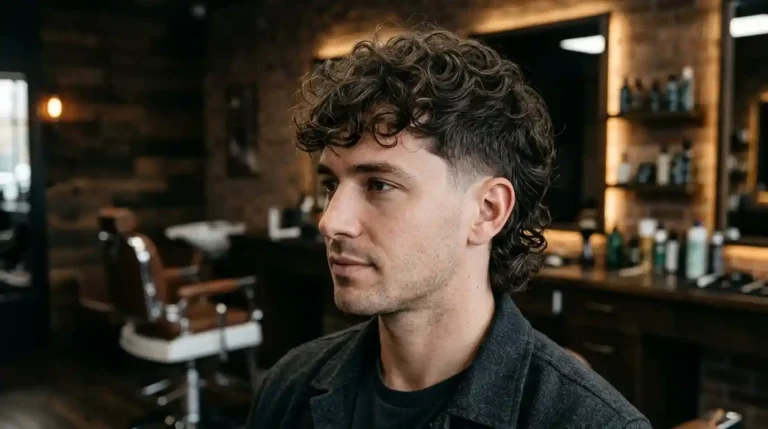
Curly or long-curly fohawk
A curly fohawk features natural curls concentrated along the center of the head.
The sides may be tapered or faded to emphasize the upper texture.
A longer curly version creates more volume and movement.
The barber must account for curl shrinkage when selecting the length.
A diffuser and suitable curl cream can help maintain definition.
Avoid forcing the curls into a rigid spike formation.
The most attractive result often comes from allowing the natural curls to create a rounded or textured central silhouette.
Natural-hair or Afro fohawk
A natural-hair fohawk, sometimes called an Afro fohawk, emphasizes the natural volume of coily or Afro-textured hair.
The barber shapes the central section to create a raised crest while shortening the sides.
A temple taper or burst fade can frame the shape.
For longer coily hair, a hair pick may help lift the roots after appropriate detangling.
A twist sponge can create additional coil definition where suitable.
Leave-in conditioner, curl cream, or an appropriate moisturizer may help manage dryness.
Products containing shea butter or natural oils may work for some textures, although heavy applications can reduce movement.

Polished and professional fohawks
Classic professional fohawk
A professional fohawk keeps the center crest relatively low and wide.
The sides are softly tapered rather than aggressively shaved.
The top may be styled with subtle upward movement, creating a neat silhouette that looks similar to a modern textured haircut.
A small amount of matte paste or styling cream provides sufficient control for many hair types.
For conservative workplaces, avoid elaborate shaved designs or extreme spikes.
The main advantage is flexibility: the same haircut can look understated during work hours and more defined when styled upward.
Smooth or sleek fohawk
A sleek fohawk emphasizes controlled strands rather than separated texture.
The central crest is raised gently and directed backward or inward.
A lightweight pomade or styling cream can create a smooth appearance.
This variation works well with straight hair and some wavy textures.
The barber should avoid creating overly short, disconnected sides if you want a classic finish.
A low taper complements the polished shape.
Unlike a traditional spiked fohawk, the sleek variation relies on smooth direction and a softer central ridge.
Front-combed fohawk
A front-combed fohawk directs additional hair toward the forehead while maintaining some central lift.
The upper hair may form a short textured fringe.
The sides remain tapered.
This variation is useful for men who prefer some forehead coverage.
It can also accommodate growth patterns that naturally direct hair forward.
However, if the entire top is styled flat toward the forehead, the result may resemble a textured crop rather than a faux hawk.
A visible central ridge should remain to preserve the fohawk identity.
Pompadour fohawk
A pompadour fohawk combines the backward sweep of a pompadour with the central shape of a faux hawk.
The front has noticeable height, while the surrounding upper hair leans toward the center.
This creates a sophisticated but expressive appearance.
The barber should preserve enough length near the forehead for volume.
A low or mid taper can balance the style.
Blow-drying and a medium-hold product are usually helpful.
For men who want less central emphasis and more sideways movement, the Comb Over Taper Haircut provides another polished alternative.
Long and statement fohawks
Long fohawk
A long fohawk features a substantial central section that can be styled into a tall crest.
The top may be four inches or longer, depending on texture and desired height.
The sides are tapered or faded to create contrast.
Longer hair offers more styling possibilities but can become heavy.
The barber should control bulk without weakening the center strip.
A suitable pre-styler, blow-dryer, and holding product may be necessary.
For a more wearable finish, the crest can be brushed backward or flattened.
Fohawk mullet
A fohawk mullet combines a raised central crest with additional length toward the back of the head.
The temples and sideburns may be tapered or faded while the rear hair remains longer.
This creates a distinctive profile.
The barber needs to maintain a smooth transition from the central top into the extended rear section.
A burst fade can complement the shape around the ears.
The hairstyle is more expressive than a conventional short fohawk.
It is suitable for men who prefer modern hybrid haircuts.
Deep-part or swirl fohawk
A deep-part fohawk introduces a more obvious separation along one side of the top.
The hair can be directed toward the center to create an asymmetrical crest.
A swirl variation uses curved styling direction to create additional movement.
These are creative adaptations rather than universally standardized fohawk categories.
The barber should work with the natural hair growth direction to prevent the top from separating awkwardly.
A medium-length top provides enough flexibility for these shapes.
Fohawk with a shaved or geometric design
A shaved design adds decorative lines near the temples or side panels.
The design may be straight, curved, or geometric.
A mid or high fade provides a contrasting background.
However, decorative lines require careful positioning.
The barber should confirm the design before shaving.
A pattern that is too large may compete with the central crest.
For a subtle result, use a single narrow line.
For a statement style, more elaborate designs are possible, provided they complement the haircut’s proportions.
Rocker fohawk
A rocker fohawk emphasizes strong height, spiked texture, and pronounced contrast.
The central strip may be relatively narrow and styled into distinct points.
The sides may have a high fade or close clipper finish.
This variation resembles the dramatic character of a mohawk without necessarily shaving the entire side panel.
Strong-hold styling products may help maintain the shape.
However, frequent aggressive styling can make hair feel dry or stiff.
A professional cut with appropriate graduation is more reliable than trying to build extreme height using excessive product alone.
Fohawk with highlights or color
Highlights or contrasting hair colors can emphasize the raised center.
For example, a lighter central crest with darker sides creates additional visual separation.
Subtle highlights can also make natural texture more noticeable.
A two-tone version produces a more expressive result.
However, bleaching and repeated coloring can increase dryness and breakage.
Use suitable conditioning products and consider professional application for significant color changes.
Color should enhance the haircut’s shape rather than replace good cutting and styling technique.
Fohawk variations with a beard or line-up
A fohawk can be paired with stubble, a short beard, or a fuller beard.
The facial hair influences how the haircut balances the face.
A neatly shaped beard can add visual weight around the jaw, while a short fohawk creates additional height above.
The barber may blend the sideburns into the beard using gradually increasing clipper lengths.
A line-up can sharpen the temples and front hairline.
However, aggressively squaring the hairline may not suit everyone, particularly men with recession at the corners.
A natural line-up usually grows out more softly.
For inspiration on combining a short taper, defined hairline, and beard blend, the Drake Taper Haircut demonstrates related grooming techniques.
Asian fohawk variations
Many men with dense, naturally straight hair find that a fohawk creates a structured appearance.
However, coarse straight hair may stand outward around the sides when cut too short.
A barber should carefully manage the upper side weight.
A medium-length center crest can be lifted using a blow-dryer and suitable matte styling product.
A low or mid taper helps control the lower perimeter.
For a softer finish, use a wider crest and natural texture.
For a sharper appearance, a mid fade and more defined central peak can work well.
Hair characteristics vary among individuals, so the haircut should be based on actual density, strand behavior, and growth direction rather than ethnicity alone.
Fohawk Taper Decision Guide
Choosing the right fohawk requires balancing the crest shape with the amount of shortening through the sides.
A short top with a low taper produces a different result from a long crest paired with a high skin fade.
Taper-only vs. low taper fade vs. skin fade
| Side treatment | Appearance | Scalp exposure | Grow-out |
| Traditional taper | Soft, natural transition | Usually limited | Often forgiving |
| Low taper fade | Defined lower perimeter | Optional | Moderate |
| Low fade | Shorter lower side panels | Depends on guard | Gradual softening |
| Mid fade | Stronger upper contrast | Variable | More visible changes |
| High fade | Dramatic side contrast | Variable | May need frequent upkeep |
| Skin fade | Very close or shaved finish | More exposed skin | Shortest areas change visibly |
If you want flexibility and a less dramatic hairstyle, begin with a traditional taper or low taper fade.
For stronger contrast, choose a mid fade.
A skin fade is suitable when you specifically want an exposed finish and are comfortable with the maintenance.
How taper height and top length change the finished look
The crest length and taper height work together to create the haircut’s silhouette.
A short crest with a low taper produces a compact, subtle fohawk.
A medium crest with a mid fade looks more defined.
A long crest with a high skin fade produces a bold appearance.
Crest width is equally important.
A narrow crest increases the impression of height and separation.
A wider crest creates more fullness and can be easier to wear in a flatter style.
A common starting range for a medium fohawk is approximately two to four inches through the central top, although the ideal length varies by texture.
Curly hair may need additional stretched length because of shrinkage.
Choose a style based on contrast, styling effort, and grow-out
| Fohawk style | Visual impact | Daily styling | Typical maintenance |
| Tiny fohawk | Subtle | Minimal | Every 3–4 weeks |
| Classic short fohawk | Moderate | About 3–5 minutes | Every 2–4 weeks |
| Textured low taper | Moderate | About 5–10 minutes | Every 2–4 weeks |
| Curly fohawk | Natural volume | Texture-dependent | Every 2–4 weeks |
| High-volume fohawk | Bold | About 10–15 minutes | Every 2–3 weeks |
| Skin fade fohawk | Strong contrast | Depends on crest | Often every 1–3 weeks |
| Long statement fohawk | Dramatic | Often 10–20 minutes | Individual routine |
These are approximate planning ranges, not fixed requirements.
The best haircut is one you can realistically maintain.
For men who prefer minimal styling, a short wide crest with a low taper is usually more practical than a long, narrow spiked fohawk.
How a Barber Cuts a Fohawk
A successful fohawk requires more than trimming the sides and styling the top into a point.
The barber must plan the central crest, graduation, taper placement, and relationship between the front and crown.
Assessing hair growth, crown whorls, and hairline
The barber begins by examining the hair’s natural growth direction.
The front hairline influences how easily the crest can lift.
The crown whorl determines how the rear of the central strip settles.
Hair density also affects the required width.
Fine hair may need a wider central section for visual fullness.
Thick hair may require additional bulk control.
The barber should discuss the desired height and daily styling routine before removing length.
Sectioning the center strip
The center strip is usually established before the sides are cut extensively.
The barber may create a triangular or elongated central section running from the forehead toward the crown.
The section can be narrow or wide depending on the desired appearance.
A narrow center produces stronger mohawk-like definition.
A wider section creates a softer faux hawk.
The barber should check the proportions from the front and back.
Both sides need to support the intended central shape.
An uneven section can create a crest that leans unexpectedly or appears wider on one side.
Tapering or fading the sides
Once the central section is planned, the barber shortens the sides.
Clippers and appropriate guards create the desired taper or fade.
For a low taper, the shortest sections remain near the temples and neckline.
For a mid or high fade, the graduation extends farther upward.
The barber may use clipper-over-comb techniques to maintain a smooth transition.
A foil shaver may be used when a skin fade is requested, but it is not necessary for every fohawk.
The cutting technique should match the intended contrast.
Cutting and shaping the top
The central section is usually shaped with cutting scissors.
The barber may leave additional length near the front and gradually reduce the hair toward the crown.
The exact profile depends on whether you want a short crest, textured ridge, or tall statement style.
Point cutting can create movement in thick hair.
Thinning scissors may be used selectively where suitable, but aggressive thinning can weaken the crest.
For curly or coily hair, the barber should account for shrinkage and the way curls settle after drying.
The aim is to create a haircut that naturally supports the upward styling direction.
Blending the sides into the longer top
The transition between the crest and surrounding hair is important.
A classic tapered fohawk should not have an accidental disconnected shelf.
The barber may use scissors-over-comb or clipper-over-comb blending to soften this area.
The hair through the upper sides should be short enough to emphasize the center but long enough to maintain the intended connection.
For an undercut-inspired version, the transition may be more dramatic.
However, that disconnection should be intentional.
A balanced blend also helps the haircut look acceptable when the crest is not fully styled.
Drying and refining the final shape
Once the cutting is complete, the barber styles the hair to reveal the finished silhouette.
The central strands are directed upward and inward.
A blow-dryer may create additional lift.
The barber then checks whether the crest is centered, proportionate, and balanced from multiple angles.
Any excess bulk or uneven texture can be refined.
The sideburns and neckline are cleaned according to the chosen finish.
Before leaving, ask the barber to demonstrate the styling technique used to create the crest.
What to Ask Your Barber For
A clear barber request should explain the crest length, crest width, side treatment, and preferred styling finish.
Simply asking for a fohawk may produce a much more dramatic or subtle result than expected.
Choose the taper or fade height and clipper guard
Begin by describing the side treatment.
For a subtle appearance, request a low taper.
For additional contrast, request a low or mid fade.
Then specify the shortest clipper guard.
| Guard | Approximate length | Appearance |
| No guard | Varies by blade and lever | Very close stubble |
| #0.5 | 1/16 inch (1.5 mm) | Extremely short |
| #1 | 1/8 inch (3 mm) | Short visible stubble |
| #2 | 1/4 inch (6 mm) | Short side length |
| #3 | 3/8 inch (10 mm) | Fuller side finish |
| #4 | 1/2 inch (13 mm) | Soft blended sides |
These are common nominal guard lengths and may vary by clipper manufacturer.
A useful request is:
“I want a textured fohawk with a low taper. Keep the upper sides fairly full and blend the temples and neckline gradually without taking the shortest section too high.”
Specify the center-strip length, width, and shape
Tell the barber how much hair you want through the center.
For a short fohawk, approximately two inches may be sufficient for a modest peak.
For a fuller style, three to four inches can provide additional height.
Explain whether you want a narrow point or a wide textured ridge.
For example:
“Keep around three inches through the center, with a slightly longer front. I want a moderately wide crest that blends naturally into the sides.”
This is more precise than simply asking for a faux hawk.
Describe the texture and amount of height you want
A fohawk can look smooth, spiky, textured, curly, or messy.
Tell the barber whether you want strong height or a subtle central lift.
For a professional version, ask for a short, wide crest with natural texture.
For a statement version, request additional center length and stronger contrast.
If your hair is curly or coily, explain whether you want defined curls or a more expanded shape.
A useful script is:
“I want the crest to look textured and naturally raised, not like one stiff spike. Please leave enough length so I can also wear it flatter.”
Use reference photos to show the front, sides, and back
Bring photographs from multiple angles.
The front view shows the crest width and height.
The side view shows taper placement and upper side fullness.
The back view reveals the neckline and how far the central shape continues toward the crown or nape.
Try to use photographs featuring hair similar to yours.
A tall straight-hair fohawk may not behave identically on curly hair.
Before cutting, confirm which features in the reference matter most.
Also explain anything you want to avoid, such as shaved sides, extreme spikes, or a disconnected undercut.
How to Style a Fohawk at Home
The fohawk’s appearance depends partly on how the central hair is styled.
A well-cut fohawk should be relatively easy to shape, but longer and more dramatic versions require additional preparation.
Start with clean, towel-dried hair
Begin with clean hair that is slightly damp.
Gently remove excess water with a soft towel or T-shirt.
Avoid aggressive rubbing, which can create tangling and frizz.
Your hair should be manageable but not dripping wet.
Use your fingers to establish the basic central direction.
For curly hair, handle the strands gently to preserve natural curl groupings.
Apply a pre-styler for grip
A pre-styler can help create texture and support before blow-drying.
Fine straight hair may benefit from lightweight mousse or a small amount of sea salt spray.
Thick hair may respond better to a suitable styling cream.
Wavy hair can use lightweight texture products.
Curly or coily hair may need leave-in conditioner or curl cream rather than a traditional volumizing spray.
Apply a modest amount and distribute it evenly.
Too much product can weigh down the central crest before styling begins.
Blow-dry the roots upward and direct hair toward the center
For straight or wavy hair, use a blow-dryer with a gentle heat setting.
Lift the roots while directing the upper strands toward the middle of the head.
A vent brush or fingers can help create height.
Work through the front and crown gradually.
The goal is to build a stable central shape before adding heavy finishing products.
Avoid holding hot air against one section for too long.
The American Academy of Dermatology’s hair-styling guidance recommends limiting unnecessary heat exposure and allowing hair to partially air-dry when possible.
For naturally curly styles, a diffuser may be more suitable than forceful directional drying.
Shape the crest and style the sides
Once the hair is mostly dry, use your fingers to bring the central strands together.
Create a continuous ridge from the front toward the crown.
The crest does not need to form a perfectly sharp point.
A textured ridge often looks more natural.
Keep the surrounding upper sides controlled so they support the central silhouette.
For a short fohawk, a few adjustments may be enough.
For a longer style, work in small sections to distribute volume evenly.
Check the shape from the front and side rather than concentrating only on the front peak.
Choose wax, clay, gel, pomade, or cream for your hair type
Different styling products create different finishes.
| Product | Main benefit | Suitable fohawk |
| Matte clay | Grip and defined texture | Short or thick-hair fohawk |
| Matte paste | Flexible hold | Textured or messy fohawk |
| Hair wax | Separation and stronger control | Spiked fohawk |
| Gel | Structured hold | More sharply defined crest |
| Pomade | Smoothness and shine | Sleek or pompadour fohawk |
| Styling cream | Soft movement | Wavy or professional style |
| Mousse | Lightweight volume | Fine or straight hair |
| Sea salt spray | Texture and grip | Suitable straight or wavy hair |
| Curl cream | Curl definition | Curly or coily fohawk |
| Hairspray | Finishing support | Taller styled crests |
Start with a small amount.
Add more only if the crest needs additional control.
Heavy products can make fine hair collapse, while excessively strong products may create an unnatural stiff finish.
Wear it raised for a bold look or flat for an everyday style
One of the fohawk’s advantages is styling versatility.
For a bold appearance, lift the central section and define the ridge with matte clay or suitable wax.
For everyday wear, reduce the height and direct the hair slightly forward or backward.
A wide, softly graduated fohawk can often resemble a normal textured haircut when worn flatter.
This makes it useful for men who want different looks without changing the haircut.
However, highly disconnected or extreme-spike versions may remain visibly dramatic even when unstyled.

Fohawk Maintenance and Grow-Out
A fohawk needs maintenance in two areas: the shorter perimeter and the longer central crest.
The sides gradually lose definition while the top may become heavier or more difficult to shape.
How often to trim a taper or fade
Many men maintain a tapered fohawk every two to four weeks.
A soft low taper may look acceptable for longer than a sharp skin fade.
Men who prefer a consistently crisp skin fade may schedule earlier touch-ups.
The central crest may not need trimming at every appointment.
For example, the barber may clean the sideburns and neckline while preserving the top length.
A full shape adjustment becomes useful when the crest becomes too wide, heavy, or difficult to maintain.
The ideal schedule depends on growth rate and styling preference.
Keeping the crest shaped between barber visits
The central crest can lose definition as the hair grows.
Longer sections may fall flat because of added weight.
Use appropriate directional styling rather than automatically applying stronger products.
For straight hair, gentle root lifting can restore height.
For wavy hair, allow the natural bends to support the shape.
For curly hair, refresh selected sections with suitable moisture and styling products.
Avoid repeatedly trimming the center freehand if you cannot see the overall shape clearly.
Professional shaping can help preserve the correct width and graduation.
How the fohawk grows out and transitions into another style
A tapered fohawk generally grows into a short textured haircut as the center and sides become more similar in length.
If you want a conventional short hairstyle, the barber can gradually reduce the crest height.
A Taper Haircut Crew Cut Low Fade provides a structured short alternative with less emphasis on the center.
If you prefer a forward fringe, the Edgar taper haircut offers a more geometric direction.
Growing the top longer can eventually support a quiff, textured crop, or side-parted style.
The best transition depends on whether you want to preserve top length or return to a shorter haircut.
Common Fohawk Taper Problems and Fixes
A fohawk can lose its intended appearance when the crest width, side blending, or natural growth direction is not handled correctly.
Understanding these problems helps you determine whether the solution involves styling or a barber adjustment.
What to do when the center crest falls flat
Flatness can result from heavy products, insufficient root lift, excessive top length, or unsuitable cutting.
Begin by reviewing your styling routine.
Use less heavy product and focus on lifting the roots during drying.
Fine hair may benefit from lightweight mousse or texture powder.
Thick hair may need some weight removed by a barber.
If the crest repeatedly collapses despite proper styling, the haircut may require different graduation.
A well-cut fohawk should support the intended central shape without demanding excessive product.
How to fix a crest that looks too wide or too narrow
A crest that is too wide may resemble an ordinary brushed-up haircut.
The barber may be able to reduce selected upper side bulk to create more central definition.
A crest that is too narrow can look disconnected or excessively mohawk-like.
If too much surrounding hair has already been removed, the best option may be to allow the sides to grow.
Avoid repeatedly narrowing the crest at home.
The correct width depends on head shape, density, and the desired styling height.
What to ask for when the sides look disconnected
A visible shelf between the top and sides may result from incomplete blending.
A barber can sometimes soften the transition using scissors-over-comb or clipper-over-comb techniques.
However, the correction may require removing some additional length.
If you wanted a traditional tapered fohawk, explain that the upper sides should connect naturally into the crest.
If the disconnect is too severe to correct without changing the haircut dramatically, allowing the hair to grow may be preferable.
How to adjust the cut when one side grows differently
Hair does not always grow symmetrically.
One temple may have stronger outward growth, while the other side lies flatter.
A cowlick may also cause the crest to lean toward one side.
The barber should assess these patterns before cutting.
Sometimes additional length on the more difficult side creates better balance.
In other cases, controlled removal of bulk improves symmetry.
Avoid assuming that identical clipper movements on both sides will create identical visual results.
The haircut should be adjusted to the natural characteristics of each side of the head.
Cost and Appointment Planning
The cost of a fohawk taper depends on the complexity of the cut, the barber’s experience, location, and additional services.
A simple short fohawk with a low taper is generally less involved than a detailed skin fade with shaved designs and specialized styling.
What can affect the price of a fohawk taper
The main pricing factors include top length, fade complexity, and whether additional scissor work is required.
A basic fohawk taper may fall within the normal price range for a men’s haircut.
Detailed designs, skin fades, beard shaping, and professional styling can increase the total.
In the United States, a broad planning estimate for many men’s haircuts is approximately $30 to $70, with premium barbershops sometimes charging more.
These are illustrative budgeting ranges rather than fixed national averages.
Ask whether the quoted price includes shampooing, styling, beard work, or design detailing.
How much time to allow for the cut and styling
A straightforward short fohawk may fit into a typical 30- to 45-minute barber appointment.
More detailed fades, longer scissor-cut tops, or elaborate designs may require approximately 45 to 60 minutes or longer.
The consultation should also include time to discuss crest width and fade height.
If you want a specific spiked or high-volume finish, ask the barber to demonstrate the styling technique.
This can help you recreate the result at home.
Touch-ups vs. a full haircut appointment
A touch-up focuses on maintaining selected areas without redesigning the entire haircut.
For example, the barber may clean the temples, sideburns, and neckline while leaving the central crest intact.
A full haircut involves reshaping the top, adjusting the crest width, and restoring the taper or fade.
If you’re growing the central strip longer, a perimeter touch-up may be sufficient.
If the top has become too heavy or lost its intended graduation, a full shaping appointment may be necessary.
Explain your goals before booking so the barber can allocate sufficient time.
Frequently Asked Questions
What is a fohawk taper haircut?
A fohawk taper haircut combines a raised central hair crest with gradually shortened temples, sideburns, and neckline.
Is a fohawk the same as a faux hawk?
Yes. Fohawk is a shortened spelling of faux hawk, and both refer to the same mohawk-inspired hairstyle.
What is the difference between a fohawk and a mohawk?
A fohawk usually retains tapered or faded side hair, while a traditional mohawk features a more clearly separated central strip and shaved sides.
Is a low taper good for a fohawk?
Yes. A low taper creates a clean, subtle finish while preserving enough side fullness for a natural-looking central crest.
How long should the hair be for a fohawk?
Approximately two to four inches through the center works for many fohawk styles, although shorter and longer variations are possible.
Can straight hair get a fohawk taper?
Yes. Straight hair can create a defined crest using suitable top graduation, root lift, and a lightweight styling product.
Does a fohawk work with curly hair?
Yes. Natural curls can create a textured central ridge while tapered or faded sides provide definition.
Is a fohawk suitable for a professional workplace?
Yes. A short, wide crest with a low taper can be styled subtly for many professional settings.
Which fade works best with a fohawk?
A low or mid fade is versatile, while a high or skin fade creates a more dramatic appearance.
Can a fohawk be styled without blow-drying?
Yes. Some hair textures naturally provide enough lift, and a small amount of suitable styling product may be sufficient.
What product is best for a fohawk?
Matte clay or paste works well for textured styles, while mousse, curl cream, gel, or wax may suit different hair types and finishes.
How often should a fohawk taper be trimmed?
Many men refresh the haircut every two to four weeks, depending on fade height, hair growth, and preferred sharpness.
Is a fohawk good for thinning hair?
A short, wide crest may suit some thinning patterns, but the result depends on the location and degree of hair loss.
Can you wear a fohawk flat?
Yes. Many softly blended fohawks can be brushed flatter for a more conventional everyday appearance.
Does a fohawk work with a beard?
Yes. A barber can blend the sideburns into a beard to create a balanced and coordinated hairstyle.
How much does a fohawk taper cost?
Many U.S. barbershops may charge approximately 30–70, with detailed fades, designs, or premium services costing more.
Final Thoughts
The fohawk taper haircut is a versatile men’s hairstyle that combines the distinctive central crest of a mohawk with the clean, wearable appearance of tapered or faded sides. A classic short fohawk provides a subtle everyday look, while textured, curly, high-volume, and skin-faded variations create stronger personal style. The most important decisions are the center-strip width, top length, taper height, and amount of styling effort you’re comfortable with. Before your next barber appointment, choose a realistic reference photo, explain how tall and wide you want the crest, and confirm whether you prefer a soft taper or sharper fade. With an appropriate haircut and simple styling routine, a fohawk can remain practical, modern, and adaptable. For more men’s hairstyle inspiration, taper variations, and barber guides, explore Taper Haircut Hub and find a cut that suits your hair and lifestyle.


One Comment