
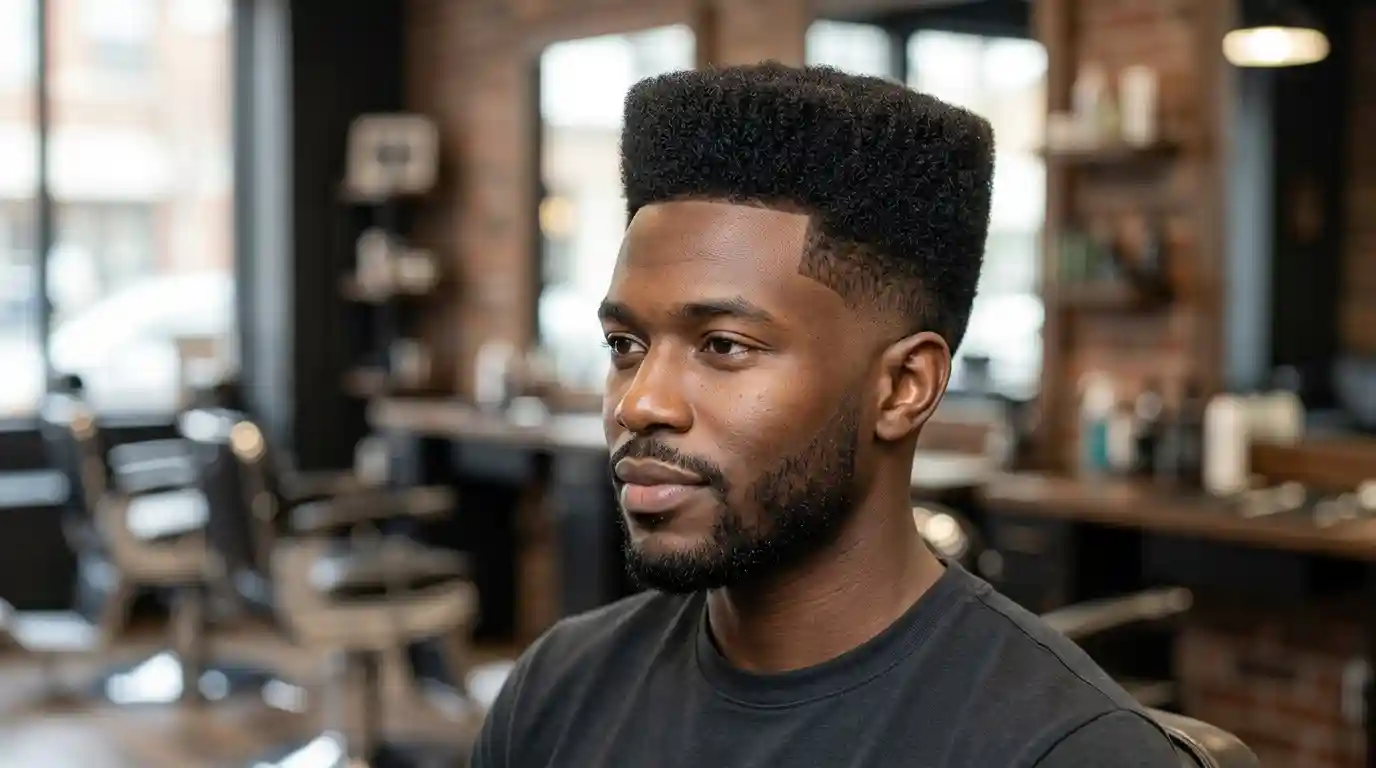
High Top Taper Haircut: 33 Styles, Barber Guide, and Maintenance
The high top taper haircut combines impressive height and shape on top with clean, gradually shortened sides, creating a distinctive hairstyle that balances bold volume with precise barbering. Closely associated with Black barbershop culture and the golden age of hip-hop, the high top has evolved from the classic squared-off box fade into modern variations featuring natural curls, rounded tops, twists, locs, braids, temple fades, and creative designs. Unlike a traditional short haircut, its defining feature is the elevated top silhouette, which can be sharply flat, softly rounded, deliberately slanted, or naturally textured.
Whether you prefer a classic high top taper, a high skin fade with a box-shaped top, or a modern curly high top with a clean neckline, the right combination of hair height, density, taper placement, and cutting technique makes all the difference. This guide explores 33 high top taper haircut styles, explains how to choose the right shape for your face and hair texture, and covers barber instructions, grow-out timelines, styling products, costs, and maintenance. You will also learn how to preserve height, manage shrinkage, and keep your haircut balanced between appointments.
Table of Contents
- What Is a High Top Taper Haircut?
- The History of the High Top
- High Top Taper Haircut Styles
- How to Choose the Right High Top Taper
- Is Your Hair Ready for a High Top Taper?
- How to Ask Your Barber for a High Top Taper
- How a Barber Cuts and Shapes a High Top
- How to Style and Care for a High Top at Home
- High Top Taper Maintenance and Grow-Out
- High Top Taper Cost and Maintenance Budget
- High Top Taper Troubleshooting
- Frequently Asked Questions
- Final Thoughts on the High Top Taper Haircut
What Is a High Top Taper Haircut?
A high top taper haircut is a hairstyle with noticeably elevated hair on top and gradually shorter hair around the temples, sideburns, and neckline. The top is often sculpted into a flat, box-shaped silhouette, although modern interpretations can be rounded, curly, twisted, or naturally shaped.
The word high top describes the height and shape of the upper hair. The word taper describes how the hair becomes shorter around the edges.
These are separate characteristics.
A high top can be paired with a subtle temple taper, a low fade, a high skin fade, or another carefully blended side treatment. The final haircut depends on both the top silhouette and the amount of hair removed around the sides.
Traditional high tops are particularly associated with dense, tightly curled or coily hair, which can support a tall, structured shape. Different textures can also be adapted into high-top-inspired hairstyles, although they may not hold the same vertical silhouette without styling.
Common high top features include:
- A noticeably elevated top, sometimes several inches high.
- A squared, flat, rounded, slanted, or natural silhouette.
- Shorter hair around the temples and sideburns.
- A carefully shaped neckline or nape.
- Clean blending between the upper hair and shorter sides.
- Optional lineups, beard blends, shaved designs, twists, braids, or color.
Some modern high tops preserve additional length on the sides and back. Others use a full skin fade for maximum contrast.
How the High Top, Taper, and Fade Work Together
The high top establishes the overall shape.
For a classic box-shaped style, the barber sculpts the hair upward and creates a relatively flat upper surface. The corners may be sharply squared, giving the haircut an architectural appearance.
For a rounded high top, the hair rises naturally and follows a curved outline.
The taper or fade determines how the elevated section connects to the sides and back.
A low temple taper shortens a smaller area near the temples while preserving additional fullness around the sides.
A mid fade removes more hair across the side panels.
A high fade creates stronger contrast, making the elevated top appear more prominent.
The neckline also contributes to the finished appearance. A clean nape taper can make the hairstyle look deliberate from behind without requiring the entire back to be shaved.
A good barber evaluates these elements together.
For example, an extremely tall top with very narrow sides may look unbalanced on some head shapes. Leaving slightly more width around the upper sides can produce a better overall silhouette.
High Top Taper vs. High Top Fade
A high top taper and a high top fade share the same general concept: elevated hair on top with shorter hair around the perimeter.
However, the side treatment can differ considerably.
| Feature | High Top Taper | High Top Fade |
| Main top feature | Elevated, shaped hair | Elevated, shaped hair |
| Shortest areas | Often localized near temples and nape | Frequently cover larger side areas |
| Upper-side fullness | Usually more retained | Often significantly reduced |
| Contrast | Subtle to moderate | Moderate to dramatic |
| Skin exposure | Optional | Common in bald-fade versions |
| Overall silhouette | Fuller and softer | Sharper and more defined |
| Maintenance | May grow out more gradually | Short fades often require frequent cleanup |
A classic high top fade commonly features a prominent vertical top and closely faded sides.
A high top taper can preserve more surrounding hair while using short, blended edges to refine the outline.
However, the terminology is not completely standardized.
Some barbers use high top taper fade to describe a high top with very short temple and neckline transitions.
Others use the phrase for a broader fade.
For this reason, it is better to show your barber the exact side profile you want rather than relying on the name alone.
High Top vs. Flat Top
The high top and flat top are closely related, but the names emphasize different characteristics.
A high top describes the overall elevated silhouette.
A flat top describes a specific shape in which the upper surface is cut into a relatively level plane.
A traditional high top fade frequently includes a flat top, but not every modern high top is flat.
For example, a rounded curly high top may have considerable height without forming a straight horizontal surface.
A short military-style flat top may have a level upper surface but significantly less height than a classic high top.
| Feature | High Top | Flat Top |
| Main defining feature | Visible vertical height | Flat upper surface |
| Typical shape | Box, rounded, slanted, or natural | Level or nearly level top |
| Hair length | Short, medium, or tall | Often short to medium |
| Texture | Commonly coily or curly, with adaptations | Depends on haircut and styling |
| Sides | Taper, fade, or other short finish | Often tapered or faded |
| Overall appearance | Can be dramatic and elevated | More geometrically structured |
If you want the classic squared high top, tell your barber that you want a flat upper surface and defined corners.
If you prefer a softer look, request a rounded or natural high top.
High Taper vs. High Taper Fade
These terms can cause confusion because high may refer to either the top height or the placement of the taper.
A high top with a low taper can have several inches of hair on top while keeping the shortest transition near the edges.
A high taper refers to a transition that rises higher around the sides.
A high taper fade usually suggests a more pronounced reduction in length, sometimes approaching the skin.
The two decisions are independent.
You can have a tall high top with a low temple taper, or a shorter high top with a high skin fade.
When speaking with your barber, describe both measurements separately:
“I want about four inches of visible height on top, with a low temple taper.”
This is far more specific than asking for a high taper without explaining whether you mean the top or the sides.
The History of the High Top
The high top is more than a modern haircut trend.
It has a significant place in Black American grooming history, particularly through its association with Black barbershops, hip-hop, dance, film, and late-1980s and early-1990s fashion.
The High Top’s Roots in Black Barbershop and Hip-Hop Culture
The high top developed through Black barbering traditions that emphasized precision, creativity, and distinctive hair shapes.
Earlier Afro hairstyles demonstrated the possibilities of natural volume and texture. Barbers developed increasingly geometric styles by combining that volume with close clipper work and sharply shaped edges.
During the 1980s, the high top became especially recognizable through hip-hop and popular music.
Artists such as Big Daddy Kane and Kid ‘n Play helped bring tall, structured high tops into mainstream visibility.
The style was closely connected to the music, fashion, and self-expression of the era.
One famous example was Christopher “Kid” Reid of Kid ‘n Play, whose tall hi-top became an immediately recognizable part of his public image.
The Smithsonian Institution preserves a 1989 photograph of Kid ‘n Play and their DJ outside the Apollo Theatre, documenting Kid’s striking tall hi-top fade.
Barbers also experimented with designs, angled tops, sharply squared edges, and creative fades.
The high top became a form of visual individuality.
It demonstrated the barber’s technical ability while allowing the wearer to express personal style.
The haircut was never limited to one exact shape. Its variations were part of what made it culturally distinctive.
Classic and Modern High Top Silhouettes
Classic high tops often featured tall, dense hair cut into a rectangular or box-shaped outline.
The upper surface appeared relatively flat, while the sides were closely faded.
Sharp corners, clean lineups, and symmetrical proportions were important parts of the look.
Some variations used angled tops, stepped shapes, or asymmetrical designs.
Modern high tops offer considerably more flexibility.
A contemporary version may be shorter, with a softer rounded top and a low taper.
Another may preserve natural curls instead of cutting them into a completely flat surface.
Twists, sponge curls, locs, and braids can also be incorporated into high-top-inspired silhouettes.
The classic high top remains an important historical style rather than simply an outdated haircut.
Modern interpretations continue to draw from its combination of volume, barbering precision, and personal expression.
The important distinction is that a true classic high top is built around a sculpted elevated shape, while many newer versions emphasize natural texture and adaptable styling.
High Top Taper Haircut Styles
The high top can be adapted through height, shape, taper placement, hair texture, and decorative details.
A squared classic top creates a different impression from a rounded curly top, even when both use the same fade.
Likewise, a temple taper produces a softer appearance than a high bald fade.
The following 33 variations cover classic high top shapes, modern fades, natural textures, and creative pairings.
Structured High Top Shapes
Structured high tops emphasize the outline of the elevated hair.
The top may be flat, rounded, slanted, or intentionally geometric.
These styles rely heavily on accurate shaping and symmetry.
1. Classic High Top Taper
The classic high top taper combines a defined elevated top with shorter, blended hair around the temples and neckline.
The upper section is shaped into a relatively neat silhouette, usually with a flat or slightly softened surface.
Unlike a full high fade, this variation can preserve additional length around the upper sides.
The resulting haircut maintains a recognizable high top without creating maximum skin contrast.
Dense, tightly coiled hair is particularly suitable because the natural texture helps support the shape.
The barber uses an afro pick to lift the hair and assess its full height before cutting.
Scissors, a flat-top comb, and clippers can then establish the desired outline.
A low temple taper helps refine the sides while preserving the classic proportions.
For home styling, gently lift the hair with a pick and maintain moisture without applying excessive heavy product.
Best for: Dense coily hair, traditional high top styling, and men wanting a clean but not overly dramatic fade.
Barber request: “Give me a classic high top with a clean, slightly squared shape and a low taper at the temples and neckline.”
2. Classic High Top Fade With a Flat Top
The classic high top fade with a flat top is one of the most recognizable versions of this hairstyle.
It features a tall, level upper surface and closely faded sides.
The shape resembles a rectangular column of hair rising above the head.
The barber must carefully establish the height and width so that the top appears balanced from multiple angles.
The corners are usually defined rather than rounded.
A flat-top comb helps the barber maintain a consistent cutting plane.
The sides may be faded very short, sometimes down to the skin.
This version requires precision because uneven areas become visible across the flat surface.
At home, the hair can be gently picked upward to restore its shape.
However, maintaining a truly level top usually requires regular professional reshaping.
Best for: Dense afro-textured hair and men wanting a classic, geometric silhouette.
Barber request: “I want a traditional flat high top fade with a level upper surface, squared corners, and smoothly blended short sides.”
3. Short High Top
The short high top preserves the elevated shape but uses less vertical height.
It may have approximately 1–2 inches of visible height, depending on curl pattern and the intended outline.
This makes it easier to maintain than a tall classic box.
The top can be flat, softly rounded, or slightly textured.
A low or mid taper creates a balanced appearance.
Short high tops are useful for men who want some vertical structure without committing to extensive grow-out time.
The shorter length may also be practical for active lifestyles.
The barber should still pay attention to the crown and front edge because even a compact high top needs a deliberate silhouette.
For styling, use a small amount of leave-in conditioner and gently lift the hair.
If you prefer an even more compact haircut, a Buzz Taper Haircut removes much of the high top’s vertical shape while retaining clean tapered edges.
Best for: Short coily hair, low-maintenance routines, and men beginning to grow a high top.
Barber request: “Keep a short, slightly elevated high top with a clean shape and a low taper around the edges.”
4. Tall or Classic Box High Top
The tall box high top emphasizes vertical height and sharp geometry.
It may rise four inches or more above the scalp, depending on density, shrinkage, and personal preference.
The top is shaped into a defined flat surface.
The sidewalls rise relatively straight, creating a box-like outline.
This hairstyle requires substantial hair length and enough natural structure to maintain the shape.
A barber may gradually establish the height over several appointments rather than attempting a dramatic transformation immediately.
The top must be checked carefully from the front, both sides, and the back.
A small difference in corner height can make the entire silhouette appear tilted.
Daily picking and careful moisture management help preserve the shape.
This is one of the more demanding high top variations because its geometry makes uneven growth noticeable.
Best for: Dense, tightly coiled hair and men wanting a bold, classic high top.
Barber request: “I want a tall box high top with a flat upper surface, straight sidewalls, and sharply defined corners.”
5. Rounded High Top
The rounded high top provides a softer alternative to the squared box silhouette.
Instead of a completely level upper surface, the hair follows a curved outline.
The highest point may sit near the center or crown, gradually rounding toward the sides.
This creates a natural appearance while still maintaining substantial height.
A low or mid taper works particularly well because it supports the rounded shape without removing too much surrounding volume.
The barber can use scissors and clipper-over-comb techniques to smooth the silhouette.
Natural curls and coils often make this variation easier to style because they already form a rounded volume.
For home care, use a pick gently to restore height.
Avoid over-manipulating the curls if you want a softer, textured finish.
Best for: Curly and coily hair, natural styling, and men who prefer softer shapes.
Barber request: “Give me a rounded high top with natural volume and a low taper, without sharp box corners.”
6. Slanted High Top
The slanted high top creates an intentional angle across the upper surface.
One side may be visibly taller than the other, producing a diagonal line when viewed from the front.
This style is associated with creative high top variations from the late-1980s and early-1990s era.
A slanted high top is sometimes associated with the Gumby-style silhouette.
The important feature is that the angle is deliberate, not the result of an uneven haircut.
The barber must plan the direction, highest point, and lowest point before cutting.
Dense hair helps the shape remain stable.
The fade or taper should complement the angle without making the silhouette look unintentionally off-balance.
For maintenance, the top needs regular reshaping because uneven growth can change the original slant.
Best for: Men who prefer retro-inspired, asymmetrical haircut designs.
Barber request: “Create a deliberately slanted high top with a clean diagonal upper surface and balanced faded sides.”
7. Blocked High Top
The blocked high top emphasizes strong, squared edges and a compact geometric outline.
It resembles the classic box high top but does not necessarily need extreme height.
The upper surface may be relatively flat.
The sidewalls remain defined, and the front corners create a recognizable rectangular shape.
A sharp lineup can reinforce the geometry.
However, the barber should work with the natural hairline instead of aggressively pushing it backward to create artificial corners.
The style requires careful blending beneath the top.
Too much weight left around the transition can make the box look wider than intended.
Too much removed can make the top appear narrow.
A blocked high top works particularly well for men who want clean lines and a structured appearance.
Best for: Dense coily hair and men who enjoy precise geometric cuts.
Barber request: “Keep a compact blocked high top with squared corners, a flat upper surface, and clean taper blending.”
8. Freeform or Modern Natural High Top
A freeform high top retains vertical volume without forcing every section into a perfectly level surface.
The hair may have natural curls, coils, or irregular texture across the top.
The outline is intentionally softer.
A low taper cleans the temples and neckline while preserving the natural fullness above.
This makes the haircut more forgiving than a highly structured box fade.
The barber may shape the outer silhouette lightly rather than cutting every strand to one uniform height.
A good freeform high top should still look balanced from the front, sides, and back.
Natural texture provides much of its character.
For home styling, prioritize moisture and gentle shaping.
Avoid excessive manipulation if you want curls or coils to retain their natural formation.
For men who prefer a softer, less geometric top with deliberately tousled movement, a messy taper haircut offers a related styling direction.
Best for: Natural curls, coils, relaxed styling, and men wanting less rigid geometry.
Barber request: “Keep my natural curls and high top volume, shape the outline lightly, and clean up the temples and neckline with a low taper.”

Taper and Fade Finishes for a High Top
The side treatment can dramatically change the appearance of a high top.
The same top height may appear natural with a temple taper or extremely sharp with a high skin fade.
9. High Skin or Bald Fade
A high skin fade creates maximum contrast between the elevated top and the sides.
The shortest sections are shaved down to bare or nearly bare skin.
The fade then gradually transitions into longer hair near the top.
This makes the high top appear visually taller and more prominent.
A bald fade may require clippers, trimmers, and a foil shaver to create the smoothest finish.
The barber must avoid taking the fade higher than intended.
If too much upper-side hair is removed, the shape can become narrow or disconnected.
A high skin fade also exposes more of the head shape and scalp.
For men who prefer a dramatic, high-contrast look, this can be part of the appeal.
However, the shortest areas show regrowth quickly, making maintenance important.
Best for: Men wanting a sharp, bold high top with strong contrast.
Barber request: “Keep the high top full and structured, with a high skin fade that blends smoothly without cutting into the box shape.”
10. Mid Fade
A high top with a mid fade balances the elevated top with a moderately shortened side panel.
The fade begins around the middle portion of the sides rather than remaining entirely near the lower perimeter.
This creates noticeable contrast without necessarily removing as much upper-side length as a high fade.
A mid fade can work with flat, rounded, curly, or twisted high tops.
The barber should determine where the upper hair begins and ensure the transition does not create an unwanted weight line.
For a classic high top, the shape should still appear symmetrical.
For a natural curly version, some softness through the upper transition may be preferable.
A mid fade is often a practical compromise between a subtle taper and a dramatic high skin fade.
Best for: Men wanting a modern, balanced high top with visible side definition.
Barber request: “Keep the top elevated and full, with a smooth mid fade that leaves enough hair around the upper sides.”
11. Low Fade
The low fade high top retains more side fullness by concentrating the shortest sections closer to the ears and neckline.
The elevated top remains noticeable, but the transition is softer.
This can create a fuller silhouette than a traditional high skin fade.
A low fade works well with rounded and natural high tops.
It can also complement a shorter structured box.
The barber should maintain enough connection between the top and upper sides to prevent an overly narrow appearance.
For men who are growing their high top taller, a low fade may preserve more flexibility during the process.
This version also tends to grow out more gradually than a skin fade extending high across the sides.
Best for: Natural high tops, fuller side profiles, and men preferring moderate contrast.
Barber request: “Give me a low fade under the high top, keeping the upper sides full and the neckline neat.”
12. Temple Fade
The temple fade, sometimes called a temp fade, concentrates the shortest transition around the temples.
It is a particularly natural pairing for a high top taper haircut.
Instead of fading the entire side panel, the barber creates a small, clean blend near the front edges.
The remaining sides may retain more length.
A separate taper can refine the neckline.
This produces a distinctive high top with a softer overall silhouette.
A temple fade works especially well with natural curly, coily, twisted, or rounded high tops.
It can also help connect the sideburns into a beard.
The main advantage is flexibility.
You can maintain the high top’s fullness while still having clean, defined edges.
Best for: Natural high tops, classic temple tapers, and men wanting a subtle fade.
Barber request: “Keep the high top full and give me a clean temple fade with a natural tapered neckline.”
13. Burst Fade
A burst fade creates a rounded transition around the ear.
The shortest section follows a curved path, while additional length may remain toward the back.
This can create a distinctive high top silhouette, especially when combined with a longer crown or mullet-inspired shape.
A subtle burst taper keeps the transition relatively localized.
A stronger burst fade produces more obvious contrast.
The barber should clarify how much hair should remain behind the ear.
If too much is removed from the rear section, the high top may lose its intended balance.
Curly and textured high tops can work particularly well with this curved fade.
A rounded top can also complement the circular fade shape.
Best for: Curly high tops, modern fade designs, and hairstyles retaining more back length.
Barber request: “Keep the high top full, create a rounded burst fade around the ears, and preserve the shape through the back.”
14. Drop Fade
A drop fade curves downward behind the ear rather than remaining at one consistent height around the head.
This follows the shape of the skull and can create an attractive side profile.
A high top with a drop fade retains visible height while the shorter transition wraps toward the nape.
The fade can begin relatively high or low around the temples.
The defining feature is the downward curve toward the back.
A drop fade can work with classic box, rounded, or curly high tops.
The barber must consider the crown carefully.
If the fade drops too sharply or cuts into the back of the elevated shape, the silhouette may appear uneven.
This style is particularly effective when you want a modern contour without completely flattening the back.
Best for: Men wanting a curved fade with a balanced back profile.
Barber request: “Give me a high top with a drop fade that curves behind the ears and keeps the crown shape intact.”
15. Disconnected High Fade
A disconnected high top uses a visibly stronger separation between the elevated top and the closely cut sides.
Unlike a smooth, gradual transition, the top may appear to sit above a distinct short section.
This produces an architectural, high-contrast silhouette.
The barber should plan the separation line carefully.
If the high fade rises too far, the top may become narrower than intended.
For a flat box, a defined disconnection can emphasize the straight sidewalls.
For a curly high top, the natural texture may soften the contrast slightly.
This haircut requires confidence in the chosen shape because it can be difficult to correct without reducing the overall height.
Regular maintenance also matters because regrowth changes the appearance of the separation.
Best for: Men wanting a bold, sharply defined high top.
Barber request: “Keep a strong high top silhouette with deliberately disconnected short sides, but show me the separation line before cutting.”
16. High Top With a Tapered Neckline
A high top with a tapered neckline focuses on keeping the nape clean while maintaining fullness through the upper sides and back.
This is useful for men who do not want a full fade.
The temples may have a subtle taper, while the nape receives its own gradually shortened finish.
The neckline can follow the natural hairline instead of forming a harsh blocked edge.
This creates a softer grow-out.
A tapered neckline works with flat, rounded, curly, and longer high tops.
For a classic box, the barber should ensure the rear silhouette remains balanced.
For a natural high top, the nape can be cleaned without removing the longer curls above it.
This variation is practical for men who prioritize shape over dramatic skin contrast.
Best for: Fuller high tops and men wanting understated maintenance.
Barber request: “Keep my high top and upper-side fullness, but clean the nape with a gradual neckline taper.”
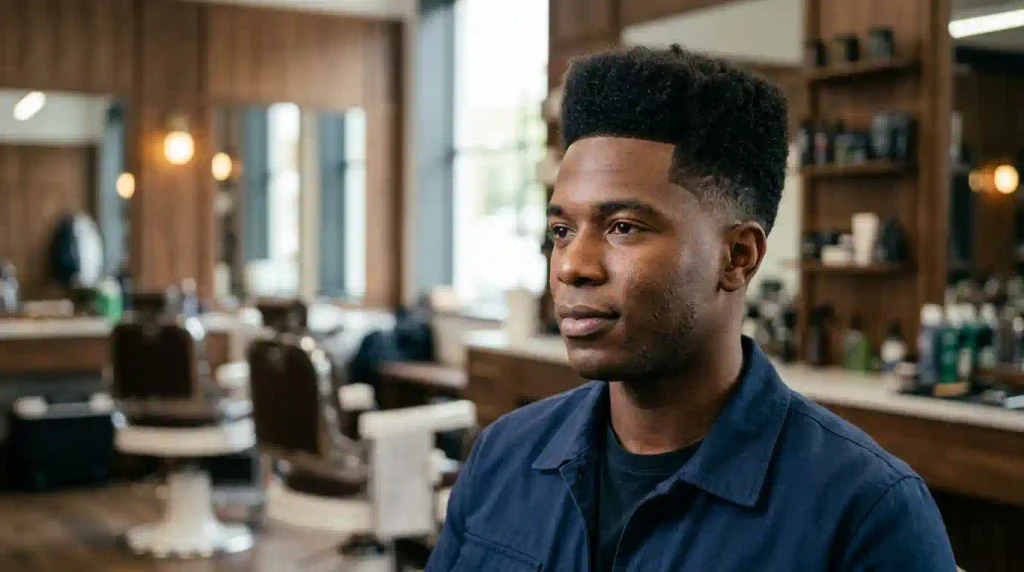
High Tops by Hair Texture and Styling
Hair texture strongly affects the height, outline, and maintenance of a high top.
Tightly coiled hair often supports a structured vertical shape naturally.
Looser textures may produce a softer, rounded silhouette.
Twists, locs, and braids introduce additional styling possibilities.
17. Afro High Top
The afro high top combines the natural fullness of an Afro with a more deliberately elevated upper shape.
The top may be flat, rounded, or lightly sculpted.
Dense, tightly coiled hair provides the structure needed to maintain volume.
A low temple taper can clean the edges while preserving the natural silhouette.
A mid or high fade creates stronger contrast.
The barber should evaluate the hair in its picked-out state before establishing the desired height.
The amount of shrinkage and the natural density distribution influence the result.
For home styling, use a wide-tooth afro pick carefully and avoid unnecessary pulling at the roots.
Moisturizing products can help maintain flexibility and reduce dryness.
A traditional Afro high top does not require perfectly uniform curls.
Its appeal often comes from combining natural texture with a carefully balanced outline.
Best for: Dense afro-textured hair and men wanting natural vertical volume.
Barber request: “Shape my Afro into a balanced high top with natural volume and a clean temple taper.”
18. Natural Curly High Top
A natural curly high top features visible curls rather than a rigid flat upper surface.
The overall shape is elevated, but the individual curls remain recognizable.
A rounded or softly squared outline works particularly well.
The barber should account for how the curls fall when dry.
Cutting the hair while wet without considering shrinkage can produce unexpected differences in height.
A low or mid taper controls the sides.
The top can be shaped with scissors to preserve curl definition.
For styling, apply a suitable leave-in conditioner or curl cream to damp hair.
Use your fingers to define the curls and allow them to air-dry or use a diffuser.
Avoid repeatedly brushing the curls after drying.
This version prioritizes natural texture over a perfectly level surface.
Best for: Naturally curly hair and men wanting a softer high top.
Barber request: “Keep my natural curls visible, shape the top into a rounded elevated silhouette, and add a low taper.”
19. Sponged High Top
The sponged high top uses a curl sponge to encourage small, separated coil formations across the elevated top.
It is commonly associated with short-to-medium afro-textured hair.
The haircut retains a structured high top outline while the sponge creates visible texture.
A low or mid fade can highlight the textured top.
The barber should leave enough hair length for the sponge to form the desired coils.
Extremely short hair may not produce the same definition.
For home styling, work on appropriately moisturized hair and use gentle circular motions.
Avoid excessive pressure or prolonged friction because it can increase tangling or breakage.
The final result should show small coil sections while maintaining a balanced high top silhouette.
Best for: Short-to-medium coily hair and men wanting defined sponge texture.
Barber request: “Keep enough length for sponge curls, shape the top into a rounded high top, and give me a clean low taper.”
20. High Top With Short Twists
A high top with short twists combines elevated hair with individually defined twisted sections.
The sides are tapered or faded to emphasize the texture above.
The twists may be relatively uniform or intentionally varied in size.
The overall silhouette can be rounded or slightly box-shaped.
The barber should consider the added visual height created by the twists.
Hair that appears compact when untwisted may look taller or more separated after styling.
Twists should not be installed excessively tightly.
Tension around the hairline and scalp can contribute to discomfort and breakage.
For maintenance, protect the twists while sleeping and follow a cleansing routine suitable for the scalp.
Lightweight moisture products can help maintain softness without excessive buildup.
Best for: Coily hair and men wanting a defined, textured high top.
Barber request: “Keep enough top length for short twists, taper the sides cleanly, and preserve a balanced high top outline.”
21. High Top With Waves
A high top with waves is a styling variation that combines a visibly fuller upper section with a wave pattern.
It should not be confused with a traditional low 360-waves haircut, which usually keeps the hair relatively short across the head.
For a high top variation, the waves may be visible primarily through the top or upper sections.
A taper can maintain a clean perimeter.
The barber should assess whether the hair length and natural pattern can produce the desired effect.
Very tall, loose hair may not maintain the same uniform wave pattern associated with shorter wave styles.
A wave-inspired textured top with moderate height is often more realistic.
A suitable brushing routine, moisture products, and a comfortable durag may help maintain an established wave pattern.
Avoid excessive brushing pressure or tight headwear.
Best for: Men wanting a compact high top silhouette with controlled wave texture.
Barber request: “Keep a slightly elevated top with enough length for my wave pattern and use a clean temple taper.”
22. High Top With Locs or Dreads
A high top with locs retains longer locked sections above closely tapered or faded sides.
The hairstyle is often called a high top loc style or high top dreads.
Unlike a traditional box fade, the top is defined by the arrangement and length of the locs.
Short locs may stand upward or outward.
Longer locs may fall toward the face, sides, or back.
The taper creates a cleaner contrast around the temples and neckline.
However, the barber must avoid cutting into the roots or established parting sections.
The stylist maintaining the locs should coordinate with the barber when necessary.
For home care, maintain scalp hygiene and avoid excessive tension from tight styles.
Use products appropriate for loc maintenance without allowing heavy buildup.
Best for: Men with established locs who want a clean, elevated top section.
Barber request: “Keep my locs and parting sections intact, taper only the designated sides and neckline, and do not cut into the loc roots.”
23. High Top With Braids
A braided high top keeps longer hair through the upper section while the sides receive a taper or fade.
The braids may run backward, form geometric patterns, or follow a center-parted arrangement.
The elevated appearance depends on the braid size, direction, and amount of hair retained.
Unlike a classic flat high top, the shape comes from the braided structure.
A low taper can preserve more hair around the upper sides.
A high fade creates a more pronounced contrast.
The barber and braider should agree on the boundaries of the braided area.
If the sides are faded too high, there may not be enough hair remaining for the intended braid pattern.
Braids should feel secure without causing scalp pain.
Regular cleansing and avoiding excessive tension are important parts of maintenance.
Best for: Men with sufficient length for braids who prefer a structured, low-daily-styling look.
Barber request: “Keep enough top and crown hair for my braid pattern, and taper the sides without cutting into the braid sections.”
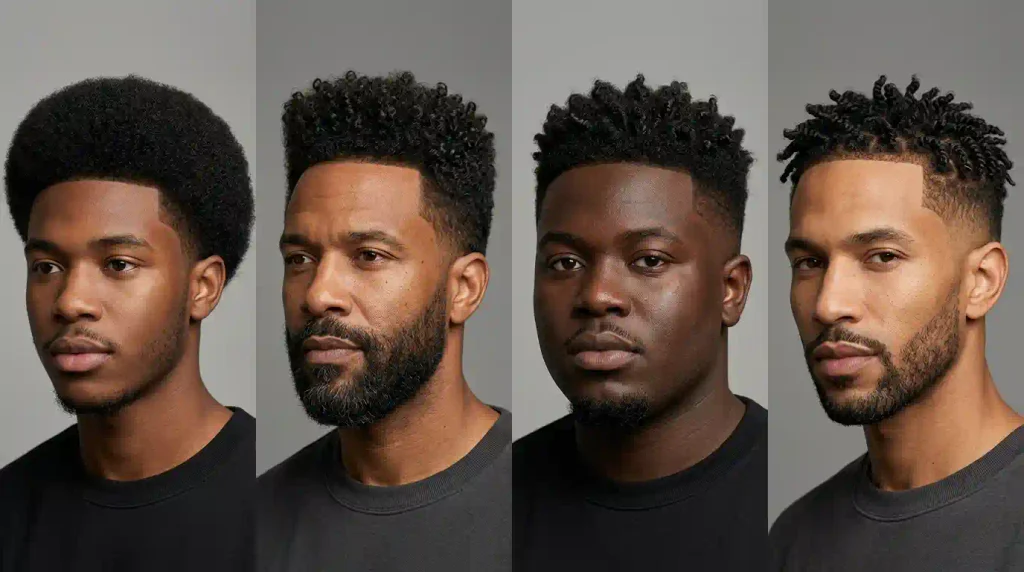
High Top Pairings and Details
Additional styling details can personalize a high top without completely changing its shape.
Facial hair, lineups, shaved designs, color, and alternative top styling can produce very different results.
24. High Top With a Beard
A high top with a beard combines elevated hair with a coordinated facial-hair shape.
The taper can gradually connect the sideburns to the beard.
This creates a smooth transition between the head and facial hair.
A short beard often creates a neat, balanced appearance.
A fuller beard can produce a more rugged silhouette.
The barber should consider facial proportions before choosing the beard length and cheek-line shape.
A very tall top and long beard may emphasize vertical length.
If that is not your goal, a shorter beard or wider top shape may provide better balance.
A temple fade can help create a clean beard connection.
For maintenance, keep the beard conditioned and avoid pushing the sideburn transition too high.
Best for: Men wanting coordinated head and facial-hair grooming.
Barber request: “Give me a high top taper with a smooth sideburn-to-beard blend and a clean neckline.”
25. High Top With a Lineup or Edge-Up
A lineup, also called an edge-up or shape-up, emphasizes the outline around the forehead and temples.
It can make a high top appear especially sharp.
For a classic box-shaped cut, a clean front edge reinforces the geometric design.
The barber uses a trimmer to define the natural hairline.
The goal should be precision without unnecessarily moving the hairline backward.
Overly aggressive repeated lineups can reduce visible hairline coverage and may create an unnatural shape.
A subtle lineup can work with both flat and rounded high tops.
The barber should check the corners from the front to ensure they complement the head shape.
For home maintenance, avoid repeatedly attempting to recreate the line with a razor unless you are experienced.
Best for: Men wanting a sharp, clearly outlined high top.
Barber request: “Keep the high top structured and give me a natural-looking lineup without pushing my hairline back.”
26. High Top With a Hard Part or Razor Design
A hard part or razor design adds a graphic detail to the high top.
The design may be a single carved line near the temple or a more elaborate pattern within the faded section.
A simple surgical line can emphasize the transition between the top and sides.
More complex designs may require additional cutting time and maintenance.
The barber should plan the design according to the available fade area.
If the taper is too narrow, there may not be enough room for the intended pattern.
A design should also complement the high top rather than making the overall haircut visually crowded.
Because shaved lines grow out quickly, their definition may need frequent refreshing.
Best for: Men wanting a personalized or artistic high top.
Barber request: “Keep the high top balanced and add one clean surgical line or a small design within the faded section.”
27. High Top With a Fringe
A high top with a fringe introduces additional length or visible movement at the front.
Instead of maintaining a completely flat front surface, the hair may fall slightly forward.
The fringe can be curly, textured, short, or asymmetrical.
This creates a softer appearance than a classic rigid box.
For curly hair, the front curls may sit over part of the forehead while the crown remains elevated.
For straighter textures, a layered front may be styled into a more directional shape.
The barber must balance the front length with the overall top height.
A heavy fringe can visually pull the silhouette forward.
If you prefer a compact, sharply defined forward fringe, compare the Edgar taper haircut or our guide to french crop taper haircut men.
For longer bangs and more fringe shapes, a fringe taper haircut provides broader inspiration.
Best for: Men wanting a softer high top with front movement.
Barber request: “Keep the top elevated, but leave a little extra length at the front for a natural curly or textured fringe.”
28. High Top With a Side Part or Comb-Over
A high top with a side part is a modern adaptation rather than a traditional flat box.
The hair retains noticeable height, but the upper section is directed sideways.
The part may be natural or deliberately defined.
This style works better for hair textures that can be directed and held into the chosen shape.
For tightly coiled hair, the effect may come from sculpted volume rather than a conventional combed part.
A low or mid taper creates a polished perimeter.
The barber should preserve enough length for the hair to move across the top.
For styling, a lightweight cream, pomade, or appropriate hold product may help maintain the direction.
A Comb Over Taper Haircut is a related alternative with more emphasis on horizontal styling than vertical height.
Best for: Men wanting an elevated, side-directed hairstyle.
Barber request: “Keep volume on top, create a natural side-part shape, and taper the sides cleanly without making the top completely flat.”
29. High Top With a Pompadour or Quiff
The high top pompadour or quiff combines vertical height with front-directed volume.
Rather than forming a uniform box, the front rises upward and often moves backward.
A pompadour usually emphasizes a fuller, smoother front silhouette.
A quiff often allows more texture and a less rigid finish.
These styles are high-top-inspired adaptations rather than traditional Afro high tops.
Straight or wavy hair may require blow-drying and styling products to achieve the lifted shape.
Curly hair can create a softer, textured variation with natural volume.
The barber should preserve enough front length for the desired movement.
A low or mid taper keeps the sides balanced.
Best for: Men with straight, wavy, or curly hair who want height without a flat box.
Barber request: “Keep enough front length for a high-volume quiff or pompadour, with clean tapered sides and a balanced crown.”
30. High Top With a Mohawk or Faux Hawk
A high top mohawk or faux hawk emphasizes a central section of elevated hair.
The sides are cut shorter, making the middle appear more prominent.
A true mohawk typically creates a stronger distinction between the central strip and the sides.
A faux hawk offers a softer interpretation with more blending.
A high top faux hawk can work with dense coily hair because the natural texture supports the elevated central shape.
The barber may create a wider central ridge rather than a narrow strip.
A low or mid taper can keep the look relatively understated.
For a more detailed discussion of this shape, explore the fohawk taper haircut.
Best for: Men wanting a bold central silhouette with textured height.
Barber request: “Keep a raised central high top shape with a soft faux hawk outline and clean tapered sides.”
31. High Top With a Mullet
The high top mullet combines elevated hair on top with additional length through the nape.
The front and crown remain visibly high, while the back extends farther down the neck.
A low taper or burst fade can refine the areas around the ears.
The longer back creates a distinctive silhouette that differs from the classic squared high top.
For coily hair, the back may retain natural volume and texture.
For looser curls, the hair may fall more noticeably toward the collar.
The barber should connect the crown and longer nape intentionally.
If the fade is carried too high into the back, the mullet shape may become disconnected or disappear.
This style offers more movement than a traditional box high top.
For men who prefer longer hair moving naturally around the sides and back, a Flow Taper Haircut provides a softer alternative.
Best for: Men wanting a distinctive elevated top with longer back hair.
Barber request: “Keep a high top shape through the crown, preserve extra length at the nape, and use a low taper around the ears.”
32. High Top With a Blowout
The high top blowout emphasizes volume and outward movement rather than a perfectly flat upper surface.
The hair may rise from the roots and form a rounded, textured silhouette.
This variation can work with curly, coily, and some straight or wavy textures.
A low or mid taper helps keep the perimeter controlled.
For curls and coils, the haircut may rely on natural volume and gentle shaping.
For straighter hair, blow-drying and lightweight volumizing products may be necessary.
The barber should avoid removing so much internal weight that the top collapses.
A high top blowout is often softer and less geometric than a classic box fade.
For related volume-focused styles, see our Blowout Taper Haircut guide.
Best for: Men wanting maximum natural-looking volume and movement.
Barber request: “Keep the top full and elevated with a rounded blowout shape, and taper the edges without losing volume.”
33. High Top With Color
Color can emphasize the shape and texture of a high top.
Popular approaches include blonde tips, a platinum upper section, subtle highlights, or a contrasting colored patch.
A classic box high top with a lighter upper surface can make the geometry more visible.
Curly high tops may use highlights to emphasize individual coils.
Color can also be applied selectively rather than across the entire hairstyle.
However, chemical lightening can increase dryness and breakage.
This is particularly important when maintaining an elevated shape that depends on healthy, flexible strands.
Ask a qualified colorist about the condition of your hair before substantial lightening.
Use appropriate conditioning products and avoid unnecessary heat exposure.
The haircut should be shaped with the colored sections in mind, especially if you want the highlights to follow the outline.
Best for: Men wanting a customized, high-contrast high top appearance.
Barber request: “Keep the high top shape clean and even, and preserve the colored sections so the texture and outline remain visible.”
How to Choose the Right High Top Taper
Choosing a high top is not simply about selecting the tallest photograph.
The best version depends on head shape, facial proportions, hair texture, natural density, growth patterns, and the amount of maintenance you are willing to perform.
A carefully selected silhouette often looks better than a taller style that is difficult to maintain.
Match Top Height and Width to Your Head and Face Shape
The height-to-width relationship strongly influences the appearance of a high top.
A tall, narrow top creates a different impression from a shorter, wider box.
For a round face, moderate vertical height may create the appearance of a longer face.
For an oblong face, an extremely tall, narrow high top may exaggerate vertical proportions.
A shorter high top with slightly more width can create balance.
A square face can work well with a structured flat top, although a rounded shape may soften angular features.
An oval face can accommodate many high top variations.
For a heart-shaped face, the barber may need to balance the upper width with a narrower jaw.
For a diamond-shaped face, some fullness near the upper sides may help balance prominent cheekbones.
These are styling considerations rather than strict rules.
| Face Shape | Possible High Top Approach | Main Consideration |
| Oval | Flat, rounded, or classic box | Maintain proportional balance |
| Round | Medium-height high top | Add controlled vertical structure |
| Square | Classic box or rounded top | Choose angular or soft contrast |
| Oblong | Shorter, wider high top | Avoid excessive vertical emphasis |
| Heart-shaped | Moderately rounded top | Balance upper and lower face |
| Diamond-shaped | Full upper sides with controlled height | Balance cheekbone width |
The barber should also consider the skull’s natural contour.
A flat top must appear level when worn, not merely follow the curvature of the scalp.
Choose a Flat, Rounded, or Slanted Outline
The outline is one of the most important high top decisions.
A flat top creates a geometric, traditional appearance.
A rounded high top produces a softer silhouette and may be easier to maintain with natural curls.
A slanted top creates an intentionally asymmetrical shape.
A blocked top emphasizes strong corners and straight sidewalls.
A freeform high top allows more irregular texture.
Choose the outline based on how you want the haircut to appear when styled normally.
A perfectly flat box requires more frequent reshaping than a natural rounded top.
If you are unsure, begin with a moderately rounded shape.
It generally provides greater flexibility during grow-out.
Check the Silhouette From the Front, Side, and Back
A high top should be evaluated from multiple angles.
From the front, check whether the top appears balanced.
For a classic box, the upper surface should look level and the corners should appear intentional.
From the side, examine the relationship between the front height, crown, and back.
An uneven crown can create a slope that was not part of the intended design.
From behind, check whether the top width and nape transition remain balanced.
A haircut that looks excellent from the front may appear too narrow or bulky from the back.
This is why reference photographs should include all three views.
The barber can also use mirrors to check the shape throughout the appointment.
Consider Your Hair Texture, Density, and Curl Pattern
Dense, tightly coiled hair is particularly suitable for a traditional high top.
Its natural structure can support height and a defined outline without relying entirely on styling products.
Loose curls often produce a softer silhouette.
Straight hair generally needs more styling support to remain elevated.
Fine or low-density hair may not create the same solid box shape.
The barber should evaluate both strand thickness and hair density.
Hair density refers to the number of strands within a given area.
Strand thickness refers to the diameter of individual hairs.
A person may have coarse strands but relatively low density, or fine strands with dense coverage.
These differences influence the achievable shape.
For a traditional high top, density and curl structure are particularly important.
For a modern rounded or textured version, there is more room for adaptation.
Choose a Style for Your Lifestyle and Maintenance Preferences
A high top should fit your daily routine.
A short rounded high top generally requires less precise shaping than a tall box.
A high skin fade may need frequent cleanup to preserve contrast.
A low temple taper can grow out more softly.
Twists, locs, and braids may reduce daily manipulation but introduce their own care requirements.
A sharply lined flat top often needs regular barber visits.
If you travel frequently, play sports, wear protective headgear, or prefer quick grooming, consider how these activities affect the hairstyle.
For a clean, compact option with less height, the Drake Taper Haircut offers a different short-hair approach.
The best haircut is one you can maintain comfortably between appointments.
Is Your Hair Ready for a High Top Taper?
A high top requires sufficient length and appropriate hair structure to create the desired elevated shape.
The amount of growth needed depends on the silhouette and your natural curl pattern.
How Hair Length, Density, and Curl Pattern Affect the Result
For a short high top, approximately 1–2 inches of visible height may be enough to establish the shape.
A medium high top may require around 2–4 inches of visible height.
A taller classic box may rise four inches or more above the scalp.
These are finished silhouette estimates, not guaranteed strand-length requirements.
The actual strand length may be substantially greater, especially for tightly coiled hair.
Density affects whether the top appears solid or separated.
A dense top can support a defined box shape.
Low-density hair may reveal more scalp or create uneven edges.
The barber should assess the hair in its natural and stretched states before recommending a target height.
How Shrinkage Changes the Finished Height
Shrinkage is especially important for curly and coily hair.
A stretched strand may measure several inches but appear much shorter when allowed to return to its natural curl pattern.
The amount of shrinkage varies widely.
It depends on curl structure, moisture, styling method, and the individual hair.
For example, hair that measures six inches when stretched may not produce a six-inch visible high top.
The final shape may rise only a portion of that distance.
This does not mean the hair lacks length.
It means the natural coil pattern occupies space differently.
When planning a high top, tell the barber whether you intend to wear the hair fully picked out, naturally coiled, twisted, or otherwise styled.
A haircut shaped in its stretched state may look different after the hair returns to its natural pattern.
Growing From a Short Cut to a High Top
Growing a high top from a short haircut takes time.
Scalp hair commonly grows around half an inch per month on average, although individual growth rates vary.
The amount of time required depends on your starting length and desired finished height.
A short high top may become achievable after several months.
A tall box may require a considerably longer grow-out period.
The process can be managed in stages.
Stage 1: Establish the foundation.
Allow the upper hair to grow while maintaining clean sides and neckline.
Avoid repeatedly cutting the top shorter.
Stage 2: Develop visible height.
As the top gains length, the barber can begin shaping a rounded or lightly squared silhouette.
Stage 3: Define the high top.
Once enough density and length are available, the barber can establish the desired flat or rounded outline.
Stage 4: Maintain proportions.
Continue refining the sides and top without unnecessarily removing growth.
A staged approach is useful because it allows the barber to assess how the hair behaves as it becomes longer.
What to Expect With Fine, Low-Density, Straight, or Loose-Wavy Hair
Not every hair type can naturally support a classic tall box high top.
Fine hair may bend or collapse instead of standing vertically.
Low-density hair may produce gaps in the upper surface.
Straight hair often requires blow-drying and strong styling products to create height.
Loose-wavy hair may form a softer, less geometric shape.
These characteristics do not prevent someone from choosing a high-top-inspired haircut.
However, they may make a traditional dense box shape unrealistic without substantial styling.
A shorter high top, quiff, pompadour, or textured blowout may be more manageable.
The barber should explain the likely difference between the reference photograph and the achievable result.
Avoid using excessive heat or aggressive styling to force the hair into a shape that causes discomfort or breakage.
When a Shorter Flat Top or Rounded Shape May Be More Manageable
A shorter flat top is useful when you want the geometric appearance without maintaining extreme height.
It requires less hair length and may be easier to reshape.
A rounded high top is another practical option.
Because the upper surface does not need to remain perfectly level, natural curls and coils can contribute to the shape.
This reduces the need for daily precision styling.
If your hair is still growing, a rounded shape can also serve as a transitional haircut.
Men with short hair who want a clean taper while developing additional top length may consider a Taper Haircut Crew Cut Low Fade as a separate short-hair alternative, although it does not produce the same high top silhouette.
The right choice depends on whether you prioritize height, geometry, natural texture, or maintenance simplicity.
How to Ask Your Barber for a High Top Taper
A high top requires more detailed consultation than many ordinary short haircuts.
The barber needs to understand the intended height, width, outline, fade placement, and hairline treatment.
A photograph of a high top is useful, but it should be supported with specific instructions.
Explain the Top Height, Width, and Shape
Start by explaining how tall you want the finished top to appear.
For example:
“I want a medium high top with approximately three inches of visible height when my hair is picked out.”
Next, describe the width.
A narrow top creates a more vertical appearance.
A wider box emphasizes the corners and horizontal proportions.
Then specify the upper outline.
Choose between a flat, rounded, slanted, or natural shape.
If you want a classic box, explain whether the corners should be sharply squared or slightly softened.
The barber should consider the shape of your head and the natural density of the hair.
Do not assume that a particular visible height is achievable from the current strand length.
Ask the barber to assess the hair before establishing a cutting guide.
Specify the Taper or Fade Placement and Finish
Next, explain the sides.
A low temple taper preserves more surrounding hair.
A mid fade creates moderate contrast.
A high skin fade produces a dramatic transition toward bare skin.
If you want a traditional high top taper rather than a full fade, say so explicitly.
For example:
“Keep the upper sides full. I only want the temples and neckline tapered.”
If you want a skin fade, explain where the shortest section should begin and how high the transition should rise.
The barber may use different clipper guards and lever positions to establish the blend.
However, visual reference photos are often more useful than requesting a particular guard number without explaining the desired result.
Describe the Neckline, Temples, and Hairline
The temples and neckline should complement the top.
For a natural high top, a subtle temple fade and tapered nape may be enough.
For a classic box, a sharper edge-up can reinforce the geometry.
If you wear a beard, explain how the sideburns should connect to the facial hair.
The neckline can be softly tapered or more clearly defined.
A natural taper often grows out more gradually.
Avoid requesting an aggressive lineup that pushes the hairline backward.
The barber should follow the existing hairline as closely as practical.
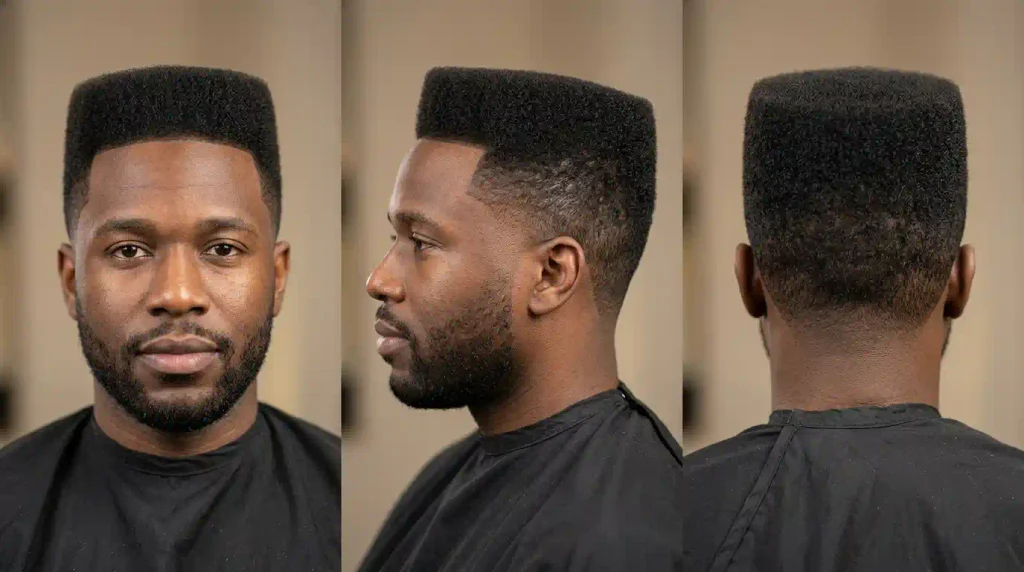
Bring Reference Photos From the Front, Side, and Back
A front photograph shows the desired top width and corner shape.
A side photograph reveals the actual height, fade placement, and transition beneath the top.
A back photograph shows the crown, rear silhouette, and neckline.
All three angles matter.
A high top may appear balanced from the front but too narrow from behind.
Similarly, a flat top can appear level from one side while sloping from the other.
If possible, choose references featuring hair texture and density similar to yours.
Explain which features you want to copy and which should be adjusted.
Example Barber Consultation Script
You can use the following script:
“I want a high top taper haircut with a medium-height top. Please keep the upper hair full and shape it into a slightly squared silhouette with a flat or gently rounded upper surface. I want a low temple taper and a clean tapered neckline, not a full high skin fade. Keep the top balanced from the front, sides, and back, and make sure the crown connects naturally. Please check my curl shrinkage before deciding how much length to remove. I also want the front hairline cleaned up without pushing it backward.”
For a taller box, add:
“I want the top to remain tall with clearly defined corners and a level upper surface.”
For a natural version, add:
“Please preserve the curl definition and avoid cutting everything into a rigid flat shape.”
For locs or braids, add:
“Do not cut into the established roots, parts, or longer top sections.”
These details help prevent a misunderstanding about the intended silhouette.
How a Barber Cuts and Shapes a High Top
A high top is a precision haircut.
The barber must coordinate the elevated top shape with the fade or taper beneath it.
The sequence can vary according to the barber’s technique, hair texture, and intended silhouette.
However, several key stages are common.
Pick Out and Prepare the Hair
The barber begins by examining the hair’s natural texture and density.
For tightly coiled hair, a gentle picking process may be necessary to reveal the full available length.
The hair should be prepared in a way that minimizes snagging and breakage.
If the hair is very dry or tangled, appropriate detangling and moisture may be needed before shaping.
The barber should identify the crown, natural hairline, temples, and uneven density areas.
The top is then assessed from the front, sides, and back.
For a classic flat high top, the barber needs to determine the intended cutting plane.
For a rounded high top, the goal is a balanced outer curve.
Preparation is important because unevenly lifted hair can lead to an uneven finished top.
Establish the Fade Line and Blend the Sides
The barber identifies where the taper or fade should begin.
For a temple taper, only a localized area near the temples may be shortened.
For a high fade, the transition extends farther up the sides.
Clippers and guard adjustments create the initial short section.
The barber then blends the transition using progressively different cutting lengths.
The exact guard progression varies according to the hair and desired finish.
A skin fade may require additional work with a trimmer or foil shaver.
The fade line should be checked carefully because its placement determines how much of the high top remains visible.
If the fade rises too high, the upper shape may become unnecessarily narrow.
The barber should preserve the planned top width throughout the blending process.
Set the Flat Top or Rounded Top Shape
For a classic flat top, the barber lifts the hair using a flat-top comb or afro pick.
A horizontal cutting guide helps establish the upper surface.
The hair may be shaped with clippers over a flat-top comb or with scissors.
The barber works progressively across the top, checking the height after each section.
The objective is to maintain a consistent cutting plane.
For a rounded top, the barber follows a controlled curved outline rather than establishing a perfectly flat surface.
The crown requires special attention.
Natural growth patterns and uneven density may cause some areas to appear lower.
The barber should avoid simply cutting the entire top shorter to compensate for one sparse section.
A better approach may involve adjusting the shape to the available density.
Square the Corners and Shape the Front Edge
For a classic box high top, the corners are major design features.
The barber defines where the upper surface meets the vertical sidewalls.
Sharp corners produce a geometric appearance.
Softer corners create a more rounded box.
The front edge should align with the intended silhouette.
A lineup may be used to refine the natural forehead boundary.
However, the barber should avoid removing excessive hair from the front merely to produce a straighter line.
For slanted high tops, the upper angle must remain consistent.
For a freeform high top, the corners may be left softer and less defined.
The correct finish depends on the reference style.
Check Symmetry and Refine the Silhouette
A high top should be checked repeatedly from different angles.
From the front, the barber examines the upper level and corner balance.
From the sides, the barber checks the slope between the forehead and crown.
From behind, the barber evaluates width and neckline symmetry.
The hair may need to be picked again to reveal areas that were compressed during cutting.
The barber should make small adjustments rather than removing large amounts of length at once.
For curly high tops, the final shape should be assessed in the intended natural state.
For twists or locs, the barber should evaluate how the styled sections sit rather than forcing them into a flat cutting plane.
The haircut is complete when the top and perimeter work together as one balanced silhouette.
Clipper Guards and Tools Used
Common barbering tools include clippers, trimmers, scissors, a flat-top comb, an afro pick, and sometimes a foil shaver.
| Tool | Main Purpose |
| Hair clippers | Establish short sides and taper transitions |
| Clipper guards | Control approximate cutting length |
| No. 0 or close-cutting blade | Create very short areas where appropriate |
| Trimmer | Refine temples, sideburns, and lineup |
| Foil shaver | Create a smooth skin finish when requested |
| Flat-top comb | Help establish a level upper surface |
| Afro pick | Lift coily hair for shape assessment |
| Wide-tooth pick | Gently lift and separate dense hair |
| Scissors | Refine height, corners, and natural shapes |
| Clipper-over-comb | Shape and connect different lengths |
| Barber mirror | Check front, side, and rear proportions |
Clipper guard lengths are approximate and can vary by equipment.
A number zero or open-blade finish is not necessarily the same as a completely shaved skin fade.
A foil shaver or close trimmer may be needed for a bald finish.
For a classic box high top, a flat-top comb and careful cutting control are especially important.
How to Style and Care for a High Top at Home
Maintaining a high top involves preserving the shape while caring for the hair and scalp.
The daily routine depends on whether the top is flat, rounded, curly, twisted, braided, or locked.
A traditional flat high top often requires gentle picking and shape checking.
A natural curly version may need more emphasis on moisture and curl definition.
Pick Out the Hair to Restore Height and Shape
For a classic Afro or box high top, picking helps restore volume after the hair has been compressed.
Start with hair that is appropriately moisturized and manageable.
Use a wide-tooth pick suited to your density and curl pattern.
Work gently through the sections rather than pulling aggressively at the roots.
If the hair is tangled, detangle carefully before attempting to lift the entire top.
Pick upward to restore the intended silhouette.
For a flat top, check whether the upper surface appears level.
For a rounded top, focus on maintaining an even outer curve.
Avoid excessive repeated picking if it causes breakage or disrupts the desired curl definition.
A mirror can help you check the side profile.
However, do not attempt to cut away uneven sections at home unless you have the necessary haircutting experience.
Moisturize Curls and Coils Without Weighing Them Down
Moisture management helps coily and curly hair remain flexible and easier to shape.
Use a shampoo and conditioner suitable for your scalp and hair texture.
A leave-in conditioner can help reduce dryness between washes.
Lightweight curl cream or styling cream may support definition.
Some people use a small amount of argan oil or another suitable hair oil to help reduce friction and improve the appearance of dry ends.
However, oil does not replace water-based conditioning.
Excessively heavy products can make a high top feel greasy or compressed.
For a structured flat high top, too much product may cause the hair to clump and lose its clean shape.
For a natural curly high top, richer moisture products may be suitable depending on the hair’s needs.
Adjust product quantity gradually.
The goal is healthy-looking, manageable hair rather than maximum product coverage.
Choose Styling Products for Hold and Texture
Different high top styles need different products.
| Product | Best For | Main Benefit |
| Leave-in conditioner | Dry curly or coily hair | Softness and easier detangling |
| Curl cream | Natural curly high tops | Curl definition |
| Lightweight styling cream | Rounded or textured high tops | Flexible control |
| Pomade | Selected polished or shaped styles | Hold and shine, depending on formula |
| Matte paste | Short textured tops | Separation and moderate control |
| Lightweight mousse | Loose curls or finer textures | Volume and flexible hold |
| Argan oil | Dry ends, when suitable | Smoothness and reduced friction |
| Gel | Styles needing stronger setting | Firmer hold |
| Texture powder | Some fine or straight adaptations | Root lift |
For a classic dense coily flat top, the natural hair structure may provide most of the support.
Heavy styling products are not always necessary.
For straight or loose-wavy high-top-inspired hairstyles, blow-drying and hold products may play a larger role.
For twists and locs, choose products compatible with the specific style and avoid excessive buildup.
Protect the Shape While Sleeping
Sleeping can compress the high top and change its shape.
A satin pillowcase can reduce friction compared with rougher fabrics.
Some people prefer a satin scarf, bonnet, or other comfortable protective covering.
For shorter wave-based styles, a properly fitted durag may help preserve the pattern.
However, very tall box high tops can be difficult to cover without compressing the upper surface.
Choose sleep protection that accommodates the hairstyle rather than forcing it into a tight space.
Avoid tying coverings excessively tightly around the hairline.
For locs and braids, a protective covering may help reduce friction and tangling.
In the morning, assess the shape before adding more product.
Often a gentle lift or small amount of moisture is enough.
High Top Taper Maintenance and Grow-Out
A high top requires maintenance in two separate areas: the elevated top and the shorter perimeter.
These sections may need attention at different intervals.
How Often to Reshape the Top and Refresh the Fade
A sharp high top fade may benefit from side cleanup every 1–3 weeks, depending on the desired appearance.
A softer temple taper may remain acceptable for longer.
For the top, professional reshaping approximately every 3–6 weeks can help maintain the original silhouette.
A tall, precisely flat box may need more frequent attention because small differences in growth become visible across its level surface.
A rounded natural high top can be more forgiving.
The ideal schedule depends on hair growth, density, and how exact you want the geometry to remain.
Do not assume that every visit requires a complete top reshaping.
Sometimes the sides need a cleanup while the top should continue growing.
How to Keep the Top Level Between Barber Visits
For a classic flat high top, maintain a consistent picking routine.
Check the haircut from the front and side after lifting the hair.
Avoid compressing one section repeatedly with hats or tight headwear.
Use enough conditioning to keep the hair manageable.
If the upper surface begins appearing uneven, check whether the difference comes from compression or actual growth.
A flattened section may recover with gentle lifting.
An uneven cutting plane usually requires professional correction.
Avoid repeatedly trimming the upper surface yourself unless you are experienced with flat-top shaping.
One incorrectly cut section can change the entire silhouette.
How to Maintain the Sides and Top on Different Schedules
The sides often lose their sharpness before the top loses its shape.
You can manage this through separate appointment types.
A taper cleanup focuses on the temples, sideburns, and neckline.
A full reshape includes the elevated top, side blending, and overall silhouette.
If you are growing the top taller, tell your barber to preserve the length during side appointments.
For example:
“Please refresh the temple taper and neckline, but leave the high top height unchanged.”
This prevents unnecessary removal of growth.
A consistent maintenance plan also helps control annual grooming costs.
High Top Taper Cost and Maintenance Budget
The cost of a high top taper depends on the barber’s experience, the complexity of the top, the fade type, and local pricing.
A basic temple taper may require less time than a tall box high top with a precise flat surface.
Detailed designs, beard blending, and specialty styling may increase the total cost.
What Affects the Cost of the Cut
In the United States, a high top haircut may cost approximately 30–100 or more, depending on the service and location.
These are broad planning estimates rather than verified prices for a particular barbershop.
| Service | Illustrative US Price Range |
| Basic temple taper cleanup | 15–35 |
| Standard short high top haircut | 30–60 |
| Detailed high top fade | 40–80 |
| Tall box high top with precision shaping | 50–100+ |
| High top with complex razor design | May cost extra |
| High top with beard detailing | May cost extra |
Major-city barbershops, premium grooming studios, and highly experienced high top specialists may charge more.
Ask whether the price includes washing, picking, top reshaping, fade work, and final styling.
A high top with locs or braids may involve separate services performed by different professionals.
How Often the Top and Sides Need Separate Touch-Ups
The side fade may need refreshing more often than the elevated top.
For example, someone maintaining a high skin fade may prefer appointments every two weeks.
However, the top may only need a complete reshape every four to six weeks.
This makes alternating services useful.
One appointment can focus on the full haircut.
The next can refresh the side fade and neckline.
The barber should confirm whether a smaller cleanup service is available.
If not, every appointment may be charged as a full haircut.
Estimating Upkeep Over a Year
To estimate annual maintenance costs, multiply the number of appointments by the price of each service.
For example, suppose you get a full high top reshape every four weeks at $65.
That results in approximately thirteen appointments per year.
13 × $65 = $845 per year.
If you also book a separate $25 taper cleanup between full appointments, the annual total may increase significantly.
The following examples illustrate different schedules.
| Maintenance Plan | Estimated Annual Visits | Example Annual Cost |
| Full haircut every 4 weeks at $55 | 13 | $715 |
| Full haircut every 3 weeks at $60 | About 17–18 | About 1,020–1,080 |
| Full reshape every 4 weeks at $65 plus 12 extra $25 cleanups | About 25 | About $1,145 |
| Full haircut every 2 weeks at $65 | 26 | $1,690 |
These are illustrative calculations and do not include tips, travel costs, or styling products.
Your actual expenses depend on the barbershop and how often you choose to maintain the haircut.
A softer rounded high top with a low temple taper may reduce the need for frequent precision appointments.
A tall box with a high skin fade is likely to require more consistent upkeep.
High Top Taper Troubleshooting
A high top’s distinctive shape can make small problems more noticeable.
Uneven height, excessive shrinkage, a misplaced fade, or changes around the crown can affect the entire silhouette.
What to Do When the Top Looks Uneven or Tilted
An uneven top may result from the way the hair was picked, natural density differences, or an inaccurate cutting plane.
First, gently lift the hair and check the shape again.
Sometimes one side has simply become compressed.
If the top remains uneven, the cutting shape may need adjustment.
Avoid immediately trimming the taller side at home.
For a classic box, an incorrect correction can reduce the overall height and create new uneven areas.
A barber should check the upper surface from the front, both sides, and the back.
For a deliberately slanted high top, distinguish the intended angle from accidental imbalance.
Why the Shape Becomes Rounded or Loses Height
A flat high top may gradually become rounded as the hair grows unevenly or settles.
Moisture, compression, and changes in curl definition can also affect visible height.
If the hair becomes heavy with product, the upper section may lose some lift.
Try gently restoring the shape with an appropriate pick.
Remove excessive product buildup through a suitable cleansing routine.
If the top has grown beyond its original cutting plane, a barber may need to reshape it.
For a natural rounded high top, minor changes in height may be part of the hairstyle’s appearance.
For a classic geometric box, more frequent precision shaping may be necessary.
What to Ask for if the Fade or Taper Sits Too High
A taper that rises too high can remove the upper-side hair needed to support the intended high top width.
Unfortunately, the removed hair cannot be restored immediately.
The best approach is usually to allow the sides to grow while maintaining the top’s shape.
At the next appointment, ask the barber to lower the transition gradually.
You can say:
“I want to grow the upper sides back in. Please only clean the lower temples and neckline until the shape becomes fuller.”
Avoid repeatedly requesting another high fade during this period.
That may delay the return of the desired side fullness.
When to Correct the Cut and When to Grow It Out
Some problems can be corrected during the same appointment.
Minor unevenness around the top edge may be addressed through careful shaping.
A visible fade line may be softened with additional blending.
However, problems involving excessive hair removal usually require time.
If one side of the top has been cut too short, trimming the entire top to match may sacrifice more height than you want.
A gradual grow-out may be preferable.
Discuss the trade-off with your barber before making a major correction.
A temporary rounded silhouette may help disguise uneven growth until enough length returns for a flat box.
Mistakes Involving Shrinkage, the Crown, or the Hairline
Ignoring shrinkage: Cutting coily hair without considering its finished natural height may leave the top shorter than intended.
Cutting the crown too short: The crown influences the rear silhouette. Excessive removal can create a noticeable dip.
Overly aggressive lineups: Repeatedly moving the edge backward can reduce natural hairline coverage.
Taking the fade too high: This can narrow the top and alter the intended proportions.
Over-picking dry or tangled hair: Aggressive manipulation may increase breakage.
Using too much heavy product: Buildup can reduce flexibility and make the top appear compressed.
Ignoring symmetry: A high top should be checked from several angles rather than only from the front.
The best prevention is a clear consultation and a barber experienced with the specific high top shape and hair texture.
Frequently Asked Questions
What is a high top taper haircut?
A high top taper haircut combines elevated hair on top with gradually shortened hair around the temples, sideburns, and neckline.
What is the difference between a high top taper and a high top fade?
A high top taper usually preserves more side fullness, while a high top fade often shortens a larger area of the sides and back.
Is a high top the same as a flat top?
No, a high top emphasizes vertical height, while a flat top specifically has a level upper surface.
Which hair type is best for a classic high top?
Dense, tightly coiled hair naturally supports the elevated, structured silhouette associated with a traditional high top.
Can straight hair get a high top taper?
Yes, but straight hair may require more styling support and may not naturally hold the same box shape as tightly coiled hair.
How long should hair be for a high top?
A short high top may need approximately 1–2 inches of visible height, while taller styles require substantially more length.
How long does it take to grow a high top?
Growing a high top can take several months or longer, depending on starting length, growth rate, shrinkage, and the desired height.
Is a low taper good for a high top?
Yes, a low temple taper can preserve more upper-side fullness while keeping the edges clean.
Can you combine a high top with a beard?
Yes, the sideburns can be blended into the beard to create a coordinated haircut and facial-hair style.
Can a high top have twists or locs?
Yes, high-top styles can incorporate short twists, locs, or braids while maintaining tapered or faded sides.
How often should a high top taper be trimmed?
Side cleanups may be useful every 1–3 weeks, while top reshaping often occurs around every 3–6 weeks, depending on the style.
How do you keep a high top from losing its shape?
Gentle picking, suitable conditioning, avoiding excessive compression, and regular professional reshaping can help preserve the silhouette.
What is the best product for a high top?
The best product depends on texture: leave-in conditioner suits many coily styles, while curl cream, styling cream, or hold products may suit specific variations.
Is a high top taper high-maintenance?
A tall, sharply squared high top with a skin fade can require frequent maintenance, while a shorter rounded high top with a low taper is generally more forgiving.
How much does a high top taper haircut cost?
A high top haircut may cost roughly 30–100 or more in the United States, depending on the barber, location, and complexity.
Final Thoughts on the High Top Taper Haircut
The high top taper haircut remains one of the most distinctive men’s hairstyles, combining vertical volume, precise barbering, and a strong connection to Black barbershop and hip-hop culture. From classic squared box fades to modern curly, rounded, twisted, and natural high tops, the right version depends on your hair texture, density, head shape, and maintenance preferences.
For a traditional appearance, choose a structured flat high top with clean tapered or faded sides. If you prefer easier styling, consider a shorter rounded high top or natural curl variation. Always discuss top height, width, shrinkage, and fade placement with your barber before cutting.
For more men’s haircut inspiration, explore Taper Haircut Hub and browse our collection of Hairstyles with taper to find a style that suits your hair and grooming routine.
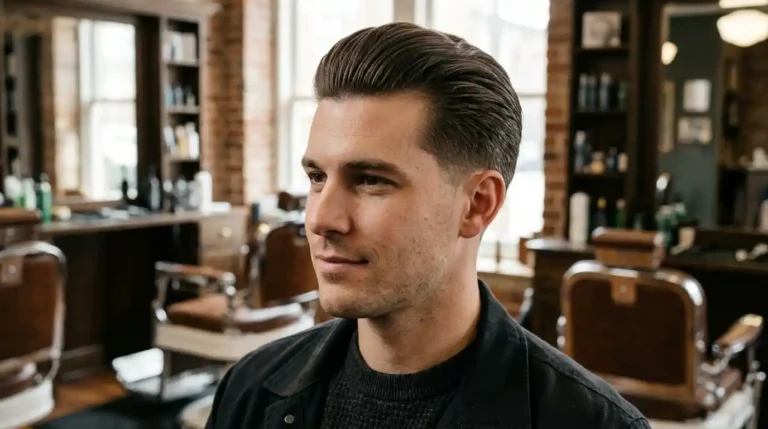


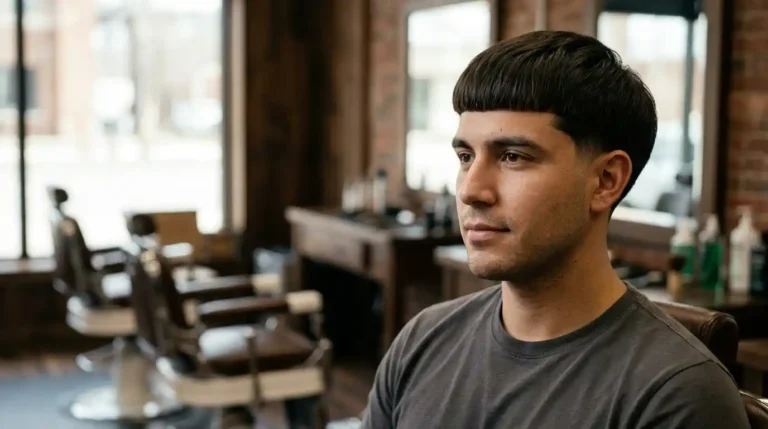
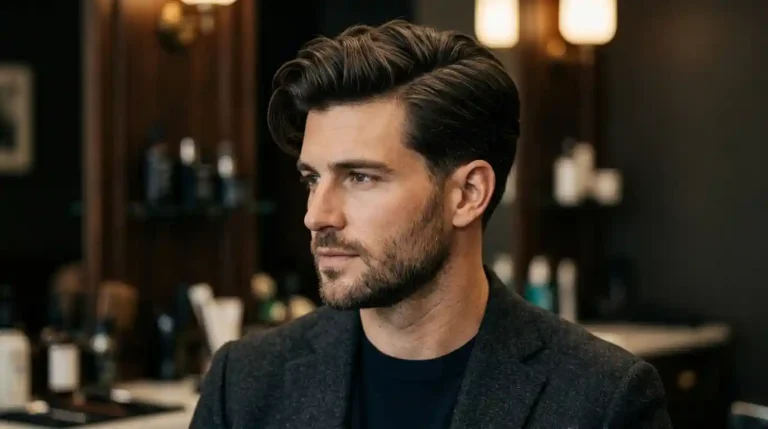

6 Comments