

Flow Taper Haircut: 25 Styles, Lengths & Barber Guide
The flow taper haircut combines the natural movement of longer hair with the clean, structured edges of a modern taper. Instead of cutting the sides extremely short or removing all the length at the back, this hairstyle preserves flowing layers on top, around the crown, and often behind the ears while gradually shortening the hair near the temples, sideburns, and neckline. The result is a relaxed yet polished haircut that works with straight, wavy, curly, and many textured hair types.
Whether you prefer a classic bro flow, a low taper with wavy hair, a middle-part flow, or a modern hockey-inspired hairstyle, the right combination of length, layers, and taper placement can completely change your appearance. A flow taper haircut for men can look casual and beach-inspired, sharp enough for work, or bold and contemporary depending on how it is cut and styled.
This complete guide explores 25 flow taper haircut styles, explains which options complement different hair textures and face shapes, and covers everything from growing your hair to communicating with your barber, styling your flow, and maintaining its shape.
Table of Contents
- What Is a Flow Taper Haircut?
- Flow Taper Haircut Styles
- Choosing the Right Flow Taper
- Hair Length and Grow-Out Guide
- What to Ask Your Barber For
- How to Style a Flow Taper
- Flow Taper Maintenance
- Flow Taper Problems and How to Fix Them
- Flow Taper Haircut Cost
- Frequently Asked Questions
- Final Thoughts
What Is a Flow Taper Haircut?
A flow taper haircut is a medium-to-long hairstyle that combines naturally moving, layered hair with a gradual reduction in length around the sideburns, temples, and neckline.
The word flow describes the movement and direction of the longer hair. It may sweep backward, curve around the ears, separate into a middle part, or fall loosely around the face.
The taper creates a cleaner outline without necessarily removing the fullness that gives the haircut its distinctive shape.
Unlike a traditional short haircut, which may keep the top only a few inches long, a flow hairstyle relies on enough length for visible movement. The hair usually follows its natural growth pattern rather than being forced into a rigid, heavily styled shape.
A typical flow taper includes:
- Medium or long hair on top, often approximately 4–8 inches.
- Scissor-cut layers that create movement and reduce unnecessary bulk.
- A gradual taper around the temples and sideburns.
- A clean neckline that blends into the longer back.
- Natural volume around the crown.
- Enough length through the upper sides to create a flowing silhouette.
The exact dimensions depend on the version you choose.
A low taper flow may preserve almost all the hair around the sides, while a mid or high taper introduces more visible contrast.
How the Flow Shape and Tapered Sides Work Together
The defining feature of this haircut is the relationship between the longer hair and the shorter edges.
The top hair provides shape, volume, and directional movement. Longer sections around the crown and upper sides connect the hairstyle, making it appear natural rather than sharply disconnected.
Meanwhile, the taper removes excess weight near the temples, sideburns, and nape.
This matters because longer men’s hair often becomes bulky around the ears as it grows. A controlled taper reduces that bulk without sacrificing the overall length.
The barber may use scissors to shape the longer sections, then clippers with progressively shorter guards to refine the edges.
A smooth transition between these areas creates a balanced haircut that looks intentional from the front, sides, and back.
For a softer result, the barber can leave more length above the ears and keep the taper low. For a sharper appearance, the taper can rise higher, creating more contrast.
Flow vs. Bro Flow vs. Hockey Flow
The terms flow, bro flow, and hockey flow are closely related, but they describe slightly different styling traditions.
| Hairstyle | Main Characteristics | Overall Appearance |
| Flow haircut | Medium-to-long hair with natural movement | Relaxed and versatile |
| Bro flow | Loose, often backward-sweeping layered hair | Casual and effortless |
| Hockey flow | Longer hair, often extending behind the ears or neckline | Sporty and full |
| Flow taper | Flowing hair with shorter, blended edges | Clean and modern |
| Surfer flow | Tousled texture and loose natural waves | Beach-inspired |
| Professional flow | Controlled layers and neatly styled movement | Polished and understated |
A classic bro flow typically emphasizes longer hair moving away from the face. The sides may be entirely scissor-cut without a noticeable fade.
Hockey flow, sometimes called hockey hair, often includes longer sections at the back that become visible below a helmet. Some versions have pronounced wings curving outward around the ears.
A flow taper introduces more deliberate detailing around the hairline.
It can borrow the movement of a bro flow or the longer silhouette of hockey hair while keeping the sideburns and neckline controlled.
How a Flow Taper Differs From a Fade
Although the terms taper and taper fade are sometimes used interchangeably, they do not always produce the same result.
A traditional taper gradually shortens the hair toward the edges, often concentrating the shortest sections around the temples and neckline.
A fade creates a more noticeable transition between different lengths and may extend farther up the sides or back.
| Feature | Flow Taper | Flow With a Full Fade |
| Top length | Usually medium to long | Usually medium to long |
| Upper sides | Often retain substantial length | May be cut much shorter |
| Shortest areas | Primarily near sideburns and neckline | Can extend across much of the sides |
| Contrast | Subtle to moderate | Moderate to strong |
| Overall shape | Softer, fuller silhouette | More defined separation |
| Grow-out appearance | Usually gradual and forgiving | Short areas become more noticeable |
A low fade, mid fade, high fade, skin fade, or drop fade can all be combined with flowing hair, but they create different proportions.
For example, a skin taper can remove hair down to the skin around a small section of the edges. A skin fade may extend the shaved area much farther around the head.
If your main goal is natural movement and preserved length, a low taper is usually the safest starting point.
Flow Taper Haircut Styles
There is no single appearance that defines every flow taper. The hairstyle can be adapted through taper height, top length, layers, parting, texture, and styling direction.
Some variations are soft and understated, while others create bold contrast.
Below are 25 flow taper haircut styles, including classic, modern, athletic, professional, and longer-hair options.
1. Classic Flow With a Low Taper
The classic flow with a low taper is one of the most balanced versions of this hairstyle.
It preserves medium-length hair on top and through the upper sides, allowing the strands to move naturally backward or away from the face. The taper stays close to the ears and neckline, creating a neat finish without making the sides look overly short.
A typical version has approximately 4–6 inches of top length, although the exact amount depends on hair texture and head shape.
The barber uses blended layers to create movement while preserving enough weight for the hair to fall smoothly.
This style works especially well with straight or naturally wavy hair. Thick hair may benefit from selective weight removal, while finer hair usually needs more conservative layering.
For everyday styling, apply a lightweight cream to damp hair and guide the strands backward using your fingers.
Best for: Men wanting a natural, versatile haircut with minimal visible fading.
Barber request: “Keep the top and upper sides long, add soft layers for movement, and use a low taper around the sideburns and neckline.”
2. Textured Flow With a Mid Taper
A textured flow with a mid taper introduces more definition and contrast.
Instead of keeping the shortest areas very low, the taper extends slightly higher around the temples and sides. This makes the longer hair above it appear fuller and more pronounced.
The top usually contains choppy layers or point-cut texture, creating separation between strands.
It is particularly useful for thick hair that becomes heavy when grown out.
A barber may use point cutting to soften the ends and remove selected areas of bulk without destroying the overall shape.
The result is a modern haircut with a naturally tousled finish.
For styling, use a small amount of matte paste or texture clay. Work it through the mid-lengths and ends rather than coating the roots.
Best for: Thick straight hair, lightly wavy hair, and men who want a more defined taper.
Barber request: “Give me textured layers with a mid taper, but keep enough length above the ears for the hair to flow backward.”
3. Wavy Flow With Tapered Sides
A wavy flow taper haircut uses natural waves to create shape, volume, and effortless movement.
Rather than fighting the wave pattern, the haircut allows the hair to bend naturally around the crown, temples, and ears.
A low taper is particularly effective because it removes unnecessary bulk near the hairline while leaving the longer waves intact.
For medium-length hair, approximately 4–7 inches on top can provide enough room for the waves to form and move freely.
The barber should avoid excessively thinning the ends, as this may create frizz or an uneven silhouette.
Apply a lightweight styling cream or mousse to damp hair, gently scrunch the waves, and allow them to air-dry.
A diffuser can add volume when necessary.
Best for: Naturally wavy hair and men who prefer relaxed styling.
Barber request: “Follow my natural wave pattern, preserve the length around the crown, and taper only the lower edges.”
4. Curly Flow With a Taper
The curly flow taper combines defined curls with clean sideburns and a refined neckline.
Unlike a straight flow, which often relies on brushed-back movement, a curly flow creates volume through curl definition and shape.
The barber must consider curl shrinkage before deciding how much hair to remove.
A section that looks long when stretched may appear significantly shorter after drying.
For this reason, dry cutting or checking the finished shape in its natural state can be especially helpful.
A low or mid taper can frame the curls while keeping enough fullness around the upper sides.
Styling should focus on curl definition rather than brushing the hair into a rigid direction.
Use leave-in conditioner and curl cream, then gently scrunch or diffuse the hair.
Best for: Loose curls, medium curls, and longer curly hairstyles.
Barber request: “Keep enough length for my curls to fall naturally, shape the layers around the crown, and add a low taper without cutting into the curl pattern.”
5. Long Flow With a Low or Skin Taper
A long flow taper haircut retains considerably more length, often extending toward the jaw, shoulders, or beyond.
The low taper cleans up the sideburns and neckline while the longer hair remains free to move.
This is an excellent option for men who enjoy longer hairstyles but want the edges to look intentional.
A skin taper can also be used, although it creates stronger contrast because the shortest sections approach bare skin.
The important consideration is keeping the shaved or extremely short areas relatively small.
If the barber removes too much hair above the ears, the longer sections may look disconnected instead of naturally flowing.
Long layers help prevent a heavy, triangular silhouette.
For styling, use a lightweight leave-in conditioner and a small amount of styling oil on dry ends.
Best for: Men growing hair past ear length who want a neat perimeter.
Barber request: “Keep my long layers and overall length. Clean up the sideburns and nape with a very low taper, but don’t fade high into the sides.”
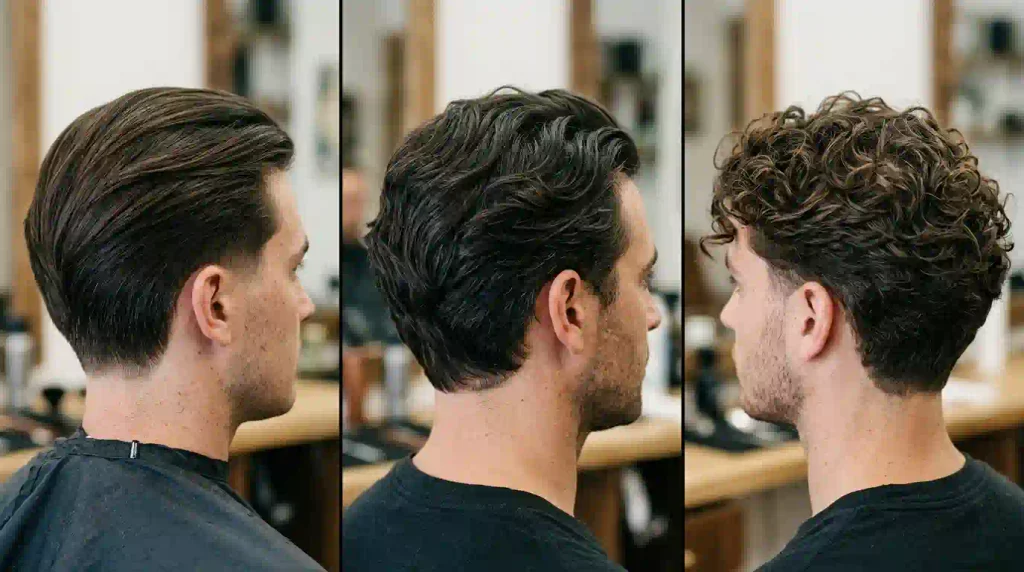
6. Swept-Back Flow With a Taper
The swept-back flow features hair directed away from the forehead and toward the crown.
It creates an open facial appearance while maintaining soft, natural volume.
Unlike a slicked-back undercut, this hairstyle does not require heavy pomade or extremely short sides.
The hair should remain flexible enough to move throughout the day.
A low taper provides a subtle finish, while a mid taper creates a sharper contrast.
This version works well when the front hair is long enough to move backward without immediately falling into the eyes.
Use a vent brush and blow-dryer to establish the direction, then finish with lightweight styling cream.
Best for: Straight or wavy hair with enough length and density to maintain a backward sweep.
Barber request: “Leave the front long enough to sweep backward, blend the layers through the crown, and keep a natural taper around the edges.”
7. Side-Part Flow With a Taper
The side-part flow adds a classic structure to longer hair.
Instead of sweeping everything backward, the hair follows a natural or slightly defined side part.
One side falls diagonally across the top while the other follows the shape of the head.
A low taper keeps the haircut understated and suitable for professional settings.
The barber can create longer scissor-cut layers that follow the side part rather than cutting the top into a short, rigid comb-over.
A small amount of styling cream or lightweight pomade can maintain the desired direction without making the hair stiff.
Men who prefer a more traditional silhouette may also like the Comb Over Taper Haircut, although a flow version generally retains more overall length and movement.
Best for: Straight, wavy, medium-density, and professional hairstyles.
Barber request: “Keep a natural side part with longer blended layers and a low taper. I want movement, not a tight comb-over.”
8. Middle-Part Flow With a Taper
The middle-part flow, sometimes called curtain flow, separates longer hair near the center of the forehead.
The front sections fall toward the temples and curve away from the face.
This creates a balanced hairstyle with visible movement on both sides.
A low taper around the ears can keep the sides tidy without interfering with the curtain shape.
For the best result, the front usually needs enough length to reach at least the eye or cheek area when pulled straight, depending on the intended finish.
Soft layers can prevent the front sections from appearing heavy.
Use a small round brush or your fingers while blow-drying the front away from the center part.
Best for: Straight and wavy hair, especially when a natural center part already exists.
Barber request: “Keep a middle-part curtain shape, preserve the front length, and use a soft low taper around my sideburns.”
9. Surfer Flow With a Taper
The surfer flow combines loose, tousled movement with a clean hairline.
Its appearance is intentionally relaxed, with waves, bends, and textured sections that seem naturally shaped rather than heavily styled.
The taper is usually low and subtle.
This allows the longer hair to maintain a casual, beach-inspired appearance without excessive bulk around the ears.
Soft, feathered layers work particularly well because they encourage movement and prevent the hair from looking like one solid block.
A small amount of sea salt spray may enhance texture on suitable hair types, although frequent use can leave some hair feeling dry.
A moisturizing styling cream is often preferable for dry or coarse strands.
Best for: Naturally wavy hair and men who prefer an informal hairstyle.
Barber request: “Give me loose, feathered layers with a low taper. I want natural surfer-style movement rather than a heavily styled finish.”
10. Hockey Flow With a Taper
Hockey flow is known for longer hair around the sides and back, sometimes creating visible wings around the ears.
Adding a taper modernizes the outline while preserving the athletic character of the haircut.
The key is retaining enough length behind the ears and around the nape.
If the neckline is cut too high, the hairstyle may lose the longer back silhouette associated with hockey hair.
A low taper can remove excess weight at the lower sideburns and nape without eliminating the flow.
Medium-to-long layered hair works best for this look.
It can be styled backward with a lightweight cream or simply allowed to follow its natural direction.
Best for: Medium-to-long straight or wavy hair and men who enjoy an athletic, longer-haired appearance.
Barber request: “I want hockey-style flow with longer wings around the ears. Clean up the edges with a low taper, but leave the length at the back.”
11. Professional or Business Flow With a Taper
A professional flow taper balances longer hair with a clean, restrained silhouette.
The style typically features controlled volume, smooth layers, and a neatly tapered neckline.
A low taper works especially well because it provides definition without making the sides dramatically short.
The top can be styled backward or into a soft side part.
For office environments, the goal is usually to keep the hair out of the eyes while preserving natural movement.
Avoid excessive texture or overly shiny products if you prefer a subtle, polished finish.
A lightweight styling cream or flexible-hold pomade can help keep the hair controlled.
Best for: Business-casual workplaces, formal settings, and men wanting longer hair with a tidy appearance.
Barber request: “Keep a medium-length flow with soft layers and a low taper. I want a professional shape that still moves naturally.”
12. Messy or Layered Flow With a Taper
The messy flow taper is built around separation, texture, and an intentionally relaxed finish.
The barber uses blended, feathered, or choppy layers to prevent the longer hair from forming a heavy block.
This creates a flexible hairstyle that can be styled with the fingers.
A low or mid taper provides structure around the edges.
The result should look naturally tousled rather than unkempt.
For thick hair, selective texturizing can remove unwanted bulk. Fine hair generally benefits from fewer, carefully placed layers so the ends do not appear sparse.
Use a small amount of matte paste or a lightweight texturizing product.
Work the product through the hair, then gently separate sections with your fingers.
Best for: Men wanting an informal, textured look with moderate styling effort.
Barber request: “Add movement and soft texture through the longer sections, but don’t over-thin the ends. Finish with a natural low taper.”
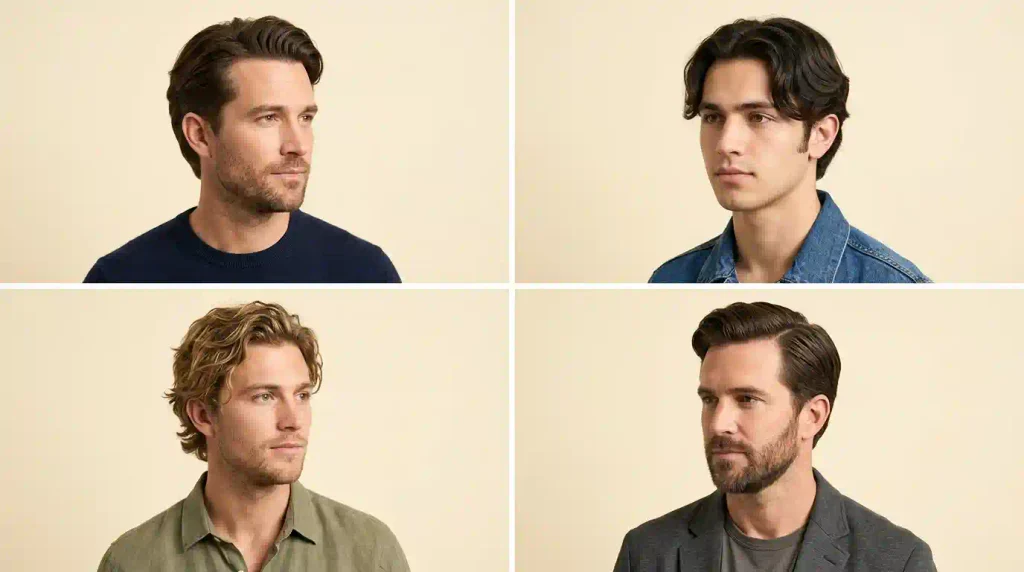
13. Textured Crop Flow With a Taper
The textured crop flow is a shorter interpretation of the traditional flow haircut.
It combines a textured top with slightly longer sections toward the crown and back.
Unlike a classic medium-length bro flow, this version does not need hair long enough to sweep fully behind the ears.
Instead, the flowing effect comes from directional texture and blended layers.
A low or mid taper keeps the edges clean.
This option suits men who want to start growing their hair but are not ready for a fully developed long flow.
The barber should preserve more length than a conventional cropped haircut, especially near the crown.
A light matte paste can create texture without making the top appear rigid.
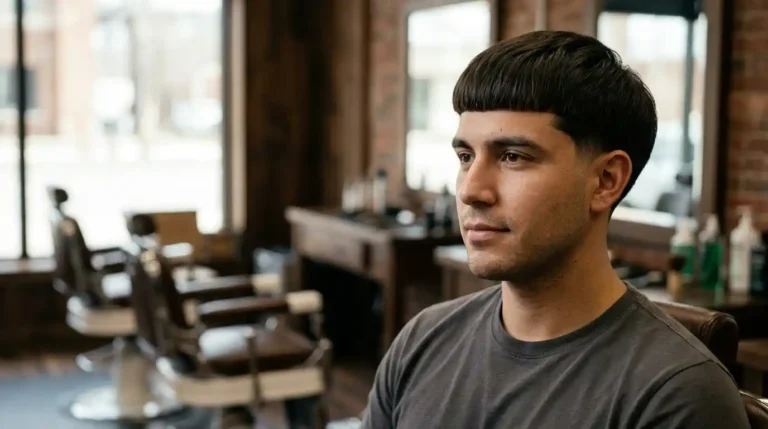
If you prefer a straighter, more defined fringe rather than flowing movement, an Edgar taper haircut offers a different cropped silhouette.
Best for: Short-to-medium straight or wavy hair and men transitioning from shorter cuts.
Barber request: “Keep a textured crop shape with extra length through the crown and back so I can grow it into a flow.”
14. Blowout Flow With a Burst Taper
The blowout flow combines lifted roots, textured movement, and a rounded taper around the ears.
The top is styled with noticeable volume while the longer sections move backward or outward.
A burst taper follows a curved shape around the ear, leaving more length toward the back of the head.
This makes it particularly useful for maintaining flow through the crown and nape.
However, the taper should not extend so far into the back that the haircut loses its connected shape.
The barber can use scissors to preserve layered length and clippers to create the rounded edge.
For styling, apply mousse or a lightweight pre-styling product, then blow-dry upward and backward using a vent brush.
For a more detailed explanation of this voluminous style, explore our Blowout Taper Haircut guide.
Best for: Thick, wavy, or medium-density hair that holds volume.
Barber request: “Keep a layered flow on top, add volume through the crown, and create a subtle burst taper around the ears.”
15. Mullet Flow With a Taper
The flow mullet emphasizes longer hair at the back while maintaining shorter or more controlled sections near the front and sides.
Unlike a heavily disconnected mullet, the flow version often uses blended layers to create a softer transition.
A low taper or burst taper can clean the sideburns and areas around the ears.
The back remains longer, sometimes reaching the collar or shoulders.
This style can be dramatic or understated depending on the difference between the front and back lengths.
For a softer appearance, ask for a gradual progression from the crown into the longer nape.
For a stronger mullet silhouette, keep a more obvious length difference.
A lightweight styling cream works well for softer flow, while matte clay can emphasize texture.
Best for: Men wanting a distinctive, longer-back silhouette.
Barber request: “I want a layered flow mullet with length at the back and a low taper around the ears. Keep the transition soft.”
16. Disconnected Flow With a High Taper
A disconnected flow with a high taper creates a stronger contrast between the long top and shorter sides.
The taper or fade rises higher, sometimes approaching the parietal ridge, where the head transitions from the top into the sides.
Unlike a fully blended low taper flow, the upper hair may visually overhang the shorter sections.
This makes the haircut more dramatic.
The barber must control the weight line carefully so the hairstyle looks intentional.
For straight hair, the contrast is especially visible. Curly or wavy hair can create a softer overhanging shape because of its natural texture.
A high taper is also less forgiving during grow-out, as the shorter sections may become noticeable sooner.
Best for: Men who prefer strong contrast and are comfortable with regular taper maintenance.
Barber request: “Keep the top long and flowing, but create a higher taper with visible contrast. Don’t shorten the top to match the sides.”
17. Flow With an Undercut
The flow undercut keeps substantial length on top while cutting the sides noticeably shorter.
In a disconnected undercut, the top may hang over the shorter sides without a gradual transition.
This differs from a classic flow taper because the blending is reduced or removed.
An undercut can make thick hair easier to control around the sides, but it also creates a more dramatic silhouette.
For the longest versions, the top hair may be pushed backward or tied into a small ponytail.
A blended undercut is a useful compromise if you want contrast but prefer a softer transition.
The barber should determine where the undercut begins based on head shape, hair density, and styling goals.
Best for: Thick hair, longer top hairstyles, and men who like defined contrast.
Barber request: “Keep the flowing top long and create a controlled undercut on the sides. Show me where the separation will begin before cutting.”
18. Flow With a Beard
A flow taper with a beard balances longer head hair with structured facial hair.
The taper can connect the sideburns to the beard, creating a gradual transition between the haircut and facial hair.
This approach works particularly well with medium-length swept-back or wavy flow hairstyles.
For a natural result, the beard should complement the proportions of the face rather than overpower the haircut.
A shorter beard can create a neat contrast with longer hair, while a fuller beard creates a more rugged appearance.
A barber may blend the sideburns into the upper beard using progressively longer clipper guards.
Beard oil or a suitable facial-hair conditioner can help manage dry beard hair.
Best for: Men who want longer head hair with neatly shaped facial hair.
Barber request: “Give me a low flow taper and blend the sideburns naturally into my beard without creating a harsh separation.”
19. Short Flow and Buzz-Flow Hybrid
The buzz-flow hybrid is a transitional hairstyle between a very short haircut and a medium-length flow.
It does not create the same movement as a traditional bro flow because the hair is shorter.
Instead, the style retains enough length on top and through the crown to begin developing direction and texture.
A low taper keeps the edges clean while the longer sections grow.
This makes it practical for men transitioning from a buzz cut, crew cut, or short fade.
During the early stages, a matte paste or light styling cream can encourage the hair to move backward.
For a much shorter and more uniform silhouette, compare the Buzz Taper Haircut with a buzz-flow hybrid.
A Taper Haircut Crew Cut Low Fade is another compact alternative if you prefer a shorter, more structured top.
Best for: Men growing out short hair or wanting subtle movement without medium-length styling.
Barber request: “I’m growing out a short cut into a flow. Keep the top and crown growing, and only clean up the lower edges.”
20. Vintage-Inspired Flow Taper
Vintage-inspired flow draws from classic longer men’s hairstyles, including relaxed swept-back layers and traditional side-part silhouettes.
Instead of sharp lines or strong fading, it focuses on soft movement and controlled fullness.
A low taper keeps the neckline and sideburns neat without making the haircut look excessively modern.
The hair may be styled backward with a slight side part, creating a polished shape.
A soft-shine styling cream or lightweight pomade can enhance the finish.
For a less structured appearance, comb the hair backward while damp and allow it to settle naturally.
Best for: Straight or wavy hair and men who prefer classic, timeless styling.
Barber request: “Give me a classic scissor-cut flow with natural layers, a soft side part, and a subtle low taper around the edges.”
21. Flow Taper With a Hard Part or Design
A flow taper with a hard part introduces a sharper detail into a normally soft hairstyle.
A hard part is a defined line cut into the hair to emphasize the separation between two sections.
It can complement a side-part flow by making the parting more visible.
Some men also choose a small shaved design near the temple or tapered section.
Because flow haircuts emphasize natural movement, excessive linework can compete with the longer silhouette.
A single subtle detail is often enough.
Remember that shaved designs grow out quickly and may require frequent touch-ups to maintain their definition.
Best for: Men who want a personalized or more contemporary version of a classic flow.
Barber request: “Keep the flow natural, add a clean taper, and make one subtle hard part without cutting deeply into the longer hair.”
22. Asian Hair Flow Taper
An Asian hair flow taper is a styling variation often designed around straight, dense, or coarse hair textures, although people of Asian backgrounds have many different hair types.
Straight, resilient strands can sometimes project outward above the ears rather than lying flat.
A flow taper can reduce this outward bulk while keeping enough length for the hair to fall backward or around the face.
The barber may use scissor-over-comb techniques, strategic layering, and careful weight removal.
The goal is to shape the hair according to its actual density and growth direction.
A middle-part flow, side-swept flow, or layered swept-back flow can work particularly well when the hair has enough length to settle naturally.
Use a lightweight styling cream and direct the hair while blow-drying.
Avoid aggressive thinning if it would create short pieces that stick outward.
Best for: Straight or thick hair that benefits from controlled weight distribution.
Barber request: “Keep enough length above the ears for my hair to lie naturally, remove excess bulk carefully, and give me a low taper with blended layers.”
23. Blonde or Platinum Flow With a Taper
A blonde or platinum flow taper emphasizes the texture and movement of longer hair through a lighter color.
The haircut itself can be classic, wavy, swept-back, or middle-parted.
Lighter hair often makes individual layers and changes in direction more visible.
A low taper creates a subtle contrast, while a skin taper may produce a stronger distinction between the colored hair and shorter sections.
If bleaching is involved, hair condition becomes particularly important.
Lightened hair can be more vulnerable to dryness and breakage, especially when repeatedly exposed to heat styling.
Use conditioner and gentle styling products suited to chemically treated hair.
For major lightening, professional color services can help reduce unnecessary damage.
Best for: Men who want to emphasize layered texture with lighter hair color.
Barber request: “Keep a layered flow with a low taper, and shape the haircut so the longer sections show natural movement.”
24. Long Flow With a Bun, Half-Up Style, Braid, or Ponytail
A long flow taper can be adapted into tied-back hairstyles once the hair becomes long enough.
The longer sections may be gathered into a man bun, half-up hairstyle, braid, or low ponytail.
The taper creates a clean outline around the sideburns and neckline while leaving most of the hair available for styling.
A half-up hairstyle is useful when the front is long enough to tie back but the lower sections are still growing.
A ponytail usually requires more consistent length, while braiding options depend on length, texture, and sectioning.
For curly or coily hair, protective styling can be incorporated when appropriate, but tension should remain comfortable.
Avoid pulling the hair tightly or using accessories that strain the hairline.
Best for: Long hair, active lifestyles, and men who want multiple styling options.
Barber request: “Keep my long hair and preserve enough length for tying it back. Clean the sideburns and neckline with a subtle taper.”
25. Viking-Inspired Flow Taper
The Viking-inspired flow taper combines longer hair, rugged texture, and a clean or contrasted perimeter.
The name describes a modern aesthetic rather than a historically standardized haircut.
The hair may be swept backward, braided, tied into a bun, or worn loose.
A low taper keeps the appearance understated, while a higher taper or undercut creates a stronger contrast.
A beard can complement the style, but it is not required.
For long, thick hair, carefully placed layers prevent excessive heaviness around the crown.
A small amount of styling cream or oil can control frizz without flattening the natural texture.
Best for: Longer hair, thick textures, and men who want a rugged, versatile silhouette.
Barber request: “Keep the long textured flow, preserve enough length for braids or a bun, and add a clean taper without removing too much hair from the back.”
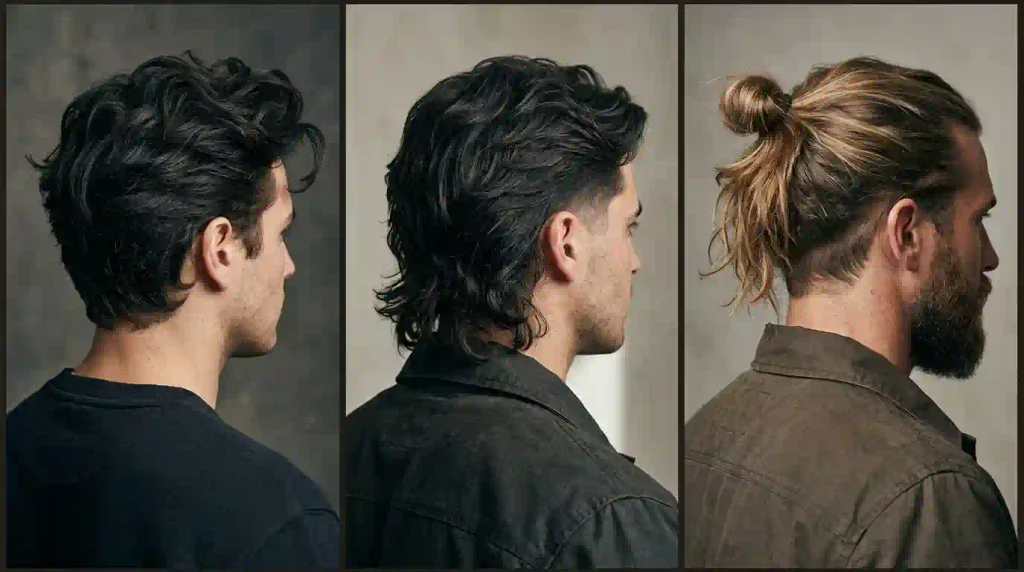
Choosing the Right Flow Taper
The ideal flow taper depends on several factors, including your hair texture, density, face shape, growth direction, lifestyle, and willingness to style your hair.
Choosing the right taper height is just as important as selecting the overall hairstyle.
Which Flow Taper Should You Choose? A Style-Selection Table
Use the following table as a starting point when comparing popular options.
| Hair Type or Goal | Recommended Flow Taper | Why It Works |
| Natural straight hair | Classic low taper flow | Preserves movement and softness |
| Naturally wavy hair | Wavy low taper flow | Enhances existing texture |
| Curly hair | Curly low or mid taper | Controls edges while retaining curls |
| Thick, bulky hair | Textured mid taper flow | Reduces visual width |
| Fine hair | Soft layered flow | Preserves the appearance of fullness |
| Longer hair | Long flow with low taper | Maintains length and flexibility |
| Professional appearance | Side-part or swept-back flow | Keeps hair controlled |
| Casual appearance | Messy or surfer flow | Creates relaxed texture |
| Strong contrast | High taper or undercut flow | Emphasizes longer top sections |
| Athletic styling | Hockey flow or short flow | Balances movement and practicality |
| Hair growing out | Short flow with low taper | Allows gradual length development |
| Longer back preference | Flow mullet with taper | Preserves length around the nape |
These recommendations are flexible. Haircuts should be adjusted to individual growth patterns rather than selected strictly by category.
Choosing a Taper for Your Face Shape
Face shape influences how the flow taper frames the forehead, cheeks, jawline, and sides of the head.
An oval face shape can accommodate many flow variations, including swept-back, middle-part, and side-part styles. The choice often comes down to hair texture and preferred styling.
For a round face shape, adding some height on top while keeping the sides controlled can create a more elongated appearance. A textured mid taper or swept-back flow may be useful.
A square face shape often works well with softer layers that contrast with angular facial features. A classic low taper or wavy flow can provide that balance.
For an oblong face shape, excessive height on top may make the face appear longer. A middle-part or side-swept flow with some width around the upper sides can create a more balanced silhouette.
A diamond face shape may benefit from longer sections around the temples and forehead, depending on the hairline and cheekbone proportions.
However, face-shape advice is not a strict rule. The exact placement of volume, parting, and layers often matters more than the broad face-shape label.
Choosing a Taper for Straight, Wavy, Curly, or Coily Hair
Different hair textures require different cutting and styling approaches.
Straight hair: Straight hair often shows cutting lines clearly. Soft blended layers help create movement, while a low taper preserves a natural transition. If the hair sticks outward, additional length may help it settle.
Wavy hair: Wavy hair often produces flow naturally. A light layering approach can enhance movement without making the ends thin. Low and mid tapers both work depending on the amount of contrast desired.
Curly hair: Curly hair needs careful length planning because of shrinkage. Keeping the shape balanced when dry is essential. Curl cream, leave-in conditioner, and gentle diffusing can help preserve definition.
Coily hair: A coily flow-inspired taper can emphasize length, natural texture, and movement through shaped coils, twists, or longer styled sections. The classic swept-back bro-flow silhouette is not necessary. A low temple taper or nape taper can keep the perimeter clean while preserving the texture above.
For Black men with coily or tightly curled hair, the design can incorporate a temple fade, shaped coils, twists, or other texture-specific styling while preserving enough length for the desired movement.
The most important factor is choosing a barber or hairstylist experienced with your particular hair texture.
Choosing a Taper for Thick, Coarse, Fine, or Thinning Hair
Hair density describes how many strands grow within a given area, while hair thickness describes the diameter of individual strands.
These characteristics affect how a flow haircut behaves.
Thick, dense hair often creates considerable volume around the sides. A barber may use strategic layering, point cutting, or careful weight removal to prevent excessive bulk.
Coarse hair can be strong and resistant to changing direction. It may need additional length before it begins falling naturally.
Fine hair generally requires a more restrained approach. Excessive thinning or too many short layers can make the ends appear sparse.
A soft low taper with sufficient weight around the crown may provide a fuller appearance.
For thinning hair, the barber should consider the distribution of density and avoid exposing areas you would prefer to keep covered.
A textured flow may help create the appearance of movement, but haircutting cannot restore lost hair density.
Men who prefer a short, structured style rather than a longer flow may consider alternatives such as the Drake Taper Haircut or a fohawk taper haircut, depending on their desired silhouette and hair texture.
How Cowlicks, Natural Parts, and Curl Shrinkage Affect the Cut
Natural growth patterns can determine whether a flow taper looks effortless or requires constant adjustment.
A cowlick at the crown may cause the hair to rise or separate in a direction that differs from the surrounding strands.
A strong natural part can make a middle-part flow easier or harder to achieve.
Instead of cutting against these patterns, a skilled barber can place layers and volume to work with them.
For example, if the crown naturally pushes backward, a swept-back flow may require less styling.
If the front naturally separates off-center, a relaxed side-part flow may be more practical than forcing a perfectly symmetrical middle part.
Curl shrinkage is equally important. Curly and coily hair can appear considerably shorter when dry than when stretched or wet.
A careful consultation should account for the hair’s natural finished state before cutting away length.
Hair Length and Grow-Out Guide
A convincing flow taper requires enough hair length to create visible movement.
The amount of length needed depends on the style, curl pattern, and whether the hair is intended to move backward, to the sides, or around the ears.
How Long Should Your Hair Be for a Flow Taper?
For a short flow-inspired haircut, approximately 3–4 inches on top may be enough to create some directional texture.
A fuller medium-length flow usually develops more clearly around 4–7 inches.
Longer flow styles may require 7–10 inches or more, particularly when the hair needs to reach behind the ears or fall toward the neck.
These are approximate lengths, not fixed barbering standards.
Straight hair may need additional length before it bends naturally, while wavy hair can display movement sooner.
Curly and coily hair must be assessed with shrinkage in mind.
A haircut that measures six inches when stretched may have a substantially shorter visible silhouette after drying.
Short, Medium, and Long Flow Lengths
| Flow Length | Approximate Top Length | Appearance | Typical Styling |
| Short flow | 3–4 inches | Directional texture and slight movement | Matte paste or light cream |
| Medium flow | 4–7 inches | Visible sweep, layers, and volume | Styling cream, mousse, blow-drying |
| Long flow | 7–10 inches | Hair moves around ears and toward the neck | Leave-in conditioner, light styling products |
| Extra-long flow | 10+ inches | Longer back, possible tying or braiding | Conditioning, detangling, loose styling |
A medium-length flow is often the most versatile option because it provides visible movement without requiring the maintenance associated with very long hair.
A long flow offers more styling possibilities but also requires more attention to conditioning, tangles, and breakage.
How Long It Takes to Grow a Flow
Scalp hair commonly grows at an average rate of about half an inch per month, although individual growth rates vary.
This means hair may gain approximately six inches over a year before accounting for trims and breakage.
If you are starting with a very short haircut, developing a medium-length flow can take several months or longer.
A rough grow-out timeline may look like this:
| Starting Point | Approximate Time | Expected Progress |
| Very short buzz cut | 0–3 months | Short growth with limited movement |
| Short layered hair | 3–5 months | Increased top length and early direction |
| Developing flow | 5–8 months | More noticeable sweep and shape |
| Medium-length flow | 8–12 months | Longer layers and stronger movement |
| Long flow | 12+ months | Greater versatility and length behind the ears |
This is illustrative rather than a guaranteed timeline. Your starting length, hair growth rate, shrinkage, trimming schedule, and desired style all affect the result.
The safest approach is to set a target length with your barber and preserve progress between visits.
How to Manage the Awkward Grow-Out Stage
The awkward grow-out stage usually occurs when the hair becomes too long for a short haircut but is not yet long enough to settle into a flowing shape.
Common problems include hair puffing outward above the ears, an uneven crown, and front sections that fall awkwardly into the eyes.
During this stage, avoid repeatedly cutting the top shorter to regain a familiar shape.
Instead, use small adjustments.
A low taper cleanup can refine the sideburns and neckline while the upper hair continues growing.
A lightweight styling cream can help control outward movement.
A vent brush and blow-dryer can encourage the front to move backward.
If the hair becomes bulky around the ears, ask for selective scissor shaping rather than an aggressive fade.
Patience is an important part of growing a flow haircut. Some areas need additional time before their weight and length allow them to fall naturally.
How to Maintain the Taper While Growing Out the Flow
Maintaining the taper does not require cutting the longer hair every time.
You can book short cleanup appointments specifically for the temples, sideburns, and neckline.
During these visits, tell the barber that your goal is to grow the top, upper sides, and back.
The barber can use clippers to refine the taper while leaving the longer sections untouched.
Occasional scissor trims may be helpful if the ends become damaged or the shape becomes uneven, but excessive trimming can delay your target length.
A useful instruction is:
“Please maintain the low taper and clean the outline, but don’t remove length from the top, crown, or back unless we agree on a specific adjustment.”
This helps prevent the common problem of losing several months of growth during an ordinary maintenance haircut.
What to Ask Your Barber For
A successful flow taper depends on clear communication.
The word “flow” is not a precise technical specification, and different barbers may interpret it differently.
Reference photos, desired length, taper height, and styling preferences should all be discussed before cutting begins.
A Barber Consultation Script for a Flow Taper
You can use the following script during your appointment:
“I want a flow taper haircut with medium-length hair that moves naturally backward and around the sides. Please keep most of the length on top and through the crown, and use soft, blended layers to create movement. I want a low taper around the sideburns, temples, and neckline, but I don’t want a high fade or too much length removed above the ears. Please show me how much you’re planning to cut before starting.”
For curly hair, add:
“Please account for my natural curl shrinkage and make sure the finished shape works when my hair dries.”
For longer hair, add:
“I’m growing my hair out, so preserving length is more important than making the top shorter.”
A clear consultation reduces the risk of receiving a short fade when you expected a longer, scissor-cut style.
A Cut Blueprint: Top Length, Taper Placement, Sideburns, and Neckline
A barber can use a simple haircut blueprint to establish the proportions.
| Haircut Area | Suggested Approach | Main Purpose |
| Top | Preserve 4–7 inches for medium flow | Create movement and volume |
| Crown | Maintain connected layers | Prevent an uneven silhouette |
| Upper sides | Keep enough length to flow or settle | Preserve fullness |
| Temples | Low or mid taper | Clean the edges |
| Sideburns | Gradual reduction in length | Create a neat transition |
| Around ears | Controlled scissor shaping | Reduce unwanted bulk |
| Nape | Low, blended taper | Clean the neckline |
| Back | Preserve length according to style | Maintain the flow silhouette |
The barber may use a combination of scissors, a comb, clippers, and different clipper guards.
For a subtle taper, the shortest areas may use a longer guard rather than exposing the skin.
For a skin taper, the shortest edge may be cut with a trimmer or shaver.
Clipper guard numbers should be agreed upon with the barber because the final appearance depends on the cutting system, lever position, and blending technique.
The goal is a smooth transition rather than a visible line separating the longer and shorter sections.
How to Use Front, Side, and Back Reference Photos
A single front-facing photograph rarely shows enough detail for a flow taper consultation.
The front view helps communicate the parting, fringe, forehead exposure, and top volume.
The side view shows how the longer hair connects to the taper, where the shortest area begins, and how much hair remains around the ears.
The back view is equally important because the neckline and crown determine whether the haircut maintains its flowing silhouette.
Bring three photographs whenever possible:
- A front view showing the preferred top direction.
- A side view showing taper height and ear coverage.
- A back view showing the desired crown, nape, and neckline length.
If the pictures show slightly different hairstyles, explain which feature you want from each image.
For example, you may prefer the swept-back front of one style, the low taper of another, and the longer neckline of a third.
What to Say When You Want a Taper Cleanup but Want to Keep the Length
Many flow haircuts lose their intended shape when a barber removes too much length during a routine cleanup.
To prevent this, be specific about what should and should not be cut.
You can say:
“I only want the sideburns, temples, and neckline cleaned up today. Keep the top, upper sides, and back growing. If you see an area that needs reshaping, please show me before cutting it.”
Avoid asking for a general “shorter on the sides” cut if you want a subtle taper.
That instruction can lead to a broader fade.
Instead, explain that the upper sides must remain connected to the longer hair.
How a Barber Shapes and Blends the Cut
A barber typically begins by examining the hair’s natural growth direction, density, and desired finished length.
The longer sections may be cut with scissors to establish the overall silhouette.
Long layers create movement while retaining weight.
Feathered layers can soften the ends, while choppy layers introduce stronger texture.
Point cutting may remove weight from selected sections without creating a blunt edge.
Slide cutting can produce a softer transition through some hair types, but it should be used carefully, especially on fragile, curly, or highly textured hair.
After shaping the longer hair, the barber can create the taper with clippers.
The taper is blended gradually into the upper sides and back.
The final stage involves checking the haircut from multiple angles, refining the neckline, and styling the hair in its intended direction.
A good flow taper should retain a balanced shape even when styling products are minimal.

How to Style a Flow Taper
One of the main attractions of the flow taper is its natural movement.
However, achieving an effortless appearance still requires some attention to washing, drying, and product application.
The ideal routine depends on your hair type and desired finish.
A Simple Daily Styling Routine
A basic flow taper styling routine does not need to be complicated.
Start with slightly damp hair.
If your hair is already clean, lightly misting it with water may be enough to reset its direction.
Apply a small amount of styling cream, mousse, or another suitable product.
Distribute the product evenly through the longer sections.
Use your fingers or a wide-tooth comb to guide the hair into its preferred position.
For swept-back flow, direct the front backward.
For middle-part flow, separate the front near the natural part.
For wavy or curly flow, gently scrunch the hair rather than brushing out the texture.
Allow the hair to air-dry or use a blow-dryer with appropriate heat protection.
Finish by separating a few sections with your fingers.
The goal is natural movement rather than a stiff, heavily coated hairstyle.
Blow-Drying for Volume and Direction
Blow-drying can help create volume, especially when the hair naturally falls forward or appears flat.
For a swept-back flow, begin with damp hair and apply a lightweight heat protectant.
Use a vent brush or your fingers to lift the front sections.
Direct airflow from the roots toward the ends while moving the hair backward.
For additional shape, use a round brush to create a gentle bend through the front and crown.
Avoid using extremely high heat or holding the dryer too close to one section for too long.
For wavy or curly flow, a diffuser may be more suitable.
A diffuser spreads the airflow and helps reduce disruption to the natural curl pattern.
Use low or medium heat and allow the hair to finish drying naturally when practical.
If your hair is fine, concentrate on root volume without applying too much heavy product.
If your hair is thick, direct airflow through the upper sides to prevent excessive outward puffiness.
Styling Products for Different Hair Types
The right product should support natural movement rather than overpower it.
| Product | Best For | Expected Finish |
| Styling cream | Straight or wavy flow | Soft, flexible movement |
| Matte paste | Short or textured flow | Moderate texture and control |
| Matte clay | Thick hair needing separation | Matte finish and definition |
| Mousse | Fine or flat hair | Lightweight volume |
| Sea salt spray | Suitable wavy or straight textures | Tousled texture |
| Curl cream | Curly hair | Curl definition and moisture |
| Leave-in conditioner | Dry, curly, or long hair | Moisture and detangling |
| Lightweight styling oil | Dry ends and longer hair | Smoothness and shine |
| Volumizing powder | Shorter or medium fine hair | Root lift |
| Pomade | Polished side-part or swept-back flow | Control and varying shine |
For Straight Hair
Straight hair may benefit from styling cream or lightweight mousse.
If you want more texture, use a small amount of matte paste.
Avoid excessive heavy pomade, which may flatten the hair.
For Wavy Hair
Wavy flow often works well with a lightweight styling cream or mousse.
Sea salt spray can enhance separation, but it may not be suitable for already dry hair.
Allow natural waves to form without excessive brushing.
For Curly and Coily Hair
Leave-in conditioner and curl cream can help maintain softness and definition.
Apply products to damp hair and distribute them gently.
For tighter textures, prioritize moisture retention and styles that minimize unnecessary pulling.
For Thick or Coarse Hair
A combination of leave-in conditioner and controlled styling cream may help manage bulk.
If the hair naturally stands outward, directing it during drying can be more useful than applying large quantities of product.
For Fine Hair
Use lightweight mousse or a small amount of texture powder near the roots.
Avoid coating the entire hairstyle with heavy oils or waxes.
Too much product can make fine hair appear flat or separated.
Matching the Style to Casual, Smart-Casual, Streetwear, or Work Outfits
The same flow taper can produce different impressions depending on how it is styled.
For casual outfits, allow the hair to move naturally with loose texture.
A messy flow or surfer-inspired version works well with relaxed clothing.
For smart-casual outfits, a side-part or softly swept-back flow creates a more controlled appearance.
For streetwear, a textured mid taper, blowout flow, or more defined taper can add visual contrast.
For work settings, use a lightweight product to keep the front out of the face and maintain a neat shape around the ears.
You do not necessarily need a different haircut for every occasion.
With enough length and a balanced taper, the hair can be styled in multiple directions.
Flow Taper Maintenance
The flow taper generally requires two types of maintenance: keeping the shorter edges neat and maintaining the health and shape of the longer hair.
These areas do not always need attention at the same frequency.
How Often to Clean Up the Taper
A clean taper often benefits from maintenance approximately every 2–4 weeks, depending on how sharp you want the outline to remain.
Skin tapers may show regrowth sooner because the shortest areas create stronger contrast.
A soft low taper can usually grow out more naturally.
If your priority is a relaxed flow rather than a precisely defined fade, you may be comfortable extending the interval between cleanup appointments.
The best schedule depends on your hair growth rate, desired appearance, and budget.
During a maintenance visit, ask the barber to focus on the sideburns, temples, and neckline.
This preserves the longer sections and reduces the likelihood of losing your flow shape.
When to Trim the Top and Back While Preserving Length
The top and back generally do not require trimming as frequently as the shortest taper areas.
For a growing flow, a light shape check approximately every 8–12 weeks may be sufficient, although some haircuts need more frequent adjustments.
The purpose is to maintain proportion and address damaged ends, not to reset the length.
If the back becomes too bulky, the barber may remove selected weight while keeping the overall length.
If the front begins falling awkwardly into the eyes, directional styling or a minor adjustment may solve the problem without significantly shortening it.
Always discuss how much hair will be removed before a trim.
Washing and Conditioning Longer Flow Hair
Longer flow hair needs appropriate cleansing and conditioning because it is exposed to friction, weather, styling, and general wear.
Wash according to your scalp’s oil production, product buildup, and hair texture.
Straight hair with an oily scalp may require more frequent shampooing, while dry, curly, or coily hair may benefit from less frequent washing and greater conditioning.
Apply shampoo primarily to the scalp and allow the lather to rinse through the lengths.
Use conditioner after shampooing, paying attention to the lengths and ends.
A leave-in conditioner can help manage tangles and dryness when needed.
Clarifying shampoo may occasionally help remove significant product buildup, but overuse can make some hair types feel dry.
Avoid rough towel rubbing and aggressive detangling.
For evidence-based hair care, the American Academy of Dermatology’s healthy hair tips explain how washing habits, conditioning, gentle detangling, and heat protection support healthier-looking hair.
Good hair care helps the longer sections retain their appearance and reduces preventable breakage during the grow-out process.
Flow Taper Problems and How to Fix Them
Even a well-cut flow taper can become difficult to manage as the hair grows.
Common issues usually involve uneven volume, styling direction, excessive bulk, or poor communication during a haircut.
Hair Puffs Out Above the Ears
Hair that puffs outward above the ears is particularly common during the grow-out stage.
This can happen when the hair is too short to fall naturally but long enough to stand away from the head.
Thick or coarse strands may make the issue more noticeable.
A barber can reduce selected bulk with scissors while preserving enough length for the hair to settle.
A low taper can also clean the edge beneath the bulky area.
However, cutting the upper sides extremely short may create another problem by disrupting the flow silhouette.
For daily styling, apply a lightweight cream and direct the hair backward or downward while drying.
In some cases, simply allowing the hair to grow longer is the best solution.
The Top Falls Forward or Looks Flat
The top may fall forward when the front is too heavy, the hair lacks root volume, or its natural growth direction points toward the forehead.
A layered haircut can redistribute weight.
Blow-drying the front backward from the roots may help establish a different direction.
For fine hair, use lightweight mousse or volumizing powder rather than heavy pomade.
If the hair has a strong forward-growing pattern, an entirely slicked-back appearance may require more styling effort than a side-swept or curtain flow.
Working with your natural growth direction often produces a more manageable result.
The Back Looks Too Bulky or Too Short
The back is an important part of the flow silhouette.
If the nape becomes too bulky, the haircut can look heavy or uneven.
A barber may use controlled layering or a subtle nape taper to improve the shape.
If the back is too short, however, there may not be enough length to create the desired movement.
This commonly happens when a traditional fade is carried too far upward.
The solution is generally to allow the back to grow while maintaining only the necessary perimeter cleanup.
Avoid repeatedly shortening the longer crown sections to match the nape.
That can delay the development of a full, balanced flow.
Common Haircut and Styling Mistakes
Several mistakes can prevent a flow taper from looking natural.
1. Choosing a taper that is too high
A high taper or aggressive fade can remove the side weight needed for a classic flow.
Choose a low taper if preserving fullness is your priority.
2. Over-thinning the longer sections
Excessive thinning may produce wispy ends, frizz, or uneven movement.
Ask for targeted layering rather than indiscriminate thinning.
3. Cutting the crown too short
The crown connects the top and back of the hairstyle.
Removing too much length can disrupt the flowing shape.
4. Using too much styling product
Heavy clay, wax, or pomade can make longer hair stiff and greasy.
Start with a small amount and add more only if needed.
5. Ignoring natural hair texture
Trying to force curly hair into a straight-hair flow or making coarse hair fall in an unnatural direction can create unnecessary styling work.
Select a variation that complements your natural texture.
6. Not showing the barber reference photos
A request for a flow haircut can be interpreted differently by different professionals.
Front, side, and back references reduce misunderstandings.
7. Repeatedly cutting the hair during the awkward stage
Constantly shortening bulky areas may prevent the hair from reaching the length needed to fall naturally.
Use limited shaping and taper cleanups while growing out the top.
Flow Taper Haircut Cost
The price of a flow taper haircut depends on the barber, location, appointment length, and complexity of the cut.
A simple taper cleanup generally requires less time than a complete restyling involving long layers and detailed scissor work.
What Affects the Price of a Flow Taper?
In the United States, a flow taper haircut may cost approximately 30–80 or more, depending on the shop and service.
Budget barbershops may charge less, while experienced stylists in major cities or premium salons can charge substantially more.
The following estimates illustrate how service complexity can influence pricing.
| Service | Illustrative US Price Range |
| Basic taper cleanup | 15–35 |
| Standard haircut with taper | 30–60 |
| Full scissor-cut flow with taper | 40–80 |
| Premium long-hair restyling | 70–120+ |
| Haircut with beard detailing | Varies by shop and add-on services |
These are broad planning estimates, not guaranteed local prices.
A flow taper with long, thick, or highly textured hair may require more time than a conventional short haircut.
Detailed layering, shampooing, blow-drying, beard blending, or special designs may also affect the total price.
What to Confirm With the Barber Before Booking
Before scheduling your appointment, confirm that the barber or hairstylist is comfortable working with longer men’s hair.
Some professionals specialize in clipper fades, while others have more experience with layered scissor cuts.
Ideally, choose someone who can handle both.
Ask whether the service includes a consultation, scissor shaping, taper blending, and final styling.
If you have long or curly hair, confirm whether the quoted price includes the extra time necessary for your texture and length.
If you only need a taper cleanup, ask whether the shop offers a shorter maintenance appointment.
You can also show a reference photo before booking and ask whether the style is achievable with your current hair length.
Clear expectations help you avoid unnecessary costs and disappointing results.
Frequently Asked Questions
What is a flow taper haircut?
A flow taper haircut combines medium-to-long layered hair with gradually shorter sections around the temples, sideburns, and neckline.
What is the best taper for a flow haircut?
A low taper is a versatile choice because it preserves more length and creates a natural transition around the edges.
How long should my hair be for a flow taper?
Around 4–7 inches on top is a practical starting range for a medium flow, although shorter and longer variations are possible.
Can straight hair get a flow taper haircut?
Yes, straight hair can create a flow taper with sufficient length, soft layers, and styling that encourages natural movement.
Is a flow taper good for wavy hair?
Yes, naturally wavy hair often produces visible movement and texture with relatively little styling.
Can curly or coily hair have a flow taper?
Yes, a flow-inspired taper can preserve longer curls, coils, twists, or textured sections while keeping the perimeter clean.
What is the difference between a low taper flow and a mid taper flow?
A low taper concentrates the shortest hair near the edges, while a mid taper extends the transition higher for more contrast.
Is a flow taper the same as a bro flow?
No, a bro flow emphasizes longer natural movement, while a flow taper adds a deliberate shortening and blending of the perimeter.
What is a hockey flow taper?
A hockey flow taper preserves longer hair around the sides and back while keeping the sideburns and neckline neatly shaped.
Can I get a flow taper with a middle part?
Yes, longer front layers can separate naturally into curtain-style sections while the sideburns and neckline remain tapered.
Does a flow taper work with a round face?
Yes, controlled sides and suitable volume on top can help create a balanced silhouette for a round face.
Can a flow taper work with thinning hair?
Yes, a carefully layered flow can work with some thinning patterns, but the barber should avoid excessive thinning and consider the distribution of hair density.
How long does it take to grow a flow taper?
It may take several months to a year or longer, depending on starting length, hair growth rate, curl shrinkage, and the desired finished style.
How often should I get a flow taper trimmed?
Taper cleanups are often useful every 2–4 weeks, while longer sections may need less frequent shape maintenance.
How do I style a flow taper without a blow-dryer?
Apply a lightweight styling cream to damp hair, guide it with your fingers or a comb, and allow it to air-dry naturally.
What is the best product for a flow taper?
A lightweight styling cream is versatile, while mousse, matte paste, curl cream, or leave-in conditioner may be better for specific hair types.
Can I wear a flow taper in a professional workplace?
Yes, a low taper combined with neatly styled, swept-back or side-parted layers can create a polished professional appearance.
Is a flow taper high-maintenance?
The longer hair requires regular care, but a soft low taper can be relatively easy to maintain compared with sharply defined skin fades.
Can I get a flow taper while growing out a buzz cut?
Yes, keeping the top and crown growing while maintaining a low taper is a practical way to transition toward a medium-length flow.
Should I go to a barber or hairstylist for a flow taper?
Choose a professional experienced with both longer scissor-cut layers and taper blending, regardless of whether they work in a barbershop or salon.
Final Thoughts
The flow taper haircut is an adaptable men’s hairstyle that combines the natural movement of longer hair with clean, controlled edges. From classic low taper flow and wavy bro flow to middle-part, hockey, curly, and modern textured variations, the best result comes from choosing the right length, layers, and taper placement for your hair.
If you want a timeless, low-contrast appearance, start with a classic low taper. For more texture and definition, consider a mid taper, layered flow, or blowout variation. Whatever style you choose, show your barber clear reference photos and emphasize which areas should retain their length.
For more inspiration and practical grooming guides, explore Taper Haircut Hub and discover our collection of Hairstyles with taper to find a haircut that matches your hair texture, face shape, and personal style.


One Comment