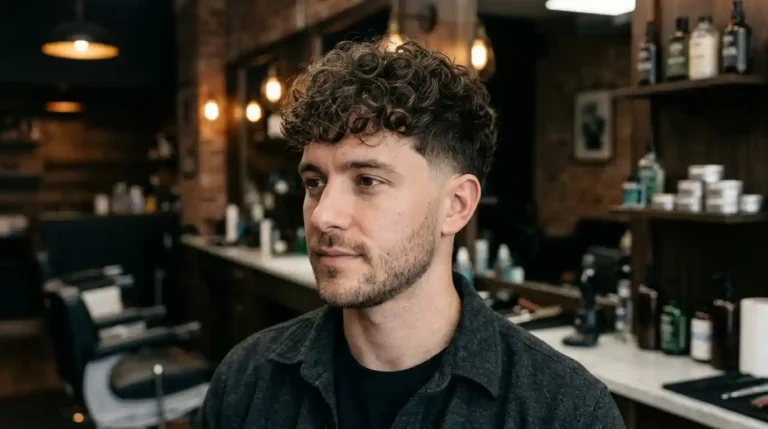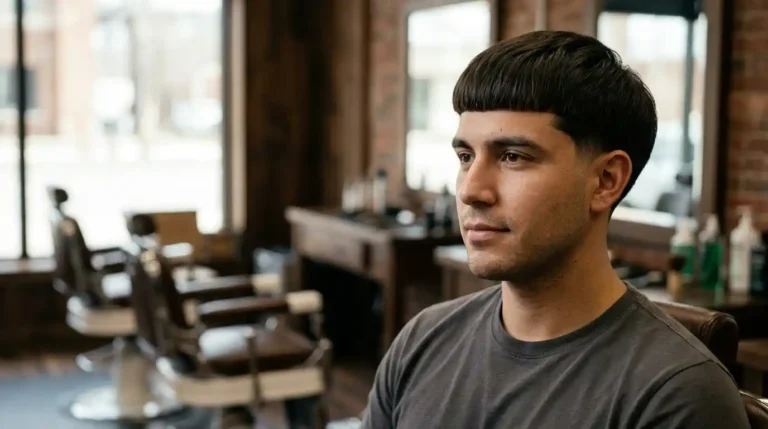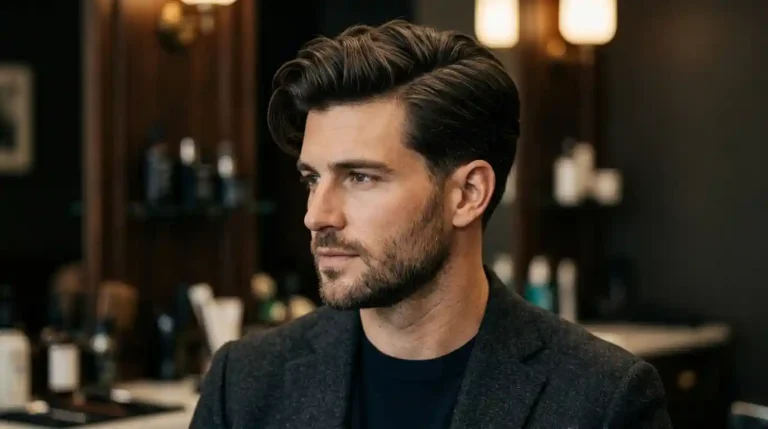

Quiff Taper Haircut: Volume, Shapes & Styling Tips
A taper fade haircut quiff combines the lifted, voluminous front of a classic quiff with neatly blended sides and a clean neckline. It is one of the most versatile men’s hairstyles because you can wear it short and professional, textured and messy, sleek and polished, or dramatically lifted with a high-volume finish. A low taper fade quiff creates subtle contrast around the temples, while mid and high fade variations make the longer front hair more prominent. The hairstyle works with straight, wavy, curly, thick, and some fine hair types when the length, layering, and styling techniques are adjusted correctly.
The secret to a great quiff is balancing front hair length, crown weight, taper height, and natural hair growth direction. The right haircut makes daily styling easier, while suitable products and careful blow-drying help maintain volume without creating stiffness or unnecessary damage.
This complete guide explores 80+ quiff taper haircut ideas, low, mid, and high fades, face-shape recommendations, clipper guard lengths, barber instructions, before-and-after styling results, cowlick solutions, U.S. haircut costs, and practical routines for achieving a quiff that looks good throughout the day.
Table of Contents
- Taper Fade Haircut Quiff: Quick Overview
- Best Taper Fade Quiff Haircuts for Men
- Taper Fade Quiff Haircut: Front, Side, and Back Views
- Taper Fade Quiff Before and After Styling Results
- Understanding Taper Fade Quiff Haircut Proportions
- How to Choose the Right Taper Fade Quiff Haircut
- Taper Fade Quiff with Natural Curls vs. a Perm
- Taper Fade Quiff Haircut Length and Clipper Guard Guide
- How to Ask Your Barber for a Taper Fade Quiff Haircut
- How to Style a Taper Fade Quiff Haircut at Home
- Best Hair Products and Styling Tools for a Taper Fade Quiff
- How to Maintain a Taper Fade Quiff Haircut
- Taper Fade Quiff Growth Timeline: Week by Week
- How Much Does a Taper Fade Quiff Haircut Cost?
- How to Grow Your Hair into a Taper Fade Quiff
- Common Taper Fade Quiff Haircut Mistakes and How to Fix Them
- Styling a Taper Fade Quiff in Different Situations
- Taper Fade Quiff vs. Similar Haircuts
- History and Evolution of the Quiff Haircut
- Frequently Asked Questions About Taper Fade Quiff Haircuts
- Final Thoughts: Choosing the Best Taper Fade Quiff Haircut
Taper Fade Haircut Quiff: Quick Overview
What Is a Taper Fade Quiff Haircut?
A taper fade quiff is a men’s haircut featuring longer hair at the front, styled upward and usually backward, with progressively shorter hair around the sides and neckline.
The quiff provides height, shape, and movement, while the taper fade creates a clean transition between different hair lengths.
In a classic taper, the shortest areas are generally concentrated around the sideburns and nape. A broader fade may extend farther up the sides. Barbers sometimes use the terms together, so photographs help clarify the intended result.
A taper haircut quiff may feature a small, natural front lift or a dramatic, high-volume silhouette. Unlike a completely slicked-back hairstyle, the front usually retains noticeable elevation or a curved shape.
This versatility makes the quiff suitable for casual, professional, contemporary, and retro-inspired looks.
For additional haircut variations, explore Taper Haircut Hub.
Why Is the Taper Fade Quiff Haircut Popular?
The taper fade quiff combines two desirable haircut characteristics: noticeable volume and controlled sides.
The raised front creates a distinctive profile without requiring extremely long hair. Meanwhile, shorter sides prevent excessive bulk around the temples and ears.
The hairstyle is also adaptable. Men with straight hair can create structured lift using a blow dryer and suitable styling products. Wavy hair naturally produces movement, while curly hair can form a textured, elevated front.
Another advantage is customization. A low taper quiff offers a subtle, classic appearance, whereas a high skin fade produces stronger contrast.
The same haircut can transition from a neat office hairstyle to a relaxed weekend look by changing the amount of product, the styling direction, and the finish.
How a Taper Fade Changes the Traditional Quiff
A traditional quiff can feature scissor-cut sides that retain considerable length.
Introducing a taper fade changes the silhouette by removing weight near the lower hairline.
A low taper creates a restrained transition while preserving natural fullness above the ears.
A mid taper introduces additional contrast, making the quiff appear more prominent.
A high taper or full fade creates a sharper separation between the long top and short sides.
Importantly, the fade does not directly create quiff volume. Height comes from the front hair length, natural texture, haircut structure, and styling technique.
The fade changes how that volume appears in relation to the rest of the head.
Key Characteristics of a Modern Quiff
A modern quiff generally combines front elevation, movement, controlled layering, and balanced side proportions.
Front Hair Direction and Volume
The front hair is usually directed upward before being guided backward or diagonally.
Some quiffs include a forward-facing section or a curved fringe.
The front should have enough length to form the desired shape without collapsing immediately.
Quiff Height and Shape
Quiff height ranges from a subtle lift of less than an inch to a dramatic elevated front.
The best height depends on face shape, hair density, and how much daily styling you prefer.
A moderate quiff is generally easier to maintain than an exaggerated vertical style.
Textured vs. Smooth Finish
A textured quiff features visible strand separation and natural movement.
A smooth quiff uses controlled combing and styling products to create a polished silhouette.
Matte clay often suits textured styles, while pomade can provide a smoother finish.
Side Blending and Taper Placement
The side blend determines how gradually the longer top connects with shorter hair.
A low taper preserves a softer outline.
A mid or high fade produces greater contrast.
The barber should consider the parietal ridge, temple shape, and crown weight when establishing the transition.
Benefits and Drawbacks of a Taper Fade Quiff
| Benefits | Drawbacks |
| Adds visual height and front volume | May require daily styling |
| Works with multiple hair textures | Some versions need blow-drying |
| Offers professional and casual variations | Fade definition requires maintenance |
| Can complement different face shapes | Incorrect layering can cause collapse |
| Allows matte or polished finishes | Heavy products can flatten fine hair |
| Supports subtle and dramatic fade styles | Very high fades may expose sparse areas |
| Can be adapted to different ages | Long, heavy quiffs can be harder to control |
The most practical version is not necessarily the tallest or most heavily styled. A properly shaped medium-height quiff often provides the best balance between appearance and daily effort.
Taper Fade Quiff Haircuts at a Glance
Compare Quiff Styles by Fade Height, Hair Length, Texture, and Maintenance
| Quiff style | Fade placement | Suggested front length | Best suited to | Styling effort |
| Classic taper quiff | Low | 3–4 inches | Straight, wavy | Medium |
| Textured low taper quiff | Low | 2.5–4 inches | Most textures | Low–medium |
| Short mid fade quiff | Mid | 2–3 inches | Straight, thick | Low–medium |
| High-volume quiff | Low to mid | 4–6 inches | Medium to thick hair | High |
| Curly quiff fade | Low to mid | Depends on curl shrinkage | Curly hair | Medium |
| Slicked-back quiff | Low | 3–5 inches | Straight, wavy | Medium |
| Skin fade quiff | Skin-close | 3–5 inches | Suitable hair density | Medium–high |
| Messy layered quiff | Low to mid | 3–5 inches | Wavy, thick | Medium |
| Business quiff | Low | 2.5–4 inches | Most textures | Low–medium |
These lengths are practical starting ranges rather than universal cutting rules. Individual hair growth patterns and texture can change the ideal measurements.
Best Picks for Classic, Modern, Textured, and Professional Quiffs
For a classic appearance, choose a medium-height quiff with a subtle low taper and natural side volume.
For a modern look, a textured quiff with a mid taper provides definition without requiring an extremely high front.
Men who prefer a relaxed hairstyle may like a messy quiff with matte styling clay.
For professional settings, a short or medium quiff with a low fade provides clean edges and manageable volume.
If you want a stronger statement, a high-volume quiff combined with a skin fade creates dramatic contrast.
Best Taper Fade Quiff Haircuts for Men
The following variations show how a quiff can change according to taper height, texture, hair length, styling direction, and personal preference.
Classic and Modern Quiff Hairstyles
Classic Quiff with Taper
The classic quiff features a lifted front, gradually shorter sides, and a controlled outline.
The upper hair is usually combed upward and backward, creating a rounded front shape.
A traditional taper preserves enough side weight to keep the hairstyle balanced.
This option works well for men who prefer a timeless haircut rather than an aggressive fade.
Modern Quiff with Taper Fade
A modern quiff emphasizes textured movement and cleaner side transitions.
The front can be styled loosely rather than forming a perfectly smooth wave.
A low or mid taper fade creates separation between the upper volume and shorter sides.
Matte clay or lightweight styling paste helps maintain a natural appearance.
Classic Low Taper Quiff
The classic low taper quiff concentrates the shortest hair around the sideburns and neckline.
Most of the upper-side hair remains visible, preserving a traditional silhouette.
The front is styled into a modest roll or backward sweep.
It is particularly suitable for men who want a professional appearance with minimal scalp exposure.
Modern Low Taper Fade Quiff
This variation combines the subtle placement of a low taper with contemporary front texture.
The hair can be lifted and separated using fingers rather than combed into a rigid shape.
It works well with straight or slightly wavy hair.
A small amount of texturizing paste helps define individual sections.
Soft and Natural Quiff with Taper
A soft quiff uses modest height and minimal product.
The front hair follows its natural direction while gaining a little root lift.
The taper remains understated, making the haircut suitable for everyday wear.
A light styling cream often provides enough control without creating a stiff appearance.
Clean and Neat Quiff
The neat quiff features controlled front volume and carefully shaped sides.
The fringe is directed backward or diagonally, with minimal loose strands.
It pairs well with a low taper and a natural neckline.
This is a practical choice for formal environments and people who prefer structured grooming.
Contemporary Medium-Height Quiff
A medium-height quiff provides noticeable elevation without becoming excessively dramatic.
The front can rise around one to two inches in the finished style, depending on hair length and technique.
A mid taper adds visual balance.
This variation offers flexibility for both textured and polished finishes.
Scissor-Cut Quiff with Natural Sides
A scissor-cut quiff preserves more side length than most fade variations.
The hair transitions naturally from the top into the surrounding sections.
The result creates a softer silhouette.
Men who dislike skin-close fades may prefer this version because it allows the haircut to grow out more gradually.
Low, Mid, and High Taper Fade Quiff Styles
Low Taper Fade Quiff
The low taper fade quiff features elevated front hair and a subtle transition near the lower temples.
The upper sides retain enough length for a balanced appearance.
This is one of the most versatile options because it works with short, medium, and longer quiffs.
Mid Taper Fade Quiff
A mid taper begins the shortening higher around the temples.
The increased contrast makes the top appear more prominent.
Medium-height textured quiffs work particularly well with this placement.
It creates a contemporary appearance without removing as much side hair as many high fades.
High Taper Fade Quiff
A high taper fade creates stronger separation between the longer top and short sides.
The quiff becomes the primary visual feature.
This haircut suits men who prefer bold styling and a sharply defined silhouette.
However, it may require more frequent maintenance because regrowth is especially noticeable.
Low Fade Quiff
A low fade quiff gradually shortens a broader lower-side area while leaving the top longer.
Compared with a small temple taper, the blend may extend farther around the ears.
The haircut supports both classic and textured quiff shapes.
Mid Fade Quiff
A mid fade quiff features a clear transition around the middle of the sides.
The contrast works well with defined front volume.
For a sharp appearance, the barber should avoid creating excessive bulk just above the fade.
High Fade Quiff
A high fade removes substantial side weight and emphasizes the longer upper hair.
It produces a strong, angular silhouette.
The style may be suitable for men with dense top hair who want the quiff to stand out.
A more conservative fade may be preferable when scalp exposure is a concern.
Skin Fade Quiff
A skin fade blends the lower hair into bare skin.
The contrast makes the quiff appear especially prominent.
This version requires precise clipper and trimmer work.
Clients prone to irritation or razor bumps can discuss less aggressive cutting options.
Low Skin Fade Quiff
A low skin fade keeps the bare-skin transition close to the lower sides.
It combines sharp barbering with a more restrained overall outline.
A short or medium-height quiff balances the fade effectively.
Mid Skin Fade Quiff
The mid skin fade creates a more noticeable transition around the temples.
It works particularly well with a thick, lifted front.
The resulting contrast is bold but usually less extreme than a high skin fade.
Temple Fade Quiff
A temple fade concentrates detailed blending around the temples and sideburns.
The remaining side hair may stay relatively full.
This option is suitable when someone wants cleaner edges without changing the entire side profile.
Drop Fade Quiff
A drop fade curves downward behind the ears.
The shape preserves more length near selected rear sections while maintaining strong side definition.
A textured or medium-height quiff complements the curved fade pattern.
Burst Fade Quiff
A burst fade creates a rounded transition around the ear.
The upper and rear hair can retain additional length.
This creates a distinctive silhouette, particularly with textured or curly quiffs.
Short Quiff with Skin Taper
A short quiff with a skin taper combines a compact front lift and closely shortened lower edges.
The hairstyle is relatively easy to style when the top has sufficient texture.
A small amount of matte clay or lightweight paste can provide control.
Textured High Taper Quiff
This variation features a dramatic upper texture above high tapered sides.
The barber uses layering and controlled texturizing to prevent the top from appearing excessively heavy.
For another style emphasizing elevated upper hair, explore the high top taper haircut.

Short, Medium, and Long Quiff Haircuts
Short Quiff with Taper Fade
A short quiff features a compact upward lift at the front.
It generally requires less styling time than longer versions.
A low or mid taper creates a clean outline.
This haircut is suitable for men who want some volume without managing a long fringe.
Medium-Length Quiff with Taper
A medium-length quiff provides flexibility for soft waves, textured movement, and polished styling.
The front usually has enough length for a visible curve.
A low taper preserves natural side proportions.
This is an excellent starting option for first-time quiff wearers.
Long Quiff with Taper Fade
A long quiff allows greater front height and sweeping movement.
However, the extra length adds weight, making suitable layering and root styling essential.
A mid taper can prevent excessive side bulk.
This variation generally requires more daily attention than a short quiff.
Long Flowing Quiff with Taper
The flowing quiff emphasizes backward movement rather than a rigid front roll.
The longer hair can gradually connect with the crown.
For another hairstyle based on natural backward movement, compare the Flow Taper Haircut.
Low-Volume Quiff with Fade
A low-volume quiff creates a small, controlled lift near the forehead.
It is suitable for people who prefer subtle styling.
The fade provides enough definition to make the front shape noticeable without requiring exaggerated height.
High-Volume Quiff with Low Taper
A high-volume quiff places substantial emphasis on the front.
The low taper keeps the sides relatively natural, creating a balanced contrast.
Longer front hair, suitable layering, and careful blow-drying are usually necessary.
Lifted Quiff with Taper Fade
A lifted quiff emphasizes root elevation and a clean backward sweep.
It can be styled with a round brush, vent brush, or fingers depending on hair texture.
Avoid concentrating excessive heat on one area to achieve more height.
Textured, Messy, and Layered Quiff Hairstyles
Textured Quiff with Taper Fade
A textured quiff features visible separation between hair sections.
The front is lifted without being smoothed into a single rigid shape.
A matte paste can create controlled movement.
This hairstyle complements a low or mid taper.
Messy Quiff with Low Taper
A messy quiff emphasizes natural-looking irregularity.
The front may have uneven peaks and loose sections.
The low taper provides structure underneath the relaxed upper styling.
For a hairstyle with similar casual texture but less front elevation, see the messy taper haircut.
Messy Textured Quiff with Taper
This variation combines layered texture with deliberate strand separation.
It works especially well with medium-length wavy hair.
A small amount of styling cream or matte clay can preserve movement without making the hair look overly arranged.
Layered Quiff with Low Taper
A layered quiff uses different upper hair lengths to distribute weight.
The front remains long enough for lift while the crown is shaped to support the silhouette.
Strategic layers prevent the quiff from becoming too heavy.
Avoid excessive thinning, particularly with fine hair.
Loose and Relaxed Quiff
A loose quiff creates a gentle rise near the forehead.
The hairstyle appears natural because it does not require strong-hold products.
It suits men who prefer minimal grooming.
A subtle taper complements the soft shape.
Matte-Finish Quiff
A matte quiff avoids noticeable shine.
Styling clay, matte paste, or suitable texture powder can create separation and hold.
This style is particularly useful for contemporary, casual haircuts.
Apply product sparingly to avoid a dry, chalky appearance.
Spiky Quiff with Taper Fade
A spiky quiff combines lifted front volume with separated, upward-directed strands.
The look is sharper than a soft textured quiff.
A strong but flexible styling product may be needed.
The taper provides clean contrast around the sides.
Forward-Styled Quiff
A forward-styled quiff directs some upper hair toward the forehead before lifting the front edge.
This produces a hybrid between a traditional quiff and a textured fringe.
It can work well with shorter top lengths and natural forward growth.
Dropped Quiff with Textured Fringe
A dropped quiff features a lifted front section that curves or falls forward.
The shape is softer than an upright quiff.
For a related haircut that emphasizes forward texture, explore the fringe taper haircut.
Razor-Textured Quiff with Fade
A razor-textured quiff uses appropriate cutting techniques to create movement.
It can work well on suitable thick or medium-density hair.
Razor cutting is not ideal for every hair condition, especially when the ends are fragile or prone to frizz.
Taper Fade Quiff Haircuts by Hair Type
Straight Hair Quiff with Taper Fade
Straight hair can create a defined quiff but may require root lift to hold its shape.
A blow dryer and lightweight pre-styling product help establish direction.
The taper keeps the sides controlled.
This is a popular approach for a taper quiff haircut straight hair style.
Wavy Hair Quiff with Taper
Wavy hair naturally provides movement and texture.
A low taper preserves balance while the front is lifted into a relaxed shape.
Use lightweight cream or mousse to enhance the existing wave pattern.
Curly Hair Quiff with Low Fade
A curly quiff features elevated natural curls across the front.
The low fade creates contrast without removing excessive side length.
The stylist should account for curl shrinkage when establishing the front length.
Loose Curly Quiff with Taper
Loose curls create a softer, rounded quiff.
A subtle taper supports the upper volume.
Finger styling and suitable curl cream can maintain definition while avoiding excessive brushing.
Coily and 4C Hair Quiff with Taper
Coily hair can create a textured elevated front using its natural structure.
The haircut should respect shrinkage, density, and individual curl patterns.
A skilled barber can shape the upper hair without unnecessary thinning.
Thick Hair Quiff with Fade
Thick hair offers natural fullness but can become difficult to control when too much weight remains in the front.
Strategic layering and moderate product application help maintain a balanced shape.
Fine or Thin Hair Quiff with Taper
Fine hair benefits from lightweight styling and conservative cutting.
A shorter textured quiff may be easier to support than an extremely long front.
Avoid heavy oil-based pomade and excessive thinning.
Quiff for Receding Hairlines and Temples
A quiff may complement certain receding hairlines by using available front density and directional styling.
However, lifting the fringe can also expose sparse areas.
Choose a realistic shape based on current hair density rather than attempting to disguise progressive thinning through excessive styling.
Side-Parted, Slicked, and Polished Quiff Hairstyles
Side-Part Quiff with Taper Fade
A side-part quiff combines a defined parting with front lift.
The hair is directed upward and diagonally.
A low taper creates a polished appearance suitable for professional settings.
Side-Swept Low Taper Quiff
The side-swept quiff sends the front hair toward one side while retaining some vertical elevation.
It works well for people with naturally directional growth.
The low taper keeps the outline understated.
Hard-Part Quiff with Fade
A hard part introduces a narrow shaved line along the chosen parting.
The quiff is styled away from the part.
This creates a structured appearance, although the shaved line needs periodic maintenance.
Middle-Part Quiff with Taper
A middle-part quiff divides the front into two elevated or outward-moving sections.
It offers a softer alternative to a single backward sweep.
For another haircut emphasizing center-parted movement, explore the middle part taper haircut.
Slicked-Back Quiff with Taper Fade
A slicked-back quiff retains some front lift while directing the remaining top backward.
The style is smoother than a textured quiff.
A moderate amount of pomade or styling cream helps control the shape.
Sleek Pomaded Quiff with Fade
This variation emphasizes shine and smoothness.
A suitable pomade creates a polished front curve.
Avoid excessive application because heavy product can reduce root lift.
Comb-Over Quiff with Taper
A comb-over quiff directs hair across the head while lifting the front.
The result combines side-part structure with additional height.
For another side-directed hairstyle, see the Comb Over Taper Haircut.
Brushed-Back Quiff with Taper
A brushed-back quiff uses controlled backward movement while maintaining natural texture.
The haircut works well with medium-length wavy hair.
A low taper prevents unnecessary side bulk.
Edgy, Retro, and Hybrid Quiff Hairstyles
Undercut Quiff with Taper Fade
An undercut quiff features a more pronounced difference between the long upper hair and short sides.
A tapered neckline can soften the lower transition.
This hairstyle is suitable for men who prefer greater contrast.
Disconnected Quiff with Fade
A disconnected quiff uses an intentionally abrupt boundary between long and short sections.
The top appears visually separate from the sides.
It requires careful planning because growing out the disconnected area can take time.
Pompadour Quiff Hybrid
This hybrid combines the broad swept-back volume of a pompadour with the lighter front movement of a quiff.
The hairstyle can look polished or textured.
A low taper balances the upper height.
Rockabilly Quiff with Taper
A rockabilly quiff draws inspiration from mid-century men’s grooming.
It typically features a noticeable front roll or elevated sweep.
Pomade and careful combing create the retro finish.
Punk-Inspired Quiff with Fade
A punk-inspired quiff uses dramatic height and strong contrast.
The front may appear spiky, sharply elevated, or deliberately irregular.
The fade emphasizes the bold silhouette.
Fauxhawk Quiff with Taper
A fauxhawk quiff concentrates upper volume toward the center while retaining a lifted front.
The sides are tapered rather than completely shaved.
For a related hairstyle, explore the fohawk taper haircut.
French Crop Quiff Hybrid
This variation combines the compact texture of a French crop with a small elevated front.
It is useful when the hair is too short for a dramatic quiff.
For a more traditional forward-fringe alternative, see the french crop taper haircut men.
Quiff Mullet with Low Taper
A quiff mullet features front volume with longer hair toward the back.
The low taper keeps the temples controlled without removing the extended nape.
For additional variations, explore the mullet taper haircut.
Modern Fringe Quiff with Fade
A fringe quiff combines forward-directed top hair with a lifted or curved front edge.
The fade creates a clean outline.
For a shorter, more structured alternative, compare the Edgar taper haircut.
Quiff with Hair Design or Line-Up
A line-up or shaved detail can add graphic definition to a quiff haircut.
The style is most visible with mid or high fades.
Avoid overly aggressive edging on sensitive skin or a fragile hairline.
Quiff Hairstyles with Beards and Facial Hair
Low Taper Quiff with Full Beard
A full beard balances the visual weight of the elevated front.
The sideburns can transition gradually into the beard.
This creates a cohesive haircut and facial-hair combination.
Quiff with Beard Fade
A beard fade connects the shorter sideburn area to fuller facial hair.
It works particularly well with a low or mid taper quiff.
The barber should ensure that the beard transition complements the haircut rather than creating unrelated fade lines.
Mid Skin Fade Quiff with Beard
A mid skin fade creates a sharp contrast between the quiff and sides.
A carefully shaped beard adds structure to the lower face.
The result is bold and well defined.
Quiff with Stubble
Short stubble creates facial definition without competing with the quiff.
It suits classic and textured styles.
A subtle temple taper can make the entire appearance feel balanced.
Clean-Shaven Taper Fade Quiff
A clean-shaven face places greater emphasis on the haircut’s front height and side proportions.
A low taper with a controlled quiff creates a polished look.
For another short, neatly groomed style, consider the Drake Taper Haircut.
Colored and Highlighted Quiff Hairstyles
Blonde Quiff with Taper Fade
Blonde hair can emphasize texture and layering.
A matte, lifted quiff creates visible separation through the front.
If the hair has been bleached, conditioning and gentle heat styling are especially important.
Silver and Gray Quiff with Low Fade
Silver or naturally gray hair can create a sophisticated quiff.
A low fade keeps the haircut modern without excessive contrast.
The best styling products depend on density and texture rather than age alone.
Quiff with Natural Hair Highlights
Subtle highlights can make the shape and movement of a quiff more noticeable.
The lifted front exposes different sections to the light.
Avoid unnecessary chemical processing on already damaged hair.
Contemporary and Culturally Influenced Quiff Styles
These names describe common styling inspirations rather than hairstyles restricted to specific ethnic groups.
Korean Quiff with Taper
A Korean-inspired quiff often emphasizes soft movement, controlled root volume, and a natural front curve.
The sides may be subtly tapered rather than aggressively faded.
K-Pop Inspired Quiff
A K-Pop-inspired quiff can combine airy texture, layered fringe movement, and moderate height.
The finished appearance is usually less rigid than a traditional pompadour.
Lightweight styling products help maintain natural movement.
Asian Straight-Hair Quiff
Straight, dense hair can form a structured quiff when the front is cut and blow-dried appropriately.
Hair that naturally points downward may require additional directional styling.
The technique should reflect individual growth patterns rather than assumptions about ethnicity.
Black Men’s Textured Quiff
Naturally textured or coily hair can create a compact, elevated quiff with distinct volume.
The fade emphasizes the upper shape.
The barber should consider curl shrinkage, density, and the intended final height.
Latino-Inspired Quiff with Fade
Some contemporary Latino-inspired barbering styles combine sharply defined hairlines, smooth fades, and structured front volume.
However, the haircut can be adapted to any hair type.
The styling technique should match the wearer’s actual texture and preferences.
Quiff Haircuts by Age and Lifestyle
Quiff Haircuts for Teenage Boys
A short textured quiff with a low taper provides a modern appearance without requiring lengthy styling.
Lightweight products and moderate height are practical for everyday activities.
Professional and Business Quiff
A business quiff emphasizes clean lines and controlled volume.
The front is lifted modestly while the sides remain neat.
A matte or natural finish usually looks understated.
Executive Quiff with Low Taper
An executive quiff combines a polished front sweep with a subtle taper.
The hairstyle can be worn with a side part or smooth backward direction.
It is suitable for people who prefer classic grooming.
Casual Everyday Quiff
A casual quiff emphasizes natural movement and manageable height.
The sides may be maintained with a soft low taper.
It is practical for men who do not want a complicated morning routine.
Athletic Low Taper Quiff
An athletic quiff keeps the top relatively short while preserving a small front lift.
A low taper removes unnecessary side bulk.
For a more volume-focused alternative, explore the Blowout Taper Haircut.
Quiff Haircuts for Men Over 40
A quiff can suit men over 40 when the proportions match their hair density and face shape.
A moderate front lift with a low taper creates a refined appearance.
Avoid relying on excessive product to compensate for thinning hair.
Mature Men’s Quiff Hairstyles
A mature quiff may feature gray hair, a softer side blend, and restrained front height.
Natural movement can look more balanced than an excessively rigid shape.
Choose products according to hair condition rather than age.
Bold and Edgy Quiff
A bold quiff combines prominent height, visible texture, and stronger side contrast.
A mid or high fade emphasizes the silhouette.
This variation generally requires more styling effort and regular maintenance.
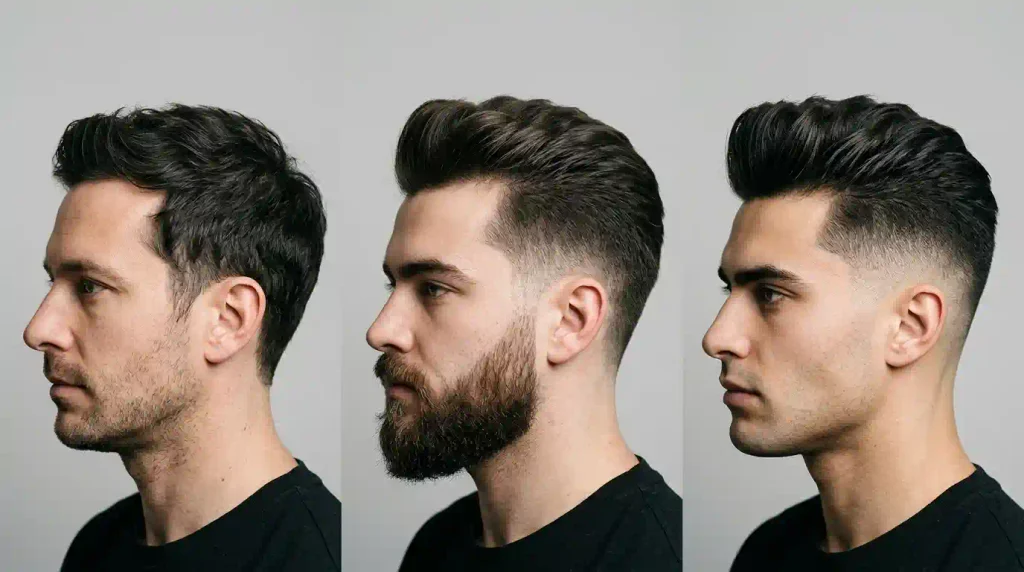
Taper Fade Quiff Haircut: Front, Side, and Back Views
A quiff should be evaluated from several angles because front height, side blending, and crown shape influence the overall appearance differently.
Front View: Quiff Height, Hairline, and Fringe Shape
The front view reveals the quiff’s height, width, and direction.
A rounded quiff creates a softer look, while a tall, narrow quiff emphasizes vertical height.
The hairline also affects the appearance. A quiff that exposes the forehead can highlight the shape of the temples.
For a balanced result, the front should complement the face rather than appear disproportionately tall.
Side View: Front Volume and Taper Fade Transition
The side view is often the most informative angle.
It shows how the fringe rises, how the quiff curves backward, and where the side fade begins.
A low taper creates a gradual transition with more retained side hair.
A high fade makes the quiff appear more separated from the surrounding hair.
The crown should connect smoothly to the elevated front.
Back View: Crown Blend and Tapered Neckline
The back view shows the crown shape, nape taper, and overall blending.
A properly shaped crown prevents the haircut from appearing excessively bulky behind the quiff.
The neckline may be softly tapered or more sharply defined depending on personal preference.
Low vs. Mid vs. High Taper Quiff from Different Angles
| View | Low taper quiff | Mid taper quiff | High taper quiff |
| Front | Softer side framing | Moderate contrast | More exposed temples |
| Side | Gradual lower transition | Balanced fade height | Strong visual separation |
| Back | Natural neckline | Defined lower blend | Greater upper-side exposure |
| Overall appearance | Classic and subtle | Modern and versatile | Bold and dramatic |

Taper Fade Quiff Before and After Styling Results
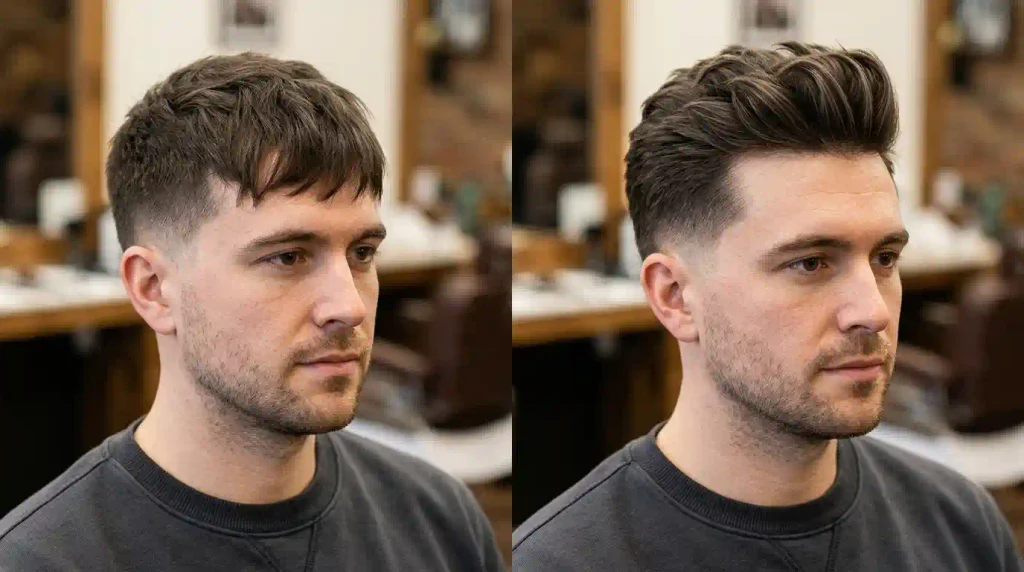
A quiff can look very different before and after styling because the hairstyle relies heavily on front elevation and directional shaping.
How a Quiff Looks Without Styling Products
Without product or blow-drying, straight hair may fall forward or lie flat against the forehead.
Wavy hair may retain some natural movement, while curly hair can maintain more visible volume.
The underlying haircut should still look balanced when unstyled.
A quiff that appears completely shapeless without heavy product may need better layering or a more suitable front length.
Before and After Blow-Drying a Quiff
Before blow-drying, the front hair may follow its natural downward growth direction.
Directional airflow can temporarily lift the roots and guide the strands upward or backward.
The difference may be substantial, especially for straight hair.
However, blow-drying should be controlled. Excessive heat is not required to create good volume.
Natural Hair Texture vs. Styled Quiff Volume
Natural texture influences how much lift the hair maintains.
Straight hair may require more directional drying.
Wavy hair often provides movement without extensive styling.
Curly hair may create volume naturally but require careful definition.
Fine hair may need lightweight products to avoid collapse.
Matte vs. Sleek Quiff Before and After Comparison
A matte quiff features visible texture and minimal shine.
A sleek quiff has smoother strands and a more controlled surface.
Both can use the same underlying haircut.
The main differences come from product choice, combing, and finishing technique.
Realistic Styling Results for Fine, Thick, and Wavy Hair
Fine hair can gain the appearance of additional volume, but styling cannot increase follicle density.
Thick hair often supports greater height but may require more weight removal.
Wavy hair can create natural movement, although achieving a perfectly smooth quiff may take additional effort.
Understanding Taper Fade Quiff Haircut Proportions
A successful quiff depends on the relationship between front length, crown structure, side weight, and natural hair growth direction.
What Makes a Quiff Shape Look Balanced?
A balanced quiff connects the elevated front to the crown without creating an abrupt step.
The side lengths should support the chosen silhouette.
If the front is excessively tall relative to the crown, the haircut can look top-heavy.
If the sides retain too much bulk, the front may appear less prominent.
How Quiff Height Changes the Haircut Silhouette
Low-height quiffs create a subtle, elongated front shape.
Medium-height quiffs provide noticeable elevation without excessive drama.
High-volume quiffs emphasize vertical height and can change the visual proportions of the face.
Choose height according to facial features, hair density, and styling preferences.
How Much Hair Should Stay on Top?
The amount of top hair depends on the desired quiff height and texture.
Short quiffs may need only a few inches of front length.
Longer, swept-back quiffs require additional hair.
The crown should be shaped to support the front rather than left uniformly heavy.
Front Length vs. Crown Length
The front is often longer than the crown because it must rise and curve backward.
If the crown is equally long and heavy, it can pull the quiff down.
If the crown is cut too short, the connection may look abrupt.
A stylist should create a gradual relationship between these sections.
Balancing Quiff Volume with Tapered Sides
The fade determines how much side weight remains.
A low taper creates a softer, fuller outline.
A high fade places greater emphasis on the top.
The right balance depends on the desired silhouette rather than a single universal formula.
How Side Length Affects Quiff Appearance
Longer sides can create a classic, scissor-cut appearance.
Shorter sides increase contrast.
A strong fade may make the quiff appear taller even when the actual front height remains unchanged.
This is a visual effect rather than an increase in hair volume.
How Natural Hair Growth Direction Affects the Quiff
Hair that naturally grows backward may be easier to style into a quiff.
Hair that grows strongly forward may require additional directional drying.
Cowlicks can influence where the front separates or changes direction.
Working with natural growth patterns often produces a more durable result.
Understanding Crown Weight and Layer Distribution
The crown acts as a transition between the lifted front and the back of the haircut.
Too much crown weight can flatten the hairstyle.
Excessive thinning can create uneven or weak sections.
Controlled layering distributes volume while preserving enough density for styling.
How Head Shape Influences Quiff Proportions
Head shape affects how the quiff appears from the side.
A flatter crown may benefit from carefully distributed volume.
A naturally prominent crown may require less elevation behind the front.
A skilled barber considers the occipital bone, parietal ridge, and overall profile when shaping the cut.
Quiff Height and Taper Fade Placement Visual Chart
Low, Medium, and High Quiff Height Comparison
| Quiff height | Approximate visible lift | Appearance | Typical effort |
| Low | Under 1 inch | Subtle, natural | Low |
| Medium | 1–2 inches | Balanced, noticeable | Medium |
| High | 2–3+ inches | Dramatic, elevated | High |
These values describe visual styling targets, not mandatory haircut measurements.
How Front Hair Length Changes Visible Quiff Height
Longer front hair allows greater movement and curvature.
However, more length also means more weight.
An extremely long fringe may be harder to keep upright without appropriate layering and styling support.
Quiff Volume vs. Low, Mid, and High Fade Placement
A low taper preserves side fullness and creates a softer transition.
A mid taper provides moderate contrast.
A high fade makes the upper volume stand out more strongly.
The correct fade height depends on the overall appearance you want.
Front-to-Crown Length Ratio Illustration
A practical quiff often retains slightly greater length at the front than at the crown.
There is no universal numerical ratio.
The ideal relationship depends on hair thickness, growth direction, and desired curvature.
Barbers should use the finished silhouette rather than a fixed ratio as the primary guide.
Choosing a Balanced Quiff Profile for Different Head Shapes
For a long face, moderate elevation may look more balanced than an extremely tall quiff.
For a rounder face, some front height can create visual length.
These are styling considerations, not strict requirements.
How to Choose the Right Taper Fade Quiff Haircut
Choosing the right quiff requires more than selecting a photograph. Hair texture, density, growth direction, and everyday styling habits matter.
Choosing a Quiff by Hair Texture
Best Quiff for Naturally Straight Hair
Straight hair creates a smooth, defined shape but may lack natural root lift.
A medium-length textured quiff with a low taper is often a practical choice.
Blow-dry the front upward and backward with controlled airflow.
Best Quiff for Wavy Hair
Wavy hair naturally provides movement and texture.
A messy or layered quiff can use those characteristics without requiring a perfectly smooth finish.
A low or mid taper keeps the haircut balanced.
Best Quiff for Curly and Coily Hair
Curly and coily hair can create substantial front volume.
A suitable shape should account for shrinkage and avoid excessive thinning.
Finger styling or a diffuser may help maintain definition.
Best Quiff for Thick and Dense Hair
Thick hair can support a high-volume quiff but may become heavy.
Strategic layering helps distribute weight.
Avoid applying excessive product, which can make the top difficult to control.
Best Quiff for Fine or Thinning Hair
Fine hair often benefits from shorter, lightweight quiff styles.
Avoid aggressive thinning and heavy pomade.
A subtle low taper may preserve a fuller overall appearance.
Best Taper Fade Quiff Haircuts by Face Shape
Oval Face Shape
Oval faces generally accommodate several quiff variations.
A medium-height quiff with a low or mid taper creates a balanced look.
Round Face Shape
Additional front height can create an elongated visual appearance.
A mid taper with controlled side bulk may emphasize that effect.
Avoid excessive width around the upper sides if you want a narrower silhouette.
Square Face Shape
Square faces often pair well with textured or softly rounded quiffs.
A low taper maintains balanced side proportions.
A strong angular fade may create a sharper appearance.
Long and Oblong Face Shapes
Longer faces may benefit from moderate quiff height.
An extremely tall front can emphasize facial length.
A side-swept or lower-volume quiff offers an alternative.
Heart-Shaped Face
A heart-shaped face may feature a wider forehead and narrower chin.
A soft textured quiff with moderate height can create a balanced appearance.
Avoid overly rigid vertical styling if it exaggerates forehead width.
Diamond Face Shape
Diamond faces often feature prominent cheekbones.
A medium quiff with some retained upper-side volume can balance the profile.
A low taper may look softer than a very high skin fade.
Choosing Quiff Height by Facial Proportions
Quiff height changes the apparent length and shape of the face.
A taller front can elongate a rounder appearance.
A lower quiff may better suit a long or narrow face.
The best approach is to compare several heights before committing to a dramatic cut.
How Forehead Size and Hairline Shape Affect the Quiff
A quiff exposes more of the forehead than a forward fringe.
People with prominent foreheads may prefer a softer, side-swept front.
The position of the temples and natural hairline also affects where the quiff begins.
Choose a shape that works with existing hair rather than forcing a perfectly straight artificial hairline.
Quiff Haircuts for Receding Hairlines
A receding hairline does not automatically rule out a quiff.
However, the style should not depend on hair that is no longer sufficiently dense.
Best Fringe Direction for Receding Temples
A diagonal or side-swept quiff may create a softer transition around the temples.
Avoid exaggerated backward pulling if it exposes sparse areas you prefer to minimize.
Choosing a Taper for Thin Temple Hair
A subtle taper can preserve some fullness around the temples.
A high skin fade may increase visible scalp exposure.
Ask the barber to keep the transition conservative when density is limited.
Avoiding Excessive Scalp Exposure
Avoid cutting too high into thin upper-side areas.
The goal is to maintain a balanced appearance using the hair that is present.
Progressive or unexplained hair loss should be evaluated by a dermatologist.
How to Style a Quiff with Cowlicks and Difficult Hair Growth Patterns
Cowlicks influence where the hair naturally rises, splits, or changes direction.
A good quiff should account for these patterns rather than fighting them unnecessarily.
Front Hairline Cowlick and Quiff Direction
A front cowlick may cause one section to stand upright or separate.
A side-swept quiff can sometimes incorporate this natural lift.
Use directional airflow while the hair is slightly damp.
How to Manage a Crown Cowlick
A crown cowlick may create uneven volume behind the quiff.
The stylist can adjust the crown length and layering to reduce unwanted separation.
Avoid cutting the crown extremely short without considering its growth direction.
Quiff Haircuts for Double Crown Swirls
A double crown can create two competing growth directions.
The quiff should be shaped around those patterns.
A textured finish may be easier to maintain than a perfectly smooth, rigid hairstyle.
Choosing a Side-Swept Quiff for Uneven Growth
If the front naturally grows toward one side, a diagonal quiff may require less effort.
The hairstyle can still retain height while following the natural parting.
When to Work with Your Natural Hair Direction Instead of Against It
Repeatedly forcing hair into the opposite direction may require more heat and product.
A suitable haircut can use the natural growth pattern to create the desired shape with less effort.
Choosing a Quiff for Your Lifestyle
Low-Maintenance Quiffs for Everyday Wear
Short textured quiffs are often the easiest to manage.
They require less product and have shorter drying times.
A low taper may also grow out more softly than a skin-close high fade.
Professional and Office-Friendly Quiffs
A medium-height quiff with a smooth or lightly textured finish can look polished.
Keep the sides neat and avoid excessive height.
High-Volume Quiffs for Statement Styling
High-volume quiffs require enough front length, appropriate layering, and styling time.
They are suited to men who enjoy deliberate daily grooming.
Quiffs for Men Who Prefer Minimal Styling Products
Choose a softer quiff that works with natural hair direction.
A scissor-cut top with modest root lift may need only a small amount of cream or mousse.
Who Should Choose a Taper Fade Quiff?
A quiff is suitable for someone who wants noticeable front volume and is comfortable maintaining it.
It works best when the haircut respects hair texture, density, and natural growth.
When Should You Consider a Different Hairstyle?
Consider another hairstyle if the desired quiff requires more daily work than you want.
A very short crop, classic side part, or natural flow may be more practical.
For a compact alternative with a structured fringe, compare the low taper haircut edgar cut and mid taper haircut edgar.
Taper Fade Quiff with Natural Curls vs. a Perm
A naturally curly quiff and a chemically permed quiff can look similar, but they are created differently.
Naturally Curly Quiff with Taper Fade
A naturally curly quiff uses the hair’s existing curl pattern.
The barber shapes the front to create height while maintaining curl definition.
A low taper provides a clean outline.
Quiff with a Loose Wave Perm
A loose wave perm chemically creates movement in suitable hair.
It may help straight hair achieve a softer, waved quiff.
However, the treatment changes the hair structure and carries risks.
For a detailed explanation, explore the taper haircut perm.
Quiff with a Textured Top-Only Perm
A top-only perm treats selected upper sections while leaving the short sides untreated.
It can create additional movement in the front.
A qualified stylist must assess the hair condition before recommending chemical processing.
Styling Differences Between Natural and Chemically Treated Curls
Naturally curly hair may already provide sufficient volume.
Permed hair requires attention to chemical aftercare and potential dryness.
Both benefit from gentle detangling and suitable conditioning.
When a Chemical Perm Is Not a Good Choice
A perm may be unsuitable for severely damaged, overprocessed, or chemically incompatible hair.
It should also be postponed if the scalp is irritated.
A natural haircut or temporary styling method may be safer.
Taper Fade Quiff Haircut Length and Clipper Guard Guide
Knowing the desired lengths helps your barber create the correct proportions.
How Long Does Your Hair Need to Be for a Quiff?
The required length depends on how high the front should rise and how far it should sweep backward.
Minimum Front Hair Length for a Short Quiff
Approximately two to three inches can support certain compact quiff styles.
The result depends on texture and growth direction.
A shorter front may only create a subtle lift.
Recommended Length for a Medium Quiff
Approximately three to four inches often provides useful styling flexibility.
This length can create a noticeable front curve without becoming excessively heavy.
Ideal Top Length for a Long or High-Volume Quiff
A longer quiff may use four to six inches or more at the front.
Extra length allows movement but adds weight.
The crown should be shaped carefully to prevent collapse.
Recommended Side Lengths for Different Taper Heights
A low taper preserves greater upper-side length.
A mid taper removes more weight around the temples.
A high taper or fade creates stronger separation.
The exact length should be chosen according to the desired blend, not solely the fade name.
Common Clipper Guard Numbers and Cutting Lengths
| Guard | Approximate cutting length |
| #0.5 | 1/16 inch |
| #1 | 1/8 inch |
| #2 | 1/4 inch |
| #3 | 3/8 inch |
| #4 | 1/2 inch |
Measurements may vary slightly by clipper system and blade adjustment.
Choosing Guard Sizes for Low, Mid, and High Tapers
A barber may combine multiple guards and adjustable blade settings to create a smooth transition.
Low, mid, and high describe fade placement rather than a particular guard number.
Taper Height vs. Fade Height
A taper typically concentrates shorter lengths near the sideburns and neckline.
A fade may extend across more of the sides or back.
Barbershop terminology varies, so show a photograph and specify the desired transition.
How Hair Texture and Shrinkage Affect Quiff Length
Curly and coily hair can appear shorter once dry.
The barber should evaluate the natural curl pattern before removing front length.
Straight hair often shows its cut length more directly.
How to Ask Your Barber for a Taper Fade Quiff Haircut
Clear instructions help prevent problems with front length, taper height, and crown weight.
What to Tell Your Barber
Explain the desired front height, natural texture, fade placement, and styling finish.
Ready-to-Use Barber Request Script
“I want a medium-height textured quiff with a low taper fade. Please keep around three to four inches at the front, depending on what works with my hair, and gradually shorten the crown. Keep the taper low around the temples and neckline. I want natural movement rather than a stiff pompadour.”
Explaining Your Preferred Taper or Fade Height
Tell the barber whether the shortest area should remain near the sideburns or extend farther up the sides.
Use photos to clarify the boundary.
Describing Your Desired Quiff Volume and Texture
Explain whether you prefer a low, medium, or high quiff.
Describe the finish as matte, natural, textured, or polished.
Explaining Front, Top, Crown, and Side Lengths
The front needs sufficient length for lift.
The crown should connect smoothly to the front.
The sides should support the selected taper height.
Understanding Common Quiff Barber Terminology
Terms such as taper, low fade, skin fade, textured top, point cutting, and graduated blend describe different cutting decisions.
Ask for clarification if a term is unfamiliar.
Choosing Reference Photos for Your Hair Type
Reference photos should show a hairstyle with similar hair density and texture.
Avoid selecting images based only on facial appearance.
Front View Reference Photos
Use the front view to communicate quiff height, width, and hairline exposure.
Side Profile and Fade Placement Photos
Side photographs show how the front curves backward and where the fade begins.
Showing Your Barber the Desired Quiff Height
Choose a photograph with realistic styling height.
Explain whether you want that appearance every day or only for special occasions.
Step-by-Step Professional Quiff Haircut Process
Preparing and Sectioning the Hair
The barber assesses growth patterns, sections the hair, and establishes the intended shape.
Establishing the Top and Front Length
The stylist preserves enough front length for the desired quiff while shaping the crown.
Creating the Taper or Fade
Clippers gradually shorten selected side and neckline areas.
The barber controls the height and transition.
Blending the Sides into the Crown
The upper sides are connected with the crown using suitable cutting techniques.
Adding Layers and Texture
Controlled point cutting or layering reduces excess weight while preserving fullness.
Shaping the Fringe and Quiff
The front is refined according to the desired height and direction.
Refining the Hairline and Neckline
The barber cleans the edges and checks the haircut’s symmetry.
Essential Barber Tools and Cutting Techniques
Common equipment includes clippers, guards, detail trimmers, scissors, combs, and appropriate styling tools.
Point cutting and scissor-over-comb techniques can help shape the quiff.
What to Check Before Leaving the Barbershop
Inspect the haircut from front, side, and back angles.
Check the front length, crown connection, taper symmetry, and neckline.
Ask the barber to demonstrate how to style the quiff at home.
How to Choose a Barber Experienced with Quiff Haircuts
Look for examples of well-shaped fronts and smooth side transitions.
A barber experienced with both scissors and clippers is particularly useful for balancing the quiff.
How to Style a Taper Fade Quiff Haircut at Home
A quiff becomes easier to style when the haircut has the correct proportions.
Step-by-Step Quiff Styling Tutorial
Step 1: Wash and Towel-Dry Your Hair
Clean the hair as needed.
Gently absorb excess moisture with a towel.
Avoid aggressive rubbing, which can increase tangles and frizz.
Step 2: Apply a Pre-Styling Product
Distribute a lightweight mousse or suitable pre-styling spray through the intended styling sections.
Use less product on fine hair.
Step 3: Blow-Dry Upward and Backward for Volume
Use moderate heat and direct airflow toward the roots while lifting the front.
Guide the hair in the intended direction.
Avoid holding concentrated hot air against the same area for too long.
Step 4: Shape the Quiff with a Brush or Comb
A round brush can create curvature.
A vent brush or fingers may provide a more textured appearance.
Shape the front into the desired height.
Step 5: Apply Your Main Styling Product
Warm a small amount of clay, wax, or pomade between your palms.
Work it through the hair gently.
Add more only if necessary.
Step 6: Refine the Front and Set the Hairstyle
Use your fingers or a comb to create the final shape.
A light finishing spray can provide additional hold.
Avoid overworking the hairstyle once it is set.
How to Style a Classic Quiff
Create a smooth upward-and-backward sweep.
Use a comb for definition and a suitable medium-hold product.
Keep the front elevated without excessive stiffness.
How to Create a Messy and Textured Quiff
Use fingers to separate sections and create controlled irregularity.
Matte clay can add definition.
Avoid combing the finished style into a rigid shape.
How to Style a Curly or Wavy Quiff
Preserve natural curl formation.
Use a diffuser or gentle air-drying method and avoid aggressive dry brushing.
A lightweight curl cream may help maintain definition.
How to Create a Slick and Polished Quiff
Apply an appropriate pomade to manageable hair.
Comb the front backward while maintaining a noticeable lift.
Avoid excessive shine or product buildup.
How to Style a Quiff Without a Blow Dryer
A quiff can be shaped without heat when the hair naturally supports some lift.
Use damp hair, finger styling, and suitable lightweight products.
Expect less dramatic volume than a professionally blow-dried style in some hair types.
How to Keep a Quiff Looking Natural
Use minimal product and avoid excessive separation.
Allow the front to move slightly.
A natural quiff should look styled without appearing rigid.
How to Make a Quiff Last All Day
Begin with a suitable haircut.
Establish direction before applying heavy products.
Choose hold according to hair thickness and environmental conditions.
Quick Morning Quiff Styling Routine
Lightly dampen the front, reshape the roots, and apply a small amount of product if needed.
A short textured quiff may take only a few minutes.
Long, high-volume styles require more attention.
Styling Time Required by Hair Type and Quiff Style
| Hair and quiff type | Illustrative daily styling time |
| Short textured quiff | 3–5 minutes |
| Medium classic quiff | 5–10 minutes |
| Wavy natural quiff | 3–8 minutes |
| High-volume quiff | 10–15 minutes |
| Curly defined quiff | 5–12 minutes |
Times vary with experience, hair density, and the desired finish.
Best Hair Products and Styling Tools for a Taper Fade Quiff
Products influence hold, texture, shine, and volume, but they cannot replace a properly shaped haircut.
Choosing Styling Products by Hair Type and Hold
Fine hair generally benefits from lightweight products.
Thick hair may tolerate stronger hold.
Curly hair often benefits from conditioning and definition.
Choose products according to the hairstyle’s needs rather than buying the strongest available formula.
Matte Clay for Texture and Natural Finish
Matte clay provides grip and low shine.
It works well for modern textured quiffs.
Use a small amount to avoid flattening the roots.
Pomade for Sleek and Classic Quiffs
Pomade creates a smoother finish and may add shine.
Water-based formulations can be easier to wash out than some heavier oil-based products.
Choose the appropriate hold and finish for your hair.
Hair Wax for Flexible Hold and Definition
Hair wax can provide shape and strand separation.
It is useful for shorter quiffs.
Apply moderately to prevent excessive buildup.
Texturizing Powder for Root Volume
Texturizing powder may help fine or flat hair appear more lifted.
Apply sparingly near suitable root areas.
Too much powder can leave hair feeling rough or difficult to comb.
Sea Salt Spray for Natural Texture
Sea salt spray can add grip and texture.
However, some formulas may feel drying.
Use moderately and condition appropriately.
Volumizing Mousse and Pre-Styling Products
Mousse can support a lightweight finish and help establish lift.
It is useful for straight or fine hair.
Apply before directional drying.
Hairspray and Finishing Products
A light finishing spray can reduce unwanted movement.
Use enough to support the hairstyle without creating excessive stiffness.
Heat Protectant and Hair Conditioning Products
Heat protectant can reduce some damage associated with blow-drying.
Conditioner improves manageability and reduces friction.
Neither product makes unlimited high-heat styling harmless.
Quiff Product Placement and Application Amount Guide
Where to Apply Pre-Styling Products
Apply lightweight pre-styling products to the sections that need direction and volume.
For many quiffs, this means the front and upper crown.
How Much Clay, Wax, or Pomade to Use
Start with a small, pea-sized amount for a short or medium quiff.
Thicker or longer hair may need more.
Product concentration varies, so adjust according to the formula.
Root Application vs. Mid-Length and End Application
Root-directed products support lift.
Finishing wax or clay can be distributed through the mid-lengths and ends for shape.
Avoid loading the roots with heavy pomade.
Applying Products to Fine vs. Thick Hair
Fine hair usually needs less product because excess weight can cause collapse.
Thick hair may require stronger hold and more careful distribution.
How to Avoid Product Buildup and Flattened Roots
Use the smallest effective amount.
Wash according to scalp and styling needs.
Avoid repeatedly adding product over several days without appropriate cleansing.
Essential Quiff Styling Tools
Blow Dryer for Root Lift
A blow dryer helps direct the hair and create temporary volume.
Use low or medium heat where possible.
Round Brush and Vent Brush
A round brush creates curvature and lift.
A vent brush allows airflow while shaping the hair.
Choose according to the desired finish.
Comb for Quiff Direction and Shape
A comb creates smoother lines and defined parts.
It is especially useful for classic and polished quiffs.
Optional Diffuser for Curly Hair
A diffuser can help dry curly hair while maintaining its natural shape.
Use controlled airflow and moderate heat.
Choosing Between Matte, Natural, and Glossy Finishes
Matte finishes emphasize texture.
Natural finishes preserve soft movement.
Glossy finishes provide a polished appearance.
The best choice depends on the hairstyle and personal preference.
Styling Products You May Not Need
Not every quiff requires clay, pomade, powder, mousse, and hairspray simultaneously.
A good haircut may need only one or two suitable products.
Avoid unnecessary complexity.
Estimated Initial Styling Kit Cost
An illustrative starter kit might include a styling product, comb or brush, and a blow dryer if you do not already own one.
Depending on product quality and equipment, a basic setup could cost approximately 30–100 or more.
This is a budgeting example rather than a fixed market price.
Monthly and Annual Hair Product Budget
If a styling product costs $15 and lasts two months, the annual cost would be approximately $90.
Actual spending depends on product size, application quantity, and how frequently you style your hair.
How to Maintain a Taper Fade Quiff Haircut
A quiff needs maintenance in two areas: the front shape and the shorter tapered sides.
Daily Hair Care and Styling Routine
Use gentle washing and styling methods.
Avoid unnecessary heat exposure.
Check that the hair retains its intended direction without excessive product.
How Often Should You Wash a Quiff?
Washing frequency depends on scalp oiliness, product use, and hair texture.
Clean the scalp as needed and use conditioner where appropriate.
Avoid overwashing if it leaves your hair excessively dry.
How Often Should You Refresh the Taper Fade?
A sharp skin fade may need a cleanup every two to three weeks.
A softer low taper may remain presentable for longer.
Choose based on hair growth and desired definition.
When to Trim the Front, Crown, and Sides
The front should be trimmed when it becomes too heavy or loses its shape.
The crown may need periodic adjustment.
The sides often require attention more frequently than the top.
How to Maintain Quiff Volume Between Haircuts
Use suitable products and controlled styling techniques.
If the quiff becomes difficult to lift because of excess length, schedule a trim rather than adding increasingly heavy products.
How to Prevent Heat Damage and Dryness
Limit unnecessary blow-drying and avoid excessive temperatures.
Use suitable heat protection when styling with heat.
For general hair-care guidance, see the American Academy of Dermatology’s healthy hair recommendations.
Keeping the Fade and Neckline Defined
A barber can refresh the sideburns and neckline without substantially changing the quiff.
Avoid attempting complicated skin-fade corrections without experience.
Maintaining Hair Hydration and Natural Movement
Condition hair according to its needs.
Use lightweight products when volume is the priority.
Avoid excessive stiffness.
How to Adjust Your Styling Routine as Hair Grows
Longer hair gains weight and may require a different brush, drying direction, or product.
A quiff that worked immediately after the haircut may need small adjustments several weeks later.
Taper Fade Quiff Growth Timeline: Week by Week
The quiff’s shape changes gradually as the front, crown, and sides grow at different visual rates.
Week 1: Fresh Taper and Defined Quiff Shape
The taper appears sharp, and the top retains its intended layers.
Daily styling is usually most predictable during this period.
Week 2: Early Sideburn and Temple Regrowth
Short hair begins appearing around the original fade boundaries.
The quiff may still maintain its initial shape.
Weeks 3–4: Losing Fade Definition and Crown Balance
The fade becomes softer.
The crown and front may begin feeling heavier.
A taper cleanup can restore side definition.
Weeks 5–6: Managing Longer Sides and Heavy Front Hair
Additional length may reduce quiff height or create unwanted side bulk.
A full haircut may be useful if the upper shape has changed substantially.
How a Quiff Looks After 8 Weeks Without a Haircut
After eight weeks, a low taper may look more natural and grown out.
A high skin fade may lose much of its original contrast.
The quiff can become longer, heavier, and more difficult to lift.
How Much Does a Taper Fade Quiff Haircut Cost?
Haircut pricing varies by location, barber experience, service complexity, and included styling.
Average Barbershop Prices for a Quiff Fade
The following are illustrative U.S. budgeting ranges, not a guaranteed national pricing schedule.
| Service | Approximate budget |
| Basic men’s taper haircut | 25–50 |
| Detailed quiff with taper fade | 35–75 |
| Skin fade with detailed top shaping | 40–85 |
| Premium barbershop styling service | 70–120+ |
| Taper or neckline touch-up | 15–35 |
Confirm the exact service and price before booking.
Pricing Differences Between Low, Mid, and Skin Fades
A basic low taper may require less detailed blending than a complex skin fade.
However, barber skill, appointment duration, and local pricing often matter more than the fade name alone.
Full Haircut vs. Taper Touch-Up Costs
A full haircut includes shaping the front, crown, and sides.
A touch-up focuses on shorter areas.
If the quiff still holds its shape, a taper cleanup may be sufficient.
Factors That Affect Haircut Pricing
Location, barber experience, hair density, styling services, and haircut complexity influence pricing.
Additional beard work or specialty designs may increase the total.
Monthly and Annual Haircut Maintenance Budget
For example, a $45 haircut every four weeks would total approximately $585 over 13 appointments.
A different schedule combining full cuts and smaller touch-ups may cost more or less.
What to Expect During a Maintenance Appointment
The barber may refresh the fade, shape the neckline, and remove weight from the upper hair.
Explain whether you want to retain your current quiff height or modify it.
How to Grow Your Hair into a Taper Fade Quiff
Growing a quiff requires enough front length to create elevation and movement.
Growing a Quiff from a Buzz Cut or Short Haircut
Begin by preserving front length during subsequent trims.
Continue maintaining the sides if desired.
For a related short starting hairstyle, see the Buzz Taper Haircut.
Transitioning from a French Crop or Textured Fringe
A French crop usually features a forward-directed fringe.
As the front grows, it can gradually be styled upward.
Avoid cutting the fringe too short during the transition.
Growing the Front Longer While Keeping the Sides Tapered
Ask your barber to preserve the front and carefully shape the crown.
Maintain the lower taper without removing unnecessary top length.
Managing the Awkward Growing Stage
During growth, the front may be too long for a short crop but too short for a full quiff.
Use lightweight products and a modest side sweep.
For a related structured haircut, compare the Taper Haircut Crew Cut Low Fade.
Maintaining Crown Balance During Hair Growth
The crown may become heavy before the fringe reaches the desired length.
A barber can remove selected weight without sacrificing front growth.
Growing Out a Quiff Fade into a Different Hairstyle
A quiff can transition into a flow haircut, side-part style, or longer brushed-back hairstyle.
The appropriate transition depends on how much front and crown length is retained.
Common Taper Fade Quiff Haircut Mistakes and How to Fix Them
Most quiff problems relate to cutting proportions, hair growth direction, product weight, or styling technique.
Choosing the Wrong Quiff Length
A front that is too short may not create enough lift.
An excessively long front may collapse under its own weight.
Choose length according to the desired height and hair texture.
Taking the Taper or Fade Too High
A high fade can create excessive contrast or expose sparse upper-side areas.
If unsure, begin with a low taper.
Leaving Too Much Weight on Top
Heavy crown hair may pull the front down.
Careful layering can improve balance.
Avoid excessive thinning that weakens the overall shape.
Over-Thinning Fine Hair
Fine hair may lose fullness when too much weight is removed.
Use conservative texturizing and lightweight products.
Ignoring Natural Hair Growth Direction
Hair may resist a style that directly opposes its growth pattern.
Adjust the parting or blow-drying direction.
Using Incorrect Blow-Drying Direction
Drying downward can flatten the roots.
For a lifted quiff, guide airflow upward and toward the desired sweep.
Skipping Blow-Drying When Volume Is Needed
Some straight hair types benefit significantly from directional blow-drying.
If you prefer not to use heat, choose a lower-volume hairstyle.
Applying Too Much Styling Product
Heavy product can weigh down the quiff.
Start with a small amount and add more only if needed.
Choosing the Wrong Product for Your Hair Type
Fine hair may collapse under heavy pomade.
Thick hair may need stronger hold.
Curly hair may require additional conditioning.
Creating an Overly Smooth or Stiff Quiff
Excessive combing and strong-hold product can eliminate natural movement.
Use a flexible finish when appropriate.
Letting the Sides Grow Too Long
Excessive side bulk can change the quiff’s proportions.
Regular taper maintenance restores balance.
Delaying Regular Haircuts
As the top grows, weight distribution changes.
A timely trim may make styling easier.
Ignoring Face Shape and Hairline Proportions
An extremely tall quiff may not create the appearance you want.
Choose a shape based on facial balance and available hair density.
Using Unsuitable Reference Photos
Celebrity photos may show different textures, lengths, and styling conditions.
Choose realistic references.
Giving Up Before Learning the Styling Technique
A quiff can require practice.
Experiment with manageable product amounts and brush direction before changing the haircut.
How to Correct a Poorly Cut Quiff
If the front is too long or heavy, a barber may be able to reshape it.
If too much hair has been removed, growing it out may be necessary.
Avoid repeated cutting attempts that worsen the shape.
Taper Fade Quiff Styling Troubleshooting Chart
Why Your Quiff Falls Flat After One Hour
The front may be too heavy, insufficiently dried at the roots, or overloaded with product.
Check the haircut shape and styling technique.
Why Your Quiff Separates in the Middle
Natural growth patterns, cowlicks, or uneven product distribution can cause separation.
Try a different direction or a textured finish.
Fixing a Quiff That Falls Forward
Use controlled upward drying and suitable hold.
If the front is excessively long, consider trimming.
How to Fix Uneven Quiff Height
Check whether the hair has different lengths or growth directions.
Adjust the styling direction and avoid overworking one side.
Quiff Troubleshooting by Symptom, Cause, and Solution
| Problem | Possible cause | Practical solution |
| Quiff falls flat | Heavy product or excessive length | Use less product; consider reshaping |
| Middle separation | Cowlick or natural parting | Adjust direction; use textured styling |
| Front falls forward | Insufficient root lift | Blow-dry upward with moderate heat |
| Uneven height | Growth pattern or inconsistent length | Restyle or consult barber |
| Excessive stiffness | Too much strong-hold product | Reduce product quantity |
| Frizzy finish | Dryness or rough handling | Condition and style gently |
| Greasy roots | Heavy pomade buildup | Cleanse appropriately; use lighter product |
Styling a Taper Fade Quiff in Different Situations
The same haircut can be adapted for different environments.
Office vs. Weekend Quiff Styling
For work, choose a controlled medium-height quiff with minimal flyaways.
For weekends, allow more texture and natural movement.
Maintaining Quiff Volume in Humid Weather
Humidity can change hair texture and increase frizz.
Use suitable products and avoid excessive manipulation.
Styling a Quiff in Windy Conditions
A stronger flexible-hold product may help maintain shape.
Avoid relying on a rigid finish that breaks apart when disturbed.
Restoring a Flattened Quiff After Wearing a Hat
Remove the hat, lightly reshape the roots, and use your fingers to restore the front.
A small amount of moisture may help.
Refreshing Your Quiff After the Gym
Sweat can flatten the upper hair.
Allow the scalp to dry or wash as needed before restyling.
Quick Quiff Fixes Without Rewashing Your Hair
Lightly dampen the front, lift it with your fingers, and reshape.
Avoid repeatedly adding heavy product.
Taper Fade Quiff vs. Similar Haircuts
Understanding related styles helps clarify what to request from your barber.
Quiff vs. Pompadour
A quiff usually emphasizes front lift and flexible movement.
A pompadour generally features broader, more continuous volume swept backward.
Differences in Front Height and Hair Direction
A quiff can have irregular or textured front movement.
A pompadour typically creates a smoother, more defined backward shape.
Volume and Styling Requirements
Pompadours often require more deliberate smoothing and volume distribution.
Quiffs can be shorter and more relaxed.
Maintenance and Product Differences
Classic pompadours may rely on pomade and careful combing.
Modern quiffs often use matte products and finger styling.
Quiff vs. Slicked-Back Hair
Slicked-back hairstyles direct hair backward without necessarily creating substantial front elevation.
A quiff retains noticeable lift.
Quiff vs. Textured Crop
A textured crop usually directs the fringe forward.
A quiff lifts the front upward.
Quiff vs. Fringe Haircut
A fringe falls toward the forehead.
A quiff generally rises away from it.
Quiff vs. Comb Over
A comb-over directs hair across the head.
A quiff emphasizes front elevation.
The two can be combined in a side-part quiff.
Quiff vs. Fauxhawk
A fauxhawk concentrates volume through the center.
A quiff emphasizes the front.
Classic Quiff vs. Modern Textured Quiff
A classic quiff usually has smoother direction and more controlled shape.
A textured quiff emphasizes visible strand separation.
Low Taper Quiff vs. Low Fade Quiff
A low taper concentrates shortening near the lower hairline.
A low fade may create a broader blended transition.
Low vs. Mid vs. High Taper Fade Quiff
A low taper creates subtle contrast.
A mid taper provides balanced definition.
A high taper emphasizes the quiff more dramatically.
Taper Fade Quiff vs. Undercut Quiff
A taper fade usually creates a graduated transition.
An undercut may produce a stronger, disconnected boundary.
History and Evolution of the Quiff Haircut
The quiff has evolved through several generations of men’s hairstyling.
Origins of the Classic Quiff
The quiff became associated with mid-20th-century men’s grooming and youth fashion.
Its defining feature was a raised front that differed from flatter, conventional hairstyles.
How the Quiff Became a Popular Men’s Hairstyle
The style gained popularity through music, fashion, and changing grooming preferences.
Its dramatic front shape made it recognizable.
Rockabilly and Retro Quiff Influences
Rockabilly-inspired quiffs often feature polished front rolls and visible height.
Pomade and combing techniques help recreate the retro silhouette.
The Evolution from Classic Quiffs to Modern Taper Fades
Modern barbering introduced more precise fades and contemporary texture.
Today, the quiff can combine classic volume with low, mid, or high tapered sides.
Why Textured Quiffs Remain Popular in Contemporary Barbering
Textured quiffs offer a less rigid alternative to traditional polished styles.
They accommodate natural movement and different hair types.
The taper fade adds a clean finish without removing the hairstyle’s character.
Frequently Asked Questions About Taper Fade Quiff Haircuts
What Is the Difference Between a Quiff and a Pompadour?
A quiff emphasizes lifted front movement, while a pompadour usually has broader, smoother volume swept backward.
How Long Does Hair Need to Be for a Quiff?
Many short quiffs work with approximately two to three inches at the front, while taller styles generally need more length.
Is a Low Taper Fade Good for a Quiff?
Yes, a low taper preserves side fullness while creating a clean outline beneath the lifted front.
Can You Get a Quiff with Straight Hair?
Yes, straight hair can form a quiff with appropriate length, directional styling, and suitable products.
Does a Quiff Work with Curly Hair?
Yes, curly hair can create a textured quiff when the cut accounts for curl shape and shrinkage.
Can Men with Thin Hair Get a Quiff?
Yes, some fine or thinning hair types can support a short, lightweight quiff without excessive thinning or heavy products.
Is a Quiff Suitable for a Receding Hairline?
Sometimes, depending on available density, temple recession, and the chosen front direction.
What Face Shape Looks Best with a Quiff?
Quiffs can suit many face shapes when the height, width, and side proportions are adjusted appropriately.
Can a Taper Fade Quiff Look Professional?
Yes, a medium-height quiff with a subtle low taper and controlled finish can look polished.
Is a Quiff Hard to Maintain?
Short, textured quiffs are generally easier to maintain than long, high-volume styles.
How Long Does It Take to Style a Quiff?
A simple quiff may take a few minutes, while more elaborate versions can require ten minutes or longer.
Can You Style a Quiff Without a Blow Dryer?
Yes, especially when the hair has natural lift, although the finished height may be more limited.
Which Hair Products Work Best for a Quiff?
Matte clay, styling cream, pomade, mousse, and texture powder can work depending on hair type and desired finish.
Why Does My Quiff Keep Falling Flat?
Excess weight, heavy products, insufficient root lift, or unsuitable cutting proportions may cause the quiff to collapse.
How Often Should You Get a Quiff Haircut?
Many people refresh the fade every two to four weeks and reshape the top according to growth and styling needs.
Which Fade Looks Best with a Quiff?
A low taper offers subtle contrast, a mid fade creates balance, and a high fade produces a bolder appearance.
Can Older Men Wear a Quiff?
Yes, quiffs can suit older men when the style complements current hair density, texture, and facial features.
Is the Taper Fade Quiff Still in Style in 2026?
Yes, contemporary quiff variations remain relevant because they combine classic front volume with modern faded sides.
Final Thoughts: Choosing the Best Taper Fade Quiff Haircut
A taper fade haircut quiff offers an adaptable combination of front volume, natural movement, and clean, carefully blended sides. Whether you prefer a short professional quiff, a relaxed textured hairstyle, a polished classic shape, or a bold high fade, the best result depends on hair length, density, growth direction, and the balance between the front and crown.
Begin with a realistic reference photo and discuss your desired quiff height, taper placement, and daily styling preferences with your barber. Keep the front long enough for lift, avoid excessive product weight, and use gentle heat styling when needed.
Before your next haircut, save a few front and side reference images and identify the version that suits your hair texture and lifestyle. A well-shaped quiff should look balanced, feel comfortable, and remain manageable between appointments.