
Side Part Taper Haircut: Best Styles, Variations, Fades, Lengths & Styling Guide
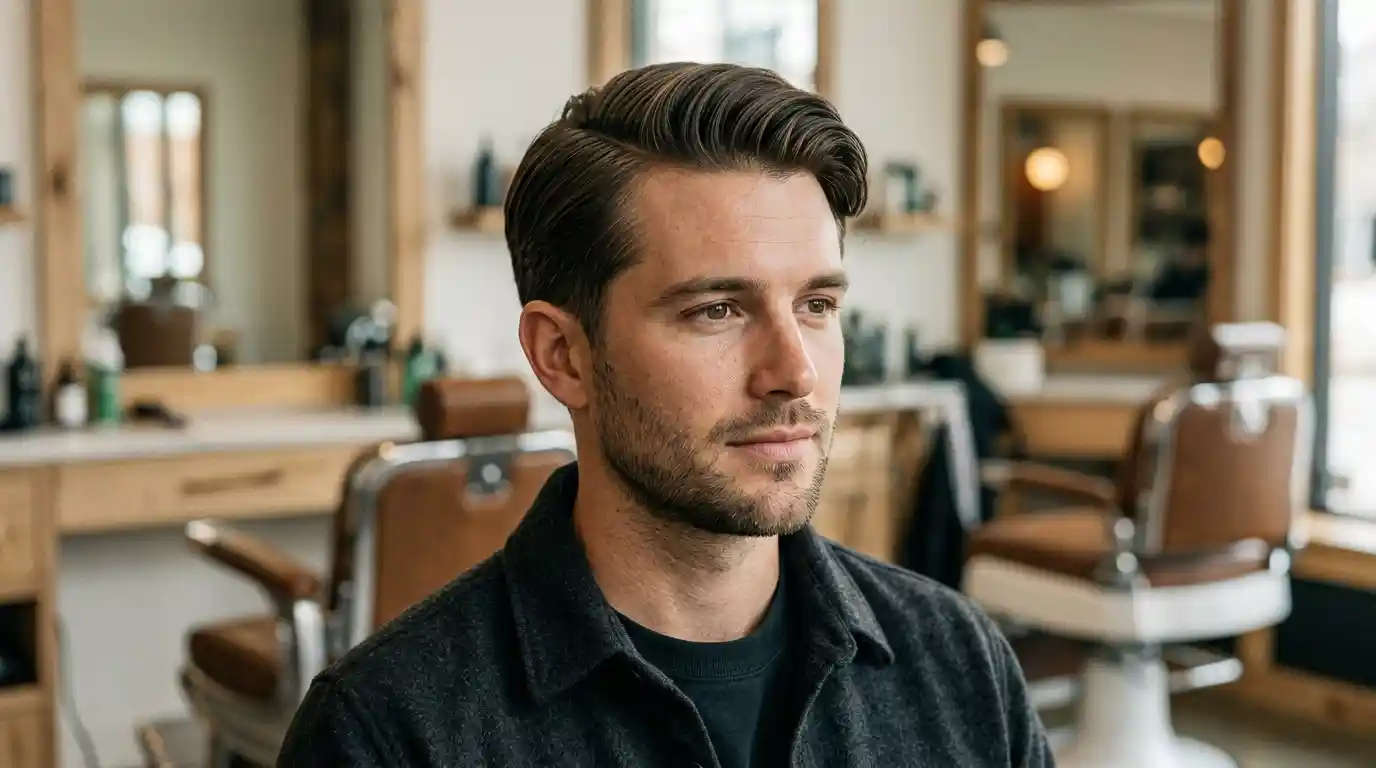
A side part taper haircut combines the timeless elegance of a neatly parted hairstyle with the clean, graduated finish of a modern taper. It’s an excellent choice for men who want a professional appearance without sacrificing personality, texture, or styling flexibility. Whether you prefer a classic combed side part, a low taper fade with natural volume, or a textured modern look, this haircut can be customized to different hair lengths, face shapes, and lifestyles.
The key is choosing the right taper height, parting position, and top length. A low taper offers subtle refinement, while a mid or high taper creates stronger contrast. You can keep the top smooth and polished for work or add movement for a more relaxed appearance.
This guide covers 35+ side part taper haircut styles and related variations, complete with haircut comparisons, clipper guard recommendations, barber instructions, styling techniques, and maintenance advice. You’ll also learn how to find your natural part, choose a flattering variation, and explain exactly what you want at your next barber appointment.
Table of Contents
- Side Part Taper Haircut: Quick Overview
- Understanding Side Parts, Tapers, and Fades
- Best Side Part Taper Haircut Styles and Variations
- Side Part Taper Haircut Pictures and Photo Gallery
- How to Find Your Natural Side Part
- Choosing the Right Side Part Taper Haircut
- How to Ask Your Barber for a Side Part Taper Haircut
- How to Style a Side Part Taper Haircut
- Best Styling Products for a Side Part Taper Haircut
- Side Part Taper Haircut Maintenance and Care
- Common Side Part Taper Haircut Problems and Mistakes
- Side Part Taper Haircut Cost and DIY Cutting
- Side Part Taper Haircut FAQs
- Final Thoughts on Side Part Taper Haircuts
1. Side Part Taper Haircut: Quick Overview
1.1 What Is a Side Part Taper Haircut?
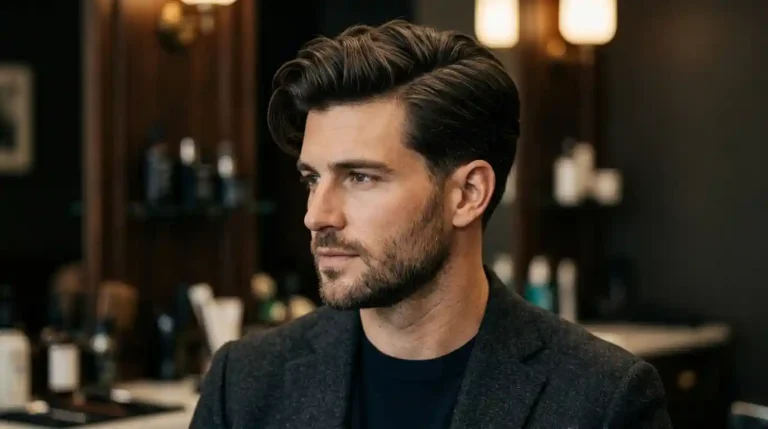
A side part taper haircut is a men’s hairstyle featuring a visible or naturally defined hair part on one side of the head, combined with gradually shorter hair around the temples, sideburns, and neckline.
The top remains long enough to comb sideways, creating a balanced shape with controlled volume. The taper removes excess bulk around the edges while keeping the transition between different hair lengths smooth.
Unlike hairstyles requiring an aggressive skin fade, a traditional side part taper can retain more coverage on the sides. This makes it suitable for professional environments, formal events, and everyday wear.
At Taper Haircut Hub, this haircut represents an adaptable combination of traditional barbering and modern grooming.
1.2 How Does a Side Part Work With a Taper Haircut?
The side part establishes the hairstyle’s direction, while the taper controls its silhouette.
The longer section on top is combed away from the parting line, usually following the natural hair growth pattern. Meanwhile, the hair gradually becomes shorter toward the sideburns and nape.
These two features work together to create a polished appearance without requiring the entire head to be cut extremely short.
For example, a man with three inches of hair on top can maintain a prominent side sweep while keeping the lower edges tidy with a subtle taper.
1.3 Key Features of a Side Part Taper Haircut
The defining characteristics include a visible side part, longer top hair, gradually shortened edges, and a controlled transition between the top and sides.
Other important features include:
- Defined parting: Creates direction and structure.
- Graduated sides: Produces a tidy outline without necessarily exposing skin.
- Flexible top length: Allows polished or textured styling.
- Natural blending: Reduces harsh lines between longer and shorter sections.
- Adaptable finish: Works with matte clay, pomade, or minimal product.
- Customizable neckline: Can feature a natural taper or more defined edge.
The appearance depends on hair density, curl pattern, taper placement, and the amount of volume retained near the forehead.
1.4 Classic vs. Modern Side Part Taper Haircuts
A classic side part taper emphasizes smooth styling, balanced proportions, and conservative cutting.
The hair generally lies neatly against the head, with a recognizable parting line and a natural taper around the edges. Pomade or grooming cream often provides a controlled finish.
A modern side part taper introduces greater texture, separation, and contrast. The top may be messy, loosely swept, or styled into a quiff. The sides can incorporate a low skin taper or a more visible fade.
Neither version is automatically better. Classic designs suit understated grooming preferences, while modern versions offer more freedom to experiment with volume and styling products.
1.5 Why Is the Side Part Taper Haircut Popular?
The appeal comes from its versatility.
A side part works with business attire, casual clothing, and special occasions. It can also be adapted to straight, wavy, curly, and some coily hair textures without requiring everyone to follow the same cutting pattern.
Men who prefer clean, structured hairstyles with taper often appreciate the balance between a recognizable style and a personalized finish.
The haircut can look freshly styled for a formal event and more relaxed when finger-combed the following day.
1.6 Benefits and Drawbacks of a Side Part Taper
| Benefits | Potential drawbacks |
| Professional and timeless appearance | Defined parts may require daily styling |
| Adaptable to multiple hair textures | Cowlicks can complicate part placement |
| Works with several top lengths | Sharp tapers need periodic touch-ups |
| Can be styled formally or casually | Hard parts grow out visibly |
| Subtle or high-contrast options | Very short top hair limits parting |
| Pairs well with facial hair | Some styles require heat or styling products |
Most drawbacks can be managed by adjusting the top length, choosing a natural part, or requesting a softer taper.
1.7 Side Part Taper Haircut at a Glance
Compare Styles by Taper Height, Top Length, Texture, and Maintenance
| Style | Taper height | Suggested top length | Appearance | Typical maintenance |
| Classic side part taper | Low | 2–4 inches | Smooth, professional | Every 3–5 weeks |
| Low taper side part | Low | 2–4 inches | Subtle, clean | Every 2–4 weeks |
| Mid taper side part | Mid | 2–4 inches | Balanced contrast | Every 2–3 weeks |
| High taper side part | High | 2–5 inches | Bold, defined | Every 1–3 weeks |
| Textured side part | Low or mid | 3–5 inches | Casual, modern | Every 3–5 weeks |
| Curly side part taper | Low or mid | Varies by curl shrinkage | Natural, textured | Every 3–5 weeks |
| Hard part taper | Any | 2–4 inches | Sharp, structured | Every 1–2 weeks for the part |
These are practical starting ranges, not universal cutting rules. Actual maintenance depends on hair growth, preferred sharpness, and how closely the taper is cut.
Best Picks for Classic, Modern, Professional, and Casual Looks
For a conservative workplace, a classic low taper with a natural part is a dependable option.
For a modern appearance, choose a textured side part with a mid taper and a matte finish. Men wanting strong contrast can consider a high taper or skin taper, while those who prefer minimal daily styling may find a short, softly parted haircut easier to manage.
2. Understanding Side Parts, Tapers, and Fades
2.1 What Is the Difference Between a Taper and a Fade?
A taper gradually reduces hair length toward the edges of the head, usually concentrating on the temples, sideburns, and neckline.
A fade also transitions from longer to shorter hair, but the blending often extends farther across the sides and back. A skin fade reaches bare or nearly bare skin at its shortest point.
In barber terminology, the categories can overlap. A taper fade typically describes a fade-like transition concentrated around the perimeter rather than spread extensively over the head.
For a traditional side part haircut, a classic taper offers a softer silhouette. A fade creates stronger visual contrast.
2.2 Side Part Taper vs. Low, Mid, and High Fade
The main distinction is how far the short-to-long transition extends up the head.
A traditional taper keeps more hair around the upper sides. A low fade begins close to the ears and neckline, while a mid fade creates a transition around the middle of the sides. A high fade removes more coverage near the upper side panels.
A side part can accompany any of these cutting patterns.
Men seeking a discreet professional haircut often prefer a low taper. Those wanting greater contrast may choose a mid fade or high fade.
2.3 Side Part Taper vs. Skin Fade
A skin fade exposes the scalp at the shortest section, creating a pronounced contrast between the lower hairline and the longer hair above.
A classic side part taper usually leaves some hair at the edges, resulting in a softer finish.
Skin fades emphasize sharpness but may need more frequent attention to maintain their appearance. Traditional tapers generally grow out less dramatically.
For clients who experience irritation after extremely close clipper work, retaining slightly more length may also be preferable.
2.4 Side Part vs. Comb Over Haircut
A side part refers primarily to the placement of a visible or natural division in the hair. A comb over describes how the longer hair is swept across the head.
The two often overlap, but they are not identical.
A side part may include volume, texture, or waves instead of a smooth combed shape. A comb over can also be styled with an understated or nearly invisible part.
For a related variation emphasizing controlled sideways movement, explore the Comb Over Taper Haircut.
2.5 Side Part vs. Slick Back Haircut
A side part directs hair predominantly sideways, while a slick back directs the top backward.
A slicked-back hairstyle usually creates a more continuous flow from the forehead toward the crown. A side part creates visible asymmetry and often adds separation around the upper side panels.
Both can work with taper fades, pomade, and formal styling. However, a side part generally offers more options for balancing the hairstyle against different facial proportions.
2.6 Side Part vs. Quiff and Caesar Haircuts
A quiff emphasizes upward and backward volume at the front. A side part focuses on lateral direction and a recognizable parting line.
A side part quiff combines both features.
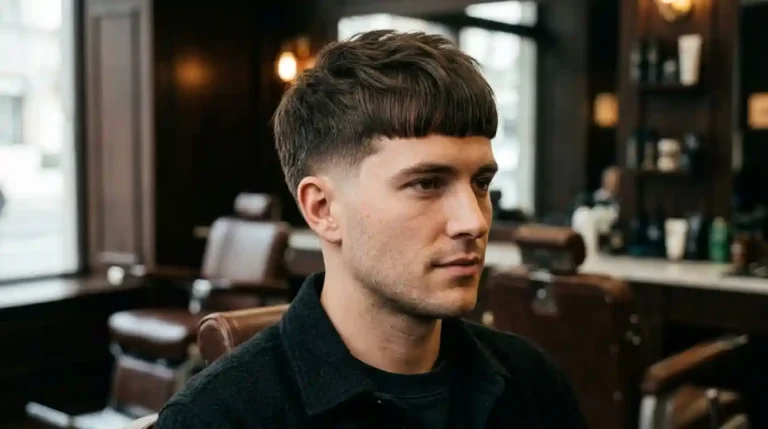
The Caesar haircut, by comparison, typically uses shorter hair with a forward-directed fringe. It usually requires less length for sweeping hair sideways.
Men who prefer an almost uniform short hairstyle may also consider a Buzz Taper Haircut, although it does not normally feature a prominent side part.
2.7 Side Part Taper vs. Undercut
A side part taper uses gradual blending, while an undercut creates a more obvious distinction between longer top hair and shorter sides.
Traditional Side Part Undercut
A traditional side part undercut maintains significant top length while cutting the sides noticeably shorter. Some blending may remain near the upper transition.
The result is sharper than a classic taper but can still be styled conservatively.
Disconnected Side Part Undercut
A disconnected undercut creates a visible separation between the top and sides, without a fully graduated transition.
This delivers stronger contrast but requires careful shaping to prevent the upper hair from appearing excessively heavy.
2.8 Hard Part vs. Soft Part vs. Natural Part
A hard part is a deliberately shaved line created with a trimmer or razor. It provides a sharp division between sections.
A soft part is created through combing and styling without permanently removing hair along the line.
A natural part follows the direction in which the hair tends to separate.
Natural and soft parts often overlap. For a flexible everyday look, a natural part is usually the easiest option because the hairstyle can be changed without waiting for a shaved line to grow out.
2.9 Scissor Taper vs. Clipper Taper
A scissor taper uses cutting shears, often with a scissor-over-comb technique, to progressively shorten the hair.
This method can provide a softer transition and preserve natural movement.
A clipper taper uses adjustable blades and attachment guards to establish controlled lengths. Clippers are especially useful for close, precise work around the temples and neckline.
Many professional barbers combine both methods to achieve a balanced result.
2.10 How Taper Placement Changes the Overall Haircut
Taper placement affects how dramatic the hairstyle appears.
A low taper keeps the transition near the hairline. A mid taper introduces more visible blending, while a high taper removes additional bulk from the upper sides.
The ideal placement depends on the head shape, hair density, and desired style.
A higher transition may visually emphasize the top, while a subtle taper creates a smoother, more traditional silhouette.
3. Best Side Part Taper Haircut Styles and Variations
The best side part taper haircut for men depends on the amount of structure, texture, and contrast they prefer.
The following styles include both true taper variations and closely related faded or hybrid hairstyles. Some are distinct cuts, while others are different ways of styling the same underlying shape.
3.1 Classic and Traditional Side Part Taper Haircuts
Classic Side Part Taper Haircut
The classic side part taper haircut features approximately two to four inches of top hair, a neat part, and softly graduated edges.
The top is combed sideways with moderate control, while the sideburns and neckline remain tidy.
It is particularly suitable for professional environments because it provides structure without excessive contrast.
Classic Low Taper Side Part
This variation keeps the gradual transition close to the ears and neckline.
More hair remains on the upper sides, creating a natural appearance when viewed from the front.
It is a practical choice for men who want a refined haircut that does not draw unnecessary attention to the fade.
Old-School Side Part Taper
Inspired by traditional barbering, the old-school side part emphasizes clean comb lines, smooth styling, and understated proportions.
A small amount of medium-hold pomade can create the classic finish without making the hair appear stiff.
Don Draper-Inspired Side Part
This retro-inspired style emphasizes a deep, polished side part and a carefully combed top.
It typically features moderate length, controlled shine, and neatly blended sides.
The aesthetic works well with formal clothing and vintage-inspired grooming preferences.
Ivy League Side Part Taper
The Ivy League is a relatively short haircut that retains enough hair at the front for a subtle side part.
It combines the simplicity of a crew cut with additional styling flexibility.
Men wanting an even shorter outline can compare it with the Taper Haircut Crew Cut Low Fade.
Scissor-Cut Side Part Taper
A scissor-cut side part preserves a softer finish throughout the sides and top.
The barber uses scissors to remove bulk and create gradual transitions, often allowing the natural hair texture to remain visible.
This is a strong option for men who dislike an extremely close clipper finish.
3.2 Side Part Haircuts by Taper and Fade Height
Low Taper Side Part Haircut
The low taper side part haircut keeps the fading concentrated around the lower temples and nape.
It is one of the most versatile variations because the upper sides retain enough coverage to support a classic silhouette.
The low taper works particularly well with a natural part and medium-length top.
Mid Taper Side Part Haircut
A mid taper starts its visible transition higher than a low taper, creating more contrast.
This variation balances a clean professional style with modern barbering detail.
Men who want the top to appear more prominent without exposing extensive scalp may appreciate this option.
High Taper Side Part Haircut
A high taper removes more bulk from the upper sides and places greater emphasis on the top.
It creates a sharper profile and may work well with thick or dense hair.
However, the transition needs careful blending to avoid making the top appear disconnected from the sides.
Temple Taper Side Part
A temple taper focuses on the area around the sideburns and front corners of the hairline.
The rest of the side hair may remain relatively full.
This provides a subtle cleanup while preserving the traditional shape of the side part.
Low Skin Taper Side Part
A low skin taper shortens the hair to skin level around the lowest perimeter sections.
Because the skin exposure stays concentrated near the edges, the result can appear more restrained than a full skin fade.
It is a good option for clients who want precise details without dramatically changing the overall haircut.
Drop Taper Side Part
A drop taper follows a curved transition that descends toward the back of the head.
This creates a rounded profile and helps maintain visual fullness around the crown.
The shape can be particularly attractive when the top is styled with a diagonal sweep.
Low Fade Side Part
A low fade side part creates a smooth transition above the ears while retaining most of the top length.
It delivers slightly stronger visual contrast than many traditional low tapers.
For comparison, the low taper haircut edgar cut uses a more forward-directed top rather than a traditional sideways sweep.
Mid Fade Side Part
The mid fade side part features a more visible reduction in length along the middle portion of the sides.
It is appropriate for men who want a defined modern silhouette.
A mid taper haircut edgar can provide an alternative direction for those who prefer a shaped fringe instead of a parted top.
High Fade Side Part
A high fade creates a dramatic difference between the longer top and closely cut sides.
Although less conservative than a traditional side part taper, it can produce a clean, striking style.
A professional barber should account for head shape and hair density to avoid excessive bulk near the transition.
3.3 Side Part Haircuts by Parting Style
Hard Part Taper Fade
The hard part taper fade uses a shaved line to create a clearly defined division.
It works best when the surrounding hair is cut and styled precisely.
Because the line grows out visibly, regular maintenance may be needed to preserve its sharp appearance.
Soft Part Taper Fade
A soft part is created with a comb, brush, or fingers rather than a razor.
It provides a more flexible appearance and is easier to restyle.
This variation suits men who prefer a natural everyday look.
Natural Part Taper Haircut
A natural part taper follows the hair’s existing growth direction.
It often requires less effort because the hair is not forced against its natural pattern.
Men with strong crown whorls may find this approach especially convenient.
Deep Side Part Taper
A deep side part positions the dividing line farther toward one side.
It leaves a larger section of hair available for sideways movement and can create a fuller-looking top.
For men who prefer a central division instead, the middle part taper haircut offers a different balance.
Side-Swept Part Taper
The side-swept variation emphasizes flowing movement rather than a rigidly defined parting line.
It works particularly well with medium-length straight or wavy hair.
A light styling cream can help maintain flexibility.
Natural Edge Side Part Taper
This style retains softer edges around the temples and neckline.
Rather than using aggressive lineups or extremely sharp outlines, the barber follows the natural hairline.
It is suitable for an understated, low-contrast appearance.
3.4 Side Part Taper Haircuts by Hair Length
Short Side Part Taper Haircut
A short side part taper generally needs approximately 1.5–2.5 inches of usable top length, depending on hair texture.
The parting may appear less pronounced than on longer hair, but the overall silhouette remains tidy.
This variation is convenient for men who prefer quick styling.
Medium-Length Side Part Taper
Medium-length hair provides enough flexibility for a clear part, controlled volume, and a smooth side sweep.
Approximately three to four inches on top is a practical starting point for many straight and wavy styles.
It is one of the easiest lengths to adapt between business and casual looks.
Long Top Side Part Taper
A long top side part usually retains around four to six inches or more.
The additional length allows dramatic sideways movement, volume, and texture.
However, thicker hair may require layering or point cutting to control excessive weight.
Short Sides With a Long Side Part
This variation combines closely tapered sides with a significantly longer top.
The contrast creates a more contemporary silhouette.
It can also be adapted into a loosely swept look similar to a Flow Taper Haircut.
Side Part With Scissor-Cut Sides
Keeping the sides longer with scissors produces a softer outline.
This works well when the client wants natural movement around the upper sides instead of a prominent fade.
3.5 Textured and Messy Side Part Taper Haircuts
Modern Textured Side Part Taper
A modern textured side part features separated strands, natural movement, and a matte finish.
The barber may use point cutting or light layering to remove bulk and create definition.
This is a versatile choice for casual and smart-casual styling.
Messy Side Part Taper
The messy side part uses a loose parting line and deliberately relaxed texture.
Instead of carefully combing every strand, the hair is styled with fingers and a small amount of light-hold product.
For more textured inspiration, consider the messy taper haircut.
Side Part Quiff Taper
This hairstyle combines a side part with upward volume at the front.
A blow dryer and lightweight styling product help create lift before the hair is directed sideways.
The taper fade haircut quiff offers a related look with a stronger emphasis on front height.
Textured Quiff With a Side Part
A textured quiff maintains separation through the lifted front section.
The result appears more relaxed than a smooth, traditional quiff.
Men seeking a more pronounced peaked silhouette may prefer a fohawk taper haircut.
3.6 Side Part Taper Haircuts for Different Hair Textures
Straight Hair Side Part Taper
Straight hair allows the parting line to appear clearly and supports a smooth, polished finish.
However, fine straight hair can lie flat, so root lift and lightweight products may be useful.
Wavy Side Part Taper
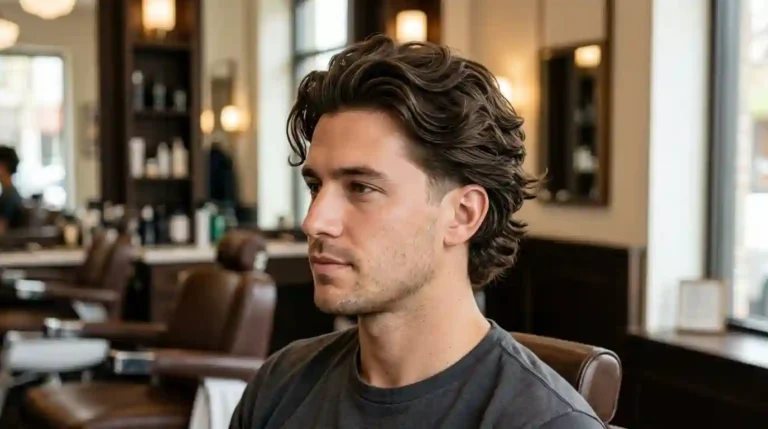
Wavy hair adds natural volume and movement.
A soft side part allows the waves to retain their shape without appearing excessively controlled.
Styling cream or light mousse can help define the natural pattern.
Curly Side Part Taper
A curly side part works best when sufficient length remains on top to establish a recognizable division.
The barber should account for curl shrinkage before deciding the final cutting length.
Avoid excessive brushing after the curls have dried, as it can disrupt their definition.
Coily Hair Side Part Taper
Coily hair can create a distinctive side-parted silhouette when shaped according to its density and growth direction.
The part may be defined with a comb while the hair is appropriately moisturized and detangled.
A temple taper can provide clean edges while preserving natural fullness.
3.7 Modern and Trendy Side Part Haircut Combinations
Side Part Mullet
A side part mullet combines a directional top with additional length toward the back.
The side areas can be tapered to maintain a cleaner shape.
For more length-focused inspiration, explore the mullet taper haircut.
Wolf Cut With a Side Part
A side-parted wolf cut uses layered texture and a less structured silhouette.
The taper can soften the perimeter while the longer layers maintain movement.
This combination is more casual than a traditional professional side part.
Side Part Taper With a Beard
A side part taper can blend naturally into short stubble, a defined beard, or a short boxed beard.
The barber should coordinate sideburn length with facial hair density.
For another modern, celebrity-inspired grooming direction, the Drake Taper Haircut provides a useful comparison of clean edges and facial-hair blending.

4. Side Part Taper Haircut Pictures and Photo Gallery
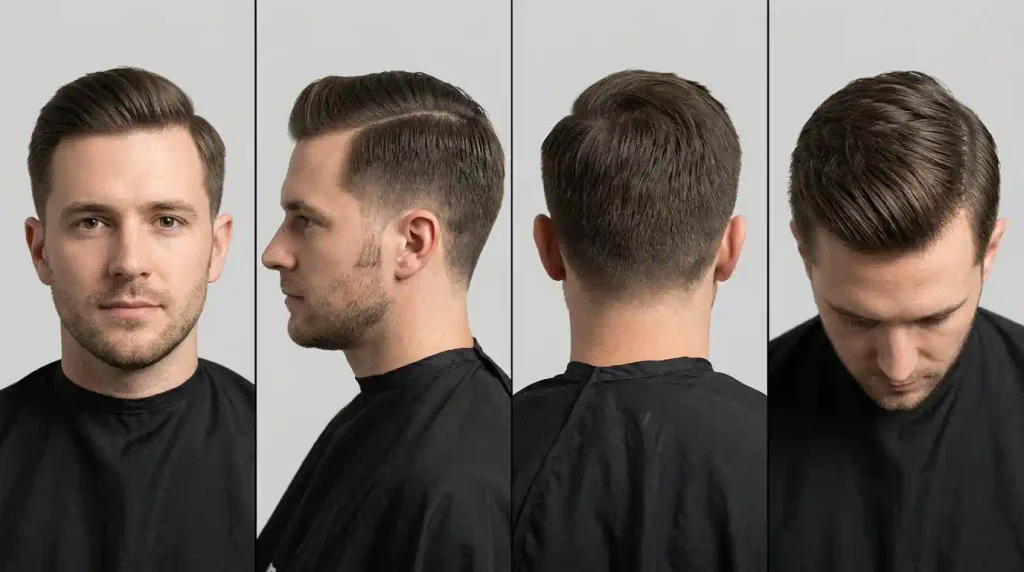
A useful side part taper haircut gallery should show more than attractive front-facing photographs.
Different angles reveal how the hair is parted, where the taper begins, and how the back blends into the neckline.
The following visual guide explains what to look for when choosing haircut inspiration.
4.1 Side Part Taper Haircut Front View
The front view highlights facial framing, hair volume, and the direction of the side sweep.
Look for a balanced relationship between the longer top and the forehead. A classic side part creates an orderly sweep, while a modern variation may feature loose strands and front lift.
When comparing photos, pay attention to whether the style relies on thick hair, strong styling products, or a naturally favorable growth pattern.
4.2 Side Part Taper Haircut Left and Right Side Views
The side views reveal the transition around the temple and sideburn.
A low taper stays close to the lower hairline. A mid or high taper creates a more obvious gradient.
Photos from both sides are helpful because natural hair growth and part placement can make the haircut appear different on each side.
4.3 Side Part Taper Haircut Back View
The back view shows how the hair transitions toward the nape.
A well-executed haircut should have a deliberate silhouette without unexplained patches or uneven blending.
Natural, Rounded, and Tapered Neckline Examples
A natural neckline follows the existing hair growth boundary, while a rounded neckline has a visibly curved outline.
A tapered neckline gradually shortens the hair toward the nape, creating a softer transition.
These descriptions are not mutually exclusive: a tapered neckline may also have a natural or rounded overall shape.
4.4 Side Part Taper Haircut Top View
The top view reveals how the part divides the hair and how much volume remains on each side.
A traditional side part may show a clear separation running from the front toward the crown.
Natural, Hard, and Deep Parting Placement
A natural part creates a subtle division following hair growth.
A hard part produces a visibly shaved line, while a deep part places most of the top hair on one side.
Top-view photographs are especially helpful for comparing these options.
4.5 Side Part Taper Haircut Before and After Pictures
Before-and-after images should demonstrate how the haircut changes the hair’s silhouette.
Useful comparisons include overgrown sideburns versus a clean taper, bulky sides versus gradual blending, and unstyled top hair versus a finished side part.
For accurate comparisons, use the same person, lighting, camera angle, and head position whenever possible.
4.6 Low vs. Mid vs. High Side Part Taper Visual Comparison
A low taper provides the most subtle perimeter cleanup.
A mid taper removes more hair through the middle side sections, while a high taper creates the greatest visible contrast.
Keep in mind that barbers may interpret low, mid, and high taper terminology differently. Reference photographs are more reliable than labels alone.
4.7 How to Choose the Best Reference Photo for Your Barber
Select photographs featuring hair texture and density similar to your own.
Ideally, bring a front view, side view, and back view of the same haircut.
Avoid choosing a style solely because the model has a flattering face shape or professional lighting. The most useful image clearly demonstrates the actual cutting pattern.
5. How to Find Your Natural Side Part
5.1 What Is Your Natural Hair Parting?
Your natural hair parting is the location where your hair tends to separate based on its growth direction.
Many people notice that their hair naturally falls toward one side after washing or combing.
Following this pattern usually makes styling easier because the hair requires less force to remain in place.
5.2 How Your Crown Whorl Determines Your Part
A crown whorl is a circular or spiral hair growth pattern near the back of the top of the head.
It affects how hair moves around the crown and can influence where a part sits comfortably.
However, the whorl does not always determine one universally correct parting line. Front hair growth, cowlicks, hair density, and personal preference also matter.
5.3 Should You Part Your Hair on the Left or Right?
There is no universal rule requiring men to part their hair on a particular side.
A simple approach is to wash your hair, comb it backward, and observe where it naturally separates.
Try styling both directions before deciding. Choose the side that produces the best combination of comfort, volume, and manageable movement.
5.4 How to Find Your Natural Parting Line
Start with slightly damp hair and comb it backward.
Use your fingers to gently move the hair left and right. Notice where it separates with the least resistance.
Once you identify a comfortable division, use a tail comb to refine the line.
Avoid forcing an extremely straight part if your natural growth pattern produces a slight curve.
5.5 Where Should a Side Part Sit on Your Head?
A traditional side part often follows the transition between the top and side of the head, near the upper temple region.
A deeper part sits farther toward the side, leaving more hair available for sweeping across the top.
The ideal position depends on forehead proportions, hairline shape, and natural growth.
5.6 Understanding 70/30 vs. 80/20 Side Part Haircut Ratios
The terms 70/30 and 80/20 describe approximate styling proportions rather than precise barber measurements.
What Is a 70/30 Side Part?
A 70/30 side part places roughly seventy percent of the styled top hair on one side and thirty percent on the other.
It creates asymmetry without placing the part extremely far toward the temple.
What Is an 80/20 Side Part?
An 80/20 side part uses a deeper division, directing most of the hair toward one side.
This produces a more dramatic sweep and can emphasize top volume.
Balanced vs. Deep Side Parting
A balanced side part is generally easier to style conservatively.
A deep side part offers stronger visual movement but may require greater top length and more control.
Which Side Part Ratio Works Best for Your Hair?
Choose based on the natural part, hair density, and desired silhouette.
The phrase taper haircut 70 30 usually describes a taper paired with a roughly 70/30 top division, not a specific clipper guard formula.
5.7 Can You Change Your Natural Side Part?
Yes. Hair can often be trained to lie in a different direction through repeated styling.
However, the new part may require blow-drying, product, and regular adjustment.
Strong cowlicks or opposing growth patterns can make certain placements difficult to maintain.
5.8 How to Create a Clean Side Part Without Shaving a Line
Use a tail comb to establish the division while the hair is slightly damp.
Comb the larger section in the desired direction and smooth the smaller section downward or backward.
Apply a small amount of styling cream or pomade to maintain separation.
This approach creates a defined part without committing to a razor line.
5.9 When Should You Choose a Hard Part Instead?
A hard part can be useful if you want a consistently visible, sharp line.
It works well with structured styling and clean taper fades.
However, it requires regular upkeep and cannot be immediately repositioned once shaved.

6. Choosing the Right Side Part Taper Haircut
Choosing a flattering side part taper involves more than identifying a fashionable photo.
Face proportions, hair density, curl pattern, natural growth, and daily styling preferences all influence the result.
6.1 Which Face Shapes Suit a Side Part Taper?
Oval Face Shape
Oval faces generally accommodate several side part variations.
A classic low taper with moderate top length provides a balanced appearance, while textured variations offer a more relaxed finish.
Round Face Shape
Men with round faces may prefer additional height on top and controlled bulk along the sides.
A side part quiff or medium-length sweep can create an elongated visual effect.
Avoid excessive roundness near the temples if the goal is to reduce the appearance of facial width.
Square Face Shape
A square face features a relatively defined jawline and stronger angles.
A side part taper can complement this structure through clean edges and controlled top movement.
Both classic and textured variations can work well.
Long or Oblong Face Shape
For longer faces, excessive vertical height may emphasize length.
A lower-volume side part with moderate side fullness can create a more balanced silhouette.
A low taper is often a useful starting point.
Diamond and Heart Face Shapes
Diamond faces tend to have prominent cheekbones, while heart-shaped faces often feature a wider forehead and narrower jaw.
A side part with controlled volume and moderate side length can help balance these proportions.
Avoid assuming one haircut works identically for every person with the same face shape.
6.2 Best Side Part Taper for Your Hair Type
Fine or Thin Hair
Fine hair often benefits from lightweight products and moderate layering.
A short-to-medium top can create the appearance of fullness without excessive weight.
Avoid heavy pomades that separate fine strands and expose more scalp than desired.
Thick and Dense Hair
Thick hair provides volume but may create bulky sides.
A barber can remove excess weight through layering, scissor-over-comb cutting, or controlled thinning where appropriate.
Men who prefer additional height may also consider the high top taper haircut as an alternative silhouette.
Straight Hair
Straight hair usually makes a defined part easy to establish.
A light pomade or styling paste can provide direction without making the top appear excessively rigid.
Wavy and Curly Hair
Wavy and curly hair add natural texture.
A soft side part tends to work better than forcing every strand into a perfectly smooth shape.
Men interested in introducing curls to naturally straighter hair can learn about the taper haircut perm as a separate styling option.
Coarse or Coily Hair
Coarse and coily hair require attention to moisture, shrinkage, and natural growth direction.
A softly defined part with a temple taper can maintain the hair’s natural character.
Choose products based on moisture needs rather than trying to force the hair into a straight-hair styling routine.
6.3 Side Part Taper Haircuts for Different Hairlines
Receding Hairline
A soft side part with moderate texture may help reduce attention on uneven temple recession.
Avoid excessively sharp parting lines that highlight sparse areas.
For men who prefer forward styling, the french crop taper haircut men offers another option.
Widow’s Peak
A widow’s peak can work with a natural side part.
The key is positioning the part to complement the central hairline rather than forcing a symmetrical front.
Uneven Temples
Uneven temple hairlines are common.
A natural taper can create a tidy appearance without cutting aggressively into the weaker side.
Thinning Crown
When the crown is thinning, heavy separation may reveal more scalp.
A textured, moderately short top can sometimes create a more cohesive appearance.
A fringe taper haircut may suit men who prefer forward coverage, although it does not conceal every thinning pattern.
6.4 Side Part Taper Haircut With Cowlicks and Difficult Hair Growth
Managing a Front Hairline Cowlick
A cowlick near the forehead can cause hair to stand upright or separate unexpectedly.
Sometimes leaving the affected area slightly longer helps the hair settle. In other cases, shortening it reduces the unwanted movement.
The better choice depends on the growth direction and density.
Working With Double Crowns
A double crown creates multiple growth centers.
A barber should assess how the hair separates before cutting the top too short.
Leaving enough length around the crown may help prevent sections from sticking up.
Handling Opposing Hair Growth Directions
When neighboring sections grow in opposite directions, a perfectly straight part may be difficult to maintain.
A curved or softer part can follow the natural movement more comfortably.
When to Change the Parting Placement
Move the part if hair repeatedly lifts, splits, or collapses despite appropriate styling.
A slightly different placement can often improve the appearance without changing the haircut itself.
6.5 How Long Does Your Hair Need to Be for a Side Part?
Most clearly defined side parts benefit from around two to four inches of top length, though shorter versions are possible.
Longer hair provides more sweeping flexibility, while shorter hair offers quicker styling.
Curly hair may require additional length because the visible length decreases when curls contract.
6.6 Best Side Part Taper for Older Men
Older men may prefer a natural part, moderate side fullness, and a comfortable maintenance schedule.
Gray or silver hair can look particularly refined with a smooth scissor taper.
The goal should be a flattering cut that complements existing density, not an age-specific rule.
6.7 Does a Side Part Taper Work With Glasses?
Yes. A side part taper can pair well with eyeglasses.
Keeping excessive bulk away from the temples may make the frames more comfortable.
The haircut can also provide a clean visual relationship between the hairline and glasses.
6.8 How to Match a Side Part Taper With Your Beard
The sideburns create the transition between the haircut and facial hair.
Short stubble often works with a subtle taper, while a fuller beard may benefit from gradual blending through the upper sideburn.
Ask the barber to avoid an abrupt gap unless that disconnected effect is intentional.
6.9 Best Side Part Taper for Business and Formal Occasions
A classic low taper with a natural or soft part is a dependable professional hairstyle.
Use moderate top length, controlled volume, and a clean neckline.
A smooth matte or subtle satin finish creates polish without excessive shine.
6.10 Best Low-Maintenance Side Part Taper Haircuts
Short Ivy League variations and softly parted low tapers typically require less daily styling.
Avoid hard parts, extreme volume, and high-contrast skin fades if you prefer infrequent barber visits.
Natural movement is usually easier to maintain than a rigidly sculpted top.
6.11 When Is a Side Part Taper Not the Right Choice?
A traditional side part may be inconvenient if the top hair is extremely short, the growth pattern strongly resists parting, or the client does not want any daily styling.
It may also be less suitable for someone who prefers a completely uniform buzz cut or a fringe covering the forehead.
In those cases, another taper-based style may be easier to maintain.
6.12 Side Part Taper Haircut Style Selection Guide
Choose Based on Your Hair Length
Short hair favors an Ivy League or compact natural part.
Medium hair works with most classic and modern side parts, while longer hair supports dramatic sweeping and volume.
Choose Based on Hair Texture and Density
Fine hair may benefit from lighter styling and controlled length.
Thick hair often needs bulk management, while curly hair benefits from shape-conscious cutting and moisture-focused products.
Choose Based on Daily Styling Time
For minimal styling, choose a natural part and moderate top length.
For more elaborate styling, a deep part or side part quiff provides greater flexibility.
Choose Based on Taper Height and Visibility
Choose a low taper for subtle refinement, a mid taper for balance, and a high taper for stronger contrast.
Choose Based on Your Preferred Finish
A matte finish creates a modern, relaxed appearance.
A satin or lightly glossy finish works well for classic professional styling, while a wet-look finish produces a more deliberate retro effect.
Side Part Taper Haircut Comparison and Decision Table
| Your preference | Recommended style | Main advantage |
| Professional and understated | Classic low taper side part | Timeless, conservative |
| Modern but office-friendly | Mid taper textured side part | Balanced structure |
| Minimal daily styling | Short natural side part | Quick routine |
| Strong visual contrast | High taper side part | Pronounced silhouette |
| Naturally curly hair | Curly temple taper | Preserves texture |
| Vintage grooming | Old-school hard or soft part | Classic definition |
| More front volume | Side part quiff taper | Height and movement |
| Longer flowing hair | Long top side part | Styling flexibility |
7. How to Ask Your Barber for a Side Part Taper Haircut
Clear communication is one of the most important parts of getting the haircut you actually want.
Terms such as low taper, mid taper, fade, and side part may be interpreted differently by individual barbers.
7.1 What to Tell Your Barber Before the Haircut
Explain your preferred top length, taper height, parting position, and overall finish.
Mention whether you want a natural or shaved part and whether the final style should look formal or textured.
Tell the barber how much time you normally spend styling your hair.
7.2 How to Explain Your Preferred Taper Height
For a subtle result, request a low taper limited to the sideburns and neckline.
For greater contrast, ask for a mid or high taper and show exactly where you expect the blend to begin.
Use a photo to clarify the difference between a classic perimeter taper and a fuller fade.
7.3 Choosing the Right Top Length and Side Length
A classic side part often works with approximately two to four inches on top.
Ask the barber to retain enough hair for the sweep while reducing bulk around the sides.
If you want stronger front volume, explain that you need additional length near the fringe.
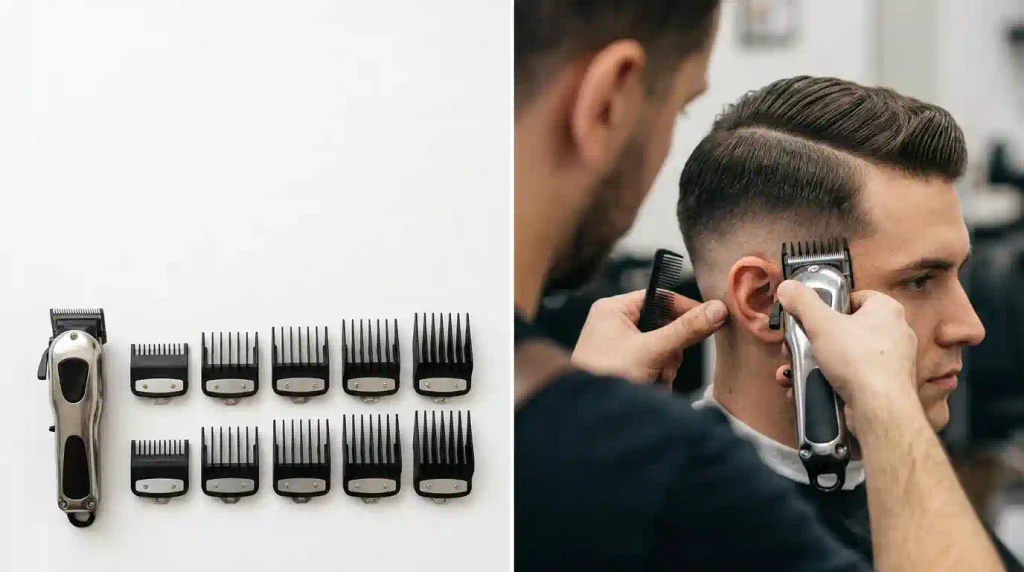
7.4 Side Part Taper Haircut Length and Clipper Guard Guide
Clipper guards determine the approximate length left after cutting.
Understanding common guard numbers can help you communicate with your barber, although exact results depend on the clipper model, blade position, hair texture, and cutting technique.
Recommended Top Hair Lengths in Inches and Centimeters
| Side part style | Suggested top length | Approximate metric length |
| Very short side part | 1.5–2 inches | 4–5 cm |
| Short classic side part | 2–3 inches | 5–8 cm |
| Medium side part | 3–4 inches | 8–10 cm |
| Long side part | 4–6 inches | 10–15 cm |
| Extended side-swept style | 6+ inches | 15+ cm |
These are styling guidelines rather than fixed haircut specifications.
Understanding #0, #0.5, #1, #2, and #3 Clipper Guards
A lower guard number generally leaves shorter hair.
However, #0 is often used informally for a bare clipper blade, and its cutting length varies by machine and lever position.
A #0.5 attachment typically leaves around 1/16 inch, while a standard #1 guard leaves approximately 1/8 inch.
Clipper Guard Length Chart for Side Part Tapers
| Guard | Approximate length | Common application |
| #0 / bare blade | Varies by clipper | Very close perimeter cutting |
| #0.5 | 1/16 inch / 1.5 mm | Close transition work |
| #1 | 1/8 inch / 3 mm | Short taper section |
| #2 | 1/4 inch / 6 mm | Lower-to-middle blending |
| #3 | 3/8 inch / 10 mm | Softer upper transition |
| #4 | 1/2 inch / 13 mm | Longer side coverage |
For manufacturer-specific information, refer to the official Wahl guide to hair clipper guard sizes.
How Guard Lengths Affect the Final Haircut
Shorter guards expose more of the natural scalp color and create stronger contrast.
Longer guards retain coverage, making the haircut appear softer.
The barber can combine several lengths to prevent visible steps between sections.
Typical Clipper Guard Transitions for Low, Mid, and High Tapers
A low taper may use a short guard close to the sideburn and gradually transition into longer side hair within a small vertical area.
Mid and high tapers use similar blending principles but position the transition higher.
There is no single mandatory sequence of guard numbers. Professional barbers may combine guards, lever adjustments, scissor-over-comb work, and freehand techniques.
How Hair Density and Texture Affect Guard Selection
Dense hair may appear darker at the same guard length than fine hair.
Curly and coily hair also behave differently after cutting because of shrinkage and natural volume.
Ask your barber to judge the visual result rather than relying exclusively on numbered guards.
7.5 How to Describe Your Preferred Parting Line
Tell your barber whether you want a natural, soft, deep, or hard part.
If you want a shaved line, specify its starting position, direction, and approximate width.
Remember that an overly wide hard part may look more prominent as it grows out.
7.6 Scissor-Cut vs. Clipper-Cut Instructions
Request a scissor taper if you want a softer transition and natural side movement.
A clipper taper is appropriate when you prefer shorter, more clearly defined edges.
Combining the two methods often produces a balanced result.
7.7 How the Barber Creates the Side Part and Taper
Establishing the Parting
The barber identifies the natural growth pattern and separates the top from the sides.
The parting position helps guide the length and weight distribution.
Cutting and Shaping the Top
The top is trimmed to the requested length.
The barber may add point cutting or layering to control bulk while preserving enough length for the side sweep.
Blending the Sides and Back
Clippers or scissors create a gradual transition between the shorter perimeter and longer hair above.
The blending should match the chosen taper height.
Finishing the Neckline and Edges
The barber cleans the sideburns and neckline with a trimmer.
Final detailing should complement the natural hairline instead of unnecessarily pushing it backward.
7.8 Sideburn and Neckline Options
Sideburn Length and Shape
Short sideburns create a more minimal outline, while longer sideburns may support facial hair blending.
Choose a length that suits your face and grooming preferences.
Natural vs. Rounded vs. Squared Necklines
A natural neckline follows the hairline, while rounded and squared shapes create more deliberate outlines.
A tapered neckline often grows out more softly than a sharply blocked edge.
Blending the Taper Into Facial Hair
For clients with beards, the barber can gradually transition the sideburn into the beard’s upper section.
This prevents an abrupt difference in density between the haircut and facial hair.
7.9 Reference Photos to Show Your Barber
Bring photographs showing the same style from multiple angles.
Include a close-up of the parting line and a clear picture of the taper around the temple.
Choose realistic images that resemble your hair texture and density.
7.10 Example Barber Instructions You Can Use Word for Word
For a professional low taper:
“I want a classic side part with about three inches on top. Keep the part natural and taper the sideburns and neckline without taking the fade too high. Leave enough weight on the sides for a clean professional finish.”
For a modern textured variation:
“I want a side part with a mid taper and textured volume on top. Keep enough front length for a loose sweep, remove excess bulk, and leave a natural matte finish.”
7.11 Common Communication Mistakes to Avoid
Avoid requesting a specific guard number without explaining the overall style.
Don’t assume that every barber interprets taper fade terminology identically.
Also, clarify whether you want a shaved part, how much scalp exposure is acceptable, and whether the finished top should look smooth or textured.
8. How to Style a Side Part Taper Haircut
A side part taper haircut can be styled in several ways, from a traditional combed appearance to a loosely textured modern finish.
The basic technique involves controlling the parting direction while creating enough volume for the desired shape.
8.1 What You Need to Style a Side Part Taper
Comb and Brush
A fine-tooth comb is useful for creating a clean parting line.
A wide-tooth comb works better for detangling thicker or textured hair without excessive pulling.
A vent brush or round brush can help direct hair during blow-drying.
Hair Dryer
A blow dryer allows you to control root direction and create lift.
Use a low or medium heat setting and keep the airflow moving rather than concentrating heat on one section for too long.
Styling Products
Common products include pomade, matte clay, styling paste, grooming cream, mousse, and hairspray.
Choose the product according to your hair type and desired finish.
8.2 Step-by-Step Side Part Taper Styling Routine
Step 1: Start With Clean, Slightly Damp Hair
Wash or lightly dampen your hair and gently remove excess moisture.
The hair should be manageable rather than dripping wet.
For delicate or tightly curled hair, use a detangling method suited to your texture.
Step 2: Locate and Define the Part
Use a comb to establish the parting line.
Follow the direction that produces the least resistance.
For a traditional style, refine the line with a tail comb.
Step 3: Blow-Dry in the Correct Direction
Direct airflow from the roots toward the desired sweep.
Lift the front slightly if you want volume.
Use a heat protectant when appropriate and avoid prolonged high heat.
Step 4: Apply and Distribute Styling Product
Warm a small amount of styling product between your palms.
Distribute it evenly through the hair, focusing on the areas that need shape or hold.
Add more only if necessary.
Step 5: Shape the Top and Finish the Look
Use a comb for a polished finish or your fingers for natural texture.
Adjust the fringe and side sweep until the hairstyle looks balanced.
Finish with a light mist of hairspray if additional hold is required.
8.3 How to Style a Side Part in Two Minutes
For a quick routine, lightly dampen the top, establish the natural part, and apply a small amount of styling cream.
Comb or finger-style the hair sideways.
Smooth the upper sides and adjust the front before leaving.
This works best when the haircut follows your natural growth pattern.
8.4 How to Style a Classic Side Part With a Comb and Pomade
Start with slightly damp hair and a small quantity of medium-hold pomade.
Comb the hair along the natural part and direct the larger top section sideways.
Keep the upper sides controlled without flattening the entire head.
For a retro appearance, choose a subtle glossy finish. For modern professional styling, use a more natural sheen.
8.5 How to Create a Modern Textured Side Part
Apply lightweight styling paste or matte clay to partially dried hair.
Use your fingers to separate sections rather than creating perfectly uniform comb lines.
Allow the front to retain a little volume.
The result should look intentionally relaxed rather than unfinished.
8.6 How to Style Wavy and Curly Side Part Haircuts
Apply a curl-friendly leave-in conditioner or styling cream as needed.
Define the part while the hair is damp, then gently direct the curls without excessive brushing.
A diffuser on low heat can help preserve curl definition.
Avoid overloading the hair with heavy products that reduce movement.
8.7 How to Create Volume and Height in a Side Part
Lift the roots near the front while directing the blow dryer backward and sideways.
Allow the hair to cool briefly before finishing the style.
A lightweight mousse or volumizing product can help.
For a more dramatic lift-focused variation, compare the styling approach with a Blowout Taper Haircut.
8.8 How to Style a Side Part for Formal and Casual Looks
For formal occasions, create a clean part, smooth the top, and use medium-hold pomade or styling cream.
For everyday casual styling, reduce the amount of product and use your fingers to create natural separation.
The haircut itself can remain unchanged while the styling finish changes.
8.9 Side Part Taper Haircut With and Without Styling Products
What Does a Side Part Taper Look Like Without Styling?
Without product, the top follows its natural growth pattern.
Straight hair may fall flatter, while wavy and curly hair usually retain more visible texture.
A well-shaped haircut should still have a recognizable outline even when unstyled.
How to Achieve a Natural Side Part Without Heat
Start with damp hair, establish the part, and gently comb the larger section sideways.
Let the hair air-dry while keeping the direction consistent.
This method works best with cooperative growth patterns and moderate top length.
No Product vs. Light Hold vs. Strong Hold
No product creates maximum natural movement but limited control.
Light-hold products add subtle definition, while strong-hold products create a more fixed shape.
The best option depends on hair weight, humidity, and desired flexibility.
Styled vs. Unstyled Side Part Taper Comparison
| Styling approach | Appearance | Best use |
| No product | Natural, relaxed | Casual everyday wear |
| Light styling cream | Soft, controlled | Low-effort professional styling |
| Matte clay | Textured, defined | Modern casual look |
| Pomade | Smooth, polished | Formal or classic style |
| Strong-hold gel | Firm, structured | Long-lasting defined styling |
How to Make Your Side Part Last Without Heavy Products
Use the natural parting direction and establish the shape while the hair is damp.
Avoid leaving excessive weight at the front if it consistently collapses.
A small amount of lightweight product often works better than repeatedly applying heavy layers.

9. Best Styling Products for a Side Part Taper Haircut
Choosing the right styling product is essential for balancing movement, control, and hair health.
Different products produce different levels of shine, texture, and hold.
9.1 Pomade vs. Wax vs. Clay vs. Gel
Pomade is commonly used for smooth, controlled hairstyles.
Wax provides flexible definition, while matte clay creates a more textured appearance.
Gel can deliver strong hold but may feel rigid after drying.
| Product | Typical finish | Hold | Suitable styling |
| Water-based pomade | Natural to glossy | Medium to strong | Classic side part |
| Oil-based pomade | Glossy | Flexible to strong | Retro side part |
| Hair wax | Natural to satin | Medium | Defined movement |
| Matte clay | Matte | Medium to strong | Textured side part |
| Styling paste | Natural | Flexible to medium | Casual styling |
| Hair gel | Often glossy | Medium to strong | Firm, structured looks |
| Styling cream | Natural | Light to medium | Soft, everyday styling |
Formulations vary, so check individual product labels.
9.2 Matte Finish vs. Shiny Finish
A matte finish creates a contemporary appearance with less visible product shine.
A shiny finish emphasizes smooth comb lines and a traditional barbered look.
Choose according to your styling preference rather than assuming one is universally more professional.
9.3 Best Products for Strong Hold and a Defined Part
Medium-to-strong-hold pomade, clay, or gel can help maintain a pronounced part.
For stubborn hair, establish the direction during blow-drying before applying the finishing product.
Avoid excessive tension when combing hair after strong-hold products have hardened.
9.4 Best Products for Natural and Textured Styles
Light styling cream, flexible paste, and modest amounts of sea salt spray can support relaxed movement.
Use sea salt products carefully if your hair is already dry, as some formulas may increase the feeling of dryness.
9.5 Best Products for Fine, Thick, Wavy, and Curly Hair
Fine hair generally benefits from lightweight mousse, styling powder, or small amounts of paste.
Thick hair may require stronger control, while wavy and curly hair often benefits from moisturizing creams or curl gels.
Choose products according to both texture and scalp needs.
9.6 How Much Styling Product Should You Use?
Start with a small amount and increase gradually.
The correct quantity depends on hair length, density, and the product’s concentration.
Using too much can flatten volume, increase greasiness, and make the hairstyle difficult to reshape.
9.7 How to Prevent Product Buildup and Greasiness
Wash your scalp according to how quickly it becomes oily and how much product you use.
Apply shampoo primarily to the scalp and rinse thoroughly.
Use a clarifying shampoo occasionally if appropriate, but avoid over-cleansing dry or sensitive hair.
10. Side Part Taper Haircut Maintenance and Care
A properly maintained side part taper retains its intended silhouette as the hair grows.
The most important areas are the sideburns, neckline, and top shape.
10.1 How Often Should You Trim a Side Part Taper?
Many men schedule haircuts approximately every two to four weeks.
A soft scissor taper may remain presentable longer, while a very sharp taper may require earlier attention.
The ideal schedule depends on personal preference and hair growth.
10.2 How Often Should You Refresh the Taper Fade?
A closely cut taper may begin looking less defined after one or two weeks.
If maintaining a freshly cut appearance is important, schedule more frequent touch-ups.
For a relaxed professional look, allowing a little growth is usually acceptable.
10.3 How Often Does a Hard Part Need Redoing?
Hard parts often require touch-ups approximately every one to two weeks to maintain a sharp line.
However, shaving over an existing part too frequently or widening it unnecessarily can distort the original placement.
A professional barber can maintain the line consistently.
10.4 Side Part Taper Haircut Growth Timeline
The following timeline illustrates common visual changes rather than guaranteed growth measurements.
Fresh Side Part Taper: Day 1
The edges look sharp, the taper transition is clearly visible, and the top follows the intended shape.
A freshly shaved hard part appears most defined.
What It Looks Like After 1 Week
Short growth may begin softening the hairline and taper contrast.
The part generally remains usable, although a hard part may lose some definition.
How the Haircut Changes After 2–3 Weeks
The sideburns and neckline may appear fuller.
The top can become heavier, affecting volume or part placement.
A soft natural taper may still look balanced if the original cut was shaped well.
Side Part Taper After 4 Weeks
The haircut may look more grown out, particularly around the ears and nape.
Thicker hair can create noticeable side bulk, while finer hair may retain a softer outline.
Before and After Hair Growth Comparison
Compare the same hairstyle immediately after a cut and several weeks later.
Focus on taper visibility, sideburn length, neckline definition, and top weight rather than assuming every person’s hair grows at the same rate.
When Should You Schedule Your Next Haircut?
Book an appointment when the taper loses the degree of sharpness you prefer, the top becomes difficult to manage, or the sides begin changing the intended silhouette.
10.5 Daily Maintenance Routine
Gently arrange the hair each morning and check whether the part is still following its intended direction.
Use a small amount of product when needed.
Avoid excessive brushing, aggressive heat styling, and unnecessary manipulation of the scalp.
10.6 How to Maintain a Clean Side Part Between Barber Visits
Keep the hair clean and free of excessive product buildup.
Lightly dampen and restyle the top when the part becomes disorganized.
For the neckline and sideburns, avoid aggressive home trimming if you cannot clearly see the cutting area.
10.7 How to Care for Your Hair and Scalp
Choose a gentle shampoo and a conditioner suited to your hair type.
Use a wide-tooth comb for detangling when appropriate and minimize excessive heat exposure.
If very short sections expose the scalp, remember that exposed skin needs sun protection.
10.8 How to Prevent Irritation and Ingrown Hairs
Avoid repeatedly shaving irritated skin or cutting too closely over existing bumps.
Keep grooming tools clean and avoid using damaged clipper blades.
If irritation, painful bumps, or inflammation persists, consult a qualified healthcare professional.
10.9 Maintaining a Side Part Taper in Different Conditions
Humid and Hot Weather
Humidity can affect the hairstyle’s hold and texture.
Choose products suited to your hair type and avoid applying excessive layers throughout the day.
Wind, Sweat, and Frizz
Wind can disturb the side sweep, while sweat may reduce product hold.
A light restyling routine is often enough to restore the shape.
Restyling After Wearing a Hat or Helmet
Lightly dampen the flattened sections and reposition the part.
Use your fingers or a comb to restore volume without aggressively pulling the hair.
10.10 How to Grow Out a Side Part Taper Haircut
Allow the side and back hair to gain length while maintaining occasional shaping around the ears and neckline.
Ask the barber to reduce the difference between the top and sides gradually.
This can help transition toward a longer side part or more relaxed hairstyle.
10.11 How to Transition Into a Different Hairstyle
A side part taper can be grown into a flowing hairstyle, comb over, slick back, or layered cut.
If you want significantly longer hair, a taper haircut ponytail represents a more substantial long-hair transition.
For a shorter, forward-styled option, an Edgar taper haircut offers a very different silhouette.

11. Common Side Part Taper Haircut Problems and Mistakes
Even a well-executed haircut can be difficult to manage if the styling method conflicts with the hair’s natural behavior.
The following problems are common and often manageable with small adjustments.
11.1 Why Your Side Part Won’t Stay in Place
The part may resist styling because of strong growth patterns, insufficient top length, or excessive hair weight.
Try establishing the part while the hair is damp and directing it with gentle airflow.
If the problem continues, consider moving the part closer to its natural position.
11.2 How to Stop a Side Part From Opening Up
A side part may separate unexpectedly when the top is too long, the product offers insufficient hold, or a cowlick changes the direction.
Reduce unnecessary weight during the next haircut and use a small amount of flexible styling product.
Avoid forcing the hair against a particularly strong growth pattern.
11.3 How to Fix Flat Hair and Lack of Volume
Flat hair may result from excessive product, heavy top layers, or incorrect blow-drying direction.
Use a lightweight volumizing product and lift the roots while drying.
For fine hair, a shorter top may provide better natural support.
11.4 How to Control Puffy or Unmanageable Sides
Puffy sides often occur when thick hair retains too much weight.
Ask your barber to improve blending and remove excess bulk without cutting the upper sides excessively short.
A small amount of smoothing cream can help control flyaways.
11.5 How to Fix an Uneven or Poorly Placed Part
Start by checking whether the part follows your natural growth direction.
A soft part can usually be repositioned with a comb and water.
A hard part requires greater caution because the shaved line cannot be immediately moved.
11.6 What to Do if Your Taper Is Too High or Too Short
Avoid trying to correct an overly high taper with additional clipper cutting.
Allow the shorter sections to grow and ask the barber to preserve more side coverage at your next appointment.
A temporary change in top styling can sometimes reduce the visual contrast.
11.7 How to Fix a Side Part That Looks Too Stiff
Use less product or switch from strong-hold gel to flexible cream, paste, or lightweight pomade.
Run your fingers gently through the top to break up overly uniform sections.
A natural finish usually requires some movement.
11.8 Common Cutting and Styling Mistakes to Avoid
Common mistakes include shaving a hard part too wide, choosing a fade height without considering head shape, removing too much top length, using excessive styling product, and cutting deeply into the natural hairline.
Another mistake is copying a photograph without accounting for differences in hair density and growth.
The best results come from adapting the haircut rather than reproducing every detail mechanically.
12. Side Part Taper Haircut Cost and DIY Cutting
12.1 How Much Does a Side Part Taper Haircut Cost?
In the United States, a basic men’s haircut at many conventional barbershops may cost roughly 25–60, while premium shops and larger metropolitan locations may charge more.
A detailed taper fade, hard part, beard service, or specialized stylist appointment may increase the total.
These are illustrative price ranges rather than a verified national average. Check your local barber’s current service menu.
12.2 What Affects the Price of a Side Part Taper?
Pricing depends on location, barber experience, service duration, shop positioning, and additional grooming work.
A simple scissor taper may be priced differently from a skin taper requiring extensive detail work.
Beard trimming and styling services may also be charged separately.
12.3 Can You Cut a Side Part Taper at Home?
Basic maintenance is possible, but creating a clean professional taper requires control, visibility, and experience.
The side part itself is relatively easy to style at home.
The blending around the temples and nape is more difficult because incorrect cutting can create visible lines or uneven patches.
12.4 Tools Needed for a DIY Side Part Taper
Useful tools include adjustable hair clippers, appropriate attachment guards, cutting scissors, a comb, a detail trimmer, and a handheld mirror.
Clean, well-maintained equipment is important.
Use extra caution when cutting near the ears and neckline.
12.5 Basic Steps to Maintain a Taper at Home
Begin by assessing the existing haircut under good lighting.
Comb the hair into its natural direction and avoid altering the established parting line.
If you are experienced with clippers, work conservatively around the lowest edges using appropriate guards and gradual blending.
Do not attempt dramatic corrective cutting when you cannot see the transition clearly.
12.6 When Should You Visit a Professional Barber Instead?
Visit a professional for a new taper, hard part, skin fade, uneven correction, or significant change in length.
A trained barber can evaluate the head shape, crown growth, and blending requirements more reliably than a beginner working with limited visibility.
Professional cutting is especially valuable when maintaining a sharp, business-ready appearance matters.
13. Side Part Taper Haircut FAQs
13.1 Is the Side Part Taper Haircut Still in Style in 2026?
Yes. Its combination of classic parting and modern tapering remains suitable for professional and casual grooming.
13.2 Is a Side Part Taper Suitable for Both Young and Older Men?
Yes. The top length, taper height, and styling finish can be adjusted for different ages and preferences.
13.3 Can You Wear a Side Part Taper Without a Hard Part?
Yes. A natural or soft side part creates a clean division without shaving a line into the hair.
13.4 Does a Side Part Taper Work for Everyday and Professional Settings?
Yes. A smooth finish suits formal settings, while loose texture creates a more casual everyday style.
13.5 Which Side Part Taper Variation Is the Most Versatile?
A classic low taper with a medium-length natural side part is among the most adaptable choices.
14. Final Thoughts on Side Part Taper Haircuts
The side part taper haircut offers an effective balance of traditional sophistication and modern styling flexibility. Whether you prefer a classic low taper, a textured mid taper, or a more dramatic side part fade, the best results come from matching the haircut to your natural growth pattern, hair texture, and grooming routine.
Start with a natural part and moderate top length if you’re trying the style for the first time. Bring clear reference photographs to your barber, discuss taper placement, and choose products that support your preferred finish without weighing down the hair.
A well-shaped side part taper can transition easily from professional meetings to casual occasions.
Explore more haircut ideas, compare different taper styles, and use the barber instructions in this guide to choose a look that feels comfortable, practical, and distinctly your own.


3 Comments