
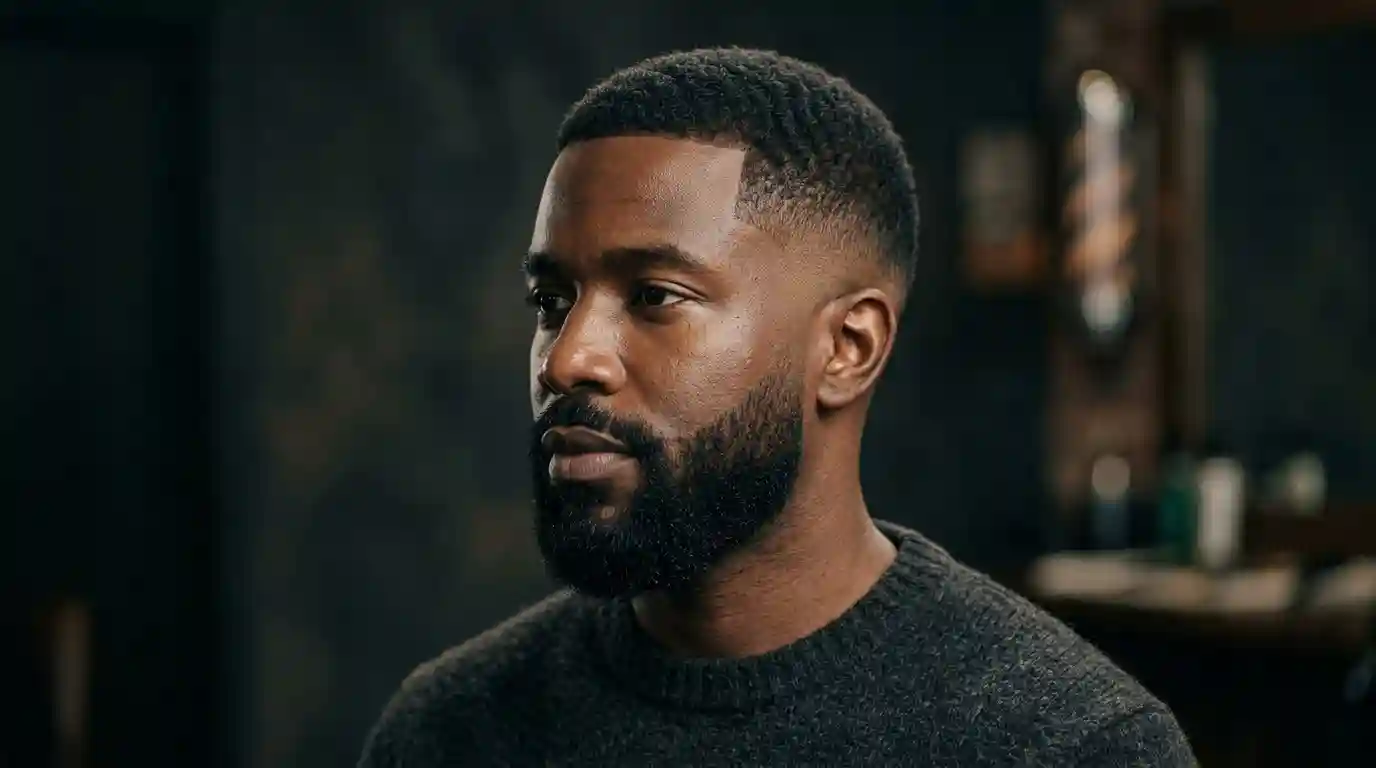
Drake Taper Haircut: Styles & Barber Guide
The Drake taper haircut is one of the most recognizable celebrity-inspired men’s hairstyles, combining a short buzzed or naturally textured top with clean faded sides, a sharp line-up, and a carefully blended beard. Canadian rapper Drake has experimented with several variations over the years, from his classic OVO buzz cut and defined 360 waves to skin fades, curly mini Afros, shaved designs, and longer cornrow braids. His signature short hairstyle remains especially popular because it looks clean, masculine, and versatile without requiring an elaborate daily styling routine. Whether you want a subtle low taper, a high-contrast skin fade, or the famous Certified Lover Boy heart design, the right result depends on your hair texture, clipper guard length, fade placement, and natural hairline. This complete guide explores Drake’s haircut evolution, his most recognizable styles, practical options for different hair types and face shapes, and exactly what to tell your barber to recreate your favorite look.
Table of Contents
- What Is Drake’s Taper Haircut?
- Drake’s Haircut Evolution and Cultural Influence
- Drake Taper Haircut Styles
- Choosing a Drake Haircut for Your Hair and Face
- How to Ask Your Barber for a Drake Taper Haircut
- Protecting Your Hairline with a Drake Line-Up
- How to Read Drake Taper Haircut Reference Photos
- How to Cut a Drake-Style Taper at Home
- Products and Tools for Maintaining the Look
- Maintenance and Barber Visit Schedule
- How to Fix a Drake Taper Haircut That Missed the Mark
- Frequently Asked Questions
- Final Thoughts
What Is Drake’s Taper Haircut?
The Drake taper haircut refers to the family of closely cropped hairstyles associated with rapper Drake, particularly his buzz cut with clean faded sides, precisely shaped hairline, and groomed facial hair.
Although people frequently call it a taper, many of Drake’s best-known haircuts are technically variations of a buzz cut with a low, mid, or high fade.
The difference matters because a localized taper preserves more length through the sides, while a fade may shorten a larger area of the head.
The signature look: a short top with tapered or faded sides
The classic Drake haircut typically features short, evenly trimmed hair on top, with a gradual transition into shorter sides.
His natural texture creates a compact, slightly coiled appearance when the top is kept short. At longer lengths, the curls become more visible.
The signature details include a crisp front hairline, controlled temple edges, clean sideburns, and a beard that connects naturally to the haircut.
Depending on the reference photograph, the top may resemble a Caesar cut, short buzz, miniature Afro, or wave haircut.
The overall appearance is structured rather than heavily styled.
A typical Drake-inspired haircut might use a #1 or #2 clipper guard on top with a fade around the sides, although longer #3 and #4 variations can create a fuller appearance.
Drake taper vs. Drake fade
A taper and fade both involve gradually reducing hair length, but they often differ in placement.
| Feature | Drake Taper | Drake Fade |
| Shortest areas | Primarily temples and neckline | Often more of the sides and back |
| Side fullness | Generally preserved | Often reduced |
| Scalp exposure | Optional and usually limited | Depends on fade height and finish |
| Overall appearance | Subtle and natural | Sharper and more contrasted |
| Maintenance | Often more forgiving | May need frequent touch-ups |
| Best for | Conservative, balanced appearance | Defined celebrity-inspired look |
Drake’s recognizable buzz-cut photographs often show a noticeable fade rather than a strictly localized taper.
If you want his familiar short haircut but prefer more side coverage, request a low taper instead of a full skin fade.
This creates a similar silhouette while preserving more hair above the ears.
What “dark temple fade” means
The phrase dark temple fade is not a universally standardized barbering term.
In some barbershop descriptions, a dark fade means the hair remains visibly dark through the shortest transition rather than being shaved completely to skin.
When applied to the temple area, this may describe a short, soft temple taper that preserves visible hair density.
However, the phrase can be interpreted differently.
For a Drake-inspired dark temple fade, the safest instruction is to request a temple-focused transition with visible stubble at its shortest point.
Ask your barber to avoid a skin finish if you want the area to retain a darker appearance.
A photograph is more reliable than assuming that every barber uses this particular name.
How the sides blend into the sideburns, neckline, and beard
One defining feature of Drake’s short hairstyles is the relationship between the haircut and beard.
The hair often transitions smoothly from the temple into the sideburn and then into fuller facial hair.
This technique is called a beard blend or beard fade.
For example, a barber might gradually increase the length from a short temple fade into the upper beard, leaving more density around the jaw.
The neckline is equally important.
A clean tapered nape or carefully faded back creates a polished result, while an excessively high fade can change the silhouette.
The front line-up completes the look by defining the forehead and temple edges.
A balanced Drake-inspired haircut should look intentional from the front, profile, and back rather than depending entirely on one sharp line.
How Drake’s haircut became popular
Drake’s rise from television actor to internationally recognized musician brought increasing attention to his grooming choices.
As his musical career developed, his short buzz cut, lined hairline, and beard became familiar elements of his public appearance.
The style appealed to men who wanted a fashionable haircut that could work with casual clothing, tailored outfits, and professional settings.
Its simplicity also made it adaptable.
Barbers could recreate the general appearance using different top lengths, fades, and beard shapes.
The haircut did not originate with Drake. Buzz cuts, line-ups, Caesar cuts, waves, and fades already had longstanding histories in Black grooming and barbershop culture.
His influence came from making a particular combination highly recognizable through music videos, appearances, album campaigns, and popular photographs.
Drake’s Haircut Evolution and Cultural Influence
Drake’s hairstyles have changed alongside his musical career.
Some periods featured relatively conservative short haircuts, while others introduced unusual designs, longer curls, or elaborate braids.
The following timeline highlights recognizable styling directions rather than suggesting that he wore only one haircut throughout each album era.
The Degrassi years: short natural afro
During his years portraying Jimmy Brooks in Degrassi: The Next Generation, Drake frequently appeared with short, natural curls and a relatively simple haircut.
The hair was generally fuller than the very close buzz styles that later became closely associated with him.
The upper shape emphasized natural texture rather than dramatic fading.
His hairline also appeared less dependent on the highly defined beard-and-line-up combination associated with his later image.
To recreate an early Drake-inspired look, request a short natural Afro with soft edges and a conservative neckline.
This variation is suitable for anyone who wants to preserve curls without an aggressive fade.
The mixtape years: longer curls and early line-ups
During his transition into a professional recording artist, Drake continued wearing compact natural curls and increasingly structured short haircuts.
The evolving appearance included neater outlines, shorter sides, and a more defined overall shape.
Rather than a dramatic transformation, these years established the foundation of his later grooming identity.
Men interested in this era can request a short curly top, a subtle side taper, and a clean but natural-looking front hairline.
The key is allowing some natural texture to remain visible.
The OVO era: signature buzz cut
As Drake’s OVO identity became more recognizable, the short buzz cut emerged as a central part of his image.
The haircut commonly featured closely cropped hair, neatly shaped temples, and a clean transition around the sides.
The top was short enough to require very little daily styling.
His growing facial hair also became an important visual element.
This period provides some of the most useful reference photographs for men who want the classic Drake haircut.
A #1 or #2 top, low or moderate fade, and carefully shaped beard can recreate the general style.
For a related haircut with less extensive side fading, explore the Buzz Taper Haircut, which explains how short guard lengths and localized tapers work together.
Nothing Was the Same era: mini afro and loose curls
The Nothing Was the Same period included photographs of Drake with relatively short, textured hair and recognizable curly variations.
The miniature Afro silhouette became a useful alternative to his closer buzz cuts.
With additional top length, natural curls become more visible and the hairstyle develops a softer shape.
Some reference images from this period also emphasize defined parts and fades.
The album artwork itself uses stylized portraits, so it should not be treated as an exact photographic haircut reference.
For a similar style, preserve enough length for natural curl formation and request a low or mid fade.
A neatly shaped beard or short stubble can complement the hairstyle.
Views era: short cut, skin fade, and side design
Around the Views era in 2016, Drake was frequently associated with very short haircuts and sharp grooming.
His close-cut appearances emphasized crisp fading, a defined front hairline, and facial-hair detailing.
Side designs and curved part variations also became recognizable elements of his broader mid-2010s haircut image.
A short top provides strong contrast when paired with closely faded sides.
If you want a similar appearance, ask for a low or mid skin fade with a short Caesar-style top and a defined line-up.
If your selected reference includes a shaved side detail, show the exact position before the barber begins.
Peak and hard-part era
Drake’s shaved part designs added an identifiable feature to his otherwise short hairstyle.
One recognizable variation uses a curved, hook-like part near the front side of the head.
Unlike a conventional straight side part, this detail creates a decorative shape within the short hair.
The design works best when enough top length remains to make the shaved line clearly visible.
A professional barber needs to determine the placement before cutting because the line cannot be moved immediately after shaving.
To understand the barbering technique, see GQ’s master-barber recreation of Drake’s skin-fade Caesar haircut, which demonstrates the combination of short top, fade, and curved part.
Scorpion era: waves, high fade, and short back
During the Scorpion era in 2018, Drake’s close-cut hairstyles continued to emphasize neat fades and controlled texture.
Short wave patterns also became closely associated with his familiar grooming aesthetic.
The haircut typically maintained a compact top, shorter sides, and a tidy rear section.
For men with suitable tightly curled hair, brushing and compression techniques can encourage an organized wave pattern.
The fade should frame the waves without extending unnecessarily high into the top.
A full beard with a gradual sideburn blend complements this appearance.
Certified Lover Boy era: heart-shaped hair design
One of Drake’s most recognizable experimental hairstyles was the heart-shaped design near his front hairline.
He introduced the look during the rollout of Certified Lover Boy, and the style became a prominent visual reference in 2020 and 2021.
The design was positioned near the front side of the hairline and paired with a closely cropped haircut.
Unlike an ordinary line-up, the heart was intentionally carved into the hair as a decorative feature.
The design attracted considerable attention because it connected his grooming directly to the album’s romantic branding.
Recreating the heart requires careful planning, especially around the natural hairline.
A barber experienced with precision hair designs should assess whether sufficient density and length are available.
Avoid cutting the heart too deeply into the forehead corners because it may create an awkward appearance while growing out.
Braids and longer-hair era
In March 2022, Drake publicly debuted cornrow braids, marking a noticeable departure from his familiar short-fade hairstyle.
He later experimented with additional braided patterns, decorative parts, longer textures, and other styling variations.
His braided looks have included designs associated with the Nike Swoosh and OVO owl branding.
The longer-hair period illustrates how a clean hairline and beard can remain central features even when the top hairstyle changes completely.
Cornrows require sufficient hair length and careful installation.
They should not be braided so tightly that they cause persistent scalp pain or excessive tension along the hairline.
A low taper around the temples can sometimes complement a braided style, depending on the desired parting pattern.
Recent Drake haircut styles
Drake has continued alternating between short, closely cropped hairstyles and longer braided looks.
Public appearances during 2025 featured longer, more experimental styling, while photographs reported in 2026 have also shown him with neatly maintained braids and a groomed beard.
These appearances demonstrate that there is no single permanent “current Drake haircut.”
For someone who wants to recreate a particular recent look, the date and photograph matter more than the celebrity name alone.
A braided Drake reference requires completely different hair length and preparation from his classic #2 buzz-and-fade.
The easiest way to avoid confusion is to select the exact appearance you want before visiting the barber.
Drake’s influence on Black men’s grooming
Drake’s hairstyles have remained visible within popular culture because they combine familiar barbering techniques with a recognizable celebrity image.
However, the techniques themselves are part of a much broader grooming history.
The role of the barber and barbershop culture
Black barbershops have long been important spaces for grooming expertise, cultural exchange, and community connection.
Fade transitions, precise line-ups, short Afros, and wave grooming were established traditions before Drake became famous.
His celebrity helped introduce these looks to additional audiences, but their development reflects generations of barbering skill.
An experienced barber understands how the haircut should respond to curl density, growth direction, hairline shape, and beard texture.
These practical details are more important than copying a celebrity photograph exactly.
The clean line-up as a signature detail
The line-up is a prominent feature of Drake’s short haircut image.
It frames the forehead, creates visual definition at the temples, and contributes to the polished overall appearance.
When paired with a short beard, the line-up also establishes consistency between the hair and facial grooming.
However, the sharpest possible line is not always the best one.
A natural-looking shape-up that respects the original hairline can be easier to maintain and less likely to exaggerate temple recession.
Simplicity, personal style, and changing looks
Drake’s hairstyle evolution demonstrates how a relatively simple haircut can be modified through small details.
A different fade height, slightly longer curls, a beard adjustment, or a carved design can create a completely different appearance.
The same principle applies to other celebrity-inspired tapers.
Michael B. Jordan’s close textured cuts, Jude Bellingham’s athletic fades, Justin Timberlake’s more styled short hair, and Ryan Gosling’s longer side-parted tapers offer different reference directions.
Similarly, NBA YoungBoy-inspired short cuts and creator-specific searches involving Sam Zia or Willy taper styles may refer to different silhouettes rather than a single standardized haircut.
If you’re comparing celebrity looks, focus on the actual top length, texture, taper placement, and hairline instead of relying on the celebrity’s name alone.
Drake Taper Haircut Styles
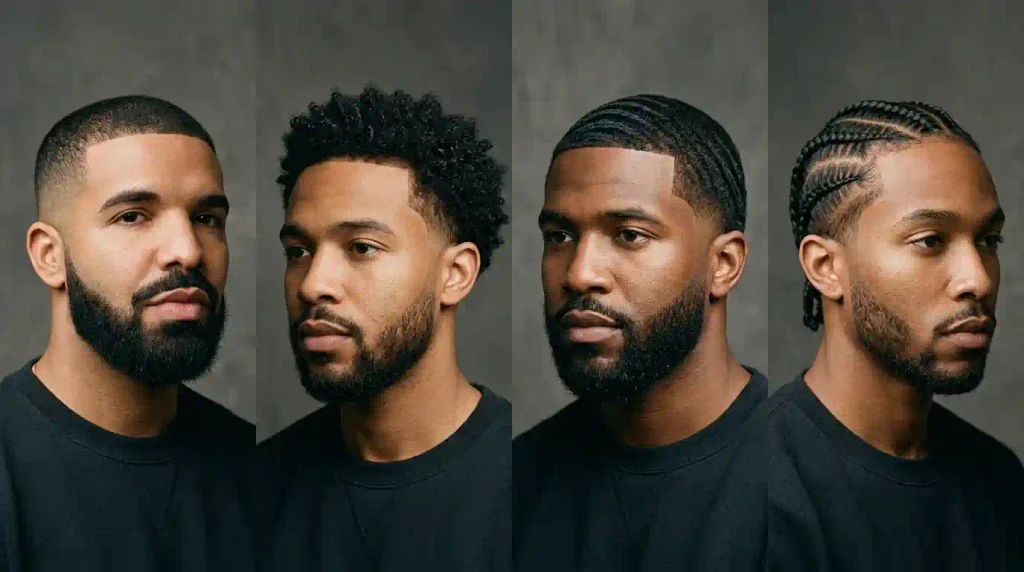
The most useful way to choose a Drake-inspired haircut is to separate taper placement, top length, hair texture, decorative details, and facial-hair styling.
These elements can be combined to create a look that resembles a specific photograph while suiting your own hair.
Some variations below are directly associated with Drake’s documented appearances. Others are practical adaptations of his signature grooming style rather than confirmed hairstyles he personally wore.
Styles by taper and fade placement
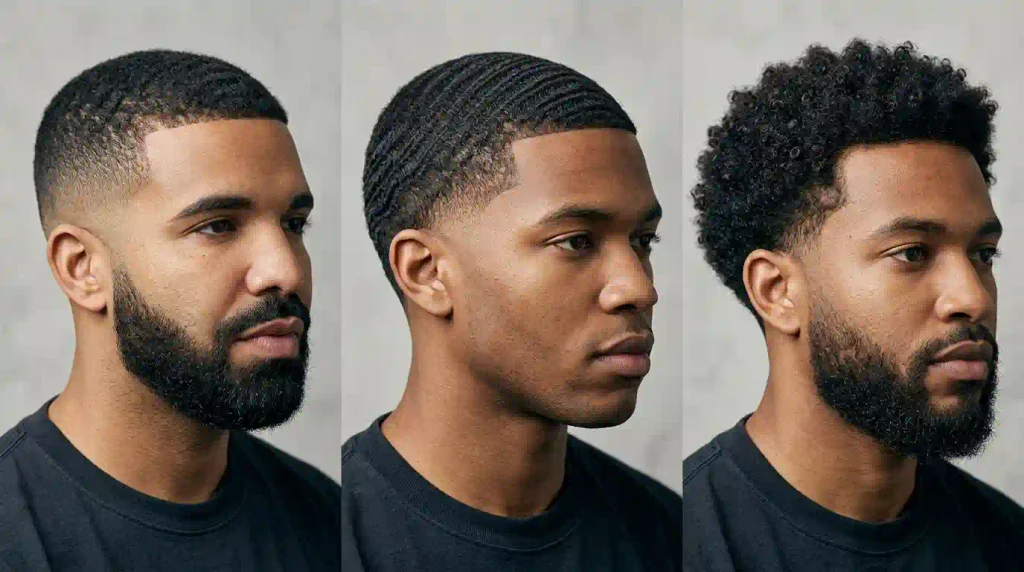
Low taper or low fade
A low taper focuses the shortest transition around the sideburns and nape while preserving more fullness through the upper sides.
A low fade extends the graduation farther across the lower side panels.
Both can support Drake’s classic short top.
A low taper is the better option if you want a conservative appearance and softer grow-out.
A low fade creates more visible definition while remaining relatively understated.
Pair either version with a #2 or #3 top and a neatly blended beard for a balanced result.
High taper or high fade
A high taper raises the shortened transition, while a high fade removes more hair through the upper sides.
These variations create stronger contrast against the buzzed or curly top.
Drake-inspired high fades work particularly well with a defined line-up and fuller beard.
However, a high fade exposes more of the head’s natural shape and may require more frequent maintenance.
A very short top combined with extensive skin exposure can produce an almost military-inspired silhouette.
Ask your barber how much upper side coverage will remain before choosing this option.
Mid fade
A mid fade begins its shorter graduation around the middle of the sides.
It offers a balance between the subtle appearance of a low fade and the stronger contrast of a high fade.
A Drake-style mid fade can complement a short Caesar cut, waves, or compact curls.
The transition should blend smoothly toward the parietal ridge without creating a visible shelf.
A neatly outlined beard helps complete the appearance.
This is a versatile option for someone seeking a recognizable celebrity-inspired short haircut without excessive scalp exposure.
Temple or dark temple fade
A temple fade, also called a temp fade, concentrates the shorter transition around the corners of the hairline.
It is especially useful when you want to retain more hair through the sides and back.
A dark temple variation preserves some visible length at the shortest point rather than reaching bare skin.
For a Drake-inspired look, pair the temple fade with a short textured top and clean sideburns.
If you prefer a natural appearance, request a soft shape-up rather than an aggressively squared hairline.
Skin or bald fade
A skin fade transitions from bare or nearly bare skin into longer hair.
It creates strong contrast and a particularly crisp finish.
A bald fade can complement Drake’s buzzed-top silhouette when the shortest area is carefully blended.
The main consideration is maintenance.
Skin-level sections become visibly softer as hair grows, and close shaving may irritate sensitive skin.
People prone to ingrown hairs may prefer a short clipper finish instead.
Drop fade
A drop fade follows a curved path, generally dipping lower toward the back of the head.
The resulting transition follows the head’s natural contour.
This variation can complement short waves, a rounded mini Afro, or a compact buzz.
A drop fade is a style adaptation rather than one universally recognized as Drake’s signature cut.
It is useful when you prefer a curved rear silhouette instead of a straight horizontal transition.
Buzz and short-cut variations
Classic Drake buzz cut
The classic Drake buzz cut features short, evenly clipped hair with a clean hairline and neatly maintained beard.
A #1 or #2 guard often produces the compact appearance associated with his familiar short hairstyles.
The sides may be faded or simply tapered, depending on the reference.
Minimal styling is required because the top is too short for elaborate movement.
This version is ideal for men who want a low-maintenance haircut that still looks polished.
Buzz cut with a fade
This variation combines a uniform buzzed top with graduated sides.
A #2 top and low-to-mid fade create a balanced appearance.
A shorter top and skin fade produce greater contrast.
The barber should maintain symmetry around the ears and ensure that the fade connects smoothly to the neckline.
A defined beard blend can make the haircut appear more coordinated.
Tapered Drake cut
The tapered Drake cut is a softer interpretation of his buzz-and-fade hairstyle.
Instead of removing most of the side hair, the barber concentrates shortening around the temples and neckline.
A #2 or #3 top provides enough coverage for a neat appearance.
This variation suits people who prefer a conservative office-friendly haircut or don’t want extensive scalp exposure.
It also grows out more gradually than some high-contrast skin fades.
Drake crew cut
A Drake-inspired crew cut preserves slightly more hair toward the front of the head.
The top gradually shortens toward the crown, allowing a compact, structured silhouette.
It is useful for people whose hair does not naturally form tight curls or waves.
A crew cut can also complement straight and moderately wavy hair.
Ask for a short graduated top, clean tapered sides, and natural front shaping.
Buzz cut with a line or pattern
A shaved line adds a recognizable design element to a short buzz cut.
The detail may be straight, curved, or shaped into a simple symbol.
Drake’s curved part and heart design are the most recognizable references.
A barber should plan the line’s thickness and position before using a trimmer.
Hair designs are temporary, but mistakes may remain visible until enough hair grows back.
Afro, curl, and wave styles
Short curly afro
A short curly Afro keeps enough length for natural curls to form a compact rounded shape.
The sides can be gently tapered or faded.
This style resembles some of Drake’s fuller short-hair appearances.
It is especially suitable for men who want a natural textured top without relying on daily brushing for waves.
Wet short curly afro
A wet-look mini Afro emphasizes curl definition and shine.
Use a lightweight curl cream or suitable styling product on damp hair.
The goal is to enhance curl grouping without making the top stiff.
A low fade and neat beard can create a polished finish.
This is a styling adaptation rather than a fixed Drake haircut name.
Mini afro with stubble
A mini Afro paired with short facial stubble creates a relaxed appearance.
The upper hair retains natural volume, while the facial hair remains understated.
A low temple taper can keep the perimeter clean.
This variation works well when you want a Drake-inspired hairstyle without maintaining a full beard.
Mini afro with a full beard
A fuller beard creates stronger facial framing beneath a compact curly top.
The barber should blend the sideburns gradually into the beard.
Keeping the mini Afro rounded helps balance the overall silhouette.
This look requires more beard maintenance than a clean-shaven or stubble variation.
Curly top with faded sides
A curly top with faded sides retains enough length to show natural curl texture while removing bulk around the ears.
A low or mid fade creates noticeable contrast.
The barber should account for shrinkage before trimming the top.
Over-cutting curly hair can produce a shorter finished shape than expected.
Drake waves with a fade
Drake-inspired 360 waves combine a short, organized wave pattern with clean faded sides.
The wave effect depends on curl structure, consistent brushing, suitable conditioning, and hair training.
A soft or medium-bristle wave brush can help align the hair in its natural growth direction.
A durag may be used to help maintain the pattern and reduce friction.
Avoid excessively tight compression or aggressive brushing that irritates the scalp.
Wavy short afro with a taper skin fade
This variation combines a compact wavy or coiled top with a localized skin taper.
The contrast frames the upper texture while preserving more hair than a full skin fade.
It can be a useful hybrid for people who want a short Afro silhouette with a sharper perimeter.
The barber should keep the transition balanced around both temples.
Puffy 360 afro
A puffy 360 Afro retains more volume than a conventional wave cut.
The rounded shape emphasizes natural texture, while the sides and neckline remain controlled.
This is best understood as a Drake-inspired variation rather than a clearly documented signature look.
It may require a longer top length and careful shaping.
If you want greater expansion and height, a Blowout Taper Haircut may also provide useful inspiration.
Line-up and design variations
Clean line-up or shape-up
A line-up creates a defined border along the front hairline and temples.
This is one of the most recognizable details of Drake’s short haircuts.
The barber uses a precision trimmer to refine the outline.
A natural, conservative line-up generally grows out better than one that extends far beyond the original hairline.
Curved line design
A curved side design adds visual interest near the front or side of the head.
Drake’s recognizable hook-like part is a useful reference.
The design should follow an intentional curve and remain proportionate to the head.
A poorly positioned line can make the haircut look unbalanced.
Heart-shaped design
The Certified Lover Boy heart is a distinctive hair design positioned near the frontal hairline.
It works best when the hair surrounding the design is sufficiently dense to reveal its outline.
Ask a barber experienced in hair art to plan the shape before shaving.
A temporary outline can help confirm the size and placement.
Hard part or defined part
A hard part is a shaved line used to create a clear separation within the hair.
For a Drake-inspired cut, it may be straight or slightly curved.
A natural side part offers a softer alternative.
Hard parts require occasional maintenance as the hair grows over the line.
Moon-cut line
A moon-cut line generally describes a crescent-like shaved detail rather than a universally standardized haircut.
It can be adapted into a Drake-inspired design if you like curved decorative lines.
However, it should not automatically be presented as a verified signature hairstyle worn by Drake.
Show the barber a photograph or sketch to clarify the desired curve.
Razor-cut edge work
Razor detailing can create extremely sharp borders.
However, a razor is not essential for achieving a neat Drake-inspired line-up.
A precision trimmer may provide adequate definition with less skin-level shaving.
If you are prone to irritation or ingrown hairs, discuss a gentler finish with your barber.
Styles paired with facial hair
Low fade with a beard
A low fade with a full beard is one of the most practical Drake-inspired combinations.
The lower transition keeps the sides clean while allowing the beard to provide facial definition.
The barber should gradually blend the sideburns into the upper beard.
Drake fade with a messy beard
A slightly fuller, less sculpted beard can create a relaxed appearance beneath a neat fade.
However, messy should not mean neglected.
Maintain the beard’s general shape and remove stray hairs that disrupt the neckline.
Shaped beard with a line-up fade
This variation emphasizes symmetry between the forehead line-up and the beard outline.
The haircut is short and precisely blended.
The beard is trimmed to maintain clean cheek and neck borders.
It produces a highly groomed appearance that may require frequent touch-ups.
Curly beard and mustache with a lined cut
A naturally curly beard can complement short coiled hair.
The barber should trim the beard according to its density and growth direction.
Avoid forcing the facial hair into an unnatural shape that requires excessive cutting.
A clean mustache and conservative line-up create a balanced finish.
Long curly beard with a side part
A longer beard can be paired with a short side-parted haircut for a mature appearance.
This is a broader Drake-inspired grooming adaptation rather than one of his most identifiable signature combinations.
The longer beard creates additional visual weight around the jaw.
The barber should balance that weight with the haircut’s top length and side shape.
Blending the haircut into the beard
A good beard blend connects the temple, sideburn, cheek area, and fuller beard without an abrupt change in length.
The barber may use several clipper settings to create a gradual transition.
Ask for the blend to follow your natural facial-hair density.
If the cheeks are relatively sparse, an extremely aggressive beard fade may make the patchiness more noticeable.
Longer and alternate styles
Long hair
Drake’s longer-hair periods show a different side of his grooming preferences.
Longer natural curls can be worn loose, styled backward, or prepared for braiding.
The sides may remain full or include a subtle taper.
The amount of length required depends on the intended finish.
Cornrow braids
Cornrows became one of Drake’s most recognizable alternative looks after 2022.
They involve braiding hair close to the scalp in organized rows.
The parting pattern can be simple or decorative.
Ask a stylist experienced with braided natural hair to select suitable sections and tension.
Braids should feel secure without causing ongoing pain, redness, or hairline pulling.
Undercut fade with a wavy fringe
An undercut fade with a wavy fringe is a modern adaptation combining longer forward-styled hair with shorter sides.
It is not one of Drake’s defining classic looks.
However, it can appeal to people who like celebrity-inspired grooming but want more movement than a buzz cut provides.
A lightweight styling cream or mousse can help control the fringe.
Low cut with a line part and no fade
This variation keeps the hair uniformly short while adding a defined part.
The sides do not necessarily include a significant fade.
It is a useful option for men who want a Drake-inspired decorative detail without extensive tapering.
A neat beard and natural neckline help maintain the overall appearance.
Choosing a Drake Haircut for Your Hair and Face
Drake’s haircut photographs provide inspiration, but the final style should be adapted to your individual features.
Hair texture, density, natural growth direction, head shape, and beard pattern all affect the outcome.
Choosing between a low taper, temple fade, and skin fade
Start by deciding how much contrast you want.
A low taper creates a subtle change around the perimeter.
A temple fade adds more visible definition near the corners of the hairline.
A skin fade creates the strongest contrast when the shortest section reaches bare skin.
For a conservative everyday haircut, a low taper is often the easiest starting point.
For a sharper celebrity-inspired appearance, consider a mid fade with a defined hairline and beard blend.
If you want a strong contrast, a skin fade may be appropriate, provided you are comfortable with the additional scalp exposure and upkeep.
How taper height changes scalp exposure and contrast
Taper height affects the visual proportions of the head.
A low taper preserves more hair through the sides, creating a fuller silhouette.
A mid fade reduces more side weight.
A high fade exposes additional scalp and can make the top appear more prominent.
Very high fades may also highlight head contours or differences in hair density.
If you’re unsure, begin with a lower transition.
A barber can make the fade higher during the same appointment, but cannot restore removed hair.
Drake haircut guard lengths: #1 to #4 and millimeter conversions
Clipper guard numbers help communicate the intended top length.
| Guard | Approximate length | Drake-inspired appearance |
| #1 | 3 mm (1/8 inch) | Very close buzz |
| #2 | 6 mm (1/4 inch) | Classic compact buzz |
| #3 | 10 mm (3/8 inch) | Fuller short cut with visible texture |
| #4 | 13 mm (1/2 inch) | Longer buzz with greater curl visibility |
These are standard approximate guard measurements. Actual lengths can vary with clipper brands, attachments, and cutting technique.
For a traditional Drake-style short haircut, the #1 or #2 range is a common starting point.
If you want more visible curls or a softer appearance, consider a #3 or #4.
Very short guards can reveal the scalp more clearly, particularly when the hair is fine or thin.
Always confirm the guard length before the barber begins.
Choosing a style for your face shape
Round face
A round face may benefit from a mid fade or controlled height on top.
A neatly shaped beard can add visual definition around the jaw.
Avoid removing so much side hair that the haircut becomes disproportionately narrow above the cheeks.
Oval face
Oval faces often accommodate low, mid, and high fade variations.
A #2 buzz with a low fade is a versatile starting point.
A short curly Afro can also work if you prefer additional texture.
Choose based on styling preference rather than assuming that one version is universally best.
Square face
Square faces can complement close buzz cuts and neatly trimmed beards.
A low or mid fade emphasizes the natural jawline without requiring exaggerated height.
A soft line-up can create a slightly less angular appearance than an aggressively squared edge.
Heart-shaped face
Heart-shaped faces often feature a wider forehead and narrower jaw.
A low taper with some side fullness can create a balanced silhouette.
A short beard may also add visual weight to the lower face.
Avoid automatically choosing an extremely high skin fade if it makes the upper face appear wider.
Adapting the cut to your curl pattern
4A to 4C hair
Type 4 hair commonly forms tight coils with noticeable shrinkage.
A short Drake-inspired buzz can create a compact, dense-looking surface when sufficient hair density is present.
Longer versions reveal more natural coil texture.
A soft brush may help develop waves for suitable hair types, but the routine should be gentle enough to avoid scalp irritation.
Conditioning and careful detangling matter as the hair grows longer.
3A to 3B hair
Type 3A to 3B hair generally has visible curls that may appear looser than very tightly coiled hair.
At shorter lengths, the curl pattern can become less obvious.
A #3 or #4 top may preserve more visible texture.
A lightweight curl cream can help organize the curls without making them overly stiff.
2A to 2C hair
Type 2 hair ranges from loose waves to more defined S-shaped waves.
It may not naturally produce the same compact 360-wave pattern associated with tightly coiled hair.
However, it can support a Drake-inspired fade with a textured top and clean beard blend.
Use the haircut’s proportions as inspiration rather than trying to force an unrelated curl pattern.
Choosing a style for short, medium, or longer hair
Short hair is ideal for recreating Drake’s classic buzz-and-fade.
Medium-length hair allows a mini Afro, textured Caesar, or more visible curls.
Longer hair creates opportunities for cornrows, slicked-back styling, or alternate designs.
If you are growing your hair for braids, maintain the perimeter without repeatedly cutting the upper length.
The barber should understand your long-term goal.
Matching the hairline finish and beard to your features
A sharp line-up can emphasize the forehead and temples.
However, not every natural hairline is symmetrical.
Your barber should follow the existing growth pattern rather than artificially removing large areas to create a straight border.
Likewise, beard shape should reflect your facial-hair density.
A short beard may suit a compact buzz, while a fuller beard can balance longer curls.
Choose a finish that looks intentional without requiring excessive correction at every appointment.
How to Ask Your Barber for a Drake Taper Haircut
The most common mistake is simply asking for “Drake’s haircut.”
Drake has worn several different styles, and the barber may not know which appearance you mean.
Clear instructions should cover the top length, fade height, hairline shape, neckline, and beard.
Barber script for the classic Drake buzz
“I want a classic Drake-inspired buzz cut with a #2 guard on top. Keep the sides clean with a low-to-mid fade, give me a neat natural line-up, and blend the sideburns into my beard.”
This request creates a recognizable short silhouette.
If you want more coverage, change the top to a #3 guard.
If you prefer a softer appearance, replace the fade with a low taper.
Barber script for a low or high fade
Low fade:
“Give me a #2 buzz on top with a low fade that stays relatively close to the ears. Keep the top and upper sides connected, and shape the hairline without pushing it back.”
High fade:
“I want a short Drake-style buzz with a high fade and stronger contrast. Keep the top evenly cut and make sure the fade blends smoothly into the crown.”
The second request produces a more dramatic haircut.
Barber script for a temple fade and line-up
“I want a short textured top with a temple fade focused around the sideburns. Keep the rest of the sides relatively full. Give me a clean line-up that follows my natural hairline.”
This is useful if you want the definition associated with Drake’s grooming but prefer less extensive fading.
Barber script for the heart design or hard part
“I’d like a short Drake-inspired fade with a small heart-shaped design near the front hairline. Please show me where the design will sit before shaving it.”
For the hard part:
“I want a short Caesar-style top with a clean fade and a curved, hook-like shaved part. Keep the design narrow and similar to this reference photograph.”
Hair designs should be discussed carefully because even small placement errors can significantly change the appearance.
Specify the top guard, fade height, neckline, and beard blend
Before the cut begins, confirm five details:
- The exact guard length or approximate top length.
- Whether the sides will receive a low taper, temple fade, mid fade, or high fade.
- Whether the shortest finish will retain visible hair or reach skin.
- Whether the front hairline will remain natural or receive a defined shape-up.
- Whether the sideburns will blend into the beard and how the neckline will finish.
These instructions provide more precision than a celebrity name alone.
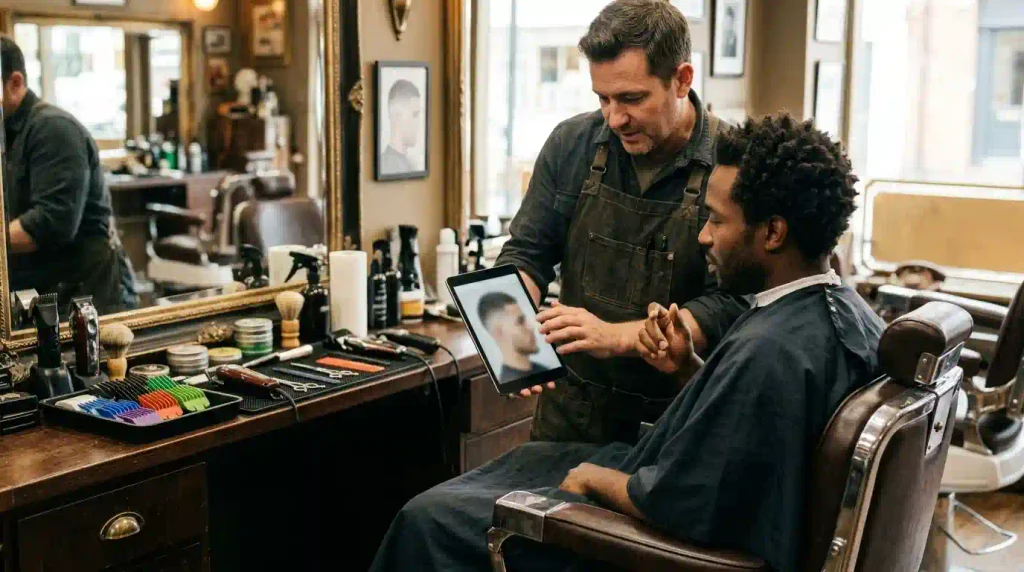
Bring a reference photo and describe the finish you want
Choose a photograph showing the specific Drake appearance you want.
If possible, bring front and side views from the same period.
Point out the features you like.
You may prefer the fade from one photograph but the beard shape from another.
Ask whether those elements can be combined successfully with your natural hair texture.
Protecting Your Hairline with a Drake Line-Up
A defined line-up can dramatically improve the appearance of a short haircut, but it should not come at the expense of an unnecessarily altered hairline.
Natural hairline vs. squared line-up
A natural hairline follows the existing shape of the forehead and temples.
A squared line-up uses precise edging to create a straighter, more geometric outline.
Both can look attractive.
The main difference is how much of the natural growth pattern remains visible.
For people with a relatively straight hairline, a subtle line-up may require little adjustment.
For people with irregular temples, an aggressive shape-up may remove more hair than necessary.
The best choice is the one that looks balanced and grows out naturally.
Adjusting the line-up for temple recession or an uneven hairline
Temple recession can make a symmetrical line-up more difficult.
Trying to create perfectly square corners may require pushing one or both sides farther back.
This can make the hairline appear more recessed.
Instead, ask the barber to preserve the natural temple position and refine only the visible stray hairs.
A short Caesar-style fringe may also soften the appearance of the front hairline.
If thinning or recession is progressing, remember that a haircut changes appearance but does not treat the underlying cause.
What to tell your barber before shaping the front
Tell your barber if you are concerned about recession, uneven edges, or previous line-ups that were cut too far back.
A useful instruction is:
“Please keep my natural hairline intact. Clean up the edges, but don’t push the corners backward or take the line higher.”
For a heart design or curved part, confirm that the design will not unnecessarily remove hair from already sparse areas.
How to Read Drake Taper Haircut Reference Photos
A reference photograph should help your barber understand the technical structure of the haircut.
The name attached to the photograph is less important than the details visible in it.
What to check in the front, side, and back views
The front view reveals the top shape, hairline, curls, and any carved design.
The side view shows the fade height, temple transition, sideburns, and beard connection.
The back view reveals the neckline and how the fade continues around the head.
Photographs from multiple angles help prevent an unexpected high fade or overly short nape.
Identify the top length, taper placement, and neckline finish
Begin by estimating whether the top resembles a #1, #2, #3, or longer cut.
Next, determine where the shortest portion of the fade begins.
A low fade remains near the lower side area.
A mid or high fade removes more hair farther upward.
Look for scalp exposure and whether the neckline has a soft taper or sharper finish.
Lighting can alter the apparent contrast, so ask your barber for an estimate rather than assuming an exact guard from a photograph.
Match each photo to a clear barber request
| Reference appearance | What to ask for |
| Classic Drake buzz | #1 or #2 buzz with clean fade |
| Short textured Drake cut | #3 or #4 top with low or mid fade |
| Drake 360 waves | Short wave-friendly top with controlled fade |
| Drake mini Afro | Preserve curls with tapered or faded sides |
| Drake heart design | Short fade with precisely planned frontal heart |
| Drake curved hard part | Caesar-style top, fade, and hook-shaped part |
| Drake braids | Sufficient top length, cornrows, and suitable perimeter finish |
A useful reference explains the shape you want while allowing the barber to adapt it to your hair.
How to Cut a Drake-Style Taper at Home
A basic Drake-inspired buzz cut can be attempted at home with suitable equipment.
However, skin fades, sharp line-ups, and decorative designs require considerably more practice.
Beginners should start with a conservative taper and avoid making irreversible changes to the hairline.
Clippers, guards, trimmer, scissors, and comb
Prepare a reliable clipper with compatible guide combs, a precision trimmer, a comb, and a handheld mirror.
A second mirror or smartphone camera helps inspect the back of the head.
Barber scissors may be useful if the top is long enough to require shaping.
Clean the tools before use and follow the manufacturer’s instructions for maintenance.
Good lighting is essential for identifying uneven sections.
Choose the top length and guard size
For a short Drake-inspired buzz, begin with a #3 or #4 if you are uncertain about the desired length.
You can move shorter after checking the appearance.
Cut the top in smooth, overlapping passes.
Work with the hair’s growth direction and use additional passes as needed for an even result.
Avoid pressing the clipper aggressively into the scalp.
Once the top is even, decide how much of the sides should be shortened.
Set the fade line
For a beginner-friendly version, keep the taper low around the sideburns and neckline.
Use a shorter guard carefully within the intended taper area.
Avoid creating a high guideline that extends around the entire head.
The height of this initial transition determines how much room remains for blending.
If the shortest area is raised too far, the result may become a mid or high fade instead of a low taper.
Blend the sides and back
Use intermediate guard lengths or the clipper’s taper lever, if available, to soften differences between the shorter and longer sections.
Move the clipper outward as you approach the longer hair.
Work slowly and compare both sides frequently.
The back of the head is difficult to cut evenly without assistance.
If you cannot see the transition clearly, avoid attempting extensive neckline blending.
A professional correction may be necessary if the fade becomes uneven.
Shape the line-up or hair design
Use a precision trimmer cautiously along the natural front hairline.
Remove only obvious stray hairs unless you have experience creating a shape-up.
Do not repeatedly move the line backward in an attempt to create perfect symmetry.
For a curved hard part or heart design, a professional barber is usually the better choice.
These designs require precise positioning and controlled blade movement.
A simple buzz-and-taper is much easier to achieve at home than a full replica of a highly detailed Drake haircut.
Products and Tools for Maintaining the Look
Most Drake-inspired short haircuts require relatively few styling products.
However, wave patterns, longer curls, braids, and facial hair benefit from different maintenance routines.
Clippers, guide combs, and liner trimmer
A quality clipper is useful for maintaining a consistent buzz length.
Guide combs determine how much hair remains after cutting.
A liner trimmer helps clean sideburns and selected perimeter areas.
For home maintenance, prioritize equipment that is easy to control rather than assuming that expensive professional tools automatically create better results.
Use compatible guards and maintain the blades appropriately.
An electric shaver can produce a closer finish, but it may not be suitable for sensitive or bump-prone skin.
Brush, comb, and barber scissors
A soft or medium-bristle brush can help maintain short wave patterns.
A comb is useful for longer curls, side parts, or checking growth direction.
For textured hair, choose tools that reduce snagging and unnecessary tension.
Barber scissors are mainly useful when the top is longer than a typical buzz.
Avoid attempting advanced scissor shaping without appropriate experience.
Products for waves, curls, and beard care
Different Drake-inspired styles require different products.
| Product | Main purpose |
| Wave pomade | Helps control and hold a short wave pattern |
| Lightweight moisturizer | Supports hair and scalp conditioning |
| Curl cream | Helps define natural curls |
| Light pomade or wax | Adds control to short styled hair |
| Matte clay | Creates a natural finish on longer textured tops |
| Beard oil | Helps condition beard hair |
| Beard balm | Adds control to fuller facial hair |
| Gentle shampoo | Removes dirt, oil, and product buildup |
Avoid applying heavy products simply because a celebrity hairstyle appears glossy.
Excessive wax or pomade can leave buildup and make hair difficult to manage.
Choose products according to your texture, scalp condition, and preferred finish.
Using a durag to maintain waves
A durag is commonly used to help maintain 360 waves and reduce friction during sleep.
After brushing the hair into its intended wave pattern, place the durag smoothly over the head.
Secure it comfortably without creating excessive pressure.
The fabric should help maintain the direction of the hair without pulling at the hairline.
Remove or adjust it if you experience discomfort, headaches, irritation, or excessive tension.
A durag supports a grooming routine, but it does not automatically create waves on every hair texture.
Consistent gentle brushing, suitable hair length, and natural curl characteristics all contribute to the result.
Maintenance and Barber Visit Schedule
The cleaner and sharper the haircut, the more noticeable its grow-out may become.
Drake-inspired fades and line-ups usually benefit from regular maintenance.
How often to refresh the fade and line-up
For a highly defined fade and line-up, some men prefer a barber visit approximately every one to two weeks.
Others maintain a more relaxed short cut every two to four weeks.
The exact schedule depends on hair growth, fade height, and how sharp you want the style to remain.
A low taper with a natural hairline may grow out more softly than a high skin fade.
If you are growing your hair longer, ask the barber to maintain only the perimeter rather than repeatedly shortening the top.
Maintaining the beard blend
A beard blend may lose definition as the sideburns and facial hair grow.
You can maintain the beard’s general shape at home using an appropriate trimmer.
However, detailed blending around the temples may be easier for a professional.
Avoid trimming one side progressively shorter in an attempt to match the other.
For a natural finish, preserve the beard’s density and avoid unnecessarily sharp cheek lines.
Keeping waves defined between cuts
Wave maintenance involves gentle, consistent brushing and appropriate conditioning.
Keep the hair at a length that supports the desired pattern.
Avoid cutting so short that the wave definition disappears completely.
A durag may help preserve the pattern while sleeping.
Wash the hair when needed and avoid excessive product buildup.
If the scalp becomes irritated, reduce brushing pressure and reconsider the products being used.
Maintaining a heart design or shaved line
A heart-shaped design or shaved part may begin losing definition within days as the surrounding hair grows.
People who want a consistently sharp design may require weekly maintenance.
However, frequent shaving near the same hairline area can irritate sensitive skin.
If you don’t want that level of upkeep, consider a simple line-up or fade without decorative detailing.
The design will gradually become less visible as hair grows, allowing you to return to a conventional haircut.
How to Fix a Drake Taper Haircut That Missed the Mark
Celebrity-inspired haircuts can turn out differently from the reference because of hair texture, cutting technique, or unclear instructions.
Some issues can be corrected immediately, while others require additional growth.
What to do if the fade is higher than requested
If your barber took the fade higher than intended, the removed hair cannot be restored immediately.
Further cutting may soften the blend, but it may also increase the amount of short hair.
If the overall haircut is acceptable, allowing it to grow may be the best option.
At your next appointment, bring a photograph showing the desired lower fade placement.
Ask the barber to preserve more upper side length as the haircut develops.
How to handle an uneven blend or an overly sharp line-up
A visible blend line may be softened using an intermediate guard or appropriate clipper technique.
However, repeated attempts to remove the line can unintentionally raise the fade.
For an overly sharp or pushed-back line-up, the solution is usually to let the natural hairline grow.
Avoid shaving more hair merely to make both sides perfectly symmetrical.
If the hairline is irritated, allow the skin to recover before further trimming.
When a barber can correct the cut and when it needs to grow out
Minor uneven sections, stray hairs, and incomplete beard blends may be corrected during the same appointment.
A deeply shaved design, excessively high skin fade, or top cut too short generally requires additional growth.
Explain what you dislike before requesting a correction.
A skilled barber can assess whether the problem can be solved without sacrificing more length.
If not, maintain the haircut conservatively until the desired shape becomes achievable again.
Frequently Asked Questions
What haircut does Drake have?
Drake has worn several hairstyles, but his signature short look is a buzz cut or Caesar-style top with faded sides, a line-up, and a beard blend.
What is Drake’s fade called?
It is commonly described as a buzz cut with a low, mid, or high fade and a clean shape-up.
What should I ask my barber for to get Drake’s haircut?
Ask for a short buzz or Caesar top, specify the fade height, request a natural or defined line-up, and show a reference photo.
What guard length should I choose?
A #1 or #2 produces a close Drake-inspired buzz, while a #3 or #4 leaves more visible texture and coverage.
Does the Drake haircut work with curly hair?
Yes. It works particularly well with natural curls and coils, although the cut can be adapted to other textures.
What face shape suits a Drake haircut?
Round, oval, square, and heart-shaped faces can all suit variations when the fade and beard are appropriately balanced.
What products help maintain the style?
A gentle shampoo, suitable moisturizer, wave pomade or curl cream, brush, and beard-care products can help, depending on the chosen style.
How much does a Drake-style haircut cost?
In the United States, many barbershops may charge approximately 30–70, with premium cuts, detailed designs, or beard services costing more.
How often should I get it trimmed?
A sharp fade or line-up may need refreshing every one to two weeks, while a softer taper may remain presentable for two to four weeks.
Which clippers does Drake’s barber use?
There is no single reliably established clipper model used for every Drake haircut; professional barbers use different clippers, guards, trimmers, and shavers.
Can I get Drake’s haircut with straight hair?
Yes. Straight hair can recreate the short buzz-and-fade silhouette, although the natural curl and 360-wave texture will differ.
Is Drake’s haircut a taper or fade?
Many of his recognizable short hairstyles are fades, but the same general appearance can be adapted into a localized taper.
What is the Drake Certified Lover Boy haircut?
It is a short faded haircut featuring a distinctive heart-shaped design carved near the front hairline.
Can I get a Drake taper without a beard?
Yes. The haircut works with a clean-shaven face, stubble, or a full beard.
Does the Drake haircut require daily styling?
A short buzz usually requires little styling, while 360 waves, longer curls, and braids need more specific maintenance.
Final Thoughts
The Drake taper haircut remains a versatile source of inspiration for men who want a clean, confident hairstyle with sharp barber detailing. From the familiar OVO buzz cut and neatly blended beard to defined 360 waves, curved hard parts, and the Certified Lover Boy heart design, Drake’s hairstyles demonstrate how small changes can transform a short haircut. The best result comes from choosing a reference that matches your natural texture, deciding on the appropriate guard length and fade height, and communicating those details clearly to your barber. Rather than copying every element of a celebrity haircut, focus on the proportions and features that complement your own appearance. For more celebrity-inspired ideas, taper variations, and practical grooming guides, visit Taper Haircut Hub and discover the right style for your next barber appointment.



3 Comments