
Taper Haircut Types: Low, Mid, High, and Other Variations
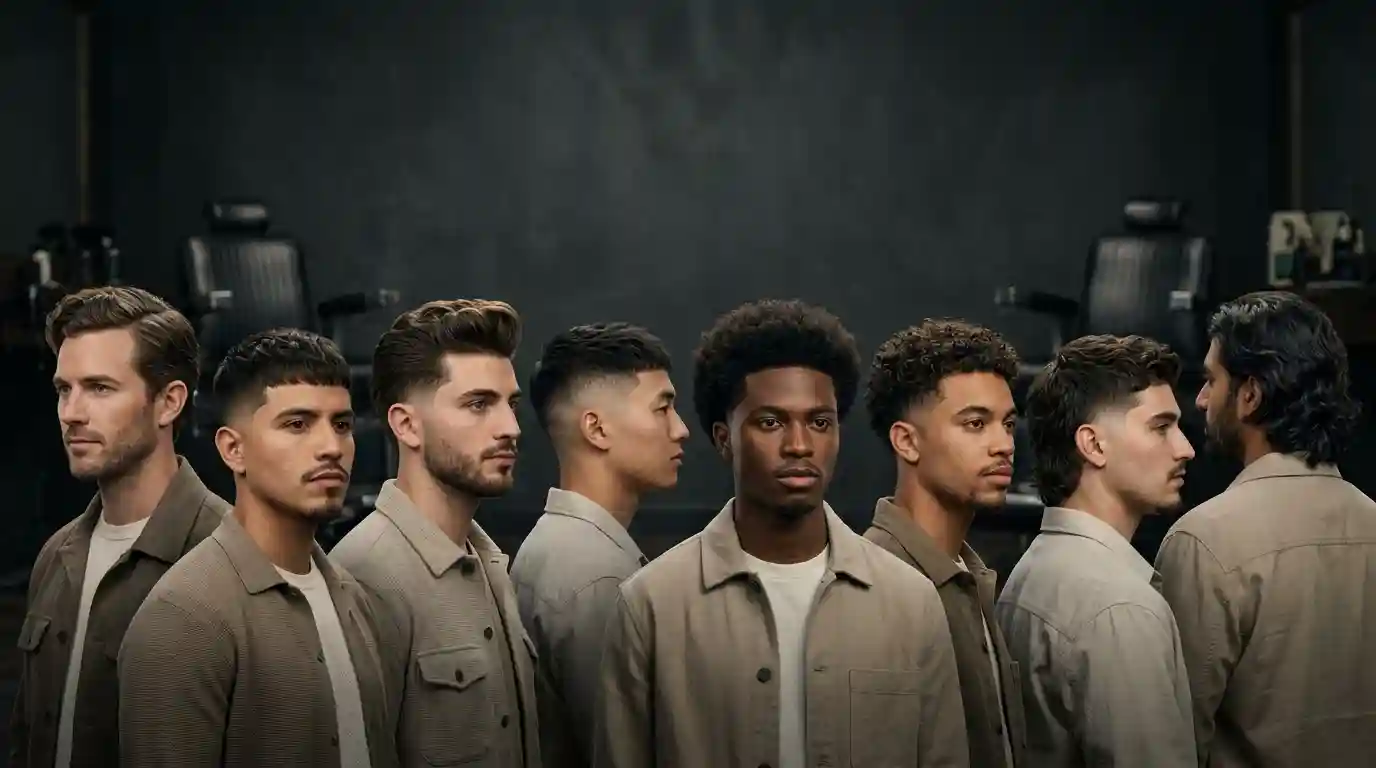
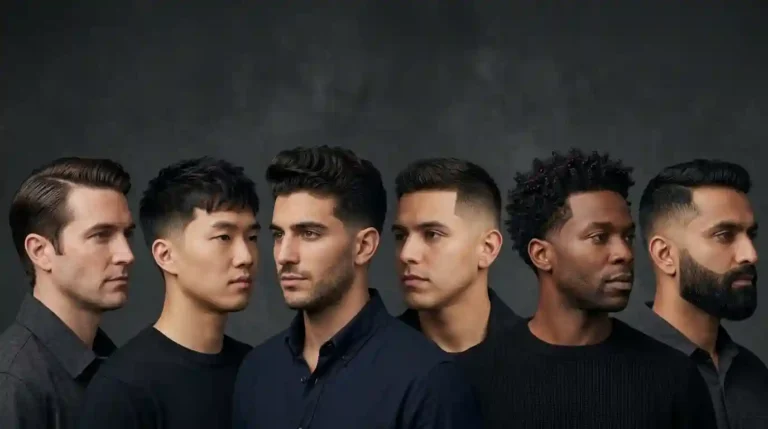
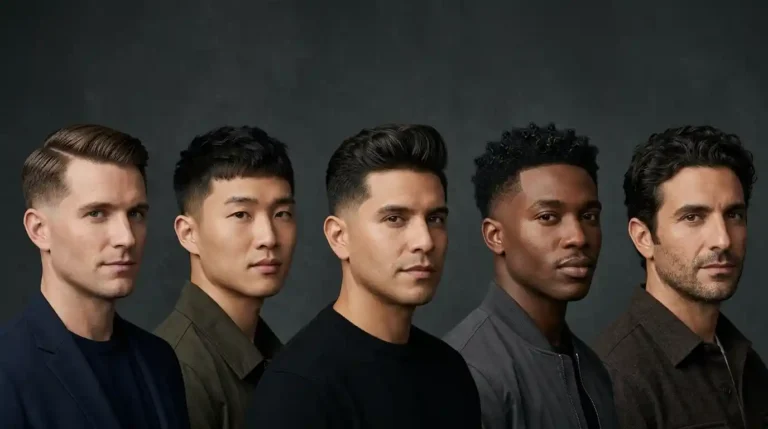
Choosing between different taper haircut types can completely change how your hairstyle looks, even when you keep the same length on top. A low taper creates a subtle, clean finish around the sideburns and neckline, while a mid taper introduces more noticeable graduation. A high taper offers stronger contrast, and variations such as the classic taper, skin taper, temple taper, burst taper, and drop taper provide even more ways to customize your haircut. However, these styles are not always as straightforward as their names suggest. The height of the blend, amount of hair left on the sides, scalp exposure, and shape of your natural hairline all influence the final result. Whether you have straight, wavy, curly, coily, thick, or fine hair, understanding the differences helps you avoid asking your barber for the wrong cut. This guide explains 10 taper haircut variations, compares their front, side, and back appearances, and shows how to choose the right taper for your face shape, hairstyle, maintenance routine, and personal preferences.
Table of Contents
- Taper Haircut at a Glance
- What Is a Taper Haircut?
- How Taper Haircut Types Are Classified
- Main Types of Taper Haircuts
- Taper vs. Fade vs. Taper Fade
- Taper Haircut Types: Front, Side, and Back Views
- How to Choose a Taper for Your Hair, Face, and Lifestyle
- Popular Hairstyles That Pair With a Taper
- How a Barber Creates a Taper
- How to Ask Your Barber for the Taper You Want
- Skin Taper Considerations
- Styling and Maintaining a Taper
- Common Taper Haircut Mistakes and How to Avoid Them
- Professional Tips for Choosing and Maintaining a Taper
- Frequently Asked Questions
- Final Thoughts
Taper Haircut at a Glance
A taper haircut creates a gradual transition from longer hair to shorter lengths around the sides, sideburns, temples, and neckline.
The shorter sections can be subtle or highly defined, depending on the taper height and cutting technique.
Traditional tapers preserve more hair around the sides than conventional full fades, making them suitable for men who want a tidy appearance without extensive scalp exposure.
Before comparing individual variations, here are the essential characteristics.
| Feature | Details |
| Haircut technique | Gradual hair-length graduation |
| Main taper areas | Temples, sideburns, ears, and neckline |
| Main height variations | Low, mid, and high taper |
| Other variations | Classic, taper fade, skin, temple, burst, drop, and neckline taper |
| Shortest finish | Visible hair, stubble, or bare skin |
| Suitable top lengths | Short, medium, and long |
| Hair textures | Straight, wavy, curly, coily, thick, and fine |
| Overall appearance | Subtle, natural, structured, or high contrast |
| Typical maintenance | Approximately 2–5 weeks, depending on the variation |
| Most versatile starting point | Classic taper or low taper |
What Defines a Taper Haircut
The defining characteristic of a taper haircut is the progressive reduction in hair length.
Rather than creating an abrupt boundary between long and short hair, the barber blends the lengths gradually.
For example, hair near the upper sides may remain relatively long, while the sideburns become progressively shorter toward the natural hairline.
The neckline follows a similar principle.
This technique helps the haircut maintain a connected appearance.
Different taper haircut types are created by adjusting three main elements: where the blending begins, how short the lowest section becomes, and the shape of the graduation.
A low taper and high taper can use similar cutting techniques but produce noticeably different results because of their placement.
Likewise, a low taper finished with a #2 clipper guard will look softer than one taken down to bare skin.
Benefits, Tradeoffs, and Grow-Out
One of the biggest advantages of a taper is versatility.
You can combine it with a crew cut, side part, quiff, textured crop, curls, Afro, braids, or longer hairstyle.
A classic or low taper can create a professional appearance without removing too much side length.
A mid or high taper adds stronger definition for men who enjoy more contrast.
You can explore more variations in our Core Taper Haircuts collection.
Another benefit is the grow-out.
Traditional tapers often become gradually softer as the hair grows rather than developing the stronger contrast changes associated with some skin fades.
However, maintenance varies.
A skin taper may require more frequent barber visits to preserve its sharp edges.
A high taper can also noticeably change shape as the shorter areas grow.
The ideal haircut should therefore suit both your appearance and your willingness to maintain it.
What Is a Taper Haircut?
A taper haircut is a cutting technique in which the hair gradually shortens toward selected areas of the head, most commonly near the temples, sideburns, and nape.
The longer hair above connects smoothly to the shorter sections below.
This creates a graduated blend rather than a disconnected edge.
A taper does not describe one specific hairstyle on top.
It can support traditional, contemporary, short, medium-length, and long hairstyles.
A conservative taper may leave substantial visible hair around the perimeter.
A skin taper can create more dramatic contrast by reducing a localized area to bare skin.
For a complete explanation of the technique and its basic characteristics, explore our taper haircut guide.
How the Hair Gradually Shortens at the Sides, Sideburns, Temples, and Neckline
The barber begins by deciding where the graduation should occur.
For a traditional taper, the hair remains fuller through much of the sides and back.
The length then progressively decreases as it approaches the sideburns and neckline.
Around the temples, this creates a smooth transition between the longer upper hair and shorter perimeter.
Around the ears, careful blending prevents excessive bulk or obvious cutting lines.
At the nape, the hair gradually shortens toward the lower neckline.
Barbers may use hair clippers, scissors, shears, different clipper guards, and trimmers.
The techniques differ according to hair texture, density, and the desired shortest length.
For example, dense straight hair may require careful weight control around the sides.
Curly or coily hair may require attention to shrinkage and natural curl direction.
A successful taper should appear balanced from the front, side, and back.
Where the Taper Sits and How Much Hair It Leaves
The location of the taper is one of its most important characteristics.
A low taper places the shortest blending close to the lower hairline.
A mid taper brings the graduation higher.
A high taper produces stronger contrast by extending the shorter transition farther up the sides.
However, taper height does not determine the shortest length.
A low taper can finish with visible hair, close stubble, or skin exposure.
The same applies to mid and high variations.
This distinction is important when discussing your haircut with a barber.
For example, asking for a low taper does not automatically mean you want a skin fade.
If you prefer a natural result, specify that you want visible hair around the edges.
If you want a sharper finish, explain how closely the hair should be cut and where that close blending should stop.
How Taper Haircut Types Are Classified
Taper haircut variations can be organized according to their height, shortest finish, and blending shape.
These categories describe different aspects of a haircut.
They are not necessarily mutually exclusive.
For example, someone can wear a low skin taper with a rounded neckline, or a mid taper with a temple-focused blend.
Understanding these combinations helps you communicate your preferred appearance more accurately.
Height: Low, Mid, or High
Taper height describes how far the visible graduation extends from the lower hairline toward the longer hair above.
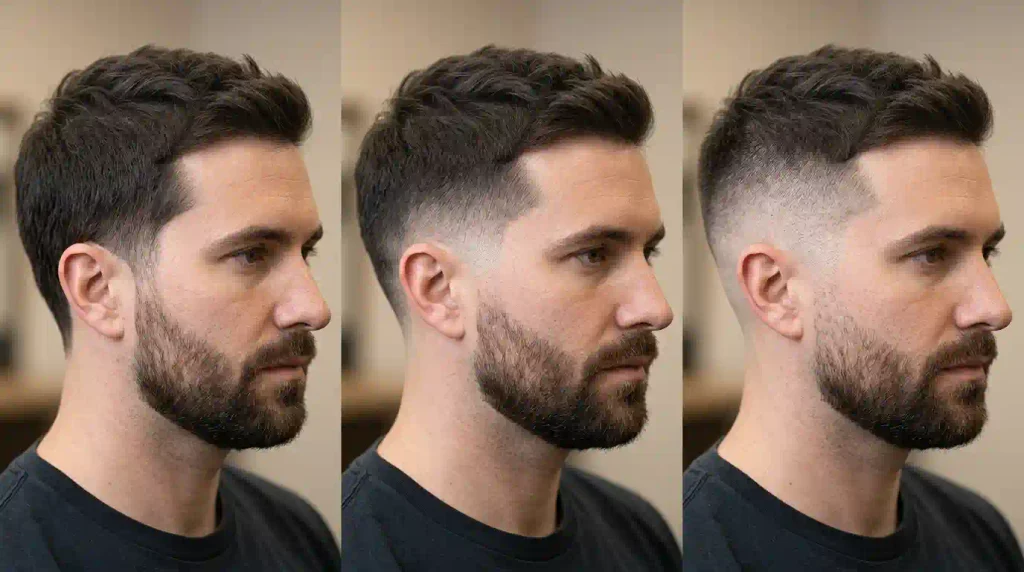
A low taper keeps the blending close to the temples, sideburns, and neckline.
It preserves more fullness through the upper sides and generally creates a subtle appearance.
A mid taper places the transition somewhat higher.
It creates more noticeable definition while still allowing the upper sides to retain length.
A high taper carries the graduated section higher around the sides.
It creates stronger contrast and can make the top hairstyle appear more prominent.
However, high taper terminology varies considerably between barbers.
Some barbers may interpret a high taper similarly to a high fade.
For this reason, always explain how much upper-side hair you want to preserve.
Finish: Visible Hair, Close Stubble, or Bare Skin
The shortest length determines how sharp or natural the taper looks.
A visible-hair finish preserves short hair around the perimeter.
This can create a soft, traditional appearance.
A close-stubble finish uses a shorter cutting length, making the graduation more noticeable.
A bare-skin finish reduces selected areas to skin level.
This produces stronger contrast between the shortest section and longer hair above.
A taper finished with a #2 clipper guard, for example, generally looks softer than one finished with a trimmer or foil shaver.
The shortest length also affects maintenance.
Skin-level sections show regrowth sooner because the original finish leaves little or no visible hair.
A guarded taper generally becomes fuller more gradually.
Shape and Location: Temple, Neckline, Burst, or Drop
Some taper types are named according to where the blending occurs or how the graduation curves.
A temple taper concentrates the shorter transition near the temples and sideburns.
A neckline taper focuses on gradually shortening hair around the nape.
A burst taper creates a rounded transition around the ear.
A drop taper describes a curved blending shape that descends toward the back of the head.
These terms are not standardized across every barbershop.
Burst and drop terminology is more consistently associated with fade haircuts, so the exact appearance should be confirmed through reference photos.
A barber may also combine different shapes.
For instance, a temple taper may have a separate, softly graduated neckline.
This allows more customization than relying on one haircut name alone.
How Taper Height Changes Contrast and Side Fullness
The height of a taper influences the overall silhouette.
A low taper usually preserves the greatest amount of side fullness.
This can be useful when you want a natural appearance or prefer not to expose too much scalp.
A mid taper reduces more visual weight around the perimeter.
It often creates a balanced contrast between the shorter sections and the hairstyle above.
A high taper can create stronger separation between the upper hairstyle and the lower sides.
However, higher does not automatically mean better.
The ideal height depends on hair density, head shape, face proportions, and the top hairstyle.
For example, a very high taper combined with a tall pompadour can visually lengthen the face.
A low taper with moderate side fullness may create a more balanced appearance for someone who prefers less vertical emphasis.
Low vs. Mid vs. High: Comparison Table
| Feature | Low Taper | Mid Taper | High Taper |
| Blend placement | Close to lower edges | Higher around the sides | Higher toward upper sides |
| Overall contrast | Subtle | Moderate | More pronounced |
| Hair retained on sides | Generally more | Moderate | Often less |
| Scalp visibility | Optional | Optional | Optional |
| Suitable top styles | Crops, curls, waves, side parts | Quiffs, textured crops, brush-ups | Faux hawks, bold textured tops |
| Professional appearance | Understated | Balanced | More noticeable |
| Grow-out | Usually softer | Moderately noticeable | May change silhouette sooner |
| First-time choice | Excellent starting point | Good with clear preferences | Best when confident about the shape |
| Styling flexibility | Very high | High | High |
The best comparison considers taper height and shortest cutting length together.
A low skin taper can have sharper contrast at the edges than a high taper finished with longer visible hair.
Main Types of Taper Haircuts
There are several commonly requested taper haircut variations.
The following ten styles provide a practical way to compare placement, finish, visual contrast, and maintenance.
Some names describe widely recognized traditional cuts, while others refer to contemporary or regionally variable barber terminology.
Low Taper
A low taper concentrates the shortest graduation close to the natural hairline.
The blending occurs around the lower temples, sideburns, and nape.
Most of the hair above these areas remains relatively full.
This creates a clean appearance without dramatically changing the overall hairstyle.
A low taper is especially useful for men who want subtle definition.
It works well with short textured crops, natural waves, curls, Afros, and medium-length hairstyles.
From the front, the hairstyle on top usually remains the main focus.
From the side, the taper is visible near the ear and sideburn.
From the back, the neckline gradually shortens toward the nape.
The low taper can be finished with visible hair, close stubble, or a skin-level transition.
Best for: Subtle everyday grooming, first-time tapers, natural textures, and professional styling.
Popular combinations: Textured crop, side part, curly top, waves, and crew cut.
Maintenance: Often around two to four weeks, depending on the shortest finish.
Barber instruction: “Keep the taper low around the temples and neckline, and preserve the fullness above the blend.”
Mid Taper
A mid taper places the shorter graduation higher than a low taper.
It creates a more noticeable transition while maintaining enough hair through the upper sides to support different hairstyles.
This variation offers a balance between subtle styling and stronger definition.
A mid taper works particularly well with a quiff, comb-over, brush-up, textured top, or short curls.
The barber should adapt its placement to your head shape.
A fixed blending height may not create the same appearance on every person.
For example, someone with a narrower head may prefer slightly more side fullness.
Someone with very thick hair may appreciate additional weight reduction.
From the side, the mid taper’s transition is more visible than the low taper.
The back typically shows a slightly higher graduation around the nape.
Best for: Balanced contrast, medium-length tops, and men who want a noticeable taper without an extensive full fade.
Popular combinations: Quiff, textured crop, comb-over, and curly fringe.
Maintenance: Approximately two to four weeks for many styles.
Barber instruction: “Give me a mid taper with a smooth blend, but keep some weight through the upper sides.”
High Taper
A high taper creates a stronger graduated effect by carrying the shorter blending higher around the sides.
It can make the top hairstyle appear more prominent.
This variation often works well with short textured hair, thick hair, faux hawks, and styles that emphasize height.
However, the term high taper can be interpreted differently between barbers.
Some may create a localized high taper around the perimeter.
Others may produce a result closer to a conventional high fade.
The amount of side weight should therefore be specified.
A high taper can reduce excessive bulk, but removing too much hair may create a disconnected appearance.
The side profile is particularly important when choosing this style.
Best for: Bold styling, thick hair, strong contrast, and prominent top texture.
Popular combinations: Faux hawk, brush-up, spiky top, and short curls.
Maintenance: Often around two to three weeks to preserve the original definition.
Barber instruction: “I want a high taper with noticeable contrast, but please don’t fade the entire sides down to skin.”
Classic Taper
The classic taper is a traditional haircut with gradual, relatively soft shortening around the sideburns and neckline.
It usually maintains greater side fullness than a closely blended fade.
The result is an understated hairstyle suitable for many professional and casual environments.
A classic taper works well with a side part, Ivy League haircut, crew cut, comb-over, or medium-length scissor cut.
It is particularly useful for men who prefer natural-looking edges.
Because the shortest sections often retain visible hair, the haircut can grow out more gradually than skin-level styles.
From the front, the hair appears balanced and relatively full.
The side view shows controlled graduation near the sideburns.
The back displays a soft, neat neckline.
Best for: Traditional grooming, professional settings, understated contrast, and softer grow-out.
Popular combinations: Ivy League, business side part, crew cut, and natural scissor cut.
Maintenance: Often around three to five weeks.
Barber instruction: “Give me a traditional classic taper with a natural neckline and plenty of fullness through the sides.”
Taper Fade
A taper fade combines localized taper placement with the closer graduation commonly associated with fade haircuts.
The result may be soft or sharp, depending on the shortest length.
A low taper fade generally keeps the close blending near the temples and neckline.
A mid taper fade brings the visible transition higher.
A high taper fade can create stronger contrast, although it may resemble a conventional high fade depending on the barber’s interpretation.
The shortest section can finish with close stubble or skin exposure.
A taper fade works well with textured crops, quiffs, curls, waves, and Afros.
The key difference from a traditional taper is usually the closeness and prominence of the blending.
Best for: Contemporary styles, sharper perimeter detail, and greater contrast.
Popular combinations: Textured crop, curly top, short waves, quiff, and beard blend.
Maintenance: Often two to three weeks, with shorter intervals for very sharp skin finishes.
Barber instruction: “I want a low taper fade around my temples and nape, with the upper sides kept full.”
For a detailed look at these variations, explore our taper haircut fade guide.
Skin Taper or Bald Taper
A skin taper is a variation in which the shortest sections around the temples, sideburns, or nape are reduced to bare skin.
The terms skin taper and bald taper are often used to describe similar results.
The distinguishing feature is the shortest finish rather than one fixed taper height.
You can have a low skin taper, mid skin taper, or more pronounced variation.
A barber may use a foil shaver, trimmer, or razor to achieve the requested close finish.
The transition should remain smooth between the bare-skin area and longer hair above.
A skin taper can make a textured crop or curly top appear particularly defined.
However, it also reveals regrowth relatively quickly.
People prone to razor bumps or neckline irritation should discuss a less aggressive finish with their barber.
Best for: Sharp edges, high-contrast styling, and men comfortable with more frequent maintenance.
Popular combinations: Textured crop, crew cut, curly top, and short quiff.
Maintenance: Approximately one to two weeks if you want to preserve a very sharp skin-level appearance.
Barber instruction: “Give me a low skin taper, but keep the bare-skin area small and concentrated near the edges.”
Temple Taper or Temp Fade
A temple taper focuses on the hair around the temples and sideburns.
A temp fade is a closely related variation that may feature shorter blending or skin exposure in the same area.
Unlike a broad full fade, the graduation can remain localized.
This makes the temple taper especially suitable for hairstyles with natural volume.
Afros, curls, twists, braids, cornrows, and locs can all work with carefully placed temple tapering.
The barber should avoid removing hair needed for the hairstyle above.
For example, cutting too far into the temples may affect the appearance of braids or a rounded Afro.
A temple taper may be combined with a separate nape taper to create clean edges from multiple angles.
Best for: Afro-textured hair, curly hairstyles, braids, twists, locs, and localized hairline definition.
Popular combinations: Rounded Afro, 360 waves, twists, braids, and curly fringe.
Maintenance: Often two to three weeks, depending on the shortest finish.
Barber instruction: “Taper only around the temples and sideburns, and preserve the rest of my hairstyle.”
Burst Taper
A burst taper creates a rounded graduation around the ear.
The shorter section follows an arched shape rather than extending evenly across the entire side.
This can create an attractive contrast with hairstyles that retain more length toward the back.
A burst taper is closely related to a burst fade, although terminology varies.
A burst fade may cover a larger area around the ear and create a more dramatic transition.
Burst-style blending is often paired with faux hawks, mohawks, curly tops, and tapered mullets.
The hairstyle works particularly well when the rounded blend supports the shape of the longer hair above.
The barber should consider how the curve connects into the back.
A poorly placed burst can make the haircut appear uneven or disconnected.
Best for: Rounded perimeter blending, creative silhouettes, faux hawks, and tapered mullets.
Popular combinations: Curly mullet, textured faux hawk, and longer central top.
Maintenance: Approximately two to four weeks, depending on contrast and detail.
Barber instruction: “Create a rounded burst-style taper around my ears while keeping length toward the back.”
Drop Taper
A drop taper describes a blending shape that descends toward the back of the head.
Rather than maintaining one consistent height around the sides, the transition curves downward as it approaches the nape.
The term is less standardized than drop fade, so reference pictures are particularly useful.
A conventional drop fade usually involves broader graduated blending that follows a descending curve toward the rear.
A drop-style taper may create a more localized version of this shape.
The result can complement textured crops, curls, and medium-length hairstyles.
It may also work well when the barber wants the transition to follow the head’s natural contours.
The key is maintaining a smooth connection around the back rather than creating an abrupt change in height.
Best for: Curved blending, personalized head-shape adjustments, and textured hairstyles.
Popular combinations: Textured crop, curly top, and medium-length layered hair.
Maintenance: Often two to four weeks, depending on the shortest finish.
Barber instruction: “I want the taper to curve slightly downward toward the back, while preserving some fullness above it.”
Neckline Taper
A neckline taper concentrates the gradual shortening around the nape.
The sides may remain relatively full or feature only subtle tapering.
This makes it useful for men who want a tidy back without substantially changing their overall hairstyle.
A neckline taper can work particularly well with medium-length and longer hair.
For example, someone growing a natural-flow hairstyle may want the nape cleaned up without removing length through the upper sides.
A neckline taper can also complement curls, locs, braids, and traditional scissor cuts.
The barber should consider the natural hair-growth pattern at the neck.
Some people have low-growing or uneven hairlines that require careful shaping.
A softly tapered neckline often grows out more naturally than a sharply blocked outline.
Best for: Longer hairstyles, traditional scissor cuts, natural grow-out, and subtle maintenance.
Popular combinations: Natural flow, layered top, long curls, braids, and classic side part.
Maintenance: Often three to five weeks, depending on hair growth and desired neatness.
Barber instruction: “Keep the sides mostly natural and give me a soft neckline taper that follows my existing hairline.”
Taper vs. Fade vs. Taper Fade
The difference between a taper and a fade is one of the most common points of confusion in men’s haircut terminology.
Both techniques involve gradually reducing hair length.
The main distinction is usually the area covered by the shorter graduation and the amount of hair retained through the sides.
A traditional taper concentrates the shortest sections near the sideburns and neckline.
A conventional full fade generally creates a broader transition across the sides and back.
A taper fade often combines localized placement with closer fade-style blending.
Differences in Blend Placement, Length, and Scalp Exposure
A classic taper generally preserves more hair throughout the sides.
A full fade usually reduces a greater area to shorter lengths.
A taper fade sits between these common interpretations, although the exact result depends on the barber.
| Feature | Classic Taper | Taper Fade | Full Fade |
| Main blending area | Sideburns and neckline | Temples, sideburns, and nape | Broader sides and back |
| Side fullness | Usually greater | Often preserved above blend | Depends on fade height |
| Scalp exposure | Usually minimal | Optional | Optional |
| Shortest finish | Often visible hair | Stubble or skin | Stubble or skin |
| Overall appearance | Soft and traditional | Defined and customizable | Continuous graduated contrast |
| Grow-out | Generally gradual | Depends on finish | Shorter fades show regrowth sooner |
A full fade does not necessarily expose bare skin.
A shadow fade, for example, can retain short visible hair.
Similarly, a taper fade can end with stubble rather than a completely shaved surface.
How a Taper Fade Combines Taper and Fade Elements
A taper fade combines two related cutting ideas.
The taper element describes the localized graduation around the perimeter.
The fade element describes the smooth transition into very short hair.
A low taper fade, for example, might feature closely blended temples and nape while maintaining fullness through the rest of the sides.
This creates a sharp outline without requiring the entire side panel to be closely faded.
The technique works particularly well with hairstyles that need both natural volume and defined edges.
Curly tops, Afros, textured crops, and short waves are common examples.
Why People Confuse Taper and Fade Terminology
Barber terminology differs between shops and regions.
Some barbers use taper to describe any gradual reduction in length.
Others reserve the term for localized blending near the sideburns and neckline.
Terms such as low taper fade, temple fade, burst taper, and drop taper can therefore overlap.
Even the distinction between a mid taper and a mid fade may vary.
For this reason, the haircut name should not be your only instruction.
Explain the exact placement and shortest finish you want.
A clear reference photograph is often more useful than debating the terminology.
When to Choose a Taper Over a Fade
Choose a traditional taper when you want to preserve more hair through the sides and achieve a softer appearance.
It is particularly useful for classic side parts, Ivy League haircuts, medium-length styles, and natural flow.
A taper can also be suitable when you want fewer noticeable changes during grow-out.
Choose a fade when you want a broader graduated transition across the sides and back.
A fade may create stronger contrast with the longer hairstyle on top.
If you want a combination of subtle side fullness and closely defined edges, a taper fade may offer a suitable compromise.
Neither technique is inherently better.
The decision depends on your preferred appearance, hair density, and maintenance routine.
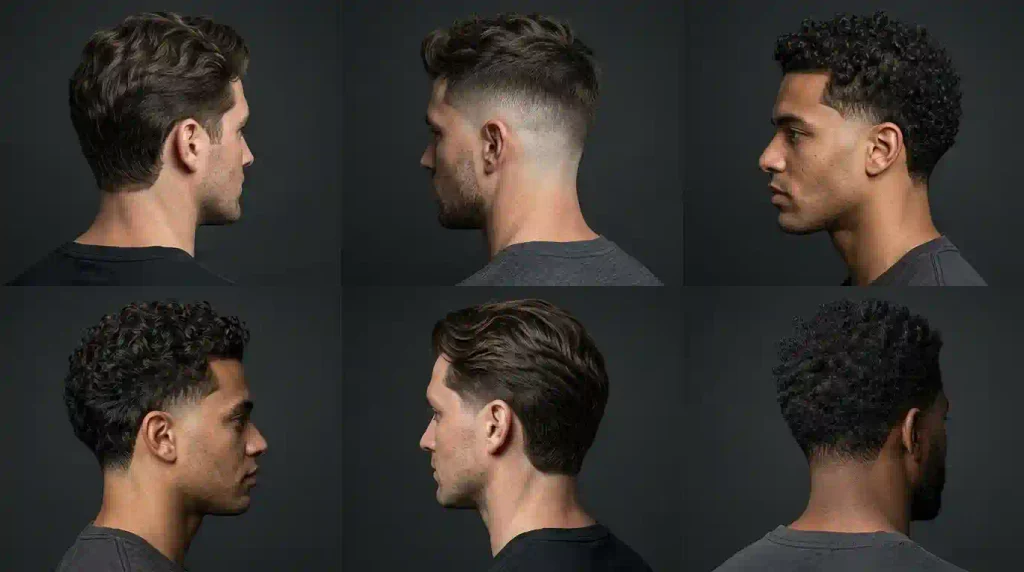
Taper Haircut Types: Front, Side, and Back Views
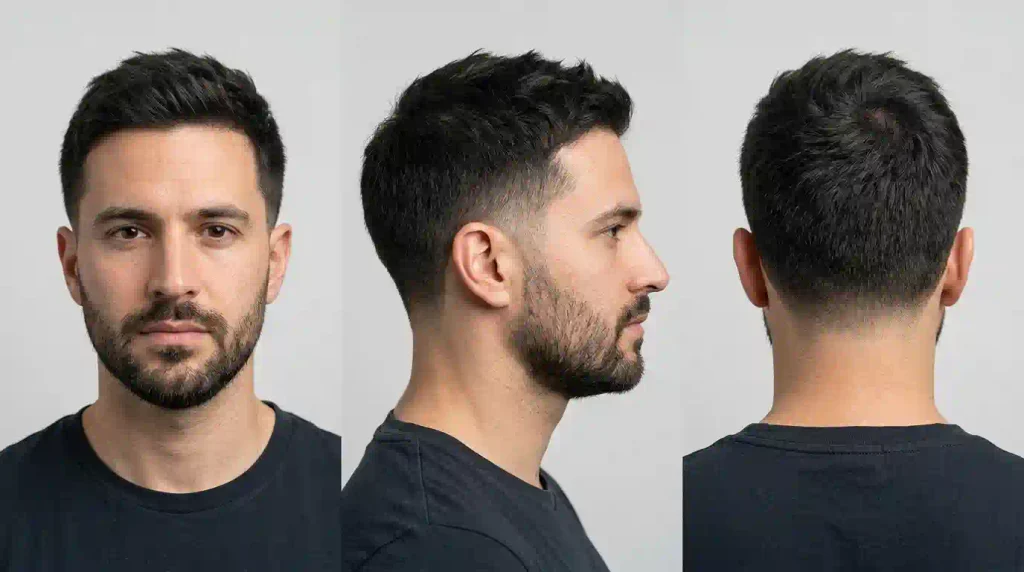
A haircut can look very different depending on the viewing angle.
The front view reveals the hairstyle and hairline.
The side profile shows taper height and side fullness.
The back view reveals the neckline and how the graduation connects around the nape.
When comparing taper types, examine all three angles rather than relying on one attractive photograph.
Where to Look Around the Temples and Sideburns
The side view is particularly useful for understanding taper placement.
For a low taper, look for a short graduated section concentrated near the lower temple and sideburn.
For a mid taper, the visible graduation should extend somewhat higher.
For a high taper, the transition becomes more prominent around the upper side.
A temple taper should appear localized rather than spreading across the entire side of the head.
A skin taper may reveal scalp near the shortest section.
Also examine the hairline around the temple.
Some barbers shape the curved temple outline, sometimes called the C-cup, with a trimmer.
A defined C-cup can make the haircut appear sharper, but an aggressive line-up may remove more natural hairline than desired.
How to Compare the Neckline and Area Behind the Ears
The back view reveals details that front-facing photos often hide.
A classic taper generally has a soft, graduated neckline.
A low taper may feature closer blending near the lower nape.
A drop-style transition curves downward toward the back.
A burst-style taper may preserve more hair behind the ear while creating a rounded shorter area nearby.
The hair behind the ears should connect smoothly into the rear sections.
Look for visible dark bands, disconnected patches, or a neckline that appears uneven.
The shape of the occipital area at the back of the skull can affect how the blend looks.
A skilled barber may adjust cutting lengths around the head contour to achieve a visually balanced result.
How to Read a Taper Reference Photo
A useful taper reference should show more than the hairstyle on top.
Look for the following details:
- Taper height: Where the visible graduation begins.
- Shortest finish: Visible hair, close stubble, or bare skin.
- Side fullness: How much hair remains above the blending area.
- Top length: Short, medium, or long.
- Hair texture: Straight, wavy, curly, or coily.
- Neckline shape: Natural, tapered, squared, or rounded.
- Hairline detailing: Natural outline or defined line-up.
- Overall contrast: Subtle, moderate, or pronounced.
How to Choose a Taper for Your Hair, Face, and Lifestyle
The right taper should complement your natural hair characteristics, face shape, and grooming preferences.
A haircut that looks excellent on one person may require adjustments for another.
Hair texture, growth direction, density, and head contour all influence how the taper should be placed.
The goal is to create a shape that works naturally rather than copying a photograph without adaptation.
Choosing by Hair Texture and Density
Different hair textures respond differently to tapering.
Straight Hair
Straight hair often reveals blending lines clearly.
A classic or low taper works well with a side part, textured crop, or crew cut.
Fine straight hair may benefit from preserving additional side fullness.
Thick straight hair may require weight control where the top meets the sides.
Wavy Hair
Wavy hair provides natural movement that complements soft tapers.
A low taper can clean the edges while preserving the wave pattern.
A mid taper works well with a textured quiff or brush-up.
The barber should consider how the waves change at different lengths.
Curly Hair
Curly hair can create strong visual contrast with a clean perimeter.
A low or temple taper is a practical choice when you want to preserve natural volume.
The barber should account for shrinkage before removing length.
Hair that appears long when wet or stretched may look considerably shorter after drying.
Coily and Afro-Textured Hair
Coily hair works well with temple tapers, low tapers, and nape tapers.
These variations can complement Afros, 360 waves, twists, braids, and locs.
The barber should avoid removing hair needed for the hairstyle above.
Preserving the natural hairline is especially important when maintaining protective hairstyles.
Thick Hair
Thick hair can create excess bulk around the sides.
A mid taper may help reduce some of this weight.
However, removing too much hair below the upper sides can create an abrupt, shelf-like transition.
A smooth blend should account for the hair’s natural growth direction and density.
Fine or Thinning Hair
Fine hair and thinning hair are different characteristics.
Fine hair refers to the diameter of individual strands.
Thinning hair involves reduced hair density.
A classic or low taper may provide a balanced appearance by preserving more side length.
Very aggressive skin-level blending can increase scalp contrast, depending on where the thinning occurs.
Choosing by Face Shape
Face shape can help guide the balance between top volume and side fullness.
It should not be treated as a strict rule.
The ideal haircut depends on the individual’s proportions and preferred appearance.
| Face Shape | Suggested Taper | Suitable Hairstyle |
| Oval | Classic, low, or mid taper | Side part, quiff, textured crop |
| Round | Low or mid taper | Quiff, brush-up, textured top |
| Square | Classic or low taper | Side part, crop, crew cut |
| Diamond | Low taper | Textured fringe, natural flow |
| Heart-shaped | Classic or low taper | Soft fringe, medium-length top |
| Oblong | Classic or low taper | Side part, textured fringe |
| Rectangular | Classic or low taper | Moderate-height top with side fullness |
For a round face, moderate height on top can create a more elongated appearance.
For an oblong face, preserving some side fullness and avoiding excessive top height may create a more balanced silhouette.
For square faces, classic tapers can complement angular features.
For diamond and heart-shaped faces, a lower taper with natural side fullness may help balance prominent upper-face proportions.
Oval faces generally accommodate a wide range of variations.
Ultimately, your hair texture and personal style should influence the final decision as much as face shape.
How Cowlicks and Growth Direction Affect the Blend
A cowlick is an area where hair grows in a different direction from the surrounding strands.
Cowlicks commonly appear near the crown, front hairline, or neckline.
These patterns can affect how the taper sits.
For example, hair growing outward behind the ears may create additional bulk at shorter lengths.
A neckline cowlick may make one section appear uneven.
Cutting too short can sometimes cause the hair to stand outward rather than lie flat.
The barber should examine the hair in its natural dry position.
In some cases, preserving slightly more length creates a smoother visual transition.
Adjusting the Taper for a Receding or Uneven Hairline
A taper can work well with a receding or naturally uneven hairline.
However, the barber should avoid unnecessarily pushing the hairline backward.
A low taper generally provides a conservative option because it concentrates the shorter blending near the lower edges.
A classic taper may also work when you want to preserve side fullness.
A sharp line-up can create definition, but it should respect the natural growth pattern.
If the temples are already receding, aggressive reshaping may emphasize the difference.
For thinning hair, a balanced top hairstyle is often more important than an extremely sharp taper.
A short textured crop or crew cut may create a natural appearance without relying on complicated styling.
What to Consider if One Side Grows Differently
Many people have slight differences in hair density, growth direction, or head contour between the left and right sides.
This is normal.
A barber should aim for visual balance rather than automatically using identical techniques everywhere.
For example, one side may contain a cowlick that makes the hair appear fuller.
The opposite side may lie flatter.
A subtle difference in cutting length or blending technique can sometimes make the finished haircut appear more symmetrical.
If you have noticed that one side consistently grows outward, mention it during the consultation.
You should also show your barber any previous haircut photographs where the difference was especially visible.
Choosing by Preferred Style, Workplace, and Upkeep
Your lifestyle should influence your choice.
A classic taper with an Ivy League haircut can create a restrained, professional appearance.
A low taper with a textured crop offers a casual but tidy look.
A mid taper with a quiff provides more styling flexibility.
A skin taper creates sharp edges but may require frequent maintenance.
If you prefer minimal daily styling, choose a short top and a softly finished taper.
If you enjoy blow-drying and using styling products, a quiff or pompadour may suit your routine.
Workplace grooming standards also vary.
Some settings prefer conservative hairstyles, while others allow more noticeable fades and modern styling.
The best taper haircut is one that suits your routine rather than requiring constant adjustments.
Popular Hairstyles That Pair With a Taper
A taper does not dictate the hairstyle on top.
This is one of its biggest advantages.
You can combine different taper variations with traditional, contemporary, short, textured, or longer hairstyles.
The most important consideration is choosing a combination that looks balanced and works with your natural hair.
Taper With a Side Part or Ivy League
A side part with a classic taper creates a polished, timeless appearance.
The hair on top is directed neatly to one side.
The taper keeps the sideburns and neckline tidy without removing excessive volume.
An Ivy League haircut uses a relatively short top with enough length at the front to create a small side part.
It pairs naturally with a classic or low taper.
This combination works well for men who prefer minimal contrast and an organized hairstyle.
Best taper: Classic or low taper.
Suitable hair: Straight or mildly wavy hair.
Styling: Lightweight pomade or styling cream.
Taper With a Quiff, Pompadour, or Slick Back
A quiff features lifted volume near the forehead.
A pompadour generally creates fuller volume directed upward and backward.
A slick back directs the hair smoothly away from the face.
All three styles can work with a taper.
A classic taper creates a traditional silhouette.
A mid taper introduces more contrast.
A high taper can make the elevated top appear more prominent.
These hairstyles usually need enough top length for effective shaping.
A blow dryer may help establish volume and direction.
Best taper: Classic or mid taper.
Suitable hair: Straight, thick, or wavy hair.
Styling: Matte clay, pomade, or styling cream depending on the finish.
Taper With Curls, Waves, or Textured Hair
Natural texture pairs particularly well with clean tapered edges.
A low taper can preserve the movement of waves.
A temple taper can define an Afro without removing excessive side volume.
A mid taper can create stronger contrast around a curly top.
For coily hair, a low taper may work with twists, braids, or locs.
The barber should avoid cutting into the hair needed for these styles.
Curl shrinkage also affects the final shape.
Best taper: Low, temple, or mid taper.
Suitable hair: Wavy, curly, and coily textures.
Styling: Curl cream, lightweight hair cream, or suitable conditioning products.
Taper With a Crop, Fringe, or Longer Top
A textured crop usually features a short top with visible separation and movement.
A fringe directs hair toward the forehead.
A low taper keeps the perimeter neat while allowing the fringe to remain prominent.
A mid taper introduces more definition.
Longer hairstyles can also incorporate a taper.
A natural-flow haircut may retain medium-length or long hair while using a subtle taper at the sideburns and neckline.
This approach is useful for men growing their hair longer.
Best taper: Low or classic taper.
Suitable hair: Straight, wavy, curly, or medium-length hair.
Styling: Matte paste for crops or lightweight cream for longer flow.
Taper With a Beard
A taper can connect smoothly into facial hair.
The barber gradually adjusts the sideburn length to create a transition into the beard.
This is known as a beard blend.
A low taper can complement short stubble.
A mid taper can create stronger definition beside a full beard.
The shape should account for facial-hair density and the desired outline.
A beard blend can make the overall haircut appear more coordinated.
Best taper: Low or mid taper.
Suitable hair: Most hair textures.
Styling: Maintain the sideburn transition and beard shape as needed.
Current Taper Haircut Trends
Contemporary taper haircut styles often combine natural texture with clean, localized blending.
Examples include low tapers with textured crops, temple tapers with curls, mid tapers with quiffs, and burst-style tapers with modern mullets.
Longer fringes and natural-flow hairstyles can also benefit from subtle tapers.
The focus is often on preserving movement on top while keeping the edges controlled.
For more contemporary combinations and styling ideas, explore our modern taper haircut guide.

How a Barber Creates a Taper
A taper requires careful blending between different hair lengths.
The barber considers the shape of the head, hair density, natural growth patterns, and desired finish before cutting.
The technique may involve clippers, scissors, clipper-over-comb work, trimmers, and different finishing tools.
A well-executed taper should look balanced without obvious steps between lengths.
Blending the Sides, Back, Temples, and Nape
The barber usually begins by establishing the overall haircut shape.
The top hairstyle and upper-side length are determined before the shortest perimeter sections are finalized.
Next, the barber creates the graduation around the temples, sideburns, or nape.
Different cutting lengths are used to connect the shorter hair into the longer sections above.
A controlled flicking motion may help prevent obvious lines during clipper blending.
Scissor or clipper-over-comb techniques can refine heavier areas.
The barber also evaluates the neckline and sideburn shapes.
For a temple taper, the focus remains near the temples.
For a neckline taper, the graduation concentrates around the nape.
For a full classic taper, both areas are blended into the overall hairstyle.
Clipper Guards and Length Transitions
Clipper guard numbers describe approximate cutting lengths.
Smaller numbers generally leave shorter hair.
| Clipper Guard | Approximate Length | Appearance |
| #0.5 | 1.5 mm | Very short stubble |
| #1 | 3 mm | Closely cropped |
| #2 | 6 mm | Short visible hair |
| #3 | 10 mm | Fuller short hair |
| #4 | 13 mm | Soft, natural short length |
| #5 | 16 mm | Fuller side length |
| #6 | 19 mm | Longer guarded length |
These measurements are approximate because clipper systems and blade settings differ.
A clipper lever can slightly adjust the cutting length without changing the guard.
A no-guard clipper cut is not necessarily equivalent to bare skin.
A skin-level finish may require a foil shaver or another appropriate finishing tool.
There is no universal guard sequence for every taper.
The barber should adjust the technique according to the hair’s density and natural behavior.
Edging, Scissor Work, and Neckline Shaping
Edging creates defined outlines around the sideburns, temples, and neckline.
A trimmer may be used to refine these areas.
Some clients prefer a sharp line-up.
Others prefer a natural hairline.
The neckline may be natural, tapered, squared, or rounded.
A natural tapered neckline usually follows the existing growth pattern with a soft graduation.
A blocked neckline creates a more defined lower boundary.
Scissor work is particularly useful when preserving fullness through the upper sides.
It can help connect the longer top to shorter perimeter sections without creating excessive contrast.
The final haircut should be evaluated from multiple angles.
How to Ask Your Barber for the Taper You Want
Choosing the right haircut is only the first step.
You also need to explain the desired result clearly.
A barber consultation should establish the taper type, blending height, shortest cutting length, top hairstyle, neckline shape, and sideburn finish.
Reference photos can help prevent misunderstandings.
Specify the Taper Type, Height, and Shortest Length
Begin by identifying the taper variation.
For example, you might want a classic, low, mid, high, temple, or skin taper.
Next, explain how short the perimeter should become.
If you want visible hair, ask for a guarded finish.
If you want very close blending, specify whether the shortest section should finish with stubble or bare skin.
Also explain the amount of side fullness you want to preserve.
This matters because two low tapers can look very different depending on the shortest length.
Describe the Neckline and Sideburn Finish
Tell your barber whether you prefer a natural, tapered, squared, or rounded neckline.
A natural tapered neckline often provides a softer grow-out.
A blocked neckline creates a sharper boundary.
Sideburns should also be discussed.
You may want them short, naturally blended, or connected into facial hair.
If you have a beard, ask for a gradual transition.
If you prefer a natural hairline, make sure the barber knows you do not want an aggressively shaped line-up.
Use a Reference Photo and Clarify Skin Exposure
A reference photo can help communicate the style more accurately than a haircut name alone.
Choose photographs showing the front, side, and back whenever possible.
The side profile is especially useful for demonstrating taper height.
The back view reveals the neckline and nape.
Explain whether you want the shortest section to expose skin.
Do not assume that a photograph labeled “low taper” automatically matches your preferred finish.
Confirm the Starting Height and Finish Before the Cut
Before cutting begins, ask the barber where the visible graduation will start.
Confirm whether the taper will remain localized or extend higher through the sides.
Also confirm the shortest cutting length.
If you are unsure, begin with a conservative approach.
The barber can usually remove additional hair during the appointment.
Once a section is cut too short, the length cannot be immediately restored.
Check the Neckline and Temple Shape Before Blending
The neckline and temple areas strongly influence the finished appearance.
Ask the barber to explain the proposed hairline shape.
If you have a receding or uneven hairline, request a natural outline.
If your neckline grows in different directions, discuss whether a softer taper would work better than a blocked edge.
The barber should also consider your head contour and the placement of the ears.
These details can affect how symmetrical the haircut appears.
Barber Request Examples for Low, Mid, and High Tapers
Low taper request:
“I want a low taper around my temples and neckline. Keep the upper sides full and finish the edges with visible short hair rather than bare skin.”
Mid taper request:
“Give me a mid taper with a smooth blend and moderate contrast. Keep enough length on top for a textured quiff and leave a natural neckline.”
High taper request:
“I want a high taper with more definition, but please don’t turn it into a full high skin fade. Preserve some weight through the upper sides.”
Classic taper request:
“I’d like a classic taper with a neat side part, soft graduation around the sideburns, and a natural tapered neckline.”
Temple taper request:
“Taper only around my temples and sideburns. Keep the natural volume of my curls and don’t push my hairline backward.”
These examples give the barber a clear description of the desired result.

Skin Taper Considerations
A skin taper can create a sharp, clean appearance, but its close-shaved finish may not suit every scalp.
Before choosing this variation, consider both the visual result and your skin’s tolerance for close cutting.
What to Consider Before Choosing a Bare-Skin Finish
A skin taper exposes a localized area of the scalp.
This can create strong contrast around the temples or neckline.
However, closely shaved sections may become irritated, especially if the skin is sensitive or prone to razor bumps.
Some people develop ingrown hairs after close shaving.
The risk may be greater when tightly curled or coarse hairs are cut extremely short and grow back into the skin.
A skin taper also requires more frequent maintenance if you want the edges to remain sharply defined.
A guarded taper may be a better choice when scalp comfort and a softer grow-out are priorities.
How to Discuss Skin Irritation or Ingrown-Hair Concerns With Your Barber
If you have experienced razor bumps, tell your barber before requesting a skin-level finish.
Ask whether a short guarded taper could provide a similar appearance without shaving directly to the skin.
You can also request fewer close passes over sensitive areas.
If you regularly develop bumps around the back of your head or neck, avoid treating them as a purely cosmetic problem.
Persistent bumps, painful irritation, or scarring should be evaluated by a dermatologist.
The American Academy of Dermatology’s guidance on acne keloidalis nuchae explains why close shaving around the back of the scalp can aggravate this condition in susceptible individuals.
A good haircut should look clean without causing unnecessary skin discomfort.
Styling and Maintaining a Taper
A taper controls the perimeter of the haircut, but the hairstyle on top determines most of the daily styling routine.
A short crew cut may require very little effort.
A quiff or pompadour may need blow-drying and product.
Curly or coily hair may benefit from conditioning and gentle styling methods.
Styling Products and Techniques
Choose styling products according to your hair texture and desired finish.
| Product | Suitable Hairstyles | Main Purpose |
| Matte clay | Textured crops, quiffs | Texture and flexible hold |
| Styling paste | Short and medium tops | Separation and shaping |
| Pomade | Side parts, slick backs | Control and shine |
| Mousse | Fine or straight hair | Volume |
| Styling cream | Wavy or medium-length hair | Natural movement |
| Curl cream | Curly or coily hair | Curl definition |
| Texture powder | Short straight hair | Root lift |
| Leave-in conditioner | Dry, curly, or longer hair | Conditioning and manageability |
Use products sparingly.
Too much product can flatten fine hair, create buildup, or make textured hairstyles appear stiff.
A blow dryer can help create volume for quiffs and pompadours.
For curly hair, gentle drying or a diffuser may help preserve natural definition.
For thick hair, controlled blow-drying can reduce unwanted side bulk.
A Simple Daily Styling Routine
Step 1: Check how your hair sits naturally.
Step 2: Lightly dampen the top if necessary.
Step 3: Apply a small amount of suitable styling product.
Step 4: Shape the hair using your fingers, comb, brush, or blow dryer.
Step 5: Check the front and side silhouette to make sure the top balances the taper.
Step 6: Avoid excessive brushing or product layering once the shape is established.
For a short crop or crew cut, styling may take only a few minutes.
Medium-length hairstyles may need more effort.
Longer curls, waves, and protective hairstyles require routines appropriate to their natural texture.
How Often to Get a Trim or Touch-Up
The maintenance interval depends on taper height, shortest finish, and personal preference.
| Taper Type | Approximate Maintenance Interval |
| Skin taper | 1–2 weeks for a very sharp finish |
| Low taper | 2–4 weeks |
| Mid taper | 2–4 weeks |
| High taper | 2–3 weeks |
| Classic taper | 3–5 weeks |
| Temple taper | 2–3 weeks |
| Neckline taper | 3–5 weeks |
These are general planning estimates rather than fixed rules.
Some men prefer weekly edge detailing.
Others allow their tapers to soften naturally between full haircuts.
A haircut that requires more frequent appointments is not necessarily better.
Choose a maintenance schedule that matches your routine.
How to Keep the Taper Looking Clean as It Grows Out
A taper begins changing as soon as the hair grows.
The shortest sections gradually become fuller.
A classic taper usually loses its crisp definition slowly.
A skin taper shows visible stubble sooner.
A high taper may develop additional bulk through the upper sides as the original contrast decreases.
To maintain the haircut, keep the hair clean and styled according to its texture.
Avoid repeatedly cutting into the original blend at home.
If the neckline becomes untidy, a professional edge clean-up may be more practical than a full haircut.
For longer hairstyles, occasional perimeter trimming can preserve a neat appearance without sacrificing unnecessary top length.
Common Taper Haircut Mistakes and How to Avoid Them
Choosing a taper can be straightforward, but several mistakes can produce an unwanted result.
Confusing a taper with a fade: A conventional full fade often affects more of the sides and back than a traditional taper. Explain the amount of hair you want preserved.
Choosing a taper that is too high: A high taper can create strong contrast, but it may change your silhouette more than expected. Start conservatively if you are uncertain.
Not specifying the shortest finish: A low taper does not automatically mean a guarded or skin-level cut. Tell your barber how short the edges should become.
Ignoring hair texture: Straight, thick, curly, and coily hair behave differently. A reference photo should be adapted to your natural texture.
Overlooking the neckline: A sharply blocked neckline can look very different from a natural tapered finish, especially during grow-out.
Choosing a style that requires too much maintenance: A sharp skin taper may need frequent touch-ups. Select a haircut that suits your schedule.
Ignoring cowlicks and hair growth direction: Hair that grows outward or in multiple directions may need customized blending.
Trying to correct an uneven taper at home: Removing more hair can make the problem worse. Ask an experienced barber to evaluate the blend.
If the taper is already too high, allowing the shorter sections to grow is usually the main solution.
Further cutting cannot restore removed length.
Professional Tips for Choosing and Maintaining a Taper
A successful taper haircut begins with choosing the right proportions.
Consider the amount of hair you want to preserve, the shape of your head, and the hairstyle you want on top.
A low taper is often a practical starting point because it creates definition without dramatically changing the silhouette.
A classic taper works well when you prefer a traditional appearance.
A mid taper offers balanced contrast.
A high taper creates a bolder look but requires careful placement.
If you prefer closely defined edges, discuss a taper fade or skin taper.
However, do not assume that greater contrast always creates a better haircut.
The strongest result usually comes from matching the taper to your natural features.
Choose a barber whose portfolio includes examples with your hair texture.
Bring front, side, and back reference photographs.
Explain what you like about each photo rather than expecting the barber to guess.
Also think about maintenance before committing.
A haircut should remain reasonably balanced as it grows.
For additional personalized comparisons, see our best taper haircut guide.
Frequently Asked Questions
Which Taper Haircut Is the Most Subtle?
A classic taper or low taper finished with visible hair is generally the most subtle because it preserves greater side fullness and limits contrast.
Which Taper Type Creates the Most Contrast?
A high taper or skin taper can create strong contrast, depending on the blend height, shortest finish, and amount of hair retained above it.
Which Taper Works Best for Curly or Coily Hair?
Low and temple tapers are particularly versatile for curly and coily hair because they preserve natural volume while creating clean edges.
How Long Does a Taper Haircut Usually Stay Sharp?
Most tapers remain reasonably neat for approximately two to four weeks, while sharp skin finishes may need touch-ups after one or two weeks.
Can a Taper Be Combined With a Fade?
Yes. A taper fade combines localized graduation near the sideburns and neckline with the closer blending associated with fade haircuts.
Is a Skin Taper Suitable for Sensitive Skin?
It depends on individual skin tolerance; people prone to irritation or ingrown hairs may prefer a short guarded taper instead of a bare-skin finish.
Final Thoughts
Understanding the different taper haircut types makes choosing the right hairstyle much easier. A classic or low taper offers subtle graduation and a natural appearance, while mid and high tapers create progressively stronger contrast. Temple, burst, drop, neckline, and skin variations provide additional options for customizing the shape and finish. The best choice depends on your hair texture, face shape, natural growth direction, and grooming routine. Before your next barber appointment, decide where you want the blending to begin, how short the lowest section should become, and how much side fullness to preserve. Bring clear reference photos from multiple angles and confirm the neckline and hairline details. With the right consultation and maintenance plan, a taper can deliver a clean, balanced hairstyle that remains easy to wear as it grows.


3 Comments