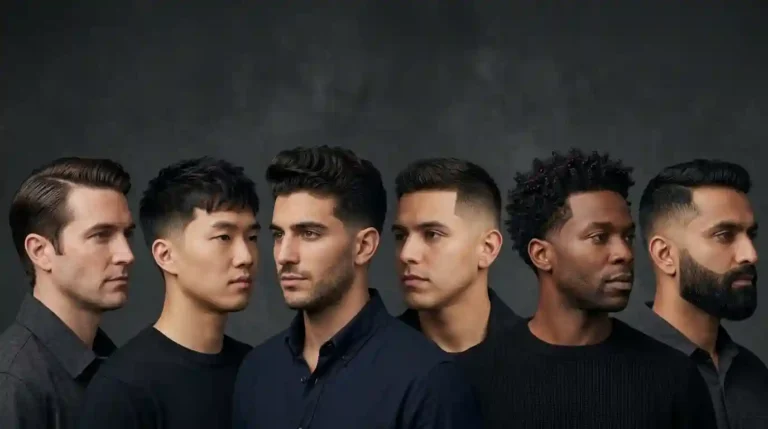

Best Taper Haircuts for Men: Styles, Hair Types, and Barber Tips
Finding the best taper haircut is about more than choosing a stylish photo. The right taper should complement your face shape, work with your natural hair texture, fit your daily routine, and leave you feeling confident from every angle. Whether you prefer a classic professional cut, a sharp low taper fade, a textured crop, a curly top, or a longer hairstyle with neatly blended edges, there is a taper that can work for you. The challenge is knowing which variation to choose and how to explain it to your barber. A low taper offers subtle definition, a mid taper creates more noticeable contrast, and a high or skin taper produces a bolder finish. Meanwhile, your hairstyle on top determines whether the overall look feels traditional, modern, relaxed, or dramatic. This guide compares the most versatile taper haircut styles for men, explains how each works with different face shapes and hair types, and provides practical barber instructions, styling recommendations, and maintenance advice to help you choose a haircut you will actually enjoy wearing.
Table of Contents
- What Is a Taper Haircut?
- Taper vs. Fade: What’s the Difference?
- Types of Taper Haircuts
- Which Taper Haircut Should You Choose?
- Best Taper Haircuts to Try
- How to Choose a Taper for Your Face Shape
- How to Choose a Taper for Your Hair Type and Length
- How to Ask Your Barber for a Taper
- How to Style and Maintain a Taper Haircut
- Common Taper Haircut Mistakes to Avoid
- What to Do If Your Taper Haircut Isn’t What You Wanted
- Frequently Asked Questions About Taper Haircuts
- Conclusion: Choosing the Right Taper for You
What Is a Taper Haircut?
A taper haircut is a men’s haircut technique in which the hair gradually becomes shorter as it approaches the lower sides, sideburns, and neckline. Instead of ending abruptly at one uniform length, the hair transitions smoothly between different lengths, creating a clean and balanced appearance.
The defining feature is gradual hair length graduation. This technique helps the shorter hair blend naturally into the longer sections above it.
A traditional taper generally preserves more hair through the sides and back than a full fade. This makes it an excellent choice for men who want a tidy haircut without exposing too much scalp.
The technique is extremely versatile because a taper describes how the hair is cut around the sides and edges rather than dictating one specific hairstyle on top.
You can combine a taper with a buzz cut, crew cut, comb-over, pompadour, textured fringe, Afro, curls, braids, or longer flowing hair.
For a closer look at the technique, variations, and basic terminology, explore our complete taper haircut guide.
How the Hair Is Tapered Around the Sides, Ears, and Neckline
A barber creates a taper by cutting progressively shorter lengths toward the hairline. Depending on the desired result, the barber may use clippers, different clipper guards, scissors, or a combination of techniques.
The process generally begins with the overall haircut shape. The barber establishes how much length to preserve on top and through the sides before detailing the perimeter.
The exact blending approach varies across the styles featured in our Core Taper Haircuts collection, particularly in how the shorter sections connect with the longer hair.
Around the temples and sideburns, the hair transitions from a longer section into a shorter one. The same principle applies at the nape, where the haircut gradually becomes shorter toward the neckline.
A well-executed taper should appear smooth rather than displaying obvious steps or disconnected patches.
For example, a barber might blend a longer side section through progressively shorter clipper lengths before finishing the lowest edge. The precise guard numbers depend on your density, texture, head shape, and requested finish.
A classic taper often leaves visible hair at the lowest point. A skin taper, however, may reduce a small section around the temples or nape to bare skin.
The barber also considers the hairline and neckline shape. A natural neckline follows the existing growth pattern, while a shaped or blocked neckline creates a more defined outline.
These small details influence the haircut’s overall appearance and how neatly it grows out.
Why Taper Haircuts Remain Popular
Taper haircuts remain popular because they offer an appealing combination of versatility, practicality, and style.
Unlike haircuts that depend on one specific top length, a taper can be adapted to numerous men’s hairstyles. You can maintain the same tapered sides while changing the top from a side part to a quiff or from a short crop to longer textured hair.
Another advantage is flexibility.
A subtle taper can look polished in professional environments without appearing overly formal. A more pronounced taper fade can create a sharper appearance for men who enjoy modern barbering styles.
The haircut also allows you to preserve your natural texture. Men with straight, wavy, curly, and coily hair can all benefit from carefully blended edges.
Maintenance is another consideration. Classic and low tapers often grow out more gradually than skin fades because they preserve more length around the perimeter.
However, this does not mean every taper is low maintenance. A detailed skin taper with a precise line-up may require frequent touch-ups to preserve its original sharpness.
Ultimately, the appeal comes from customization. Rather than forcing your hair into a particular shape, a good barber can adapt the taper to your individual features.
Taper vs. Fade: What’s the Difference?
The terms taper and fade are often used interchangeably, but they can describe noticeably different results.
Both involve gradually blending hair from longer to shorter lengths. The main distinction is usually where the shortest blending occurs, how much hair remains, and how much of the sides and back are affected.
A traditional taper concentrates the shortest graduation around the sideburns, temples, and neckline. A conventional fade generally blends a larger area of the sides and back.
A fade can finish at bare skin, but it does not have to. Shadow fades, for example, can retain short visible stubble.
| Feature | Classic Taper | Fade Haircut |
| Main blending area | Sideburns and neckline | Larger sections of sides and back |
| Scalp visibility | Usually minimal | Depends on shortest length |
| Overall contrast | Subtle to moderate | Subtle to dramatic |
| Hair preserved on sides | Generally more | Often less |
| Appearance | Natural and traditional | More defined or contemporary |
| Grow-out | Usually softer | Short fades become noticeable sooner |
| Styling versatility | Very high | Very high |
| Maintenance | Often less frequent | Depends on height and skin exposure |
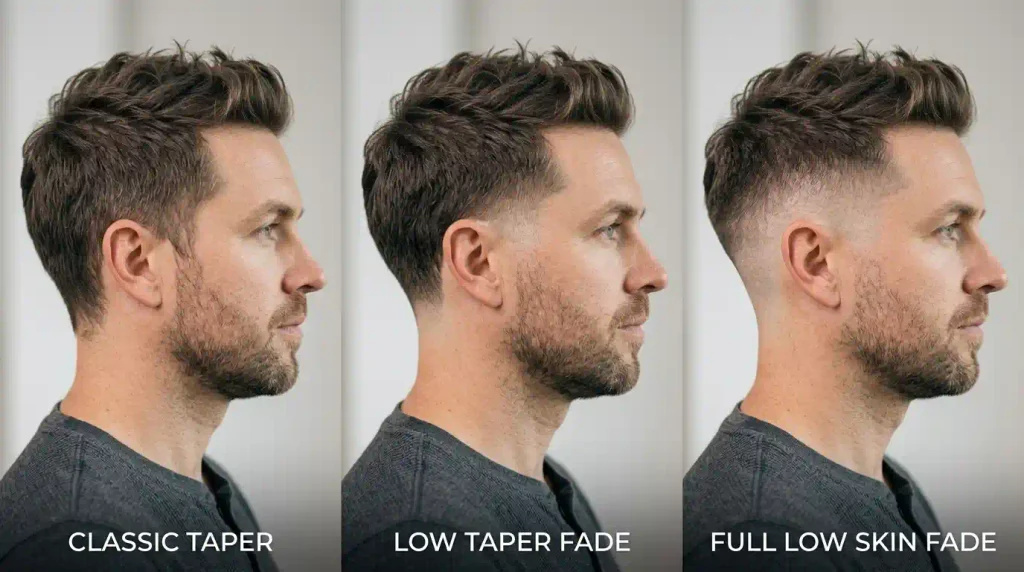
Classic Taper vs. Taper Fade
A classic taper typically features soft graduation near the edges without removing a large amount of hair from the sides.
It works particularly well with business hairstyles, side parts, scissor cuts, and medium-length hair.
A taper fade creates a tighter blend around the taper areas. The shortest part may reach extremely short stubble or skin, depending on what you request.
This creates a more noticeable transition while often retaining greater fullness through the side panels than a conventional full fade.
Consider two men wearing the same textured hairstyle.
One chooses a classic taper with visible length around the ears and neckline. His haircut looks soft, understated, and traditional.
The other chooses a low taper fade with skin exposure around the temples. His haircut creates a sharper contrast and emphasizes the texture on top.
Both haircuts can be attractive, but they communicate different styles.
If you prefer a sharper version, our taper haircut fade guide explains the variations in greater detail.
How Much Hair a Taper Leaves at the Edges
The amount of hair remaining at the lowest point significantly influences the haircut’s appearance.
A conservative taper may finish around a #1, #2, or longer clipper guard, depending on the design.
Common approximate clipper lengths include:
| Clipper Guard | Approximate Hair Length | General Appearance |
| #0.5 | 1.5 mm | Very short stubble |
| #1 | 3 mm | Closely cropped |
| #2 | 6 mm | Short but clearly visible |
| #3 | 10 mm | Fuller short length |
| #4 | 13 mm | Soft, fuller finish |
Actual cutting lengths vary with clipper systems, blade settings, and technique.
A no-guard clipper cut is not necessarily identical to a clean skin shave. Barbers may use a foil shaver or straight razor when the requested finish requires bare skin.
If you want a natural taper, explain that you prefer visible hair around the perimeter.
If you want stronger contrast, ask whether the barber can finish the lowest sections with a shorter guard or a skin-level blend.
Why Taper Terminology Can Vary Between Barbers
Barber terminology is not completely standardized.
One barber might interpret “low taper” as a subtle blend around the sideburns and nape. Another might create a very short taper fade in those same areas.
Similarly, some barbers distinguish clearly between a taper and a fade, while others use the terms more loosely.
The words low, mid, and high can also refer to different placements depending on the barbershop and haircut design.
That is why requesting a haircut solely by name can be risky.
A better approach is to specify the physical details.
For example:
“I want to keep most of the length on the sides, taper only around the temples and neckline, and avoid taking it down to skin.”
This instruction communicates more than simply saying “give me a taper.”
Reference photos showing the front, side, and back are especially helpful when your barber uses different terminology.
Types of Taper Haircuts
Understanding the different taper haircut types makes choosing your ideal style much easier.
The most important distinctions involve taper height, the amount of contrast, the shortest hair length, and whether the haircut retains a natural or sharply defined outline.
For a broader breakdown of individual variations, see our taper haircut types guide.
Classic Taper
The classic taper is a traditional haircut that gradually shortens the hair near the sideburns and neckline while maintaining a relatively natural finish.
It is among the most versatile options for men who prefer an understated appearance.
The barber typically preserves fullness through the sides, creating a smooth connection between the top and lower sections.
A classic taper works particularly well with a side part, comb-over, crew cut, and scissor-cut hairstyle.
It is also useful for men transitioning from a longer haircut because it can clean up the edges without removing too much overall length.
Best for: Professional styling, traditional hairstyles, first-time taper clients, and men who prefer subtle blending.
Barber request: “Give me a classic taper with a soft transition, keep the sides fairly full, and leave a natural neckline.”
Low Taper
A low taper concentrates the most noticeable graduation close to the ears, sideburns, and lower neckline.
Because the shortest section remains relatively low, much of the hair above it retains its existing length.
This makes a low taper a particularly adaptable option.
It can complement a short textured crop, medium-length wavy hair, curls, or an Afro without significantly changing the overall silhouette.
Men who want a neat appearance while preserving natural volume often prefer this design.
A low taper can be subtle or sharp. For example, a low skin taper creates more contrast than a low taper finished with a longer guard.
Best for: First-time tapers, natural textures, understated contrast, and flexible daily styling.
Barber request: “Keep the taper low around my temples and nape, and preserve the fullness above the blend.”
Mid Taper
A mid taper places the noticeable graduation somewhat higher than a low taper.
It creates a balance between natural fullness and visible definition.
The result can look sharper than a classic low taper without removing as much side hair as a high fade.
Mid tapers often pair well with quiffs, textured tops, curly hairstyles, and modern comb-overs.
The additional contrast can help emphasize the shape of the haircut on top.
However, the exact height should be adapted to your head shape rather than following one rigid placement.
A mid taper that looks balanced on one person may seem too high or too low on another.
Best for: Balanced contrast, medium-length hairstyles, and men who want a noticeable but controlled taper.
Barber request: “I want a mid taper with a smooth transition and some weight left in the upper sides.”
High Taper
A high taper carries the shorter graduation higher around the sides than low and mid versions.
This creates a more pronounced contrast between the upper hair and shorter perimeter.
Depending on the barbershop, the term may overlap with high taper fade terminology, so showing a reference photo is especially important.
A high taper can complement a textured brush-up, faux hawk, short curls, or hairstyle with considerable height on top.
It can also reduce excessive side bulk in thick hair.
However, removing too much hair high on the head may emphasize the shape of the temples or make an already elongated face appear longer.
If you want a high taper rather than a conventional high fade, specify how much length should remain through the side panels.
Best for: Stronger definition, thick hair, structured top hairstyles, and bolder appearances.
Barber request: “Create a higher taper around the perimeter, but don’t fade the entire sides down to skin.”
Skin Taper
A skin taper is a variation that reduces a relatively small area near the temples, sideburns, or nape to bare skin.
It creates a sharper finish than a traditional taper.
The barber may use a clipper, trimmer, foil shaver, or razor to achieve the desired shortest length.
The distinction from a full skin fade is important.
In a skin taper, the skin-level sections can remain concentrated near the perimeter while most of the sides retain greater length.
The result is particularly effective with curly tops, textured crops, sharp line-ups, and defined beard transitions.
Because the shortest hair begins growing back immediately, the crisp effect is relatively short-lived.
Best for: Clean outlines, modern styling, prominent texture, and clients comfortable with frequent touch-ups.
Barber request: “I want a skin taper only around the temples and neckline, with the rest of the sides left fuller.”
Taper Fade
A taper fade blends elements of traditional tapering with the tighter graduation commonly associated with fades.
It often creates closely blended sections near the temples and nape while retaining more weight through the rest of the sides.
Different taper fades can be described as low, mid, or high, depending on their placement.
A low taper fade usually keeps the close blending near the bottom. A mid taper fade brings the visual transition higher. A high taper fade creates a stronger perimeter contrast.
Additional fade terminology sometimes appears in haircut inspiration.
A burst taper fade may describe a rounded, closely blended area around the ear, although some barbers use burst fade for a broader fade design.
A drop taper fade may describe a blend that follows a curved path toward the back of the head. Again, terminology varies.
A temple taper focuses specifically on the temple and sideburn areas.
Before choosing any of these variations, decide whether your priority is a soft graduation, a skin-level finish, or a visibly contrasting shape.
Best for: Modern haircuts, textured tops, defined edges, and men who prefer a more noticeable blend.
Barber request: “I’d like a low taper fade around the temples and nape, with a smooth blend and fullness through the upper sides.”
Which Taper Haircut Should You Choose?
Choosing a taper should begin with your preferred overall appearance rather than what looks most dramatic in a photograph.
Consider how formal or relaxed you want your haircut to appear, how much time you spend styling your hair, and how often you can visit your barber.
Your face shape, natural hair growth, and texture should also influence the final decision.
Best Choice for a Subtle, Professional Look
For a subtle and professional appearance, a classic taper or low taper is often the strongest starting point.
Both options preserve a relatively natural silhouette while keeping the perimeter clean.
A classic taper paired with a side part can create a traditional business haircut.
A low taper with a textured scissor-cut top offers a less formal but equally polished alternative.
Men who regularly attend meetings, work in conservative environments, or simply prefer restrained hairstyles may appreciate the balance.
You can also keep the haircut modern without making it excessively short.
For example, a soft low taper with a natural side part and approximately two to three inches of hair on top can provide enough flexibility for several styling options.
The specific length should be adjusted to your hair density and natural growth pattern.
Best Choice for More Contrast
If you prefer an eye-catching haircut, consider a mid taper, high taper, or skin taper fade.
These variations can make the top hairstyle appear more prominent by reducing volume or length around the lower sides.
A mid taper with a textured quiff creates an especially balanced contrast.
A skin taper with short curls or a defined line-up produces a sharper finish while retaining the natural texture above.
High tapers can work well when you want a bolder silhouette.
However, more contrast does not automatically create a better haircut.
The placement must complement your head shape, and the blend should connect smoothly into the hair above.
Ask your barber to explain how high the taper will reach before cutting.
Best Choice for Low Maintenance
If convenience matters most, a classic taper with a short or medium-length, easy-to-manage top is often a practical choice.
A low taper can also work well because the shortest areas are concentrated near the hairline.
As those sections grow, the transition usually becomes softer rather than developing a dramatic contrast line.
Pairing the taper with a crew cut, natural scissor cut, or short textured crop can further simplify daily styling.
Avoid assuming that a skin taper will be equally convenient. Although the top may require little attention, the closely shaved perimeter can lose its sharp definition relatively quickly.
The most convenient haircut is one that looks acceptable not only on the day of your barber appointment but also two or three weeks afterward.
| Your Priority | Recommended Taper | Suggested Top Hairstyle |
| Traditional professional look | Classic taper | Side part or comb-over |
| Subtle everyday haircut | Low taper | Crew cut or textured top |
| Balanced modern contrast | Mid taper | Quiff or textured crop |
| Bold appearance | High taper | Brush-up or faux hawk |
| Sharp edges | Skin taper | Curls or short textured top |
| Minimal daily styling | Classic or low taper | Buzz cut or crew cut |
| Preserve natural texture | Low temple taper | Afro, curls, twists, or locs |
| Longer hairstyle | Classic or low taper | Natural flow or top knot |
Best Taper Haircuts to Try
The best taper haircuts combine a well-blended perimeter with a top hairstyle that complements your appearance and routine.
The following taper haircut ideas cover classic, contemporary, short, textured, and long hairstyles.
These combinations are not completely separate taper techniques. Instead, they show how the same tapering principles can support different hairstyles.
If you are comparing options from a modern taper haircut collection, pay attention to the shape, proportions, and amount of hair retained rather than focusing only on the haircut name.
Short Taper With a Buzz Cut or Crew Cut
A short taper paired with a buzz cut or crew cut creates one of the most straightforward men’s hairstyles.
The buzz cut keeps the hair relatively short across the top, while the taper introduces gradual blending around the sideburns and neckline.
This small adjustment can make an otherwise simple haircut look more intentional.
A crew cut provides slightly more length through the upper front, allowing for subtle texture or a gentle upward shape.
Both options are especially practical for men who prefer minimal daily styling.
A classic taper with a crew cut can look conservative and polished. A low skin taper with a buzz cut provides a sharper and more contemporary variation.
The main consideration is scalp visibility.
If your hair is fine or thinning, cutting the sides extremely short can increase contrast with the top. This may or may not suit the appearance you want.
Ask your barber to assess the balance before choosing an aggressive taper.
Who should try it? Men with busy routines, short-hair preferences, or a desire for a clean, practical haircut.
How to style it: A buzz cut often requires no styling product. For a crew cut, use a small amount of matte clay or lightweight putty to create texture through the front.
Maintenance: The top shape is relatively easy to manage, although closely tapered edges may need regular trimming.
What to tell your barber: “I want a short crew cut with a low taper. Keep the front slightly longer so I can add a little texture.”
A shorter crew cut can also work well for men who wear hats frequently or prefer hairstyles that return to their natural position without much effort.
Tapered Pompadour
The tapered pompadour combines a high-volume top with neatly blended sides.
The pompadour is characterized by hair that is lifted upward and styled back, creating a fuller shape through the front.
A taper helps control the sides without necessarily removing all their volume.
This combination can create a classic, refined appearance or a more contemporary hairstyle, depending on the taper height and styling finish.
A classic taper is particularly suitable for a traditional pompadour because it preserves fullness around the sides.
A mid taper produces greater contrast, making the front volume appear more prominent.
A skin taper can also work, but it creates a sharper appearance and may shift the overall look away from the traditional style.
The pompadour usually benefits from enough top length to brush backward while retaining height.
For many people, approximately four to six inches of workable top length provides styling flexibility, although individual hair texture affects the result.
Who should try it? Men who enjoy volume, structured hairstyles, and a polished appearance.
How to style it: Apply a lightweight pre-styler to damp hair, then use a blow dryer and brush to direct the front upward and backward. Finish with pomade for shine or matte clay for a less glossy result.
Maintenance: Expect daily styling and regular trims to maintain the shape.
What to tell your barber: “Keep enough length on top for a pompadour and give me a classic taper with natural fullness through the sides.”
Men with very heavy or thick hair may benefit from controlled internal layering to prevent the pompadour from collapsing.
For fine hair, lighter styling products are preferable because excessive pomade can make the hair appear flat.
Tapered Quiff
A tapered quiff combines an elevated front section with shorter, blended sides.
Unlike a traditional pompadour, which generally sweeps the hair upward and backward, a quiff can have a more relaxed, textured appearance.
The front remains the focal point, while the taper creates a neat frame around the head.
A mid taper pairs particularly well with this hairstyle because it provides visible contrast without necessarily removing too much hair.
A low taper creates a softer, more versatile version suitable for both casual and professional settings.
A high taper offers a bolder interpretation, especially when combined with a strongly textured front.
The quiff works with straight and wavy hair, although the styling method may differ.
Straight hair often needs deliberate lift from a blow dryer, while naturally wavy hair may already provide some movement.
Who should try it? Men who want a modern, versatile haircut with noticeable but manageable volume.
How to style it: Work a small amount of styling mousse or pre-styler through damp hair. Blow-dry the front upward using your fingers or a brush, then define the shape with matte clay.
Maintenance: Most quiffs need a few minutes of daily styling and occasional reshaping as the front grows.
What to tell your barber: “Leave enough length in front for a textured quiff, keep the top slightly layered, and give me a mid taper.”
A quiff is particularly useful when you want more height without committing to an elaborate pompadour.
You can wear it neatly for work or loosen the texture for a relaxed weekend appearance.
Tapered Side Part or Hard Part
The tapered side part is one of the most versatile traditional men’s hairstyles.
It combines a clear or natural parting with neatly graduated hair around the perimeter.
This haircut can look formal, relaxed, or contemporary depending on the styling finish.
A classic taper with a natural side part creates a timeless professional appearance.
A low taper provides a slightly more modern variation while preserving a balanced silhouette.
A hard part introduces a more defined line, usually cut into the hair with clippers or a trimmer.
This gives the hairstyle greater structure and makes the parting visually prominent.
However, a shaved hard part requires maintenance as the hair grows.
It is not always necessary, especially if your natural growth pattern already produces an attractive part.
Who should try it? Men who prefer organized hairstyles, professional styling, or a dependable haircut that can be adapted to different occasions.
How to style it: Comb damp hair into the desired direction and use a light pomade or styling cream. For additional control, finish with a small amount of hairspray.
Maintenance: A natural side part generally grows out smoothly. A shaved hard part becomes less defined as regrowth appears.
What to tell your barber: “Give me a classic taper with a natural side part. Keep enough length on top to comb neatly to one side.”
For a hard part, explain whether you want a thin, subtle shaved line or a more pronounced detail.
The placement should follow a suitable parting rather than forcing a line against a strong natural cowlick.
Tapered Comb-Over
A tapered comb-over uses a side-directed top hairstyle with gradual graduation around the lower sides.
Despite its name, the modern comb-over does not necessarily involve hiding thinning hair.
It is often a structured hairstyle in which the top is directed across the head to create a neat, controlled appearance.
A classic taper gives the comb-over a traditional character.
A mid taper introduces greater contrast and can make the hairstyle look more contemporary.
The ideal top length depends on how much movement and coverage you want.
Shorter comb-overs can be styled quickly, while longer versions allow more volume and flexibility.
A comb-over can also work with a natural part rather than a clearly defined line.
Who should try it? Men who want a refined everyday hairstyle that works in both formal and casual environments.
How to style it: Comb slightly damp hair in your preferred direction, then apply a small amount of lightweight pomade or styling cream. Use a blow dryer if extra volume is needed.
Maintenance: Regular trims help prevent the upper sides from becoming bulky and disrupting the silhouette.
What to tell your barber: “Keep enough length on top for a comb-over and give me a low or classic taper with a smooth blend.”
If you have fine hair, avoid making the comb-over overly flat.
A little natural volume and a textured finish can help the hair appear fuller.
Tapered Scissor Cut
The tapered scissor cut is an excellent option for men who prefer a soft, natural appearance.
Instead of relying on extremely short clipper work throughout the haircut, the barber uses scissors to shape much of the top and sides.
Clippers may still be used to refine the lower perimeter.
The result can have more movement and texture than a closely cropped haircut.
This approach works particularly well with medium-length hair, natural side parts, and relaxed hairstyles.
A classic taper at the sideburns and neckline keeps the haircut looking intentional without making the shorter sections too prominent.
It also provides flexibility for men who want to change their hairstyle throughout the week.
The same cut might be worn forward, swept to the side, or brushed backward.
Who should try it? Men who prefer natural movement, moderate length, and understated styling.
How to style it: Apply a small amount of styling cream to damp hair and arrange it with your fingers. Allow the hair to air-dry or use a blow dryer on a moderate setting.
Maintenance: The longer top often remains wearable during grow-out, although the sideburns and neckline may need periodic attention.
What to tell your barber: “I want a natural scissor cut with movement on top and a subtle taper around the ears and neckline.”
This option is especially useful if you dislike the appearance of aggressive clipper fades or want a haircut that remains flexible as it grows.
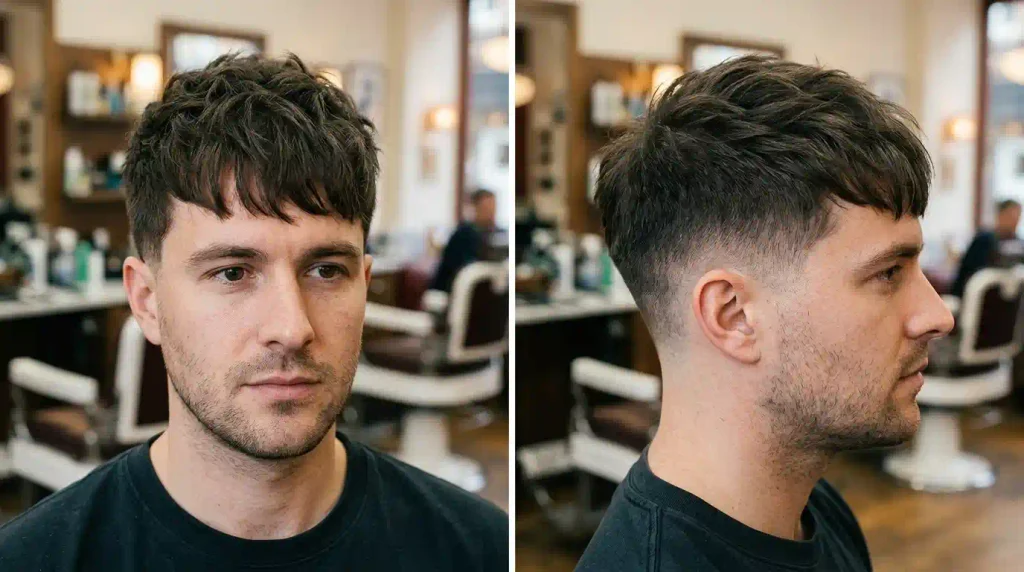
Tapered Textured Crop or Fringe
A textured crop combines a relatively short top with visible layers or separated sections.
The fringe is worn forward, creating a relaxed and often contemporary appearance.
A taper keeps the sides and neckline tidy without removing the character of the textured top.
The crop can be styled with a straight fringe, an irregular textured fringe, or a softer forward-swept shape.
A low taper gives the haircut a subtle appearance.
A mid taper emphasizes the contrast between the textured top and shorter edges.
For a more pronounced look, a skin taper can sharpen the perimeter while maintaining the crop’s natural texture.
This combination works particularly well with straight and wavy hair, although some curly textures can also be adapted into cropped styles.
Who should try it? Men who want modern taper haircut ideas without extensive styling.
How to style it: Apply a small amount of matte clay or putty to dry or slightly damp hair. Work the product through the top with your fingers to separate the texture.
Maintenance: Short crops generally require moderate upkeep because the fringe shape changes as the hair grows.
What to tell your barber: “Keep the top short and textured with a soft fringe, and give me a low taper without removing too much side weight.”
For men with a prominent forehead, the fringe may create a more balanced appearance.
However, the ideal fringe length depends on your hairline, face proportions, and how the hair naturally falls.
Tapered Slick Back or Undercut
A tapered slick back features longer hair directed backward from the forehead, with the sides gradually shortened around the perimeter.
It creates a sleek appearance that can look traditional or modern depending on the finish.
A classic taper works well when you want the sides to connect naturally into the longer top.
A low taper can preserve the same general silhouette while producing cleaner edges.
An undercut introduces a different visual structure.
In an undercut, the top is noticeably disconnected from the shorter sides, rather than transitioning continuously through every section.
A taper can still be added around the sideburns and neckline of an undercut.
This combination provides the contrast of an undercut while making the perimeter appear more refined.
For a classic slick back, a few inches of length are generally necessary so the hair can be directed backward.
Longer hair offers more movement, while shorter versions create a compact silhouette.
Who should try it? Men who enjoy controlled hairstyles, medium-length hair, and a polished finish.
How to style it: Apply styling cream or pomade to slightly damp hair and comb backward. Use a blow dryer to establish direction if necessary.
Maintenance: The top requires regular styling, while the taper needs periodic reshaping.
What to tell your barber: “Keep the top long enough to slick back, blend the upper sides naturally, and finish with a low taper.”
If you prefer an undercut, explicitly request the disconnected section.
Do not assume that a taper and an undercut automatically describe the same haircut.
Tapered Top Knot
A tapered top knot combines longer hair on top with shorter, graduated areas around the sides or perimeter.
The top is long enough to gather into a small knot or tied hairstyle.
This combination offers a way to keep longer hair manageable while giving the sides a cleaner appearance.
A low taper is particularly suitable when you want to preserve most of the side length.
A more pronounced taper fade creates stronger contrast between the tied hair and the exposed perimeter.
The hairstyle works with straight, wavy, and some curly textures, although the amount of length required varies.
The top must be long enough to tie comfortably without excessive pulling.
Very short top knots can create tension because the hair needs to be pulled tightly to reach the tie.
A comfortable knot should not cause scalp pain or strain along the hairline.
Who should try it? Men growing out longer hair who want a practical way to control it while retaining a modern appearance.
How to style it: Gather the hair loosely using a gentle hair tie. Apply a lightweight styling cream to control flyaways if needed.
Maintenance: Keep the taper neat while trimming damaged ends only when necessary to maintain the desired length.
What to tell your barber: “I want to keep the top long enough for a knot. Give me a low taper around the temples and neckline without cutting into the length I’m growing.”
This hairstyle requires patience during the growing phase.
A barber familiar with longer men’s hair can help maintain a balanced shape without sacrificing unnecessary length.
Taper With Curls, Waves, or an Afro
A taper paired with natural curls, waves, or an Afro can create an excellent balance between volume and definition.
The shorter perimeter gives the hairstyle structure while allowing natural texture to remain the focus.
For curly hair, a low taper can clean up the temples and neckline without disrupting the overall curl pattern.
A mid taper introduces additional definition around the edges.
For an Afro, a temple taper or low taper is often especially effective because it preserves the rounded or shaped volume above.
The barber should consider curl shrinkage when deciding how much hair to remove.
Hair that appears longer while stretched or wet may become noticeably shorter after it dries into its natural pattern.
A strong taper can also affect the overall shape of an Afro if too much hair is removed around the sides.
Communication is therefore essential.
A well-balanced Afro taper should preserve your preferred silhouette while creating a clean transition at the edges.
Who should try it? Men with naturally curly, coily, or Afro-textured hair who want clean edges while preserving texture and volume.
How to style it: Use suitable conditioning products and a lightweight curl cream or styling product that works with your hair’s needs. A diffuser can help dry curls with less disturbance than aggressive brushing.
Maintenance: Keep the taper refreshed as needed while maintaining moisture and avoiding excessive manipulation.
What to tell your barber: “Keep my natural curl volume and shape. I only want a low taper around the temples and neckline.”
For waves, the top styling routine may involve brushing and hair-care techniques specific to the desired wave pattern.
Avoid removing so much perimeter hair that the design loses its intended shape.
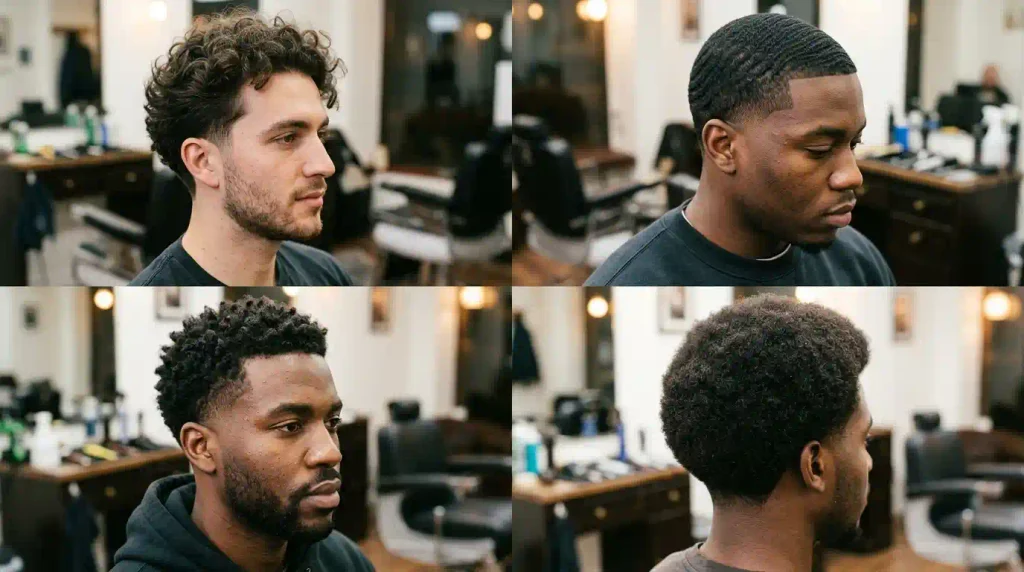
Taper With Braids, Twists, or Locs
Taper haircuts also pair naturally with protective and longer textured hairstyles such as braids, cornrows, twists, and locs.
The taper can define the temples and neckline without requiring the entire hairstyle to be shortened.
For example, a temple taper can clean the sideburn area beneath braids.
A low nape taper can create a neat finish below longer twists or locs.
A taper may also work with cornrows when the braided pattern leaves enough hair around the perimeter for blending.
However, these styles require special attention to the hairline.
The barber and stylist should coordinate so the taper does not remove hair needed for the braiding or twisting pattern.
Equally important, braids and tied styles should not place excessive tension on the scalp.
Painful tightness, repeated pulling around the hairline, or irritation should not be treated as normal.
Who should try it? Men with braids, twists, cornrows, or locs who want sharper edges while preserving the hairstyle.
How to style it: Follow a suitable scalp and hair-care routine for your chosen protective style. Use products appropriate for your texture and avoid excessive buildup.
Maintenance: Refresh the taper when needed, but coordinate perimeter trimming with the timing of braid, twist, or loc maintenance.
What to tell your barber: “Keep the braids or locs untouched. Taper only the available hair around the temples and nape, and don’t push the hairline backward.”
A good result depends on preserving enough hair for both the hairstyle and the tapered finish.
If you plan to change your braiding pattern later, discuss that possibility before making the taper too wide.
Taper With a Beard
A taper haircut with a beard can create a cohesive appearance by blending the sideburns into the facial hair.
This technique is often called a beard blend or beard integration.
Instead of allowing the haircut and beard to appear disconnected, the barber creates a gradual transition between their lengths.
For example, a low taper may shorten the hair around the temples while the sideburns transition naturally into a medium-length beard.
The exact balance depends on the density and shape of your facial hair.
A shorter beard can work with a classic taper for a tidy, understated look.
A fuller beard may create an attractive contrast with a low or mid taper.
The important consideration is proportion.
A very short taper beside a dense beard can create a visible difference in weight. This may be desirable, but it should appear intentional.
Who should try it? Men with short stubble, medium-length beards, or full facial hair who want a coordinated haircut.
How to style it: Maintain the top hairstyle according to your hair type and brush or groom the beard as needed. Keep the transition at the sideburns neat.
Maintenance: Beard growth and head-hair growth may require different grooming schedules.
What to tell your barber: “I want a low taper that blends naturally into my beard. Please keep the sideburn transition smooth rather than creating a disconnected line.”
A defined beard shape can also influence how your face appears.
For example, a slightly longer beard at the chin may add visual length to a round face, while a fuller beard on the sides can add width to a narrow face.
These are optional styling techniques rather than strict rules.
Taper With Natural Flow or Longer Hair
Not every taper haircut needs a short hairstyle on top.
A classic or low taper can work beautifully with medium-length and long hair.
The taper keeps the ears, sideburns, and neckline neat while allowing the upper hair to fall naturally.
This combination is especially useful for men who enjoy a relaxed, flowing hairstyle but dislike excessive bulk around the edges.
A natural flow haircut may be worn swept backward, parted in the middle, loosely side-parted, or allowed to fall around the face.
Wavy hair can create particularly attractive movement in this design.
Straight hair may benefit from soft layers to prevent the sides from appearing overly heavy.
Curly hair can also work when the barber considers shrinkage and volume distribution.
For longer hairstyles, the taper should usually remain restrained so it does not create an unintended disconnect.
Who should try it? Men who prefer medium-length or long hairstyles and want cleaner edges without dramatically shortening their hair.
How to style it: Apply a lightweight styling cream or leave-in conditioner suitable for your hair type, then arrange the hair naturally. Avoid heavy products that unnecessarily restrict movement.
Maintenance: Schedule occasional taper touch-ups while preserving the overall length.
What to tell your barber: “I’m keeping my longer hairstyle. Clean up the sideburns and neckline with a subtle taper, but don’t remove the volume or length through the upper sides.”
This is also an excellent transition haircut for men growing their hair from short to medium length.
The tapered perimeter helps maintain a deliberate appearance during awkward growth stages.
How to Choose a Taper for Your Face Shape
Your face shape can help guide haircut proportions, although it should not be treated as a rigid rule.
Two men with the same general face shape may have different hairlines, head contours, hair densities, and styling preferences.
The purpose of face-shape analysis is to understand how volume, height, width, and contrast influence the overall appearance.
If you are wondering which taper haircut to get for your head shape, consider both the front view and side profile.
A haircut that looks attractive straight on should also connect naturally around the ears and toward the back.
Taper Haircuts for Oval Faces
Oval faces generally have balanced proportions, with the face appearing slightly longer than it is wide.
This provides considerable flexibility when choosing a taper hairstyle.
A classic taper can reinforce the natural balance of an oval face.
A low taper works well with textured crops, side parts, and medium-length hairstyles.
Mid tapers are also a strong choice when additional contrast is desired.
For a more dramatic appearance, an oval-faced man may experiment with a high taper or skin taper.
The main consideration is the hairstyle on top.
An extremely tall pompadour can visually lengthen the face, while a heavy straight fringe may make the upper face appear shorter.
Neither result is inherently wrong, but it should align with your preferred appearance.
Recommended combinations: Low taper with textured quiff, classic taper with side part, or mid taper with short curls.
Styling advice: Experiment with moderate volume before choosing an unusually tall hairstyle.
Barber tip: Ask for a balanced shape that maintains a natural connection between the upper sides and the top.
Men with oval faces can often select a haircut according to personal style rather than trying to correct a particular facial proportion.
Taper Haircuts for Round Faces
Round faces often have softer angles and relatively similar facial width and length.
If you want to create the impression of greater vertical length, consider a taper with some height on top.
A mid taper paired with a quiff can be particularly effective.
The shorter perimeter reduces some visual width while the elevated front draws attention upward.
A textured brush-up can offer a similar effect.
A low taper is also suitable, especially when the top has enough structure to avoid an overly rounded overall silhouette.
A high taper may create stronger side contrast, but removing excessive side volume is not necessary for every round face.
The goal is to establish balanced proportions, not automatically choose the shortest possible sides.
Recommended combinations: Mid taper with quiff, low taper with textured brush-up, or classic taper with a controlled side part.
Styling advice: Add moderate height through the front rather than emphasizing excessive width at the sides.
Barber tip: “Keep a little height and shape on top, and avoid leaving the haircut overly round through the upper sides.”
Facial hair can also influence the final silhouette.
A beard with slightly greater length around the chin may create a more elongated appearance if that is the effect you prefer.
Taper Haircuts for Square Faces
Square faces typically feature a relatively strong jawline and angular facial proportions.
Many taper styles work well with this natural structure.
A classic taper with a side part can create a traditional, masculine appearance.
A low taper with a textured crop adds a contemporary element without overwhelming the jawline.
Mid tapers can also look balanced, particularly when the hairstyle includes some texture or movement.
Men who want to emphasize angular features may prefer a sharper perimeter.
Those who want to soften the appearance can choose natural scissor-cut texture and a less rigid hairline.
A very severe line-up or extremely structured top is optional rather than necessary.
Recommended combinations: Classic taper with side part, low taper with textured crop, or mid taper with quiff.
Styling advice: Use natural texture for a softer finish or controlled styling for a more defined appearance.
Barber tip: Ask the barber to preserve the haircut’s overall proportions rather than aggressively reducing the sides.
A square face can support both traditional and modern taper haircut hairstyles.
Your hair texture and preferred level of maintenance may be more important than the face shape itself.
Taper Haircuts for Oblong Faces
An oblong face appears noticeably longer than it is wide.
When choosing a taper, consider how much additional height your hairstyle will create.
A very high quiff or tall pompadour may exaggerate facial length.
If you prefer a more balanced appearance, a low or classic taper with moderate top volume can be a better starting point.
Maintaining some fullness through the upper sides may also help create visual width.
A textured crop with a soft fringe can reduce the emphasis on vertical length.
Natural flow hairstyles may work well when the hair has some side movement.
An oblong face does not mean you must avoid high tapers entirely.
However, combining extremely short sides with unusually tall hair can create a dramatically elongated silhouette.
Recommended combinations: Classic taper with natural side part, low taper with textured fringe, or tapered scissor cut.
Styling advice: Favor moderate height and natural movement rather than excessive vertical volume if balance is your priority.
Barber tip: “Keep a little fullness through the sides and avoid making the top too tall.”
The neckline should also suit the overall haircut. A natural finish can help preserve a softer appearance during regrowth.
Taper Haircuts for Heart-Shaped Faces
Heart-shaped faces generally feature a wider forehead area and a narrower lower face or chin.
A taper can complement these proportions by controlling where volume is concentrated.
A low taper often works well because it preserves greater fullness through the sides.
A medium-length scissor cut, relaxed side part, or textured fringe may help balance the upper face.
Some men prefer a fringe that visually reduces the width of the forehead.
Others choose soft waves or side-directed hairstyles that draw attention toward the middle of the face.
Extremely high tapers with significant volume concentrated at the crown can emphasize upper-face width, depending on the haircut.
That does not make them unsuitable, but it is worth considering the complete silhouette.
Recommended combinations: Low taper with textured fringe, classic taper with medium-length side part, or natural flow with soft tapered edges.
Styling advice: Use movement and moderate side fullness to create a balanced appearance.
Barber tip: Request a taper that does not remove unnecessary volume around the upper sides.
A suitable beard shape may also help add visual weight around the jaw if you want a fuller-looking lower face.
Taper Haircuts for Diamond and Triangular Faces
Diamond and triangular faces have different proportions, but both can benefit from careful placement of volume.
A diamond face often features prominent cheekbones with a comparatively narrower forehead and jaw.
A taper paired with textured hair or moderate side fullness can help balance these features.
A low taper with a quiff, natural fringe, or medium-length flow may work well.
Avoid assuming that extremely short sides are necessary.
Preserving some hair above the temples can create a smoother silhouette around prominent cheekbones.
A triangular face, particularly one with a wider jaw and narrower forehead, may benefit from greater volume through the upper hair.
A quiff, brush-up, or layered medium-length hairstyle can add visual width or height near the top.
A classic or low taper can tidy the edges without removing useful upper-side volume.
Recommended combinations for diamond faces: Low taper with textured top, scissor cut with natural flow, or classic taper with side part.
Recommended combinations for triangular faces: Low taper with quiff, classic taper with brush-up, or layered top with soft perimeter blending.
Styling advice: Consider where your haircut adds volume relative to your forehead, cheekbones, and jaw.
Barber tip: Bring both a front-facing and side-profile reference photo so the barber can evaluate the full silhouette.

How to Choose a Taper for Your Hair Type and Length
Hair type often has a greater effect on the final haircut than the name of the taper.
Straight hair reflects the haircut’s lines differently from curly hair. Thick hair can create bulk, while fine hair may reveal the scalp when cut too short.
Your natural growth direction, density, crown pattern, and desired top length also influence the result.
The best taper hairstyle should work with these characteristics rather than relying on styling products to fight them every morning.
Taper Haircuts for Straight Hair
Straight hair often makes the haircut’s blending and shape easy to see.
This is an advantage when the barber creates a smooth graduation, but it can also make uneven transitions more noticeable.
A classic taper works well with traditional side parts, comb-overs, and scissor cuts.
A low taper paired with a textured crop creates a modern and manageable option.
For more volume, consider a mid taper with a quiff or brush-up.
Straight hair may naturally lie flat, particularly when it is fine.
If you want a lifted hairstyle, ask your barber for enough length and texture to create movement.
A blow dryer can help establish direction, while a lightweight styling product provides control.
Avoid removing excessive weight from already fine straight hair.
The haircut should create the appearance of balanced density rather than leaving the top stringy or separated.
Recommended: Classic taper, low taper crop, tapered quiff, and side-part taper.
Best styling approach: Lightweight clay, styling cream, or mousse depending on desired volume and finish.
Common mistake: Requesting an extremely short taper without considering how strongly scalp visibility will contrast with the top.
Taper Haircuts for Wavy Hair
Wavy hair has natural movement that can enhance many taper hairstyles.
A low taper with a textured top allows the waves to remain prominent without creating too much bulk around the ears.
A classic taper with medium-length hair produces a relaxed, natural appearance.
A mid taper can create more contrast if you want the upper waves to become the visual focus.
For wavy hair, the amount of length removed from the top is especially important.
Cutting too short may change how the wave pattern appears.
Longer sections may fall naturally, while shorter sections can become more upright or irregular.
A barber should evaluate how your hair behaves both dry and after washing.
If you have thick waves, selective layering may reduce bulk without destroying movement.
For styling, use a lightweight cream or mousse that encourages definition without making the hair stiff.
A sea salt spray can create a textured finish for some hair types, but it may feel drying on others and is not essential.
Recommended: Low taper with waves, textured scissor cut, medium-length natural flow, and tapered quiff.
Best styling approach: Gentle towel drying, lightweight styling cream, and minimal over-brushing.
Common mistake: Cutting the wavy top too short based only on how it appears while wet or stretched.
Taper Haircuts for Curly or Coily Hair
Curly and coily hair can create particularly attractive taper haircuts because the natural texture contrasts with the clean perimeter.
A low taper allows curls to retain their shape while refining the edges.
A temple taper can work well when you want to preserve volume around the sides.
A mid taper creates additional definition and may highlight a rounded curly top.
For Afro-textured hair, a taper can be incorporated into an Afro, twists, locs, or other natural hairstyles.
The barber must consider shrinkage.
Curly and coily hair can appear significantly shorter in its natural dry state than when stretched.
Cutting too much while the hair is wet or extended may produce a shorter result than expected.
The shape should also be evaluated from multiple angles.
A balanced curly taper includes appropriate fullness through the crown, sides, and back.
Styling should support the natural texture rather than forcing every curl into the same pattern.
Recommended: Low curly taper, temple taper, Afro taper, and mid taper with defined curls.
Best styling approach: Conditioning products, appropriate curl cream, gentle detangling, and diffusing when suitable.
Common mistake: Removing excessive side volume or overlooking natural shrinkage.
If you maintain braids or twists, ensure the taper does not interfere with the hair needed for those styles.
Taper Haircuts for Thick Hair
Thick hair provides numerous styling possibilities, but it can also create excess bulk around the sides.
A taper helps refine the perimeter and establish a cleaner outline.
For very thick straight hair, a mid taper with a textured crop can reduce visual heaviness.
A classic taper with a scissor-cut top works well when you prefer a natural appearance.
For thick curly or wavy hair, a low taper may provide enough definition without removing the volume you enjoy.
The barber should also evaluate how the hair grows outward.
Some thick hair becomes wider as it gets longer around the parietal ridge, the area where the sides transition toward the top.
Removing excessive length below that ridge without blending the weight above it may create an unbalanced, shelf-like effect.
Careful haircut blending is therefore essential.
Texturizing techniques can help some thick hairstyles, but excessive thinning may cause frizz or unpredictable movement.
Recommended: Mid taper with textured top, classic taper with layers, and low taper for thick curls.
Best styling approach: Product choice should reflect your desired finish; matte clay offers control, while styling cream can preserve movement.
Common mistake: Removing too much side hair without addressing the heavier section above it.
Taper Haircuts for Fine or Thinning Hair
Fine hair and thinning hair are not exactly the same.
Fine hair describes the diameter of individual strands, while thinning hair involves a reduction in density.
Both characteristics can influence how a taper looks.
For fine hair, a classic or low taper with a short textured top can create a balanced appearance.
A short crew cut may also work well because the hairstyle does not depend on maintaining large amounts of volume.
For thinning hair, the best taper height depends on where the thinning occurs.
If the crown has reduced density, keeping the sides extremely short may create unwanted contrast.
A more conservative taper can preserve a natural silhouette.
If the hairline is receding, a short crop or textured fringe may provide styling options without requiring a complicated comb-over.
However, the goal should not be to disguise hair loss at any cost.
A well-proportioned short haircut often looks more deliberate than a style requiring extensive manipulation.
Avoid heavy products that separate the hair into thick clumps and reveal more scalp.
Lightweight mousse, matte styling products, and carefully directed blow-drying can help create a fuller appearance.
Recommended: Classic taper, low taper with short textured top, and crew cut with soft graduation.
Best styling approach: Minimal lightweight product and natural-looking texture.
Common mistake: Choosing a very high skin taper that unnecessarily emphasizes density differences.
A haircut cannot treat hair loss. If you notice sudden, patchy, or progressive thinning, a dermatologist can help assess the cause.
Choosing a Taper for Short, Medium, or Long Hair
The length of your hair determines which top hairstyles are realistically available.
For short hair, a taper can add definition without requiring much styling.
Buzz cuts, crew cuts, and short textured crops work well with classic, low, or skin tapers.
Short hairstyles are particularly convenient when you want the top to remain manageable.
For medium-length hair, the number of styling options increases.
You can wear a quiff, comb-over, pompadour, side part, brush-up, or natural textured style.
A low or mid taper often provides a balanced connection between the longer top and shorter edges.
For long hair, the taper becomes more of a perimeter detail.
A subtle classic taper can clean the sideburns and neckline while preserving longer flowing sections.
A low taper can also work with a top knot, longer curls, braids, or locs.
The longer the top becomes, the more important it is to communicate whether the haircut should remain connected.
An overly aggressive taper may introduce a dramatic disconnect you did not intend.
| Hair Length | Suitable Tapers | Popular Top Styles |
| Very short | Classic, low, skin taper | Buzz cut |
| Short | Classic, low, mid taper | Crew cut, textured crop |
| Medium | Low, mid, high taper | Quiff, comb-over, pompadour |
| Medium to long | Classic, low taper | Side part, slick back, natural flow |
| Long | Classic, temple, low taper | Top knot, braids, twists, locs |
Choosing a Taper Based on Styling Time and Barber Visits
A haircut should suit the amount of time and money you are comfortable spending on maintenance.
Someone who enjoys styling hair every morning may prefer a pompadour or quiff.
Someone who wants to leave home quickly might choose a crew cut or natural textured crop.
The taper itself also affects maintenance.
A skin taper shows regrowth relatively quickly because the shortest area starts from almost no visible hair.
A classic taper may remain visually balanced for longer because its original length graduation is softer.
Consider three practical questions before committing to a haircut.
How much time will you style your hair each morning?
If you prefer a routine of only a few minutes, select a manageable top length and a product that requires minimal effort.
How often can you visit a barber?
If you prefer appointments every month or longer, a soft classic or low taper may be easier to maintain than a skin-level design.
Will the haircut still look good as it grows?
The ideal haircut should not depend entirely on freshly shaved edges to look attractive.
If your schedule is unpredictable, choose a shape that remains acceptable during regrowth.
For example, a textured scissor cut with a low taper may offer considerably more flexibility than a highly defined skin taper with a hard part.

How to Ask Your Barber for a Taper
One of the most important steps in getting the best taper haircut is explaining your desired result clearly.
A good barber consultation should cover more than the haircut name.
You should discuss the taper height, shortest cutting length, top hairstyle, side weight, neckline shape, and overall contrast.
A reference photo makes the conversation easier, but you should also explain what specifically attracts you to that haircut.
Choose Where the Taper Should Start
The first decision is how much of the sides and back should be affected.
For a low taper, tell the barber to keep the shortest blending close to the temples and nape.
For a mid taper, ask for a more noticeable graduation while preserving enough length above it.
For a high taper, clarify whether you want a taller taper area or a more conventional high fade.
This distinction matters because some barbers interpret those terms differently.
You should also specify how short the taper should become.
A low taper ending around a #2 guard looks different from a low skin taper, even though both can have a similar height.
If you do not want exposed scalp, say so directly.
A useful barber instruction is:
“Keep the blending low around my temples and neckline. I want a clean transition but no skin showing.”
For a sharper option:
“Give me a low skin taper at the sideburns and nape, but keep the upper sides full.”
If the barber suggests a different height based on your head shape, ask to see where the blend will reach before agreeing.
This helps prevent unexpected results.
Specify the Length You Want on Top
The top hairstyle is just as important as the taper.
A low taper with a buzz cut looks entirely different from a low taper with a pompadour.
Before the haircut begins, decide whether you want to maintain your current length, remove a specific amount, or change the overall shape.
Instead of simply saying “a little off the top,” describe the result you want.
For example:
“I want to keep about three inches on top so I can style a textured quiff.”
Or:
“Keep the front long enough to sweep backward, but remove some bulk from the crown.”
Your barber may adjust the exact length according to your hair texture.
Curly hair, for example, should be considered in its natural state because shrinkage changes how short it appears.
For fine hair, the barber may recommend a shorter, more structured shape rather than aggressive thinning.
You should also discuss whether you want the top disconnected or naturally blended into the sides.
This is especially important for undercuts and longer hairstyles.
Decide Whether You Want a Natural or Shaped Neckline
The neckline is an often-overlooked detail that can significantly change the haircut’s appearance.
A natural neckline follows the general growth pattern near the nape.
The barber removes stray hairs and blends the area without creating an excessively rigid boundary.
This often produces a softer grow-out.
A tapered neckline gradually reduces hair length toward the lower neck.
It creates a controlled transition and can work well with both classic and modern hairstyles.
A blocked neckline establishes a more defined lower boundary.
The shape may be squared or rounded, depending on the haircut and your natural hairline.
Blocked necklines can look very neat when freshly cut, but regrowth below the defined edge can become more noticeable.
If you want minimal maintenance, a soft natural or tapered neckline is often worth considering.
A sharply blocked neckline may be appropriate when you prefer a precise outline and are comfortable maintaining it.
Ask your barber to show you the proposed neckline shape in a mirror before detailing it.
The natural direction of hair growth at the nape also matters.
Some people have uneven or low-growing hairlines that are better handled with a customized shape rather than a rigid straight line.
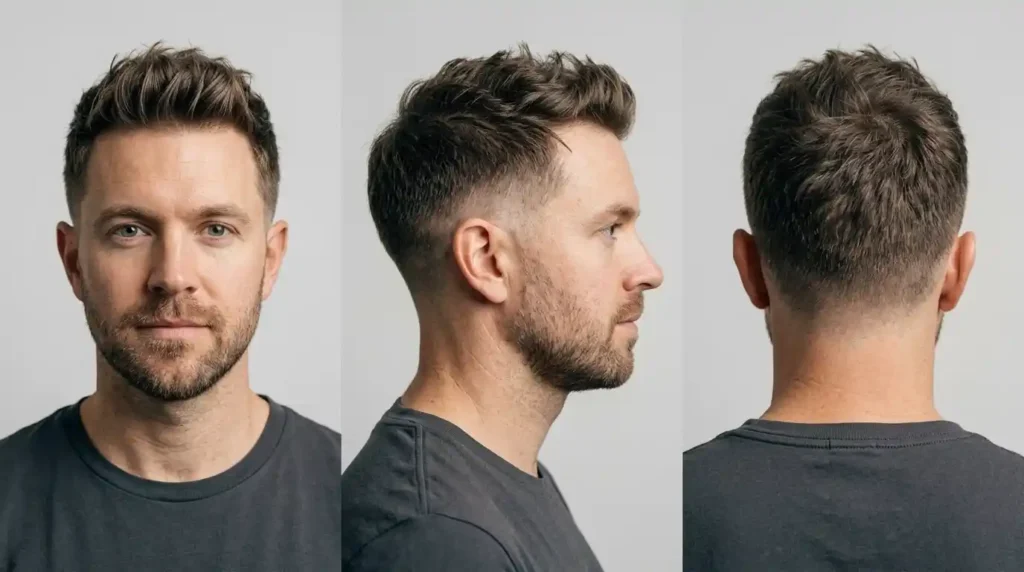
Which Photos to Show Your Barber: Front, Side, and Back
Reference photos are one of the most effective ways to communicate a haircut.
However, one front-facing photograph rarely provides enough information.
The front view shows the hairstyle’s overall proportions, fringe, hairline, and top volume.
The side profile reveals taper height, the amount of fullness preserved, and the connection between the top and sides.
The back view reveals the neckline, nape graduation, and blending around the rear of the head.
Ideally, choose photographs showing the same haircut from all three angles.
If you cannot find a complete photo set, use multiple references and explain which detail you want from each.
For example, you might like the textured top in one photograph and the low taper placement in another.
Make this distinction clear.
A complete barber request example:
“I want a low taper with a textured top. Keep approximately three inches on top, preserve some fullness on the sides, taper around my sideburns and neckline, and don’t take it down to skin. I’d like a natural neckline and a soft, balanced finish.”
This instruction establishes the key details without relying on ambiguous terminology.
How to Style and Maintain a Taper Haircut
A taper can look excellent immediately after a haircut, but its long-term appearance depends on daily care and sensible maintenance.
The correct styling routine should support the hairstyle on top while keeping the edges clean.
You do not need an elaborate collection of grooming products.
A few well-chosen products, used appropriately for your hair texture, can be enough.
Choose Products for Your Top Hairstyle
The best styling product depends on your desired finish, hair density, and natural texture.
Matte clay provides texture and control without a glossy appearance. It is often suitable for short crops, quiffs, and textured tops.
Pomade can provide definition and varying levels of shine. It is frequently used for comb-overs, side parts, slick backs, and pompadours.
Putty can help shape short or medium-length hairstyles when you want flexible separation and texture.
Styling cream generally offers a softer finish, making it useful for natural flow hairstyles, waves, and some curly hair types.
Hair mousse can help create body and controlled volume, particularly when paired with appropriate blow-drying techniques.
Sea salt spray can enhance texture in certain hairstyles, although it may not suit very dry hair and should not be considered essential.
Hairspray helps preserve the shape of hairstyles that require lasting volume or hold.
Different products vary considerably in strength, ingredients, and finish, so choose based on your individual needs.
| Hairstyle | Useful Product | Desired Finish |
| Buzz cut | Usually none | Natural |
| Crew cut | Matte clay | Light texture |
| Quiff | Mousse and matte clay | Lift and definition |
| Pompadour | Pomade or clay | Structured volume |
| Side part | Pomade or styling cream | Controlled shape |
| Textured crop | Matte clay or putty | Separated texture |
| Slick back | Pomade | Smooth control |
| Natural flow | Lightweight cream | Soft movement |
| Curly top | Curl cream or suitable leave-in | Curl definition |
| Longer hair | Lightweight styling cream | Flexible movement |
Start with a small amount of product and add more only when necessary.
Too much product can make fine hair appear flat, create buildup, or make natural texture feel stiff.
How Often to Get a Taper Touched Up
There is no single maintenance schedule that applies to every taper haircut.
The ideal interval depends on how short the taper is, how quickly your hair grows, and how precisely you want to maintain the original shape.
A skin taper often benefits from more frequent attention because newly grown hair becomes visible against the previously shaved area.
A classic taper generally has a softer transition and may remain acceptable for longer.
The following ranges are practical estimates rather than fixed requirements.
| Taper Style | Typical Touch-Up Interval |
| Skin taper | About 1–2 weeks for a very sharp finish |
| Low taper fade | About 2–3 weeks |
| Mid taper | About 2–4 weeks |
| High taper | About 2–3 weeks |
| Classic taper | About 3–5 weeks |
| Longer scissor cut with subtle taper | About 4–6 weeks |
Your preferred appearance determines whether you need appointments at the shorter or longer end of these ranges.
Some men enjoy maintaining precise edges every week.
Others prefer allowing their taper to soften naturally between full haircuts.
If you are trying to reduce grooming expenses, discuss a shape that remains balanced during regrowth.
What a Taper Looks Like as It Grows Out
Hair begins growing immediately after a haircut, but different taper styles reveal regrowth differently.
A classic taper typically loses its crisp perimeter gradually.
Because the haircut preserves some length at the edges, the transition into newly grown hair may remain relatively soft.
A low taper also tends to blend into the surrounding hair as it grows.
A skin taper changes more noticeably because previously bare areas develop visible stubble.
The contrast between skin and longer hair becomes less distinct, making the haircut appear softer.
A mid or high taper may also develop excess bulk as the hair grows through its original shorter sections.
The top hairstyle influences the grow-out process as well.
A short crop may become heavier around the fringe.
A quiff may begin losing its intended shape as the front becomes longer.
A pompadour may need a different styling approach once the top becomes too heavy.
Rather than judging maintenance solely by the edges, evaluate the overall silhouette.
If the haircut remains balanced from the front, side, and back, a complete trim may not yet be necessary.
Keeping the Neckline and Sideburns Neat Between Cuts
Small grooming adjustments can help maintain a tidy appearance between barber visits.
However, attempting to recreate the complete taper at home can easily disrupt the original blending.
The safest approach is usually to leave the graduated sections to a professional.
If you are comfortable using a personal trimmer, you may remove clearly isolated stray hairs outside the established outline.
Avoid pushing the natural hairline upward or widening the temple taper.
Even a small mistake around the sideburns can create an uneven shape that takes time to grow back.
For a blocked neckline, regrowth below the original outline may become noticeable.
Instead of shaving a new higher line, consider a brief professional neckline clean-up.
Men with curly or Afro-textured hair should also avoid repeatedly cutting into the hairline to create sharper edges.
Over time, this may change the apparent shape of the perimeter.
Proper washing, conditioning, and gentle styling support the appearance of the hairstyle between appointments.
For evidence-based general hair-care recommendations, consult the American Academy of Dermatology’s healthy hair tips.
The guidance includes selecting products for your hair type, conditioning appropriately, and reducing unnecessary heat damage.

Common Taper Haircut Mistakes to Avoid
Many disappointing taper haircuts result from unclear communication rather than poor barbering technique.
Choosing a haircut based only on a photograph, misunderstanding terminology, or overlooking daily maintenance can produce a result that does not match your expectations.
Recognizing these mistakes beforehand can help you get a more suitable haircut.
Confusing a Taper With a Fade
One of the most common mistakes is requesting a taper while expecting the appearance of a fade, or vice versa.
A classic taper usually retains more length around the sides and concentrates the shortest graduation near the edges.
A conventional fade generally affects a larger section of the sides and back.
If you ask for a taper but show a photograph of a high skin fade, your barber may receive conflicting instructions.
The problem becomes more complicated with terms such as taper fade, skin taper, and high taper.
These descriptions can vary between professionals.
The solution is to identify exactly what you want.
Explain the taper height, shortest length, scalp visibility, and amount of hair to preserve.
If you want a natural result, say you do not want the sides shaved to skin.
If you prefer a sharp fade, explain how high the blend should extend.
A precise description is more reliable than using a fashionable haircut name without further details.
Choosing a Taper Height Without Considering Your Face Shape
A taper height changes the distribution of visual weight around your head.
Choosing the highest or shortest variation simply because it looks impressive on another person may produce unexpected proportions.
For example, a high taper with substantial height on top can make a long face appear even longer.
A very low taper that preserves considerable side bulk may make a rounded silhouette look fuller.
These effects are not always undesirable.
The mistake is failing to consider them before committing.
Look at the hairstyle from several angles.
Consider how the top volume, upper-side fullness, and neckline contribute to the final shape.
Ask your barber whether the chosen taper height will work with your head contour and hair growth pattern.
A small adjustment in placement can significantly improve the overall balance.
Not Specifying the Top Length or Neckline
Many clients concentrate on taper height and forget to discuss the top hairstyle.
This can lead to unnecessary length removal or a haircut that cannot be styled as intended.
A pompadour requires enough workable length for lift and backward movement.
A short crop needs an appropriate fringe and textured top.
A slick back depends on enough length to direct the hair backward.
If you fail to describe these requirements, the barber may create a good taper but the wrong hairstyle.
The neckline deserves equal attention.
A natural neckline, blocked neckline, and sharply shaped nape produce different appearances and grow-out patterns.
Specify whether you want a soft edge or a defined outline.
It is also important to mention any areas you are growing out.
If you want longer hair in the future, an overly aggressive taper or undercut may interfere with your growth plan.
Before the haircut begins, confirm which sections will be shortened and which will remain untouched.
Choosing a Style That Does Not Suit Your Hair Texture or Routine
A haircut may look excellent in a photograph but require hair characteristics or styling habits you do not have.
A tall pompadour may need regular blow-drying.
A textured crop may require product to maintain separated strands.
A precise skin taper can demand frequent barber visits.
A curly hairstyle may depend on adequate moisture and careful handling to preserve its natural shape.
If you dislike styling your hair, choosing a complex hairstyle may become frustrating.
Similarly, copying a straight-hair haircut onto tightly coiled hair without adapting the shape can produce a very different result.
Your hair texture should influence how the haircut is executed.
Hair density, growth direction, and natural movement are equally important.
Choose a style that looks good with your normal routine, not only after a professional blowout.
If you regularly air-dry your hair, tell your barber.
If you use no styling products, choose a haircut that does not depend on them.
The most successful haircut is one that fits your real lifestyle.
What to Do If Your Taper Haircut Isn’t What You Wanted
Even with careful planning, a taper haircut may not turn out exactly as expected.
Perhaps the taper is higher than you requested, the sides are too short, the neckline feels too sharply shaped, or the top does not sit correctly.
The best response depends on what went wrong.
First, identify the specific problem.
If the taper looks uneven, ask the barber to check the balance between the two sides.
A minor blending issue may be correctable during the same appointment.
If the neckline is too wide or sharply blocked, the barber may be able to soften the edges without removing significant additional length.
However, corrections have limits.
If the haircut is already too short, removing more hair cannot restore the original length.
In this situation, ask whether a minor adjustment would improve the proportions or whether growing it out is the better option.
A barber may suggest slightly changing the top styling to balance a high taper temporarily.
For example, reducing excessive height at the front may soften the overall appearance.
If the sides have been cut too short, avoid trying to correct them at home with additional clipper work.
Repeated attempts can make the unevenness more noticeable.
If the haircut simply looks unfamiliar, allow yourself time to evaluate it after washing and styling your hair normally.
Freshly cut hair may sit differently from hair that has been washed and arranged at home.
This does not mean you must accept poor workmanship, but it can help distinguish a true cutting problem from an unfamiliar style.
If the taper is too high: Preserve the remaining length and ask for future tapers to stay lower. Regrowth is the primary solution.
If the taper is uneven: Request a careful blending correction, provided enough hair remains to make the adjustment.
If the top is too short: Use a simple hairstyle while it grows and avoid further unnecessary trimming.
If the neckline is too sharp: Ask whether the edges can be softened without moving the hairline higher.
If the skin taper feels too exposed: Let the shortest area regrow and choose a longer guard next time.
If the haircut is difficult to style: Ask for a product recommendation or a quick demonstration using your natural hair texture.
A useful way to prevent repeating the same issue is to document what you disliked.
Take photographs from the front, side, and back after the haircut.
At your next appointment, show the barber the problem and explain what you want changed.
For example:
“Last time, the taper came too high above my ears. This time, please keep the blend lower and preserve more hair on the sides.”
Or:
“The neckline looked too squared off. I’d prefer a natural tapered finish.”
Clear feedback makes it easier for a skilled barber to adjust the next haircut.
If you are unhappy with the original barber’s technique, you can consult another experienced professional.
However, avoid requesting a drastic corrective haircut without first discussing how much additional length would need to be removed.
Sometimes the best correction is a combination of a small adjustment, temporary styling changes, and natural hair regrowth.
Frequently Asked Questions About Taper Haircuts
Is a Taper Haircut Suitable for Every Face Shape?
Yes. A taper can suit every face shape when the height, side volume, and top hairstyle are adjusted to complement individual proportions.
How Long Does a Taper Haircut Last?
A taper generally stays reasonably neat for about two to four weeks, although sharp skin tapers may need touch-ups after one or two weeks.
Is a Taper Haircut Good for Curly or Thinning Hair?
Yes. Low tapers work well with curls, while classic or subtle tapers can provide a balanced appearance for fine or thinning hair.
What Is the Difference Between a Taper Fade and a Skin Fade?
A taper fade usually concentrates close blending near the temples and neckline, while a full skin fade exposes skin across a broader section of the sides and back.
Conclusion: Choosing the Right Taper for You
The best taper haircut is not necessarily the sharpest, shortest, or most fashionable option. It is the haircut that works naturally with your face shape, hair texture, preferred hairstyle, and maintenance routine. A classic or low taper is an excellent starting point for a subtle, versatile appearance, while mid, high, and skin tapers offer greater contrast. Whether you prefer a crew cut, quiff, textured crop, curls, braids, beard blend, or longer natural flow, the right graduation can make the entire hairstyle look more balanced. Before visiting your barber, choose your preferred taper height, decide how much hair to preserve, and collect front, side, and back reference photos.