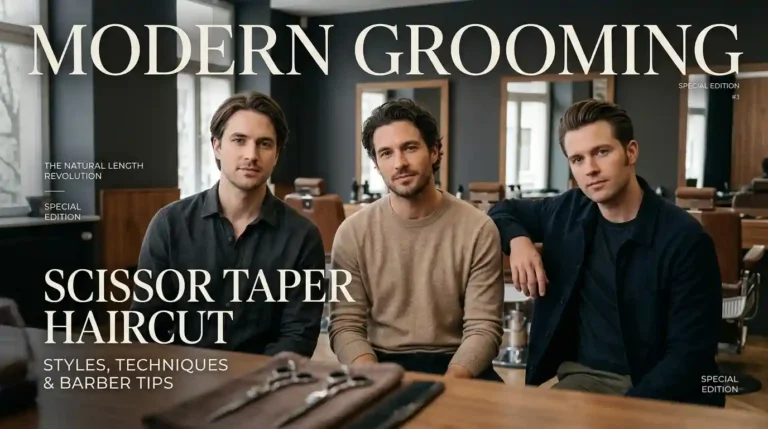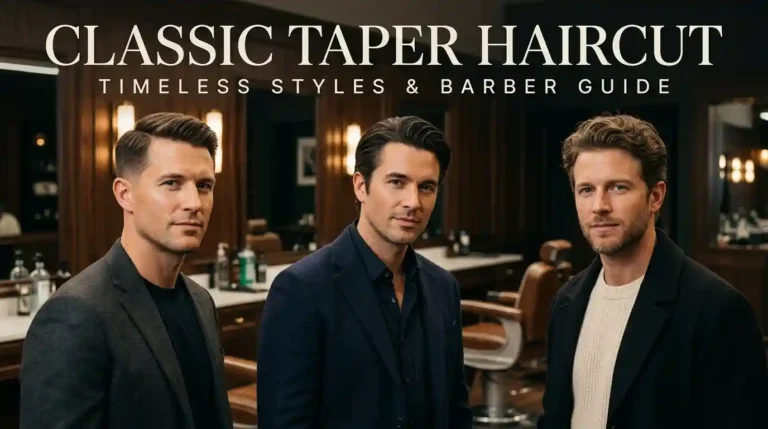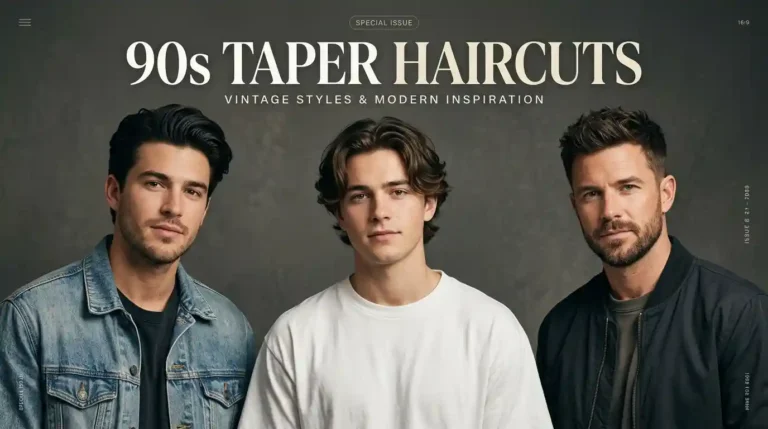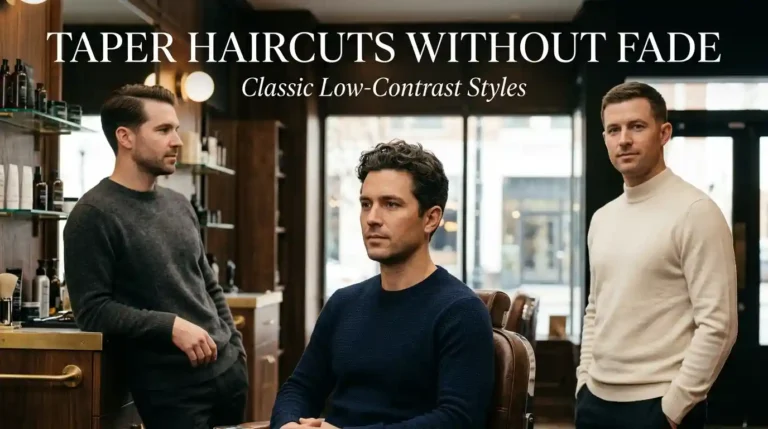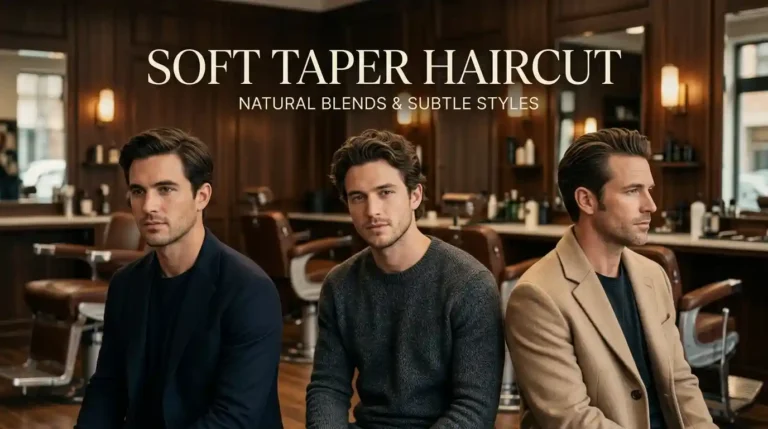

Old Money Taper Haircut: Styles, Barber Tips, and Styling Guide
The old money taper haircut is a timeless men’s hairstyle that combines understated elegance, natural movement, and carefully blended sides for a polished appearance. Inspired by traditional gentleman’s grooming, Ivy League fashion, and classic preppy styles, this haircut focuses on balanced proportions rather than dramatic fades, exaggerated volume, or heavily styled finishes. Popular variations include the classic side part, soft scissor taper, Ivy League cut, executive contour, brushed-back hairstyle, and medium-length gentleman’s cut. Whether you prefer a short, low-maintenance haircut or longer hair with natural flow, the old money aesthetic can be adapted to your face shape, hair texture, and personal preferences. The secret is maintaining enough length for comfortable styling while keeping the neckline, sideburns, and overall silhouette neat. In this complete guide, you’ll discover the best old money taper haircut styles for men, learn how low tapers and scissor cutting create a refined finish, find the right option for your hair type, and get practical barber instructions, styling techniques, and maintenance tips for achieving an effortlessly sophisticated look.
Table of Contents
- What Is an Old Money Taper Haircut?
- How the Taper Shapes the Old-Money Look
- Old Money Taper Haircut Styles
- Choosing a Style for Your Face, Hair, and Routine
- How to Ask Your Barber for an Old Money Taper
- How to Grow Out a Fade or Undercut into an Old Money Taper
- How to Style an Old Money Taper
- Maintaining the Cut
- What Can Make the Old-Money Look Less Polished?
- Old-Money Hairstyles for Women
- Old Money Taper Haircut Cost
- Old Money Taper Haircut FAQs
- Final Thoughts
What Is an Old Money Taper Haircut?
An old money taper haircut is a classic-inspired hairstyle featuring gradually shortened sides, a neatly shaped neckline, and longer hair on top that can be styled naturally or into a polished finish.
The hairstyle is associated with the old money aesthetic, which emphasizes understated grooming, traditional proportions, and timeless fashion.
Unlike a highly contrasted skin fade or disconnected undercut, an old money taper generally retains more fullness around the upper sides.
The result is a softer, more balanced haircut that complements formal clothing, smart-casual outfits, and everyday personal style.
However, the term does not refer to one universally defined barbering technique.
The Old-Money Look as a Grooming Aesthetic, Not One Fixed Haircut
The old money aesthetic draws inspiration from classic tailoring, preppy fashion, established grooming traditions, and understated personal presentation.
In hairstyling, it usually favors neatness without looking overly elaborate.
A natural side part, Ivy League, brushed-back cut, or softly layered medium hairstyle can all fit the aesthetic.
The goal is not to make a haircut look expensive or to suggest that a particular style belongs to a specific social class.
Instead, the appeal comes from its timeless proportions and versatility.
An old money haircut should generally look intentional even when styled with minimal product.
This is why the classic taper works so well: it creates structure without requiring extreme contrast.
Classic Proportions, Clean Edges, and Controlled Volume
Proportion is one of the most important features of an old money taper.
The sides should complement the top rather than create a dramatic separation.
Most variations retain enough length around the temples and upper sides to maintain a natural silhouette.
The top may be short, medium, or relatively long, but the volume should remain controlled.
For example, a side part with three inches of top length can look refined when the hair follows its natural growth direction.
The same haircut may look less restrained if styled into an excessively tall, rigid quiff.
A neatly shaped neckline and balanced sideburns help complete the appearance.
The emphasis is on precision without making every edge appear artificially sharp.
Natural Movement and a Restrained Finish
Natural movement gives the old money taper its relaxed character.
The hair may sweep gently to one side, brush backward, or follow its natural waves.
A restrained finish does not necessarily mean completely matte hair.
Low shine, satin shine, and natural-looking gloss can all suit traditional men’s hairstyles.
The important distinction is avoiding unnecessary product buildup or stiffness.
A small amount of styling cream or lightweight pomade often provides enough control.
The finished hairstyle should remain comfortable and relatively easy to adjust throughout the day.
Old Money Haircut vs. Old Money Hairstyle
A haircut refers to the shape created by cutting the hair.
A hairstyle describes how that cut is arranged and finished.
For example, a classic taper is a haircut because it defines how the hair transitions from longer to shorter lengths.
A brushed-back finish is a hairstyle because it describes the direction and appearance of the top.
This difference matters when communicating with a barber.
You might request a classic taper haircut with a natural side part, or a longer scissor taper that can be styled backward.
Understanding both elements helps you achieve the appearance you actually want.
How the Taper Shapes the Old-Money Look
The taper is the foundation of many traditional gentleman’s hairstyles.
Its purpose is to connect the longer sections of hair to shorter areas without creating an abrupt change.
However, different tapering techniques can produce noticeably different results.
Classic Taper and Soft Scissor Taper
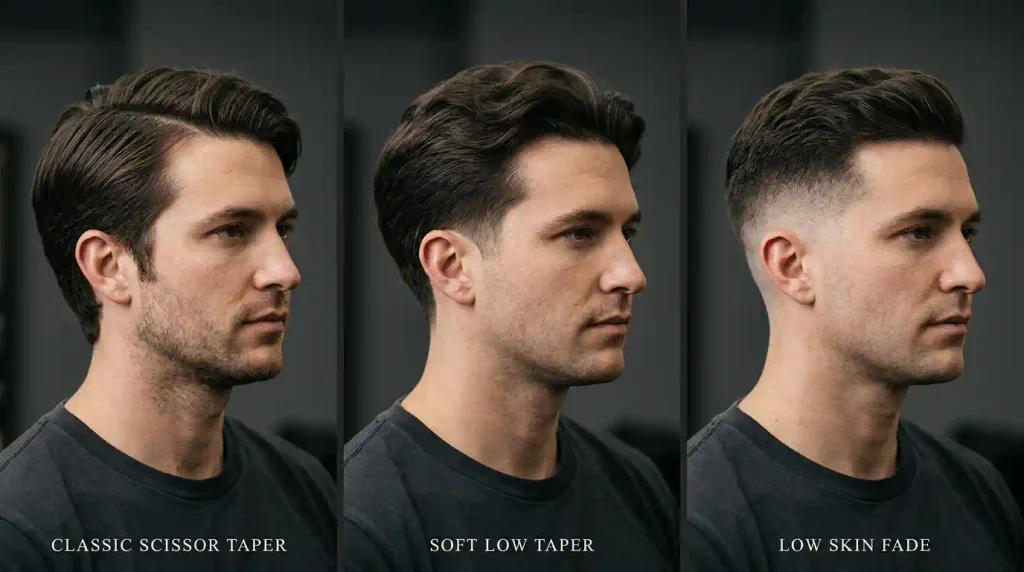
A classic taper haircut gradually shortens the sides and back while preserving a balanced silhouette.
The top can be styled into a side part, comb-over, brush-back, or natural textured shape.
A scissor taper uses scissors, often with scissor-over-comb techniques, to control how the hair changes length.
Scissor cutting is particularly useful when the client wants fuller sides or a softer transition.
Unlike very close clipper fading, it can preserve more visible hair around the temples and ears.
That does not mean clippers are unsuitable for old money styling.
A skilled barber may combine scissors and clippers to achieve the desired finish.
The important factor is how the haircut looks when completed.
Low Taper and Natural Taper
A low taper concentrates the shorter transition near the sideburns, ears, and nape.
Most of the upper sides retain their natural fullness.
This creates an understated appearance that works particularly well with medium-length hair.
A natural taper focuses on following the existing hairline and growth patterns.
The neckline gradually shortens instead of ending in an unnecessarily harsh boundary.
For men who want minimal contrast, a soft taper haircut can be an excellent option.
It maintains a gentle transition while allowing the hairstyle to grow out naturally.
Best overall recommendation: A low classic taper with sufficient length on top for a natural side part or brushed-back finish.
Taper vs. Fade
A taper and a fade both involve changing hair lengths.
However, the usual amount of contrast differs.
A traditional taper generally retains more visible hair near the lower sides.
A fade often blends down to very short stubble or bare skin.
A classic taper may therefore appear softer and less sharply defined than a skin fade.
| Feature | Classic Taper | Low Fade | Skin Fade |
| Side fullness | Usually greater | Moderate | Depends on fade height |
| Scalp exposure | Little or none | May expose skin near the bottom | Exposes skin in faded areas |
| Contrast | Subtle | Low to moderate | More noticeable |
| Grow-out appearance | Generally soft | Gradually loses definition | Very short areas become noticeable as they grow |
| Traditional aesthetic | Strong | Can work | Less typical |
| Styling versatility | High | High | Depends on the top shape |
A taper haircut without fade is particularly suitable when you want the sides to remain naturally graduated without exposed scalp.
Low, Mid, High, and Skin Fades Compared
Different fade heights can change the overall impression of a hairstyle.
A low fade keeps the shortest area close to the lower sides and neckline.
A mid fade starts the transition farther upward.
A high fade removes more hair from the upper sides, producing greater contrast.
A skin fade describes how closely the hair is cut at the shortest point, rather than one specific fade height.
A low skin fade, for example, can expose skin while remaining relatively low.
For a traditional old money appearance, a low taper or restrained low fade is usually the most natural choice.
Mid and high fades can create attractive modern combinations, but they tend to look more contemporary and less understated.
Scissor-Over-Comb vs. Clipper Cutting
Scissor-over-comb is a traditional barbering technique used to control length and blending.
The barber lifts hair with a comb and cuts the exposed section using scissors.
This allows gradual changes in hair length while preserving selected areas of fullness.
Clippers are especially useful for shorter, more precise sections.
A barber may use clippers around the lower sideburns and neckline while using scissors to shape the upper sides.
A scissor taper haircut is worth considering if you prefer fuller side length and natural texture.
However, no specific tool guarantees the old money aesthetic.
An experienced barber can create a subtle finish using either technique or a combination of both.
Natural Neckline vs. Hard or Blocked Neckline
The neckline influences how polished the haircut looks from behind.
Natural tapered neckline: Gradually reduces hair length toward the lower hairline, usually creating a softer grow-out.
Blocked neckline: Creates a more defined straight or squared edge.
Rounded neckline: Follows a curved shape around the nape.
For a classic old money taper, a natural tapered neckline is often the best match.
It complements gradual side blending and avoids an overly artificial outline.
A blocked neckline may look sharp immediately after cutting but can become more noticeable as the hair grows.
The best choice also depends on your natural neck hairline and head shape.
Side-by-Side Taper Comparisons from the Front, Side, and Back
When comparing taper photographs, examine all three angles.
The front view reveals fringe position, parting, and overall top volume.
The side view shows how much hair remains above the ears and where the taper begins.
The back view reveals the neckline, crown transition, and lower blending.
A reference photo showing only the front is not enough to communicate a specific taper.
For old money styling, look for smooth transitions, moderate side length, and a natural overall shape.
Old Money Taper Haircut Styles
There are several ways to create an old money-inspired hairstyle.
Some options are short and practical, while others preserve longer layers and natural movement.
The best choice depends on your hair texture, preferred styling routine, and desired appearance.
Short Styles
Short old money hairstyles prioritize neat proportions and manageable daily grooming.
They work well for people who want a traditional appearance without spending much time styling their hair.
Classic Taper
The classic taper is one of the most reliable choices for achieving an understated look.
It features graduated sides, a neatly shaped neckline, and a top that can be combed naturally.
For a short version, keep approximately 1.5–2.5 inches on top, depending on hair texture and styling needs.
A small amount of styling cream creates control without excessive shine.
Best for: Traditional grooming, straight or wavy hair, and low-maintenance routines.
Barber request: Keep the sides naturally graduated, avoid exposed scalp, and preserve enough top length for a soft side part.
Crew Cut and Tapered Crew Cut
A crew cut is a short hairstyle that usually keeps slightly more length near the front than the crown.
A tapered crew cut adds a gradual transition around the sides and neckline.
This combination creates a practical haircut with a neat, traditional appearance.
It is especially useful for men who prefer minimal daily styling.
A crew cut can also provide inspiration for a military taper haircut, although military compliance depends on specific regulations.
Best for: Short-hair preferences and active lifestyles.
Barber request: Maintain a compact top with a little extra front length and smoothly tapered sides.
Ivy League and Princeton Cut
The Ivy League, also known as the Princeton cut in some barbering traditions, is a longer variation of the crew cut.
It leaves enough length near the front for a small natural side part.
The sides remain short and neatly graduated.
This hairstyle is strongly associated with traditional collegiate and preppy styling.
It combines the convenience of a short haircut with the flexibility of a gentle comb-over.
Best for: Straight or slightly wavy hair, formal styling, and minimal daily effort.
Barber request: Leave approximately 1.5–2.5 inches near the front, shorten gradually toward the crown, and use a soft taper around the sides.
Caesar Cut and French Crop
The Caesar cut features a relatively short top and forward-directed fringe.
A French crop is a related modern style that often emphasizes texture and a defined short fringe.
Neither is necessarily the most traditional old money hairstyle, but both can be adapted with restrained proportions and softly tapered sides.
Avoid an overly dramatic disconnected fade if you want a more classic finish.
Best for: Short straight or textured hair and people seeking easy everyday styling.
Barber request: Keep a short, controlled fringe and blend the sides gradually without excessive contrast.
Short Back and Sides
The traditional short-back-and-sides haircut is a broad barbering style with shorter hair around the sides and back and more length on top.
It can be shaped using clippers, scissors, or both.
For an old money-inspired version, preserve natural side fullness and avoid taking the shortest sections too high.
The top can be styled into a modest side part or brushed backward.
Best for: Nearly all age groups and a wide range of professional and casual settings.
Barber request: Keep the top short but flexible, use gentle side graduation, and create a natural tapered neckline.
Medium-Length Styles
Medium-length hair offers some of the greatest flexibility for old money styling.
It allows traditional side parts, brushed-back shapes, controlled quiffs, and soft natural movement.
Classic Side Part
The classic side part is one of the most recognizable old money hairstyles.
The longer top follows a natural parting line, while the sides blend smoothly into the lower hairline.
Unlike a shaved hard part, the traditional version relies on the hair’s natural direction.
Approximately 2–4 inches on top can provide useful styling flexibility.
A small amount of lightweight pomade or styling cream helps maintain the shape.
Best for: Straight and wavy hair, medium density, and classic gentleman’s grooming.
Soft Side Part Taper
A soft side part taper creates a more relaxed version of the traditional side part.
The hair is guided to one side without forming a rigid, sharply combed shape.
The sides retain moderate fullness, and the parting line may be subtle.
This style works particularly well for men who want a polished appearance that still looks natural.
Best for: Medium-length straight or wavy hair.
Styling tip: Use your fingers after combing to soften the finish.
Natural-Part Low Taper
The natural-part low taper follows the hair’s existing growth direction.
Instead of forcing a precise side part, the barber leaves enough length for the hair to separate comfortably.
The low taper maintains a neat neckline while preserving the upper-side silhouette.
This is an excellent choice for men with cowlicks or slightly irregular parting patterns.
Best for: People who prefer low-maintenance, flexible styling.
Styling tip: Use lightweight cream and allow the hair to settle naturally.
80/20 Sweep and Side Sweep
The 80/20 sweep places most of the hair toward one side, creating an asymmetric but controlled shape.
The part is positioned farther toward the side than a traditional center part.
This allows the longer section to move naturally across the top.
A side sweep can also soften the forehead area and create gentle volume.
Best for: Medium-length straight or wavy hair.
Barber request: Preserve enough front length to sweep comfortably and keep the sides softly tapered.
Gentleman’s Haircut and Businessman Haircut
A gentleman’s haircut generally describes a refined, traditional shape rather than one fixed cutting method.
A businessman haircut often features a neat side part, moderate top volume, and smoothly graduated sides.
These styles suit people who prefer a polished appearance without elaborate detailing.
A business taper haircut follows similar principles and can be adapted to conservative offices or business-casual environments.
Best for: Professional settings and traditional everyday grooming.
Styling tip: Use a small amount of low-shine pomade for controlled movement.
Classic Comb-Over and Executive Contour
The classic comb-over uses a longer top swept across the head from a natural parting.
An executive contour usually emphasizes a carefully shaped top and controlled side graduation.
The combination can create a sophisticated appearance with a little more structure than a relaxed side part.
The sides should remain connected to the top rather than forming an obvious undercut.
Best for: Medium-density straight and wavy hair.
Barber request: Maintain approximately 3–4 inches on top, preserve a natural part, and blend the sides gradually.
Slick Back and Brushed-Back Natural
The slick-back directs the longer top backward from the forehead.
A traditional glossy finish can look elegant, but the old money aesthetic generally benefits from moderate rather than excessive shine.
The brushed-back natural variation creates a softer appearance with less product.
Hair may move slightly rather than remain fixed in place.
Best for: Medium to thick straight or wavy hair.
Styling tip: Blow-dry gently backward, then apply a small amount of styling cream or light pomade.
Classic Quiff and Textured Quiff
A quiff adds height near the front of the hairstyle.
For an old money look, the volume should remain controlled and proportional.
A classic quiff uses smoother styling, while a textured quiff introduces more natural separation.
The sides remain softly graduated to prevent excessive contrast.
Best for: Hair with enough density to support front volume.
Barber request: Keep extra length around the fringe and maintain a gradual taper through the sides.
Classic Pompadour
The pompadour features greater height and rounded volume at the front.
Although it can be more dramatic than a typical old money haircut, a restrained version fits the classic gentleman’s aesthetic.
The top should remain smooth and well shaped without becoming excessively tall.
A blow-dryer and suitable pomade can provide controlled lift.
Best for: Thick straight or wavy hair.
Styling tip: Use moderate front height and keep the sides naturally blended.
Razor Part and Hard-Part Side Sweep
A razor part or hard part creates a defined parting line using a trimmer or razor.
This is more contemporary than a natural side part.
It can still work with old money-inspired styling if the line is narrow and the rest of the haircut remains subtle.
However, a heavily shaved part may create more contrast than desired.
Best for: Men who prefer a defined part while keeping an otherwise classic haircut.
Barber request: Use a restrained part line and avoid unnecessary disconnected styling.
Longer Styles
Longer old money hairstyles emphasize flowing movement, soft layers, and controlled natural volume.
These styles usually require more thoughtful shaping than short cuts, but they can create a particularly relaxed, sophisticated appearance.
Classic Taper with Side Flow
This hairstyle combines a soft taper around the lower sides with longer hair that naturally moves toward one side.
The top may reach four to six inches or more, depending on the desired finish.
The barber should preserve enough length through the upper sides to support the flowing shape.
A lightweight styling cream can help control frizz without creating stiffness.
Best for: Medium to thick straight or wavy hair.
Layered Medium Cut
A layered medium haircut uses carefully placed layers to manage weight and movement.
It is particularly useful for thick hair that becomes bulky when left at one length.
The layers should connect naturally instead of creating a deliberately choppy appearance.
A subtle neckline taper can help maintain a clean finish.
Best for: Medium-length wavy or thick hair.
Styling tip: Use minimal product and allow the layers to settle into their natural direction.
Bro Flow
The bro flow is a relaxed hairstyle in which medium-to-long hair falls naturally backward or away from the face.
It usually maintains more length around the ears and neckline than a conventional short taper.
For an old money-inspired version, keep the shape controlled and avoid excessive bulk.
A subtle lower-neckline taper may be added without removing the flowing appearance.
Best for: Wavy or straight hair that naturally falls backward.
Side Fringe and Curtain Cut
A side fringe creates soft facial framing while maintaining a longer top.
The curtain cut features a center part or off-center part, allowing hair to fall toward both sides of the face.
Although curtains are often associated with 1990s men’s fashion, they can be adapted into a polished modern style.
A restrained taper keeps the neckline tidy while preserving movement.
For more vintage inspiration, explore the taper haircut 90s look.
Best for: Medium-length straight or wavy hair.
Long Side Part
A long side part preserves significant length through the front and crown.
The hair can be swept to one side or brushed gently away from the face.
Soft layers help reduce unnecessary weight.
This hairstyle suits men who enjoy a traditional appearance but do not want a short haircut.
Best for: Medium-density or thick hair with natural movement.
Styling tip: Apply a lightweight cream and use a wide-tooth comb to create a relaxed shape.
Classic Blowout
A classic blowout uses blow-drying techniques to create volume, smoothness, and natural movement.
Unlike an exaggerated high-volume hairstyle, the old money version should remain balanced.
A round brush may help lift the roots and direct the hair away from the face.
The resulting finish can look full without appearing stiff.
Best for: Medium-length straight or wavy hair.
Styling tip: Work with moderate heat and finish with a cool-air setting to help settle the shape.

Choosing a Style for Your Face, Hair, and Routine
The best old money taper depends on more than fashion inspiration.
Hair density, face shape, natural growth patterns, and daily styling preferences all influence the finished appearance.
Matching the Cut to Your Face Shape
Face shape can help you choose appropriate volume and proportions.
| Face Shape | Suggested Old Money Style | Main Consideration |
| Oval | Classic side part, Ivy League, brushed back | Flexible proportions |
| Round | Side part with moderate top height | Adds some visual length |
| Square | Soft side part or textured taper | Balances angular features |
| Diamond | Low taper with fuller temples | Softens prominent cheekbones |
| Heart-shaped | Medium-length side sweep | Balances the forehead and jaw |
| Oblong | Classic taper with modest height | Avoids excessive vertical volume |
These are suggestions rather than strict rules.
For example, someone with a round face can still wear a slick-back if the overall proportions are adjusted appropriately.
A skilled barber can tailor the fringe, side length, and crown shape to your preferences.
Choosing a Cut for Straight, Wavy, Curly, or Coily Hair
Straight hair: Works well with side parts, Ivy League cuts, executive contours, and slicked-back styles.
Wavy hair: Naturally supports brushed-back styles, side flow, layered cuts, and relaxed gentleman’s tapers.
Curly hair: Can create a polished appearance with a softly shaped top and graduated sides. Maintaining enough curl length helps preserve natural definition.
Coily hair: Works well with neatly shaped natural tops, short tapers, and fuller textured styles. The barber should account for shrinkage and natural growth patterns.
An old money haircut does not require straight hair.
The central idea is balanced shaping and deliberate grooming, regardless of natural texture.
Adjusting the Cut for Fine or Thick Hair
Fine hair often benefits from a shorter or medium-length top that maintains enough structure.
An Ivy League or natural side part can be easier to style than a very long brushed-back cut.
Heavy pomade may flatten fine hair, so lightweight products are often preferable.
Thick hair can support longer flow, pompadours, and full side parts.
However, excessive bulk around the upper sides may need careful scissor work.
The goal is to preserve natural fullness without allowing the hairstyle to become difficult to control.
Old-Money Styles for Thinning Hair or a Changing Hairline
A changing hairline does not prevent someone from wearing an old money-inspired haircut.
The Ivy League, short side part, and textured classic taper can work well with thinning hair.
Avoid relying on an excessively long comb-over that requires constant adjustment.
For thinning temples, a low taper with moderate side fullness may create a balanced silhouette.
The barber can also adjust the parting direction to work with the remaining density.
Sudden, patchy, or progressive hair loss should be evaluated by a dermatologist when appropriate.
Choosing by Top Length, Styling Time, and Trim Frequency
Hair length affects both appearance and daily effort.
| Haircut | Approximate Top Length | Styling Time | Suggested Trim Interval |
| Crew cut taper | 0.5–1.5 inches | 1–2 minutes | 3–4 weeks |
| Ivy League | 1.5–2.5 inches | 2–4 minutes | 3–5 weeks |
| Classic side part | 2–4 inches | 3–5 minutes | 4–6 weeks |
| Executive contour | 2.5–4 inches | 4–6 minutes | 4–6 weeks |
| Brushed-back taper | 3–5 inches | 4–7 minutes | 4–7 weeks |
| Long side flow | 4–7 inches | 5–10 minutes | 6–8 weeks |
| Bro flow | 5 inches or longer | 5–10 minutes | 6–10 weeks |
These are approximate styling and maintenance ranges.
Hair texture, growth speed, and personal preference may change the ideal schedule.
Pairing the Taper with Facial Hair and Glasses
Facial hair can complement the old money look when maintained with the same attention as the haircut.
A clean-shaven appearance, short stubble, or neatly trimmed beard can all work.
If you have a beard, ask your barber to blend the sideburns naturally into the facial hair.
Avoid an unintended gap between the haircut and beard.
Glasses can also influence hairstyle proportions.
Thicker frames may look balanced with controlled top volume and moderate side length.
Thinner frames often work with both short and medium traditional cuts.
Rather than choosing a hairstyle entirely around your glasses, consider how the overall shape looks when worn together.
How to Ask Your Barber for an Old Money Taper
Clear instructions help your barber translate the aesthetic into a practical haircut.
The term “old money” may communicate a general style, but it does not provide exact cutting measurements.
Why “Old Money Haircut” May Be Too Vague
Different people associate the old money aesthetic with different hairstyles.
One person may imagine a short Ivy League.
Another may prefer a medium side part or long brushed-back hair.
A barber might interpret the request as a traditional taper, scissor cut, or modern low fade.
To avoid confusion, describe the length, silhouette, taper height, and styling direction.
Reference photographs are particularly helpful.
Decide the Top Length and Styling Direction
Before your appointment, consider how you want to wear the top.
Do you prefer a short natural side part, brushed-back style, or longer flowing shape?
For a classic side part, approximately 2–4 inches on top often provides useful flexibility.
For a longer brushed-back cut, additional length may be needed.
For an Ivy League, a shorter front may be sufficient.
The barber should adjust these measurements for your hair texture and growth patterns.
Choose the Taper, Side Length, and Contrast
Decide whether you want a classic low taper, fuller scissor-cut sides, or a slightly closer low fade.
For a restrained old money appearance, preserving visible hair around the upper sides is usually beneficial.
Ask for smooth transitions without a dramatic change between the top and sides.
Avoid vague requests such as “make the sides really tight” if you do not want a close fade.
Instead, explain that you want natural graduation and moderate fullness.
Choose Scissors or Clippers
Scissors often provide flexibility when preserving side length and natural movement.
Clippers can create precise shorter sections and clean neckline details.
Many excellent traditional tapers combine both tools.
Ask your barber which approach is best suited to your hair.
If you want a softer, less tightly clipped appearance, explain that you prefer a scissor-dominant result.
Describe the Neckline, Natural Part, and Hairline
The neckline should complement the overall haircut.
A natural tapered neckline generally provides a soft finish.
A natural part is preferable if you want to avoid the highly defined appearance of a hard part.
The barber should also follow the existing hairline rather than pushing the temples backward unnecessarily.
Cowlicks and crown whorls may influence how the top should be shaped.
Mention any sections that usually stand up or become difficult to manage.
Bring a Reference Photo
A good reference photo should show more than the front of the haircut.
Bring images that reveal the side taper, top shape, and neckline.
Ideally, use photos of the same haircut from different angles.
If your hair is curly or coily, try to find examples with a similar texture.
A photograph can show the desired silhouette, but the barber may need to modify the technique to suit your natural hair.
Sample Barber Request
Use this description as a starting point:
“I want an old money-inspired classic taper with a natural, polished finish. Please keep around three inches on top so I can wear a soft side part or brush it backward. I want the sides gradually tapered with some fullness above the ears, not a high or skin fade. Keep the neckline natural, the sideburns neat, and the overall shape balanced. I prefer a softer scissor-cut appearance rather than an overly sharp, disconnected style.”
For a shorter version, replace the medium top-length request with a traditional Ivy League or short classic taper.
For longer hair, request natural layers and a softly cleaned neckline.
Saveable Barber Reference Card
| Haircut Detail | Recommended Old Money Option |
| Overall style | Classic gentleman’s taper |
| Taper height | Low or regular |
| Top length | Approximately 2.5–4 inches |
| Upper-side length | Moderate fullness |
| Main cutting technique | Scissors with clipper detailing as needed |
| Parting | Natural side part |
| Neckline | Softly tapered |
| Sideburns | Neatly shaped, natural length |
| Finish | Natural or low shine |
| Volume | Controlled, not exaggerated |
| Avoid | High skin fades, disconnected undercuts, excessive product |
| Styling product | Lightweight cream or low-shine pomade |

How to Grow Out a Fade or Undercut into an Old Money Taper
If you currently have a high fade or disconnected undercut, you may need a grow-out period before achieving a softer classic taper.
The process depends on how short the sides are and how much length remains on top.
What Can Be Reshaped at the First Appointment
At the first appointment, your barber can improve the overall balance.
This may involve trimming excess top length, softening sharp transitions, or cleaning the neckline.
If the sides are very short, the barber cannot immediately recreate fuller classic proportions.
However, careful shaping can make the haircut look more intentional during the transition.
Ask the barber to preserve as much useful side length as possible.
What Needs Time to Grow
The upper sides often need additional length before they can blend naturally into the top.
Hair commonly grows around half an inch per month on average, although individual growth rates vary.
A high skin fade may require several weeks or longer before the sides develop enough fullness for a classic scissor taper.
Avoid repeatedly requesting close fades during this period.
Instead, allow the sides to grow while maintaining the top at a suitable length.
What to Ask for at Each Follow-Up Visit
During early follow-up appointments, focus on maintaining a clean neckline and reducing awkward bulk.
Once the sides have grown sufficiently, ask the barber to establish more natural graduation.
Later appointments can refine the full shape and create the preferred side part or brushed-back finish.
The process may require more than one haircut.
Patience is important because a natural-looking taper relies on having enough hair to blend properly.
How to Style an Old Money Taper
Styling should enhance the haircut rather than dominate it.
The most useful tools are often a comb, blow-dryer, lightweight product, and a few minutes of attention.
Style a Classic Side Part
Begin with clean, slightly damp hair.
Find the natural parting direction and separate the hair using a comb.
Apply a small amount of styling cream or low-shine pomade.
Comb the top gently to one side while allowing some natural movement.
If necessary, use a blow-dryer on low or medium heat to help establish the shape.
Avoid forcing a very sharp part line unless that is your preferred appearance.
Brush the Hair Back Naturally
For a brushed-back taper, start with damp hair and distribute a small amount of lightweight styling cream.
Use a comb or your fingers to direct the top backward.
A blow-dryer can help create controlled movement at the roots.
Avoid pressing the hair completely flat unless you want a formal slicked-back finish.
The goal is a natural direction with enough body to maintain a balanced shape.
Bring Out a Natural Wave
Wavy hair can create an excellent old money appearance without heavy styling.
Apply a small amount of leave-in conditioner or lightweight styling cream if your hair needs moisture.
Gently arrange the hair with your fingers.
Allow it to air-dry or use a diffuser when appropriate.
Avoid excessive brushing after the wave pattern has formed, as this may increase frizz.
The finished hairstyle should preserve the natural movement of the hair.
Create Controlled Volume Without Stiffness
A quiff, pompadour, or classic blowout needs controlled root volume.
Begin with slightly damp hair and apply a suitable lightweight pre-styling product.
Use a brush while directing warm air toward the roots.
Lift the front gently rather than forcing it excessively high.
A cool-air setting can help settle the shape.
Finish with a small amount of product.
For hair health, the American Academy of Dermatology’s healthy hair-care tips recommend limiting excessive heat and selecting hair-care products suited to your hair type.
Choose Products for Your Hair Type and Desired Finish
| Product | Best Use | Typical Finish |
| Styling cream | Natural side part, brushed-back hair | Soft and natural |
| Low-shine pomade | Classic side part, comb-over | Controlled satin shine |
| Matte clay | Short textured taper | Matte and structured |
| Hair wax | Flexible short-to-medium styling | Natural to moderate shine |
| Texture powder | Adding root lift to suitable fine hair | Matte |
| Sea salt spray | Enhancing separation on suitable hair types | Textured |
| Lightweight mousse | Creating manageable volume | Soft hold |
| Leave-in conditioner | Managing dryness and frizz | Natural movement |
Fine hair often benefits from lightweight products that do not weigh down the roots.
Thick hair may need stronger control or careful weight management.
Curly and coily hair may benefit from conditioning products designed to support moisture and natural definition.
Use the smallest amount needed to achieve the desired appearance.

Maintaining the Cut
An old money taper should look neat without requiring constant aggressive reshaping.
The maintenance schedule depends on hair length, growth speed, and the desired finish.
How Often to Trim Different Lengths
Shorter styles usually need more frequent appointments.
A short Ivy League or crew cut may benefit from a trim every three to five weeks.
Medium-length side parts can often be reshaped every four to six weeks.
Longer flowing styles may allow six to ten weeks between full haircuts, depending on the shape and growth rate.
The neckline and sideburns may need attention sooner than the top.
These are general recommendations rather than fixed schedules.
Keeping the Neckline, Sideburns, and Edges Neat
A neatly maintained neckline supports the overall appearance.
Ask your barber for a natural tapered finish that follows your hair growth pattern.
Avoid repeatedly pushing the neckline higher during cleanup appointments.
Sideburns should remain balanced with the hairstyle and any facial hair.
For a softer old money finish, avoid unnecessary razor-sharp outlines unless they genuinely suit your style.
Helping the Taper Grow Out Cleanly
A well-shaped scissor taper usually develops a softer appearance as it grows.
To maintain the look, use appropriate hair-care products and avoid excessive heat.
Keep the top arranged in its intended direction.
If the sides begin expanding outward, a minor bulk-control appointment may help.
Do not automatically request a closer fade every time the edges lose definition.
That can prevent the hairstyle from developing the fuller proportions you originally wanted.
Choosing a Style You Can Maintain
The most suitable haircut should fit your daily routine.
If you have only two minutes for styling, choose an Ivy League or short classic taper.
If you enjoy blow-drying and shaping your hair, a medium side part or brushed-back cut may be more satisfying.
Longer styles generally require more attention to conditioning, tangles, and movement.
A hairstyle that looks natural after a typical morning routine is often more practical than one requiring constant correction.
What Can Make the Old-Money Look Less Polished?
The old money aesthetic depends on restraint and balance.
Several common styling mistakes can move the haircut away from its intended appearance.
Too Much Product, Shine, or Volume
Excessive pomade can make the hair look greasy.
Heavy gel may create a stiff finish that prevents natural movement.
Similarly, an exaggerated quiff or pompadour can dominate the face.
Use enough product to maintain control, but allow some softness.
Moderate volume and natural-looking shine are usually more consistent with the aesthetic.
A Fade with More Contrast Than You Want
A very high or skin-close fade creates stronger contrast between the top and sides.
This may be attractive as a modern haircut, but it does not provide the same visual softness as a classic taper.
If you prefer an understated result, ask for low graduation and visible side fullness.
A restrained low fade can still work when the overall silhouette remains balanced.
A Hard Part That Looks Overly Defined
A shaved hard part can create a striking line.
However, it may appear more contemporary than a traditional natural side part.
For a softer finish, ask your barber to follow your existing parting direction.
A comb can create enough definition without requiring a shaved line.
A Neckline That Grows Out Awkwardly
A sharply blocked neckline may look neat immediately after the haircut.
As the hair grows, the straight edge can become more noticeable.
A natural tapered neckline usually creates a softer transition.
The barber should also consider your natural nape growth pattern rather than forcing a shape that requires frequent correction.
Copying a Reference Photo Without Adapting It to Your Hair
A hairstyle that looks excellent on thick straight hair may behave differently on fine, curly, or coily hair.
The same applies to head shape, cowlicks, and hairline position.
Use reference photos to communicate the desired silhouette, not to demand identical results regardless of hair texture.
A skilled barber should adapt the cut while preserving the essential appearance.
Old-Money Hairstyles for Women
Although the old money taper is most often discussed in men’s grooming, the wider old money hairstyle aesthetic also includes several classic women’s styles.
These generally emphasize healthy-looking hair, soft movement, and restrained finishing.
Old-Money Blowout
An old-money blowout creates smooth, controlled volume with a polished finish.
The hair is shaped using a blow-dryer and brush to produce soft movement.
Unlike an exaggerated high-volume blowout, the style focuses on balance and natural shine.
It can be worn with a center or side part.
Long Bob and Lob
The long bob, often called a lob, sits around the shoulders or slightly above them.
Its clean outline creates a versatile, understated appearance.
A softly layered lob can provide movement without losing the classic shape.
This style works well with both natural straight hair and gentle waves.
Soft Layers and Face-Framing Pieces
Soft layers create movement while preserving overall length.
Face-framing pieces can be adjusted to complement different face shapes.
The goal is gentle shaping rather than excessive choppiness.
This works particularly well for medium-length and long hairstyles that need movement without dramatic contrast.
Low Chignon and Natural-Looking Color
A low chignon gathers the hair neatly near the nape.
It creates a refined appearance for formal occasions and everyday professional styling.
Natural-looking hair color is another common feature of the aesthetic.
Subtle highlights, balanced tones, and well-maintained natural shades can complement these hairstyles.
However, no particular hair color is necessary to achieve a polished appearance.
Old Money Taper Haircut Cost
The cost of an old money taper depends on the barbershop, location, stylist experience, and complexity of the requested cut.
A traditional taper may be priced as a standard men’s haircut, while longer scissor work or detailed styling can increase the appointment cost.
How Location and Barber Experience Affect the Price
Haircut prices vary considerably between cities and barbershops.
As broad illustrative U.S. planning ranges:
| Service Type | Approximate Price Range |
| Basic men’s taper at a budget shop | 15–30 |
| Traditional neighborhood barbershop | 25–50 |
| Detailed scissor taper | 35–75 |
| Premium barber or salon cut | 60–120+ |
Actual prices depend on local rates and the services included.
A high price does not automatically mean a better haircut.
Experience with your hair type and the ability to create natural graduation are particularly important.
How Scissor Work and Styling Add-Ons Affect the Appointment
A longer scissor-cut hairstyle may take more time than a basic clipper cut.
Additional services can include shampooing, blow-drying, detailed beard shaping, and finishing products.
Some barbers include these services in the standard haircut price.
Others charge separately.
If you want a traditional scissor taper with a fully styled finish, explain that when booking.
What to Confirm When Booking
Before scheduling your appointment, ask whether the barber has experience with classic men’s scissor cuts and softly graduated tapers.
Confirm the estimated price and whether washing or styling is included.
You can also ask about the appointment duration and cleanup services.
For more inspiration, explore the Classic & Traditional Tapers collection to compare classic proportions before your next barbershop visit.
Old Money Taper Haircut FAQs
Is a Low Taper Considered an Old-Money Haircut?
Yes, a low taper can suit the old money aesthetic when combined with balanced proportions, natural side fullness, and restrained styling.
Can an Old-Money Haircut Include a Fade?
Yes, a subtle low fade can work, although a traditional taper generally creates a softer and more understated appearance.
Does the Style Need a Side Part or Slicked-Back Finish?
No, old money hairstyles can include Ivy League cuts, natural texture, brushed-back hair, and longer layered styles.
Can It Work with Curly, Thick, or Thinning Hair?
Yes, the haircut can be adapted to different textures and densities by adjusting top length, layering, and side graduation.
Is It Suitable for Professional Settings and Different Ages?
Yes, its classic proportions make it versatile for many workplaces, formal occasions, casual settings, and age groups.
How Often Should You Trim It?
Most old money taper styles benefit from trimming approximately every three to eight weeks, depending on length, growth speed, and preferred neatness.
Final Thoughts
The old money taper haircut is a versatile choice for anyone who appreciates timeless grooming, natural movement, and understated elegance. From short Ivy League cuts and classic side parts to medium-length brushed-back styles and longer flowing hairstyles, the aesthetic offers plenty of options for different hair types and personal preferences.
For the most traditional appearance, choose a soft low taper or scissor-cut sides, preserve balanced top length, and avoid unnecessarily dramatic contrast. A natural neckline and lightweight styling product can complete the look without making it feel overdone.
Our top recommendation is a classic low scissor taper with a natural side part, offering an excellent balance of sophistication, flexibility, and manageable maintenance.
Explore more haircut ideas at Taper Haircut Hub, save your favorite reference photos, and discuss the exact top length, taper height, and finish with your barber.