Reverse Taper Haircut: Styles, Differences, and Barber Guide
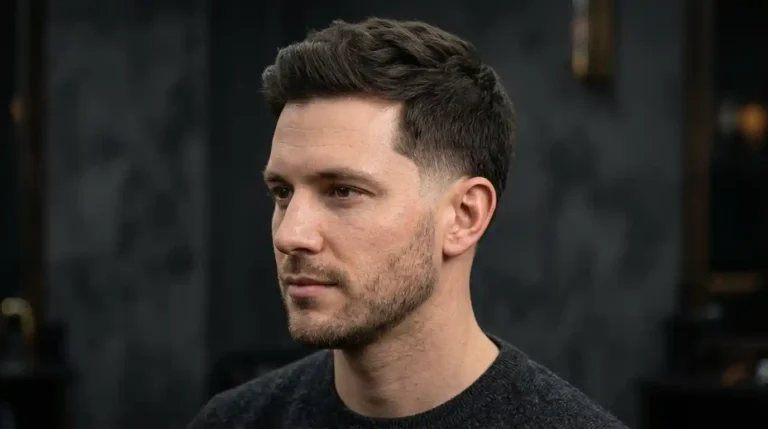
The reverse taper haircut is an unconventional men’s hairstyle that challenges the traditional way hair length transitions from the crown to the neckline. While a regular taper gradually becomes shorter toward the neck and sideburns, a reverse taper can invert that pattern by keeping selected lower sections fuller and reducing length farther up the head. The result is a distinctive silhouette that can range from a subtle inverted blend to a bold, geometric reverse fade with shaved designs.
Reverse taper hairstyles can complement straight, wavy, curly, and coily hair, with variations featuring textured crops, pompadours, mohawks, mullets, and creative neckline designs. However, reverse taper is not a universally standardized barbering term. Some barbers use it to describe a genuinely inverted length gradient, while others use reverse fade for unconventional fade placements, negative-space designs, or sharply defined shapes.
This guide explains what a reverse taper haircut actually looks like, how it differs from conventional fades, which variations suit different face shapes, and how to communicate the exact length pattern to your barber before cutting begins.
Table of Contents
- What Is a Reverse Taper Haircut?
- Reverse Taper vs. Other Taper and Fade Styles
- Reverse Taper Haircut Styles and Variations
- Choosing a Reverse Taper for Your Face Shape
- Choosing a Reverse Taper for Your Hair and Lifestyle
- How to Ask Your Barber for a Reverse Taper
- How Barbers Cut a Reverse Taper
- Tools Used to Cut a Reverse Taper
- Styling and Maintaining a Reverse Taper
- Frequently Asked Questions
- Final Thoughts
What Is a Reverse Taper Haircut?
A reverse taper haircut is a nontraditional taper variation in which the usual distribution of hair length is changed or inverted.
In a conventional taper, the hair is generally longer toward the crown and becomes progressively shorter near the neckline and sideburns. A literal reverse taper does the opposite within a selected area, allowing the hair to remain fuller near the lower section while becoming shorter toward the upper blend zone.
This unusual graduation creates a different silhouette from a traditional fade.
However, barbering and hairstyle websites also use reverse taper fade to describe cuts with inverted shaved patterns, contrasting sections, geometric designs, or unconventional neckline shapes. Not every haircut carrying the name uses a fully reversed hair-length gradient.
The exact placement of the longer and shorter sections should therefore be established before cutting.
How the reverse taper changes the usual hair-length pattern
A traditional taper follows a familiar length progression: longer hair above gradually transitions into shorter hair near the perimeter.
The reverse taper changes that progression.
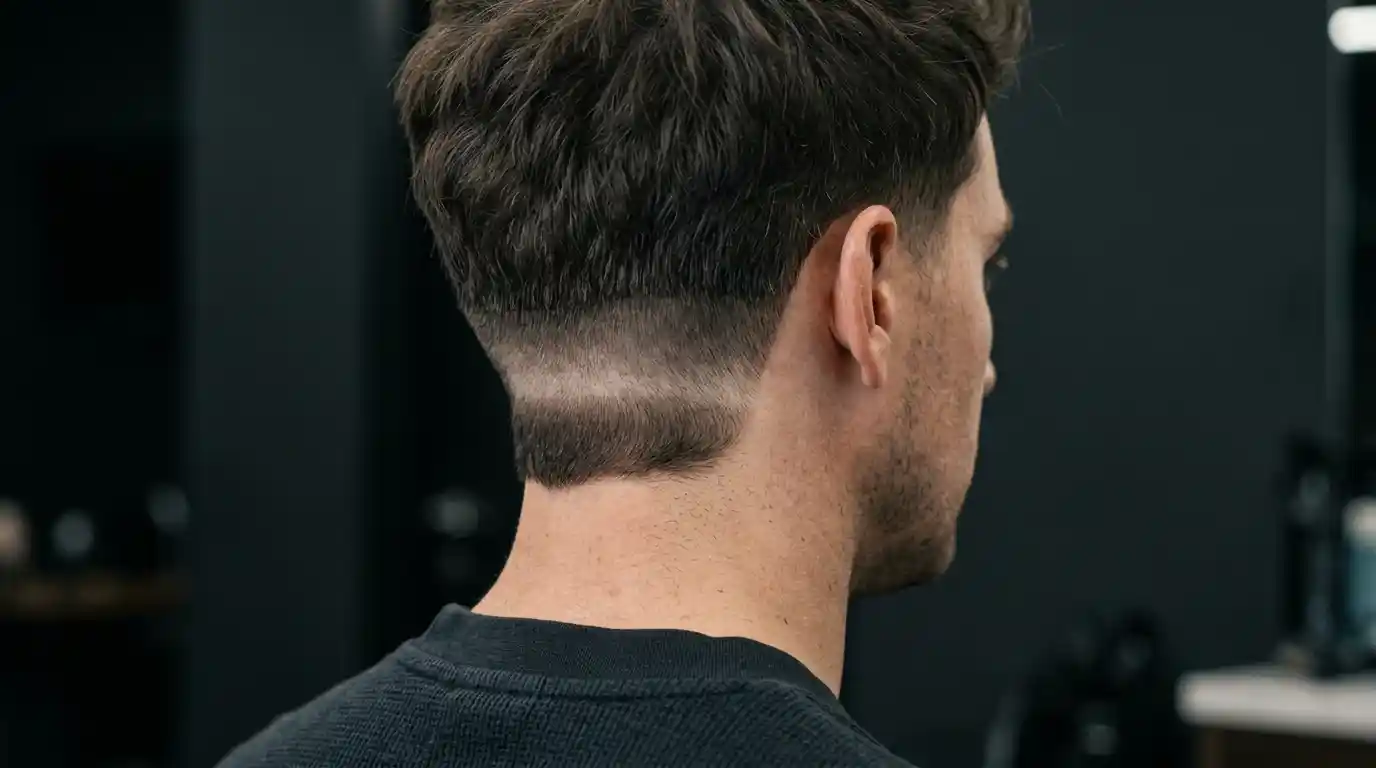
In a literal inverted design, the barber may keep the nape at a longer guard length while progressively shortening the hair as the blend moves upward toward the crown.
This can create a darker lower band beneath a lighter, shorter upper section.
The technique is sometimes described as an upward taper or inverted hair-length gradient.
Not every reverse taper needs to cover the entire back of the head. A localized reverse transition can also be incorporated into a geometric haircut or disconnected hairstyle.
The important distinction is that the intended change in length must be visible and deliberate rather than an accidental uneven fade.
Where the hair is shortest and where it stays fuller
In a literal reverse taper, the shortest hair is typically located higher within the selected transition area, while more length remains toward the nape or lower sideburns.
The crown may be cut relatively short, although it does not have to be shaved.
A design-based reverse fade may use a different arrangement, with longer hair on top and carefully placed shorter sections below.
For example, a reverse taper with a geometric V-shaped neckline may retain longer hair within the V while exposing shorter hair around it.
These variations create a reverse appearance without necessarily reversing every section of the haircut.
Where the short-to-long transition starts and ends
The blend zone is the area where one hair length gradually changes into another.
A reverse taper’s transition can be positioned low, around the middle of the sides, or higher toward the crown.
A low reverse taper concentrates the unusual gradient near the neckline.
A mid reverse fade creates a more noticeable contrast through the middle section.
A high reverse fade may extend the inverted pattern farther toward the crown or upper sides.
The exact boundaries are not standardized. A barber should agree on the shortest and longest points rather than relying on the low, mid, or high label alone.
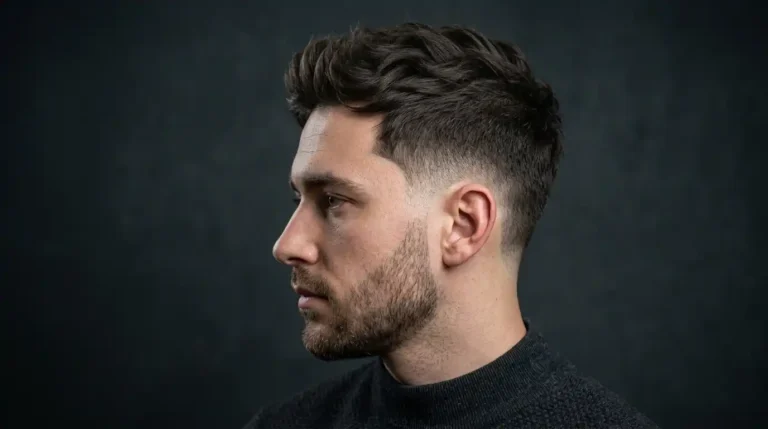
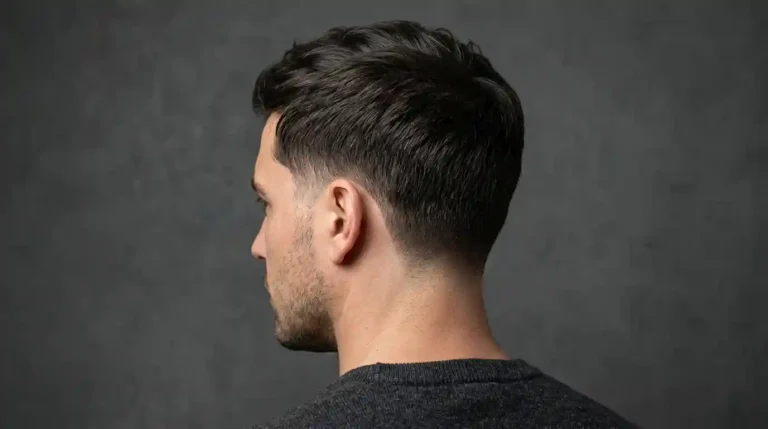
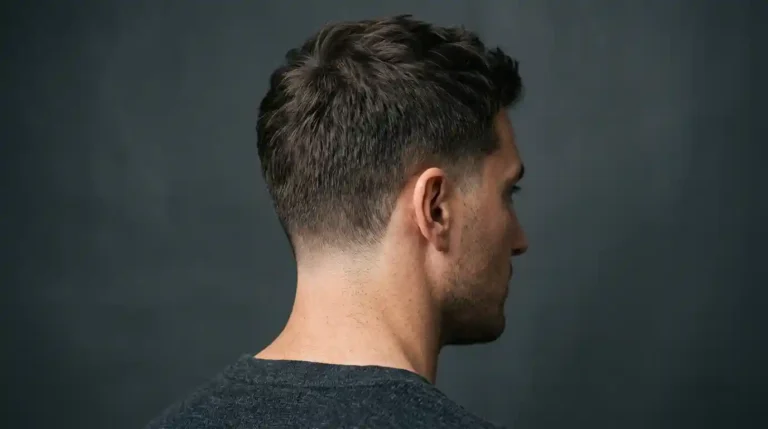
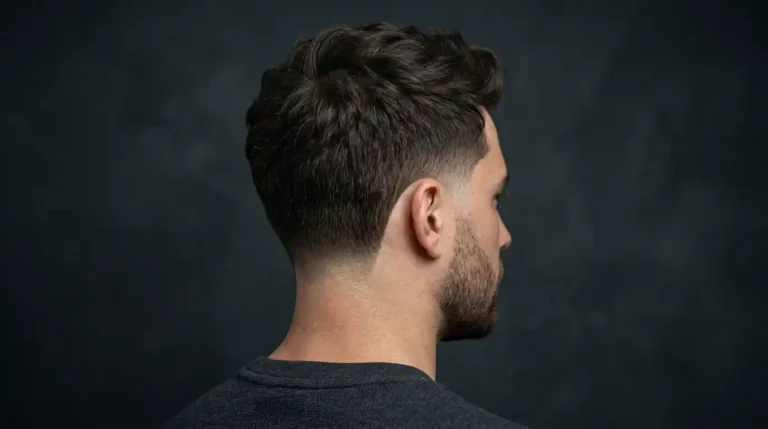
How the shape looks from the front, sides, and back
From the front, a reverse taper may resemble a conventional haircut, especially when the unusual graduation is concentrated at the back.
The side view reveals how the hair changes length around the temples, sideburns, and area behind the ears.
The back view is often the most important because it shows the inverted gradient, neckline design, or contrasting hair sections.
A geometric reverse fade may feature a V-shaped nape, curved line, or clearly separated bands of hair.
A simpler reverse taper might show a subtle darker section along the lower neckline.
The haircut’s appearance depends on how strongly the lengths contrast and whether decorative lines are included.
How a reverse taper differs from a reverse fade
The terms reverse taper and reverse fade are frequently used interchangeably, but they can describe different amounts of hair removal.
A reverse taper typically suggests a more localized, controlled change in length.
A reverse fade may involve a wider section of the sides and back, stronger contrast, or skin-level cutting.
However, there is no single universally accepted definition separating these unconventional styles.
| Feature | Reverse Taper | Reverse Fade |
| Main idea | Inverted or unconventional localized taper | Broader inverted or reverse-styled fade |
| Typical area | Nape, sideburns, or selected sections | Potentially larger side and back areas |
| Hair-length contrast | Subtle to strong | Often more pronounced |
| Skin exposure | Optional | Optional, including skin-level variations |
| Common styling | Controlled inverted blend, neckline detail | Geometric designs, disconnected shapes |
| Barber terminology | Not standardized | Not standardized |
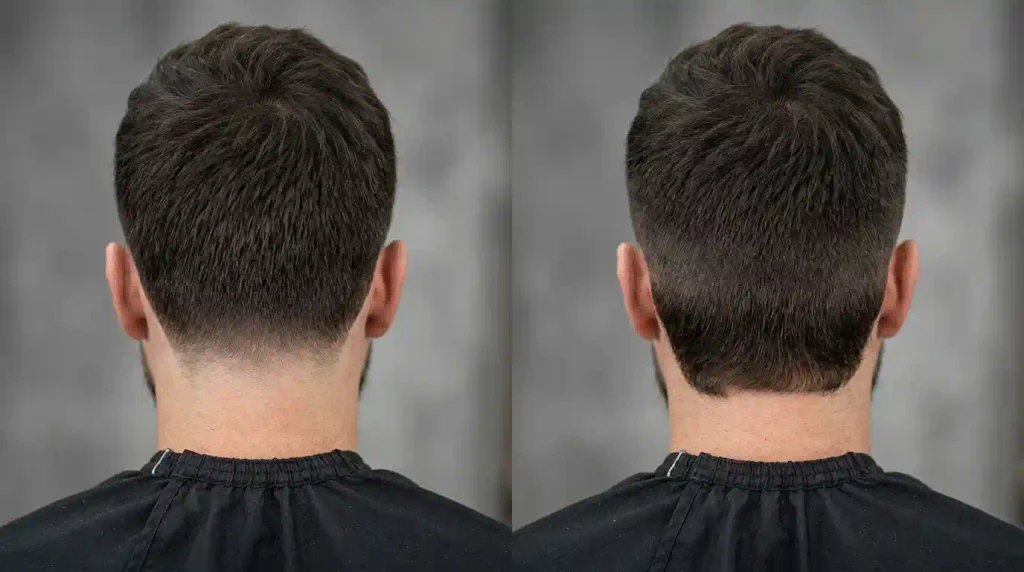
The most reliable approach is to show a reference photograph that clearly demonstrates the desired result.
Why the term can mean different things to different barbers
Reverse taper is less standardized than familiar terms such as low taper, mid fade, or skin fade.
Some hairstyle guides describe an inverted gradient with longer hair at the nape.
Others use reverse fade for visually unusual cuts featuring shaved patterns, separated lengths, or a reversed mohawk shape.
Consequently, two barbers might interpret the same request very differently.
Before committing, explain whether you want a true inverted length transition, a conventional fade with a reverse-style design, or a disconnected hairstyle with unusual shaping.
Reverse Taper vs. Other Taper and Fade Styles
Understanding the differences between a reverse taper and conventional fades helps prevent confusion at the barbershop.
The main factors are the direction of the length transition, fade placement, and whether the haircut includes exposed skin or decorative designs.
Reverse taper vs. traditional taper
A traditional taper gradually shortens hair toward the hairline, especially around the temples, sideburns, and nape.
A reverse taper changes that arrangement by preserving more length near the lower area or creating an intentionally inverted pattern.
For someone wanting a neat, conventional appearance, a temple taper haircut is generally easier to communicate and maintain.
A reverse taper is better suited to people who specifically want unconventional proportions or artistic barbering.
Reverse taper vs. reverse skin fade
A reverse skin fade introduces bare or nearly bare skin into the inverted design.
The position of exposed skin depends on the chosen interpretation. In a literal inverted gradient, skin exposure may appear higher within the transition while hair remains longer below.
A design-based reverse skin fade might instead use shaved negative space surrounding longer sections.
By comparison, a skin taper haircut typically follows the conventional short-at-the-perimeter blending pattern.
Reverse skin fades require particularly careful planning because incorrectly positioned skin-level cutting cannot be immediately undone.
Reverse taper vs. low, mid, and high reverse fades
The terms low, mid, and high indicate the approximate vertical placement or extent of the reverse transition.
A low reverse fade concentrates the effect near the neckline.
A mid reverse fade introduces the unusual gradient through a larger middle section.
A high reverse fade extends the design toward the upper head.
Unlike standardized conventional fade terminology, these descriptions can vary considerably between barbers.
A zero taper haircut provides another useful comparison for closely cropped hair, although a zero-length finish does not automatically make a haircut a reverse fade.
Reverse taper vs. bald or skin fade
A traditional bald fade generally transitions from exposed skin near the lower perimeter into longer hair toward the top.
A literal reverse taper changes the direction of that progression.
The distinction becomes more noticeable when hair remains longer near the neckline than in the section immediately above it.
However, decorative reverse fades can combine skin-level areas with longer hair in various patterns.
A bald finish describes how short the hair becomes, not the direction of the graduation.
Reverse taper with a burst fade or drop fade
Reverse-style designs can sometimes incorporate curved fading patterns.
A burst fade taper haircut creates a semicircular transition around the ear, while a drop taper haircut uses a descending curve behind the ear.
A barber may incorporate these shapes into a reverse-style haircut by adjusting where the longer and shorter sections meet.
However, combining the terminology does not automatically create one established haircut.
A photograph is essential for defining the intended shape.
Reverse Taper Haircut Styles and Variations
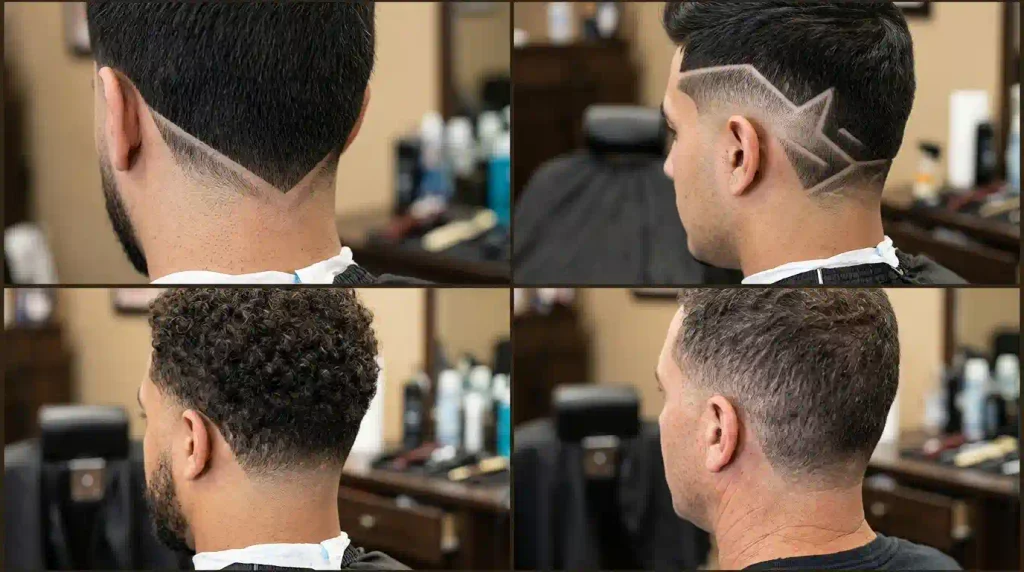
Reverse taper and reverse fade styles range from relatively simple inverted gradients to elaborate geometric designs.
Many of the names below describe creative interpretations rather than universally recognized barbering categories.
Some retain the literal reversed hair-length pattern, while others use reverse-style contrast, shaved artwork, or disconnected sections.
Low reverse fade
A low reverse fade concentrates the inverted transition near the nape or lower sideburns.
The barber may preserve additional hair along the lower neckline while shortening the section immediately above it.
Because the unusual gradient occupies a relatively small area, the haircut can look subtle from the front.
Best for: First-time reverse taper wearers and people who want a less dramatic design.
Mid reverse fade
A mid reverse fade extends the inverted blending pattern farther upward through the middle of the sides or back.
The larger transition creates more noticeable contrast between sections.
This variation works particularly well when the wearer wants the reverse effect to be visible without incorporating extensive shaved artwork.
Best for: Medium-density hair and people seeking balanced visual contrast.
High reverse fade
A high reverse fade creates a larger inverted transition near the upper sides or crown.
It can produce a distinctive, unconventional silhouette because the contrast affects more of the head.
The barber must carefully control the transition to prevent the haircut from appearing like an unfinished conventional fade.
Best for: Bold hairstyles, creative styling, and people comfortable with noticeable contrast.
Reverse skin fade
A reverse skin fade includes a skin-level section within the unconventional fade design.
For a true inverted gradient, the shortest region may be positioned above a longer lower section.
Because skin exposure emphasizes every transition, accurate blending is essential.
Best for: High-contrast designs and people willing to maintain a particularly precise haircut.
Reverse fade with burst or drop fade
This creative combination incorporates a curved fade outline into a reverse-style haircut.
A burst-inspired version emphasizes a semicircular shape around the ear, while a drop-inspired version curves downward behind it.
The reverse element may be introduced through inverted lengths or contrasting design sections.
Best for: Modern artistic hairstyles with curved transitions.
Geometric reverse fade
A geometric reverse fade incorporates straight lines, angles, triangles, or other structured patterns into the haircut.
The barber uses a detail trimmer to define the design against differently cut hair lengths.
These shapes can be placed at the nape, sides, or rear of the head.
Best for: Creative grooming, distinctive hair designs, and people who enjoy sharp outlines.
Styled mullet reverse fade
A styled mullet reverse fade combines an unconventional taper pattern with a mullet-inspired silhouette.
A traditional mullet keeps the back longer, while a reverse mullet, sometimes called a tellum or frullet, emphasizes longer front sections and a shorter back.
The two concepts should not be confused.
Ask whether the reverse effect refers to the mullet proportions, the fade direction, or both.
Best for: Experimental layered hairstyles and alternative fashion.
Mohawk reverse fade
A mohawk reverse fade uses contrasting lengths to emphasize a central or side section.
Some versions combine a conventional mohawk with a reverse-style fade near the nape.
A true reverse mohawk is different: it removes a strip along the center while keeping more hair on the sides.
Best for: Bold, unconventional hairstyles.
Pompadour reverse fade
This hairstyle combines a voluminous, swept-back pompadour with an unconventional fade design.
The top remains long enough to create height, while the reverse effect is usually concentrated along the sides or back rather than reversing the entire top-to-nape length pattern.
A strong visual separation can make the pompadour appear particularly prominent.
Best for: Medium-to-thick hair and people who enjoy structured styling.
Sectioned reverse fade
A sectioned reverse fade divides the haircut into defined areas with different lengths.
The barber may use a short upper band, fuller lower section, or clearly separated design panels.
The sections can be softly blended or intentionally disconnected.
Best for: Structured hairstyles and creative length arrangements.
Spiked geometric reverse fade
This variation combines short, upward-styled spikes with angular fade details.
The top is styled using wax, gel, or matte paste, while geometric lines create definition around the sides or neckline.
The contrast between vertical spikes and precise shaved shapes creates an expressive appearance.
Best for: Short-to-medium straight or thick hair.
V freestyle reverse fade
A V freestyle reverse fade uses a V-shaped neckline combined with optional shaved patterns.
The center point of the V can remain longer or be outlined using closely cut surrounding hair.
Additional geometric details may extend toward the sides.
Best for: People who want the back of the haircut to be the main visual feature.
Wavy length reverse fade
A wavy length reverse fade preserves natural movement while introducing a reversed transition beneath the longer sections.
The waves may sit on top, flow toward the back, or remain visible around the nape.
The barber should preserve enough length to maintain the natural wave pattern.
Best for: Medium-length wavy hair and relaxed textured hairstyles.
Blade and V-shaped reverse fade
This variation combines a sharply defined V-shaped neckline with precise shaved detailing.
The design may use blade-like lines or pointed geometric accents.
A skilled barber can create the pattern using detail trimmers and carefully controlled outlining techniques.
Best for: Sharp, sculpted hair designs.
Crop top reverse fade
A crop top reverse fade combines a short textured top with an unconventional transition around the sides or nape.
The fringe can be blunt, lightly textured, or swept forward.
Since the top is compact, the reverse fade becomes a noticeable design element.
Best for: Straight or wavy hair and people who prefer short hairstyles.
Wave-shaved reverse fade
A wave-shaved reverse fade includes one or more curved lines cut into the hair.
These lines may follow the shape of the nape or sweep around the sides.
The decorative wave pattern should be distinguished from natural 360 waves.
Best for: Artistic barbering and people who prefer curved designs over straight geometric lines.
Mirror-effect and cross-mark designs
A mirror-effect reverse fade uses symmetrical designs on opposite sides of the head.
The patterns may include curved lines, repeated angles, or matching shaved shapes.
Cross-mark designs introduce intersecting lines into the shorter hair.
Best for: Detailed, symmetrical hairstyles requiring precision barbering.
Shade reverse fade
A shade reverse fade emphasizes subtle differences in hair density rather than bare-skin contrast.
The reverse effect appears through carefully graduated clipper lengths.
It shares the softer visual character of a shadow taper haircut, although the length arrangement or design placement differs.
Best for: People who want an understated reverse taper without substantial scalp exposure.
Two-tone reverse fade
A two-tone reverse fade uses contrasting hair colors to emphasize the unusual length transition.
For example, a darker lower section may be paired with a lighter upper band.
Alternatively, colored highlights can outline a geometric reverse design.
Best for: Creative hairstyles and people comfortable maintaining colored hair.
High mohawk reverse fade
A high mohawk reverse fade emphasizes a pronounced central hairstyle with strong contrast along the sides.
The reverse element can be introduced through inverted side blending or carefully placed shaved patterns.
The central hair may be spiked, textured, or naturally curly.
Best for: Bold hairstyles with noticeable height and strong structure.
Box braids with reverse fade
This variation combines box braids with a reverse-style fade around the sides or nape.
The barber should establish which hair sections are reserved for braiding before cutting.
Removing hair too close to the braid bases can limit styling flexibility or create unwanted gaps.
Best for: Braided hairstyles and people seeking a clean, customized perimeter.
V-nape reverse fade
A V-nape reverse fade creates a pointed neckline rather than a straight or rounded lower edge.
The V can be subtle, with a natural blend, or sharply defined through trimmer work.
The reverse effect may appear within the V or in the surrounding hair lengths.
Best for: Short and medium hairstyles that benefit from a distinctive rear shape.
Sideburn design reverse fade
This variation focuses on creative detail near the sideburns.
The barber may incorporate narrow shaved lines, curved accents, or inverted length transitions.
When facial hair is present, the sideburn design should complement the beard rather than disrupt its natural connection.
Best for: Customized short hairstyles and detailed grooming.
Combover reverse fade
A combover reverse fade combines a neatly swept top with unconventional fading beneath it.
The longer top creates a traditional silhouette from the front, while the sides or back introduce the reverse effect.
A lightweight pomade helps control the styling direction.
Best for: Straight or wavy hair and people who want a mixture of classic and creative grooming.
French crop reverse fade
A French crop reverse fade features a short forward-facing fringe above an unusual fade pattern.
The top remains compact and textured.
The barber can maintain the familiar French crop outline while adjusting the hair-length gradient near the nape.
Best for: Short hairstyles and people who prefer minimal daily styling.
Horizontal-line reverse fade
This haircut incorporates one or more straight shaved lines across the back or sides.
The lines can separate different length sections and emphasize the inverted gradient.
Accurate positioning is important because horizontal designs can expose even minor asymmetry.
Best for: Structured geometric hairstyles.
Nape-shave-line reverse fade
A nape-shave-line reverse fade places a defined shaved line near the neckline.
The line may be straight, curved, or angled.
When combined with a longer lower nape section, it can reinforce the inverted appearance.
Best for: People who want subtle artwork concentrated at the back.
Scissor-cut reverse fade
A scissor-cut reverse taper uses haircutting scissors and comb techniques to create gradual length changes.
This method can produce a softer transition than an extremely close clipper fade.
It is particularly useful when the wearer wants to preserve natural movement and avoid substantial skin exposure.
Best for: Medium-length hair and subtle reverse-style transitions.
Clipper-cut reverse fade
A clipper-cut reverse fade uses adjustable clippers and multiple guard sizes to establish the inverted gradient.
The barber changes guard lengths while moving through the selected section.
Precise blending is necessary to prevent the different lengths from appearing like disconnected bands.
Best for: Short hairstyles and clearly defined gradients.
Curly reverse fade
A curly reverse fade combines natural curls with an unconventional length transition.
The curls may remain on top, around the lower nape, or in selected sections depending on the design.
The barber must account for curl shrinkage and hair density before establishing the shortest area.
Best for: Naturally curly and coily hair.
Connected-curve reverse fade
This variation uses curved design lines that connect across different areas of the haircut.
A line may begin near the temple, pass behind the ear, and continue toward the nape.
The design should follow the natural head shape to avoid awkward changes in direction.
Best for: Artistic haircuts with flowing geometric details.
Curved-down reverse fade
A curved-down reverse fade emphasizes a descending transition toward the rear of the head.
This can resemble a drop-shaped fade, but the reverse effect is introduced through the chosen length arrangement or surrounding design.
The exact result depends on the barber’s interpretation.
Best for: People who want a curved silhouette rather than straight fade guidelines.
Nude reverse fade
A nude reverse fade is a descriptive name sometimes used for a very close, skin-exposed reverse-style design.
The exposed section creates strong contrast against surrounding hair.
Because the name is not standardized, confirm precisely where skin should be visible.
Best for: Highly defined styles and people comfortable with regular maintenance.
Zip-cut reverse fade
A zip-cut reverse fade uses short, repeated shaved marks resembling the teeth of a zipper.
The design can follow a side line or neckline section.
This is primarily an artistic variation rather than a separate hair-length technique.
Best for: Statement hairstyles and detailed barber artwork.
Refined reverse fade
A refined reverse fade focuses on smooth transitions and restrained styling rather than elaborate designs.
The barber uses a softer gradient with carefully shaped edges.
It is one of the more wearable interpretations for people who want the unusual reverse appearance without excessive contrast.
Best for: Clean, minimal styling with a subtle creative element.
Bald-line reverse fade
A bald-line reverse fade introduces a sharply defined shaved line or skin-level boundary into the haircut.
The line creates separation between fuller and shorter sections.
Unlike a soft blend, this approach intentionally emphasizes contrast.
Best for: Bold designs with strong visual separation.
Infinite-line reverse fade
An infinite-line reverse fade uses flowing or looping shaved lines inspired by continuous geometric shapes.
The pattern may curve around the side or rear of the head.
The underlying fade can remain relatively simple to keep attention on the design.
Best for: Artistic hairstyles and complex custom patterns.
Shadow-line reverse fade
A shadow-line reverse fade combines a soft, shadowed gradient with a subtle outlined design.
Rather than using a broad skin-level area, the barber retains short hair around the pattern.
This can create definition while maintaining a darker overall appearance.
Best for: Low-contrast creative grooming.
Wave-line reverse fade
A wave-line reverse fade incorporates a flowing shaved line that resembles a wave.
The line may curve behind the ear or follow the nape.
Its shape should complement the natural contours of the head.
Best for: Creative hairstyles with smooth, curved detailing.
Sharp-V reverse fade
A sharp-V reverse fade uses a distinct pointed shape at the back of the haircut.
The point may be reinforced by a shaved outline or contrasting fade lengths.
Unlike a rounded neckline, the sharp V creates an angular rear silhouette.
Best for: Geometric grooming and pronounced neckline designs.
Double-sideburn reverse fade
A double-sideburn reverse fade uses two defined shapes or parallel detailing around the sideburn area.
The barber may create separate lines or contrasting sections to emphasize the design.
Both sides should be balanced, and the detailing should not create unnecessary gaps in the hairline.
Best for: Short hairstyles with distinctive temple and sideburn details.
Choosing a Reverse Taper for Your Face Shape
A reverse taper changes how hair volume is distributed around the head.
For this reason, the location of the fuller sections matters just as much as the fade height.
Face-shape recommendations are general styling guidelines rather than strict rules.
Reverse taper for oval and heart-shaped faces
Oval faces often support a broad range of haircut proportions.
A low or mid reverse taper can create a distinctive appearance without substantially changing the overall balance.
Heart-shaped faces generally have a wider forehead and narrower lower facial area.
Keeping some fullness near the lower sides may help create visual balance.
A textured top or modest fringe can also soften the appearance.
Reverse taper for round faces
Round faces may benefit from hairstyles that create additional visual height.
A reverse taper can work when the top is styled with controlled volume, such as a short quiff or textured brush-up.
Avoid allowing excessive lower-side bulk to make the face appear wider.
A carefully blended inverted transition can preserve the unusual effect without overwhelming the facial proportions.
Reverse taper for square faces
Square faces typically feature a relatively defined jawline.
A reverse taper with moderate texture can complement these angular features.
Geometric designs may reinforce the sharp appearance, while curved lines can create a softer visual contrast.
For a balanced result, avoid combining extreme side width with an excessively flat top.
Reverse taper for long and diamond-shaped faces
Long faces often benefit from moderate top height and sufficient side fullness.
A low reverse taper with a textured fringe may be more balanced than a tall pompadour.
Diamond-shaped faces commonly have prominent cheekbones with relatively narrower forehead and jaw areas.
Preserving some fullness near the temples can help prevent an overly narrow upper silhouette.
| Face Shape | Suggested Approach |
| Oval | Low or mid reverse taper |
| Heart-shaped | Soft reverse taper with balanced lower-side volume |
| Round | Controlled sides with moderate top height |
| Square | Textured reverse taper or geometric design |
| Long | Low reverse taper with limited top height |
| Diamond | Soft transition with some temple fullness |
The best haircut ultimately depends on individual features, head shape, hair density, and personal preference.
Choosing a Reverse Taper for Your Hair and Lifestyle
Hair texture and growth patterns significantly influence how an inverted gradient appears.
A reverse taper should be adjusted to the individual’s natural hair rather than copied directly from an unrelated reference photograph.
Straight, wavy, curly, and coily hair
Straight hair can make the difference between clipper lengths particularly visible. Precise blending is necessary to avoid harsh lines.
Wavy hair provides natural movement and can complement softer reverse tapers, textured crops, and layered hairstyles.
Curly hair creates volume around the longer sections, producing noticeable contrast with shorter areas.
Coily hair can support geometric fades, textured tops, and creative neckline designs.
For curls and coils, the barber should account for shrinkage before removing length.
Fine, medium, and thick hair
Fine hair requires careful length placement because removing too much hair may expose the scalp or make the hairstyle appear uneven.
Medium-density hair often offers flexibility for controlled gradients and subtle designs.
Thick hair creates strong contrast but may require additional weight removal in the fuller sections.
The barber should avoid aggressive thinning when the hair already lacks density.
How your crown, cowlicks, and natural growth patterns affect the result
The crown is an important reference point for planning a literal reverse taper.
If the hair grows in a strong spiral or cowlick, cutting it very short can cause sections to stand upright.
Cowlicks near the nape can also disrupt the intended longer lower section.
A barber may preserve additional length around these areas or adjust the direction of the transition.
The occipital bone and natural head contour should also guide the blending.
Choosing a style for your routine and preferred level of contrast
A simple reverse taper with a guarded finish may require less frequent maintenance than a skin-level geometric design.
Elaborate shaved lines become less distinct as the hair grows.
Longer tops, pompadours, and textured styles may require additional styling products.
If you prefer minimal grooming, choose a subtle reverse taper without complex artwork.
If regular barbershop visits are convenient, you can experiment with sharper designs and more contrast.
When a traditional taper or another fade may be a better fit
A reverse taper is not necessarily the best choice for someone seeking a conventional, easy-to-maintain haircut.
If you want the shortest hair at the neckline with progressively longer hair above, a regular taper or fade is more appropriate.
A conventional low taper may also suit conservative workplace grooming expectations.
For additional haircut options, explore the Fade & Taper Variants collection before choosing an unconventional transition.
How to Ask Your Barber for a Reverse Taper
Communication is particularly important because the haircut name may be interpreted differently.
The safest approach is to describe the desired hair lengths, transition direction, and neckline shape.
Specify the length at the crown and top
Tell your barber how much length you want at the crown and whether the top should remain textured, short, or long.
For a literal inverted taper, explain whether the shorter upper section should connect to the crown or remain confined to the back.
If you want a longer pompadour or fringe, clarify that the reverse design should not remove that styling length.
Explain where the hair should get fuller
State exactly where the hair should become longer.
For example, you may want extra fullness toward the lower nape while the area above is shorter.
Alternatively, you may want a traditional haircut with a reverse-looking geometric design.
These are different requests.
The barber should understand where the short-to-long transition begins and where it ends.
Choose the nape shape and neckline finish
The neckline can be natural, rounded, blocked, or V-shaped.
A soft neckline may help an inverted taper appear more understated.
A V-shaped nape introduces stronger geometric definition.
A blocked neckline produces a sharper edge but may require more frequent cleanup.
Discuss how the neckline should look after several weeks of hair growth.
Use a sample barber request
For a literal inverted gradient, use the following explanation:
“I want a reverse taper at the back, with more length preserved near the lower nape and a progressively shorter section above it. Keep the transition smooth, don’t take it down to skin, and leave the top textured.”
For a design-based interpretation, you could say:
“I want a regular short haircut with a reverse-style geometric fade design at the nape. Keep the top length and create a clean V-shaped pattern at the back.”
These instructions distinguish two substantially different haircuts.
What to agree on before the cut: top length, transition, and neckline
Confirm the three main details before the barber begins.
First, establish the top and crown lengths.
Second, identify the precise location of the shortest and longest sections.
Third, agree on the neckline shape.
If the haircut includes shaved artwork, confirm its placement and size.
For skin-level designs, ask the barber to indicate exactly which areas will be shaved.
Bring reference photos of the front, sides, and back
A rear-view photograph is especially important for a reverse taper.
The front view shows the intended top hairstyle.
The side view reveals the length distribution around the temples and ears.
The back view demonstrates the inverted graduation or neckline artwork.
Choose images of a haircut with hair texture similar to yours whenever possible.
What to do if your barber uses a different name for the style
Do not rely on terminology alone.
If your barber calls the style an inverted fade, reverse gradient, disconnected taper, or geometric neckline design, compare the actual shape rather than debating the name.
Ask the barber to explain how the hair lengths will change.
A clear visual agreement matters more than whether both people use the same hairstyle label.
How Barbers Cut a Reverse Taper
A reverse taper requires careful planning because the barber may be working against the usual direction of a conventional fade.
The following process describes a literal inverted gradient rather than every artistic variation.
Start at the nape and set the length
The barber begins by examining the natural neckline and identifying the blend area.
For an inverted gradient, the lower nape is assigned a longer cutting length than the section immediately above it.
For example, the barber might use a number four guard near the lower nape and progressively shorter settings higher within the selected area.
These guard sizes are only illustrative, and the exact cutting lengths depend on the clipper system.
The lower section should retain enough density to create the intended reverse appearance.
Blend upward with clipper guards
The barber works upward through the planned transition using progressively shorter settings.
Unlike a conventional fade, which typically becomes longer as it moves upward, this technique creates an inverted gradient.
Guard hopping may be used to establish the major length sections before refining the blend.
Care is necessary because creating a very short upper section can produce an unintended disconnected band.
Smooth the transition with clipper-over-comb or blending shears
Clipper-over-comb techniques allow the barber to control the transition between different lengths.
Blending shears may help soften selected areas, although they should not be used indiscriminately.
The objective is to remove visible steps while preserving the intended direction of the gradient.
Hair density, texture, and growth patterns determine how much blending is necessary.
Shape the top, hairline, sideburns, and neckline
After completing the reverse transition, the barber shapes the remaining hairstyle.
The top may be cropped, textured, combed back, or styled with additional volume.
A detail trimmer can refine the sideburns and neckline.
If the haircut includes geometric patterns, those are created after the main shape has been established.
The barber should check symmetry using side and rear views before finishing.
Tools Used to Cut a Reverse Taper
Reverse tapers use many of the same professional tools as conventional fades.
The difference is primarily in how the lengths are arranged and blended.
Clippers and adjustable guards
Professional clippers are used to establish the main lengths.
Adjustable guards and clipper levers help create controlled transitions.
For a literal inverted gradient, the barber works with longer lengths near the lower section and shorter lengths farther upward.
Detail trimmer or edger
A detail trimmer helps refine sideburns, hairlines, and neckline shapes.
It is particularly useful for geometric designs, V-shaped finishes, and narrow shaved lines.
A foil shaver may be used for suitable skin-level designs, although close shaving is not required for every reverse taper.
Scissors and comb
Haircutting scissors allow the barber to shape longer sections and refine transitions.
A comb helps control hair direction and provides a guide during clipper-over-comb work.
Scissors are especially useful for textured tops, wavy hair, and longer hairstyles.
Sectioning clips, spray bottle, and hand mirror
Sectioning clips separate longer areas from the fade zone.
A spray bottle helps control moisture when cutting suitable hair textures.
A neck brush removes loose hair during the appointment.
A hand mirror allows the client to inspect the rear design, where much of the reverse taper’s distinctive appearance is visible.
Styling and Maintaining a Reverse Taper
A reverse taper requires attention to the inverted transition and any decorative details.
The amount of maintenance depends on the contrast, hair growth rate, and top hairstyle.
Styling products for the top and longer sections
Choose products according to the hair texture and desired finish.
| Product | Best Use |
| Matte paste | Textured crops and relaxed tops |
| Hair clay | Short structured hairstyles |
| Pomade | Pompadours and comb overs |
| Styling cream | Natural waves and flexible styling |
| Hair wax | Spikes and defined sections |
| Styling gel | Strong hold and sculpted styles |
| Hair mousse | Lightweight volume |
| Texturizing powder | Adding lift to fine hair |
| Texturizing spray | Loose movement and separation |
| Sea salt spray | Tousled styling on suitable hair types |
| Hairspray | Holding finished styles |
| Leave-in conditioner | Dry, curly, and coily hair |
A small amount of product is usually enough for short hairstyles.
Longer or curly sections may benefit from additional conditioning.
When blow-drying, use moderate heat and an appropriate heat protectant to reduce unnecessary heat damage.
How often to get a trim
A precise reverse taper or reverse fade may need a touch-up approximately every two to three weeks to maintain its shape.
Skin-level designs and sharp geometric lines can lose definition sooner.
A softer reverse taper may remain visually acceptable for three to four weeks or longer, depending on growth rate.
The appropriate schedule depends on how crisp you want the haircut to remain.
Keeping the neckline, sideburns, and design details crisp
The neckline often determines whether a reverse taper still looks intentional.
As the hair grows, the contrast between longer and shorter sections becomes less visible.
Sideburn designs and shaved lines may also lose their sharpness.
A barber can refresh these areas without necessarily repeating the entire haircut.
Avoid aggressively trimming the design yourself, particularly when its shape depends on precise symmetry.
Scalp and hair care between barber visits
Wash your hair according to your scalp and hair needs.
A suitable gentle or sulfate-free shampoo may be helpful for some dry or chemically treated hair types, although sulfate-free products are not necessary for everyone.
Conditioner and leave-in products can support softness and manageability.
A lightweight hair oil or scalp moisturizer may help with dryness when appropriate, but avoid unnecessary buildup.
If a reverse skin fade causes irritation, consider choosing a longer clipper finish at your next appointment.
The American Academy of Dermatology’s razor bump prevention guide offers dermatologist-reviewed advice on preventing irritation from close shaving.
For curly, coily, or longer hair, a satin or silk cap may help reduce friction while sleeping.
What changes as the top and nape grow
As the hair grows, the inverted gradient gradually becomes less distinct.
The shorter upper section gains length, reducing the contrast with the fuller lower section.
A precise geometric neckline may become softer and less defined.
Longer top sections can also change the silhouette, particularly with pompadours, textured crops, and layered styles.
A reverse taper with strong contrast usually requires more deliberate grow-out management than a subtle version.
Transitioning to a traditional taper or another haircut
A reverse taper can be grown into a conventional haircut, but the process may require patience.
The barber may preserve the shorter areas while gradually reshaping the longer lower sections.
As the lengths become more balanced, a traditional taper or scissor-cut hairstyle can be established.
If the design includes a very short upper band, additional growth may be necessary before a smooth conventional blend becomes possible.
Avoid repeatedly cutting the shortest section if your goal is to grow it out.
Which touch-ups are safe to do at home and which to leave to a barber
Basic home maintenance may include washing, conditioning, styling, and removing isolated stray hairs outside the established neckline.
However, recreating an inverted gradient or geometric pattern requires precise control.
Cutting the wrong section can change the reverse shape or create visible gaps.
A home haircut using multiple clipper guards can also be difficult around the crown and nape because those areas are hard to see.
For substantial fade adjustments, skin-level work, or detailed shaved designs, professional barbering is generally the safer choice.

Frequently Asked Questions
Is a reverse taper the same as a reverse fade?
Not exactly; a reverse taper generally describes a more localized inverted transition, while reverse fade may refer to broader or more decorative interpretations.
Which face shapes suit a reverse taper?
Oval, round, square, heart-shaped, long, and diamond-shaped faces can suit customized reverse tapers when the proportions are adjusted.
Can a reverse taper work with curly or coily hair?
Yes, curly and coily hair can support reverse taper styles when the barber accounts for shrinkage, density, and natural growth patterns.
How often does a reverse taper need a touch-up?
Most precise reverse tapers benefit from touch-ups approximately every two to four weeks, depending on contrast and hair growth.
What should I show or tell my barber?
Show front, side, and back reference photos and specify exactly where the shortest and longest hair should be.
Can I grow out a reverse taper?
Yes, a reverse taper can grow into a traditional taper or longer hairstyle, although some short sections may need additional time to blend.
Final Thoughts
The reverse taper haircut offers a distinctive alternative to conventional tapers by changing the direction, placement, or visual arrangement of hair-length transitions. From subtle inverted gradients to bold geometric designs, reverse fade variations provide numerous possibilities for creative grooming.
The most important consideration is understanding exactly what your chosen style involves. Some reverse tapers preserve fuller hair near the neckline, while others use artistic shaved patterns or disconnected sections rather than a true inverted gradient.
Choose a variation that complements your face shape, hair texture, and maintenance routine. Before visiting your barber, bring clear reference photographs and confirm the length arrangement, fade placement, and neckline finish.
Explore more men’s hairstyle ideas, taper comparisons, and barbering guides at Taper Haircut Hub to discover the right haircut for your next appointment.